
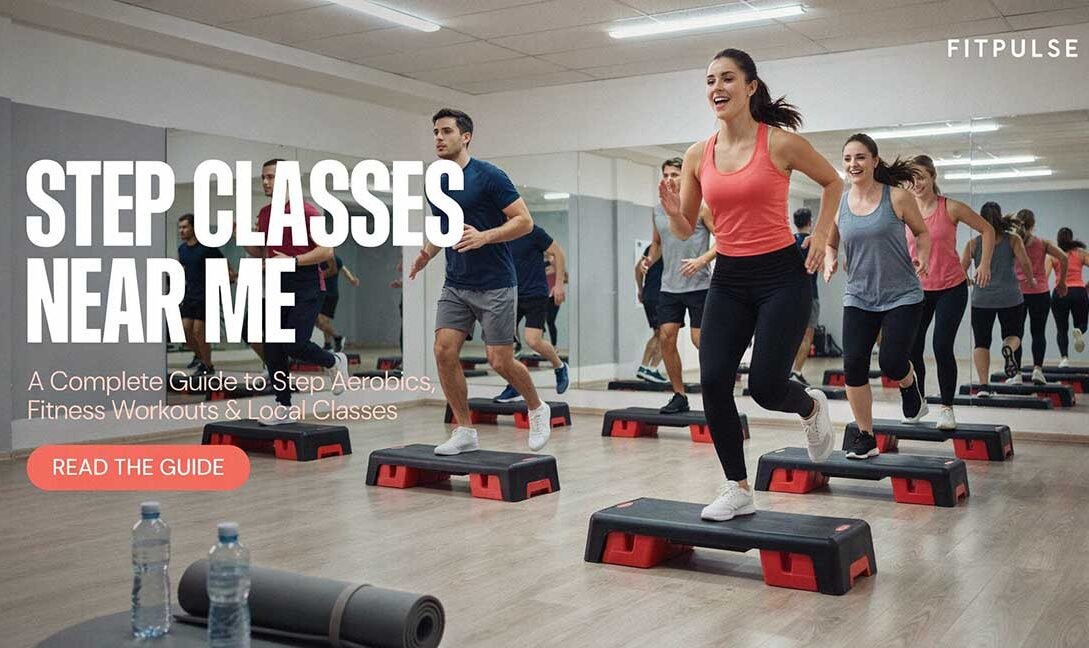
Finding the right step class shouldn’t feel like a workout in itself. Whether you’re chasing that post-90s aerobics nostalgia or just discovered step training on social media, this guide walks you through everything you need to know before lacing up and stepping onto the platform.
What Are Step Classes, Exactly?
Step classes are choreographed cardio workouts built around an adjustable platform, usually 4 to 8 inches tall. You step up, step down, and move around the platform in timed patterns set to music. It sounds simple, but a good instructor can turn basic up-and-over movements into a genuinely challenging full-body session.
The format traces back to the late 1980s, when a fitness instructor recovering from a knee injury started stepping up and down on her porch steps to rehab. That simple movement pattern eventually became one of the most popular group fitness formats in gym history, and it never really went away — it just evolved.
Today’s step classes blend traditional choreography with strength intervals, resistance bands, and even light dumbbells. So if you’re searching for step classes near me, you’re not signing up for a dated workout. You’re signing up for something that’s been refined over three decades.
Why People Still Search for Step Classes Near Me
Cardio trends come and go, but step classes have staying power for a few solid reasons:
- Low impact, high intensity — you can get your heart rate up without the joint pounding of running
- Scalable difficulty — beginners can skip the arm choreography and just focus on footwork
- Community feel — most step classes build a regular crowd, which keeps people accountable
- Efficient calorie burn — a 45-minute class can burn 400–500 calories depending on intensity and body weight
- No skill ceiling — you can keep adding complexity for years without hitting a wall
If you’re new to group fitness, step is genuinely one of the more forgiving entry points compared to something like advanced HIIT or a fast-paced dance cardio class.
How to Find Legitimate Step Classes Near Me
Before you commit to a studio, run through this quick checklist:
1. Check Instructor Certification
A qualified step instructor should hold a certification from a recognized body such as ACE, AFAA, or NASM. Don’t be shy about asking the front desk — legitimate studios are happy to share this.
2. Read Recent Reviews, Not Just the Star Rating
A 4.8-star studio with three-year-old reviews tells you less than a 4.3-star studio with dozens of reviews from the last two months. Look for comments mentioning class size, cleanliness, and whether instructors modify moves for beginners.
3. Ask About Trial Classes
Most fitness studios near me — and yours too — offer a free or discounted first class. Use it. Step choreography style varies a lot between instructors, and what works for one person’s coordination might frustrate another.
4. Confirm Equipment Quality
Worn-out step platforms with cracked risers are a safety issue, not just a cosmetic one. A well-maintained studio replaces equipment regularly.
Step Classes vs. Other Group Fitness Formats
People often search “step classes near me” alongside other formats because they’re comparing options. Here’s how step stacks up against common alternatives.
Step Classes vs. Dance Fitness Classes Near Me
Dance fitness classes near me (think Zumba-style formats) focus on rhythm, hip movement, and freeform cardio bursts. Step classes are more structured — you’re following a set choreography pattern tied to a physical platform. If you like clear, repeatable patterns, step suits you better. If you prefer loose, expressive movement, dance fitness might be the better fit.
Step Classes vs. Aerobics Classes Near Me
Traditional aerobics classes near me often skip the platform altogether and rely on floor-based cardio combinations. Step is technically a subcategory of aerobics, but it adds an extra layer of coordination because you’re navigating a raised surface. If your balance and coordination need work, starting with floor aerobics before moving to step can be a smart progression.
Step Classes vs. Sport Classes Near Me
Sport classes near me — think basketball drills, boot camps, or martial arts-based fitness — tend to be less rhythmic and more skill or drill focused. Step classes are better if you want a consistent, music-driven cardio routine rather than sport-specific conditioning.
Are Step Classes Good Workout Classes for Beginners Near Me?
Short answer: yes, with the right approach.
Most instructors design their opening 10–15 minutes as a low-complexity warm-up specifically so beginners can find their footing. Here’s what typically happens in a beginner-friendly step class:
- Basic step patterns first — simple up, up, down, down movements before anything fancy
- Arm movements introduced gradually — many first-timers skip arms entirely for the first few classes
- Modified platform height — beginners often start with the platform flat or at its lowest riser setting
- Verbal cueing before physical cueing — good instructors call out the next move before demonstrating it, giving newcomers a beat to prepare
If you’re specifically looking for workout classes for beginners near me, ask the studio directly whether their step class is labeled “beginner,” “all levels,” or “intermediate/advanced.” This one detail saves a lot of frustration on day one.
What to Expect in Your First Class
Walking into any new fitness studio near me can feel intimidating, so here’s a realistic breakdown of what a typical hour looks like:
- 0–10 minutes: Warm-up with basic marching and light stepping
- 10–35 minutes: Main choreography block, building complexity in layers
- 35–45 minutes: Peak intensity section, often with added intervals or light weights
- 45–55 minutes: Cool-down and stretching
- 55–60 minutes: Optional core or floor work
Wear supportive cross-training shoes, not running shoes — running shoes are built for forward motion, while step requires lateral stability. Bring water, and don’t be afraid to stand in the back row for your first few sessions until you get comfortable with the flow.
Benefits of Step Classes Backed by Fitness Research
Group cardio formats like step have been studied fairly extensively since their rise in popularity. Some consistently observed benefits include:
- Cardiovascular improvement from sustained moderate-to-vigorous intensity intervals
- Lower-body strength gains, particularly in the glutes, quads, and calves from repeated stepping
- Improved coordination and balance from navigating a raised platform while following choreography
- Bone density support, since step is a weight-bearing activity
- Mental health benefits tied to group exercise and music-driven movement, which many participants report as more motivating than solo cardio
These benefits aren’t unique to step alone, but the format combines several of them in a single low-cost, low-equipment session.
How Often Should You Take Step Classes?
For general fitness, two to three step classes per week is a reasonable target, paired with rest days or lower-impact activity in between. If your goal is weight management, combining step with strength training on alternate days tends to produce better results than step alone, since muscle mass supports a higher resting metabolic rate.
Listen to your knees and ankles in the first two weeks. Some mild muscle soreness is normal; sharp joint pain is not, and it’s worth reviewing your form with the instructor if that happens.
Choosing Between a Big Gym Chain and a Boutique Studio
Both have trade-offs worth considering:
Big gym chains typically offer more class time slots, often included in a broader membership, and larger class sizes. The downside is less individual attention from instructors.
Boutique studios tend to have smaller class sizes, more consistent instructors, and a stronger community feel — but usually at a higher per-class cost.
If you’re just testing whether step is right for you, a gym chain’s included class might be the lower-risk starting point. If you already know you enjoy step and want to commit long-term, a boutique studio often delivers a more personalized experience.
Frequently Asked Questions
Are step classes good for weight loss?
Step classes can support weight loss as part of a broader plan that includes proper nutrition and consistent activity. A single class burns a meaningful number of calories, but sustainable weight loss depends on overall calorie balance across the week, not one workout format alone.
Do I need to be coordinated to take a step class?
No. Coordination improves with repetition. Most people find their footing within three to four classes. Instructors design beginner classes specifically to build coordination gradually.
What should I wear to a step class?
Supportive cross-training shoes with good lateral stability, moisture-wicking clothing, and a towel for sweat. Avoid worn-out running shoes, since they lack the side-to-side support step requires.
How is step different from regular aerobics?
Regular aerobics classes are floor-based, while step classes add a raised platform, which increases both the cardio intensity and the coordination demand.
Can beginners really keep up in step classes for beginners near me?
Yes. Beginner-labeled classes are intentionally slower-paced with simpler choreography. It’s normal to modify moves or skip arm patterns during your first several sessions.
How much do step classes typically cost?
Pricing varies widely by region and studio type, ranging from classes included in a standard gym membership to $15–$30 per drop-in session at boutique studios. Many studios offer discounted class packs for regular attendees.
Is step class safe for people with knee issues?
Step is generally lower impact than running, but it does involve knee flexion. Anyone with existing knee issues should consult a doctor or physical therapist before starting and consider using a lower platform height initially.
Final Thoughts
Step classes remain one of the most reliable, low-impact, high-reward cardio formats available at most fitness studios today. Whether you’re comparing them against dance fitness classes near me, aerobics classes near me, or general sport classes near me, step holds its own thanks to its scalability, its community energy, and decades of refinement since its 1980s origins.
If you’re ready to try one, start with a trial class, wear the right shoes, and give yourself a few sessions before judging how it feels. Coordination builds fast, and most people find themselves genuinely enjoying the rhythm within their first month