
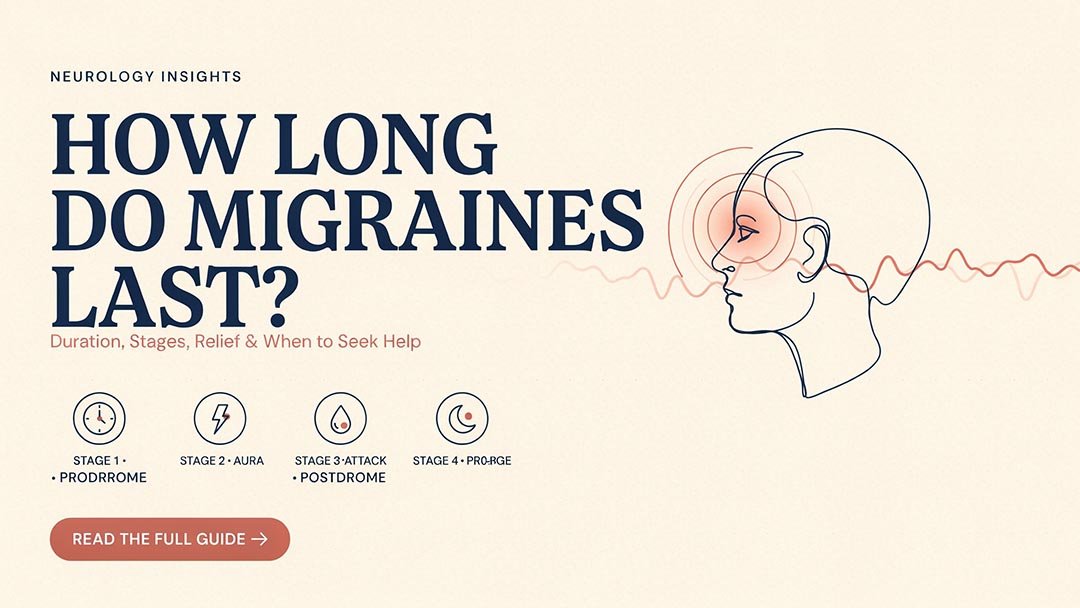
Quick answer: Typically a migraine bout lasts 4 to 72 hours untreated. The whole migraine cycle, from prodrome to recovery, can last for days. A lengthier bout of 72 hours or more is called status migrainosus and requires medical treatment.
If you’ve ever been in a dark room waiting for the pounding to cease, you know a migraine is much more than a lousy headache. It’s a neurological event and it has various phases and each phase has it’s own timetable. This guide outlines how long migraines continue, what influences that timetable, what really helps, and the indicators it’s time to call a doctor.
How Long Do Migraines Last on Average?
The International Classification of Headache Disorders (ICHD-3), the main diagnostic reference used by neurologists, states that a migraine headache phase lasts between 4 to 72 hours if untreated or unsuccessfully treated.
Here’s how that looks in practice:
- Most attacks: 4-24 hours
Longer attacks – 24 to 72 hrs
Beyond 72 hrs: classed as status migrainosus
In children and adolescents: frequently shorter, sometimes 2 to 6 hours
Notice the word, untreated. Effective early therapy can greatly shorten an attack. Many people who take acute medication as soon as they feel pain discover that the episode fades in a few hours, not a whole day.
Duration also varies from person to person even attack to attack in the same person. One migraine could be gone by noon. The next one may lay you down for two days.
The Four Stages of a Migraine and How Long Each Lasts
Many individuals believe that the headache is the complete migraine. It isn’t. A full attack can take up to four phases although not everyone goes through all of them.
1. Prodrome (The Warning Phase) Hours to 2 Days
The prodrome starts hours, or perhaps a day or two, before the pain. It’s subtle, and many people only recognise it after years of charting their attacks.
Signs include:
Stiff neck
Yawning more than normal.
cravings for food
Mood swings, irritation, poor mood
More thirst or urination
Trouble concentrating
2. Aura: 5-60 minutes
About a quarter of persons with migraine have aura. These are transient neurological symptoms, often visual, that develop over 5 minutes or more, and usually persist up to 1 hour.
Some examples are:
- Shimmering lights or zig-zag lines
Blind-spots
Tingling or numbness of the face or hand.
Difficulty finding words
Brevity of speech
If you have an aura lasting more than 60 minutes or associated with weakness on one side of the body, get medical attention quickly.
3. Headache (Attack) Phase: Lasts between 4 and 72 hours
This is the most people think of phase. It often throbs, usually on one side of the head, and gets worse with movement. Light, sound and odours may become intolerable. Oftentimes nausea.
4. Postdrome (The “Migraine Hangover”) Up to 24 Hours or More page 5
After the pain wears off, you may feel fatigued, disoriented, or strangely sensitive for up to a day. Some get a little extra fatigued. Some feel a little euphoric. This recovery phase is real and it’s part of the attack.
Total cycle length: Add all four stages together and a single migraine episode can last from one day up to four or five days.
Can Headaches Make You Puke? Migraine and Nausea Explained
Yes, and with the migraine that’s really common. Usually when someone searches ” can headaches make you puke ” it signifies the person is experiencing just that .
Nausea occurs in roughly 80% of migraine sufferers; about half will vomit at some time during episodes. This is thought to be because migraine is associated with the brainstem and the circuits that also govern digestion, suspect researchers. When you attack the gut slows down . That is why often you get stomach symptoms with pain .
But not all headaches with nausea are migraine. Vomiting is seldom caused by tension headache. Some nausea can be caused by cluster headaches. If you have nausea together with a sudden, strong headache or stiff neck and fever, it may be an indication of something more serious.
Here’s a good tip: If your stomach is sluggish, slow-absorbing tablets may not perform effectively. Ask your doctor about options such as dissolvable tablets, nasal sprays or anti-nausea medication that can help the pain treatment to work.
Silent Migraine and Aura Without Migraine: Do They Last as Long?
The length reflects the aura phase. Symptoms usually last 5 to 60 minutes, however some people feel foggy or fatigued afterward.
Migraine Aura Without Headache
You could also see this online as aura without migraine. It’s more frequent beyond the age of 50, and can be difficult to distinguish from other conditions. If new aura symptoms emerge later in life they should be properly evaluated by a health care provider to rule out reasons such as transient ischaemic attacks (mini-strokes), eye issues or seizures.
Don’t dismiss new neurological symptoms as “just a silent migraine” without a doctor’s input
What Is Status Migrainosus? When a Migraine Lasts Too Long
Status migrainosus is a severe migraine episode that lasts more than 72 hours (pain free gaps less than 4 hours, not considering sleep).
It’s rare, but devastating. Possible factors include pharmaceutical usage, sudden changes in preventative treatment, stress and hormonal changes. Dehydration may also result from persistent vomiting.
Status migrainosus typically does not improve without therapy. You may need to visit the emergency department or hospital for relief. Treatments may include IV fluids, anti-nausea medicines, corticosteroids, or other pharmaceuticals.
If your migraine lasts more than three days, don’t just sit home and wait it out.
What Affects How Long a Migraine Lasts?
The length of an attack can be changed by several factors:
- When to treat. As a rule, taking your medicine before the pain becomes severe is better than waiting.
Missing meals, dehydration, poor sleep, harsh scents, bright light, alcohol and stress can all make an attack last longer.
Hormones: Menstrual migraines are often more severe and longer-lasting.
Medication overuse Taking acute pain medications too often (usually more than 2 to 3 days a week) might produce rebound headaches that perpetuate the cycle.
Sleep Both too little and too much sleep can exacerbate duration.
Underlying health conditions: Anxiety, depression, and sleep difficulties are typically present with migraine.
One of the most useful things you can do is to keep a headache diary. Note the time started, the triggers, the medication and time the discomfort stopped. “Usually after a couple of weeks, patterns emerge
How to Shorten a Migraine: Relief That Actually Helps
There’s no single cure, but several approaches can reduce both severity and duration.
Act at the First Sign
Treat early. Waiting until the pain is intense often means the medication works less effectively.
Medication Options
Your doctor may suggest:
Mild to moderate bouts can be treated with nonprescription pain medications such as ibuprofen or naproxen or acetaminophen
Triptans (e.g., sumatriptan) – targets migraine-specific pathways.
Gepants and ditans, emerging types of drugs that do not constrict blood arteries
Medications for upset stomach and nausea
Always check any prescription drug with a healthcare professional, as dosage and suitability depend on your medical history.
- Home Comfort Measures
Rest in a calm, dark room.
Put a cool towel to your forehead or neck
Sip tiny amounts of water or an electrolyte drink
Have a little snack if you can handle it.
Avoid strong odours and screens
Preventing Frequent Attacks
If you get migraines multiple times a month, there are preventative measures. They include daily medicines, CGRP-targeted injections, nerve-stimulation devices and lifestyle measures. Many people find that consistent sleep, regular meals, staying hydrated and exercising all contribute to a measurable improvement in their lives.
When to Seek Help: Red Flags You Shouldn’t Ignore
If you experience: Call emergency services or go to the ER immediately.
- Sudden, explosive headache (sometimes described as “the worst headache of your life”
Headache with fever, stiff neck, disorientation, or rash.
One-sided weakness, numbness, or paralysis
Difficulty seeing or speaking that doesn’t go away
Headache from a head injury
convulsions or fainting
Arrange a doctor’s visit if:
- Your migraines persist for beyond 72 hours
More frequent or more serious attacks
Your pattern has shifted.
The over-the-counter treatment doesn’t work anymore
You take painkillers more than twice a week
migraines interfere with job, school or daily life
Frequently Asked Questions
How long does a usual migraine last?
Most migraines last from 4 to 72 hours if untreated. Many resolve within a few hours with early efficient therapy.
Can a migraine last for a few days?
Yes. A single attack can take three days and the entire cycle, including warning and recovery, can take longer. Status migrainosus is a headache that lasts more than 72 hours and has to be evaluated by a doctor.
Does a migraine make you vomit?
It happens all the time. Vomiting occurs in almost half of patients with migraine and nausea in most. If you vomit a lot or can’t stop, seek medical attention so that you don’t become dehydrated.
How long does a silent migraine go on for?
Usually 5-60 min corresponding to the aura phase . Because there is no pain, a lot of people don’t realise what they’re experiencing is migraine-related.
How can you get rid of a headache fast?
The best thing is to take the right prescription as soon as you feel symptoms, lie down in a dark area and drink fluids. There is no single strategy that works immediately for everyone.
Why I’m so exhausted after a migraine
This is the postdrome period. Brain activity and chemistry are still settling, and lethargy, fogginess and poor mood can last for up to a day.
What is an emergency for a migraine?
Seek immediate medical attention if you have a sudden, severe “thunderclap” headache, headache with fever and stiff neck, neurological changes such as weakness or slurred speech, or a headache after head trauma.
Conclusion
How long do migraines last, then? Most attacks last 4-72 hours, however the full experience can take several days from the first faint signal to the last trace of fog. It’s important to know the four stages so you can recognise attacks faster, treat them faster, and that’s frequently the biggest role in making them shorter.