
Ever looked at the back of your tongue and said “Wow, look at all these little bumps”? This can be a bit of a shock, especially if you have never really paid attention to that portion of your mouth previously. The good news is that bumps on the back of the tongue are usually just a normal feature of the tongue’s structure and not something to worry about.
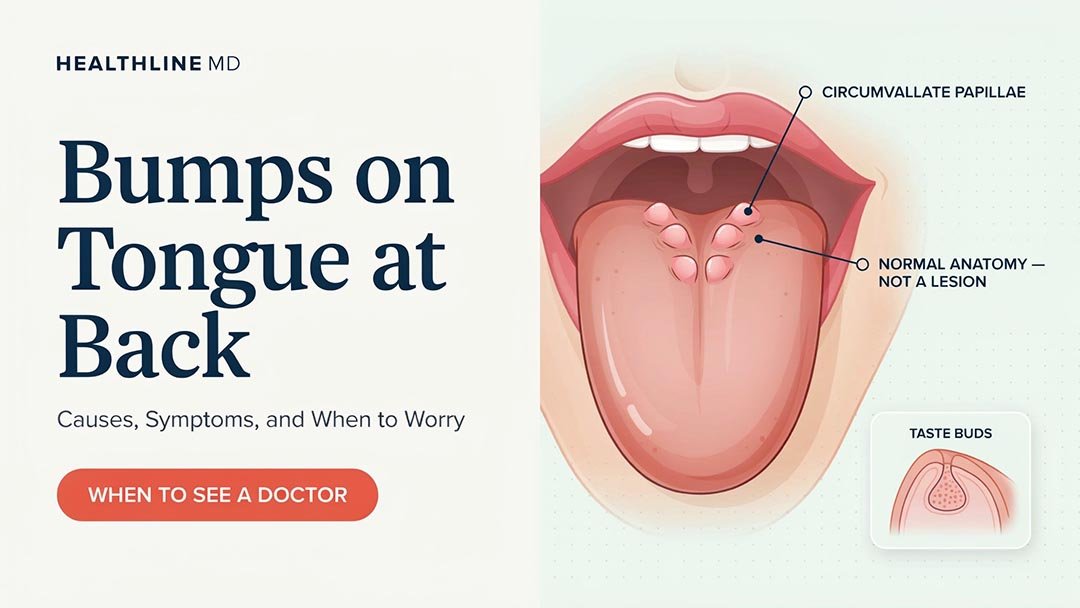
Naturally, there are several kinds of papillae or little elevated structures on the tongue. Some are involved in taste, others aid with the texture and movement of the tongue. The biggest papillae, the circumvallate papillae, are on the back of the tongue and can look like little, spherical bumps.
But not all abnormal bumps are just normal anatomy. Irritation, infections, ulcers, allergies, burns, and other disorders can also affect the look of the tongue. So how do you know one from the other?
This article looks at frequent causes, warning signals, treatment choices and when it makes sense to get your mouth checked by a dentist or healthcare expert.
What Do Normal Bumps at the Back of the Tongue Look Like?
The back of your tongue has lots of lumps, which is very normal.
When you look attentively in a mirror, you might see a row or partial circle of somewhat big, rounded lumps toward the back of your tongue. They are frequently circumvallate papillae. They have taste buds and they’re naturally larger than many of the tiny papillae that are located in other areas of the tongue.
They may be pink, somewhat crimson, or the same colour as the surrounding tongue tissue. They may also be different sizes and shapes from person to person.
Think of them as natural ridges and patterns on your fingerprints. You don’t see them every day, but it’s just part of how your body is built.”
Another type are foliate papillae, which are located at the sides near the back of the tongue. They may be in the form of folds or ridges and also have taste buds.
So, if you see any symmetrical bumps in this area that have been there forever and don’t hurt or create any problems, it might just be normal tongue anatomy.
Why Does the Back of the Tongue Have Bumps?
The tongue should not be perfectly smooth.
On its surface are papillae that have a variety of functions. Some of the papillae contain taste buds, and others function to give the tongue its texture and enable it to interact with food.
Circumvallate papillae are some of the largest papillae and are located toward the back of the tongue. They are part of the body’s regular taste system, and have many taste buds.
That’s one reason why people occasionally get frightened after staring at their tongue for the first time. They might be buildings that have been there for years yet look like a group of strange growths.
Change is the key. New, solitary, changing lesions are often more worrying than symmetrical lumps that match the surrounding tissue and are not painful or associated with other symptoms.
Common Causes of New or Enlarged Tongue Bumps
A temporary discomfort often causes the lumps on the tongue to appear more prominent.
Tongue irritation can be caused by accidently biting the tongue, eating excessively hot meals, eating spicy or acidic foods, or contact with irritating dental products. Injury can produce swelling that makes existing papillae appear larger than normal.
Another cause is transitory lingual papillitis, sometimes dubbed a lie bump. This illness can cause little red or white lumps that may feel uncomfortable, sensitive, or burning. It may affect the tip, sides or back of the tongue.
Possible triggers include:
- Minor tongue injuries
- Spicy or acidic foods
- Stress
- Certain viral infections
- Food sensitivities
- Orthodontic appliances
- Some toothpastes or mouthwashes
- Hormonal changes
These bumps often improve without specific treatment, sometimes within several days to about a week.
Can Irritation Cause Bumps on the Tongue?
Yes, everyday irritation can temporarily change the appearance of your tongue.
Imagine rubbing the same spot on your skin repeatedly. Eventually, that area may become red, swollen, or tender. Your tongue can respond in a similar way.
A sharp tooth, rough dental appliance, accidental bite, or very hot food can irritate tongue tissue. Eating strongly flavored foods may also make an already sensitive area feel worse.
Burns are another possibility. A very hot drink or meal can injure the tiny structures covering the tongue, sometimes causing soreness, swelling, and changes in taste. Most minor tongue burns heal with time.
If irritation seems to be the cause, try to identify what triggered it. Avoiding the irritating food, drink, toothpaste, or mouthwash may give the area time to recover.
Do not try to pop, cut, scrape, or squeeze tongue bumps. Unlike a skin pimple, a tongue bump is not something you should attempt to drain.
Infections That May Affect the Tongue
Some infections can produce noticeable changes in the mouth.
Oral thrush, for example, is a fungal infection that can cause raised white patches on the tongue and other areas inside the mouth. These patches can sometimes resemble a thick or cottage-cheese-like coating. Attempting to remove them may cause bleeding.
Other infections can produce sores, ulcers, inflammation, or painful areas. The exact appearance depends on the underlying cause.
Tongue discomfort can also occur with certain viral, bacterial, or fungal infections. Because several different conditions can look similar, persistent or unusual lesions should be evaluated rather than diagnosed solely from an online description.
If you have fever, significant swelling, spreading pain, difficulty swallowing, or trouble breathing, seek medical care promptly.
What Different Colors and Symptoms May Mean
Color and symptoms can provide useful clues, but they cannot confirm a diagnosis by themselves.
Small pink or red bumps at the back of the tongue may simply represent normal papillae. Inflamed papillae may become more noticeable and tender.
White areas can have several causes, including irritation or oral thrush. Red or white patches that persist should not automatically be dismissed as harmless because persistent mouth changes sometimes require professional assessment.
Pay attention to symptoms such as:
- Pain or burning
- Bleeding
- A persistent sore
- Difficulty swallowing
- Difficulty speaking
- A hard or firm lump
- A patch that changes in appearance
- A bump that continues growing
- A lump in the neck
- Unexplained weight loss
These signs do not automatically mean you have a serious disease. Many common conditions can cause similar symptoms. However, they are good reasons to have the area examined.
How Are Tongue Bumps Diagnosed?
A dentist or health care provider typically can learn a great deal just by looking in your mouth.
They might enquire when you first noticed the bump, whether it’s altered, if it hurts, if you recently injured your tongue or changed foods, toothpaste, mouthwash or dental equipment in a visit.
They might also look at the remainder of your mouth and, if indicated, feel around your jaw and neck.
Often the look and history are sufficient to establish a benign aetiology. Sometimes, more testing may be recommended if a lesion is unusual or chronic.
The diagnosis cannot be established on the basis of pictures alone. Two lumps can look alike but be caused by totally distinct things.
Home Care and Treatment Options
How the bump is treated depends on the cause.
If it seems to be a minor annoyance, the best thing is to just give the tongue time to recuperate. You may also:
- Drink lots of water.
Avoid particularly hot or acidic foods for a while.
Stay away from really hot meals and drink.
Gentle mouth health.
If it feels calming, rinse with warm salt water.
Avoid goods that plainly inflame your mouth.
Don’t pick or scratch the bumps.
Transient lingual papillitis Healthcare providers may recommend avoiding recognised causes and taking the right over-the-counter pain treatment when necessary. These lumps usually go away without any particular treatment.
Treatment may be different if an infection is the cause. For example, oral thrush may need an antifungal treatment given or advised by a health care provider.
When Should You See a Dentist or Doctor?
A bump that does not go away deserves attention.
Most temporary tongue difficulties go away within a few days. But if a new sore or ulcer doesn’t go away in approximately two weeks, Cleveland Clinic recommends getting it checked out.
If you notice the following, you should consider booking an examination:
- A bump that returns or doesn’t go away
A bulge that becomes bigger
Bleeding, unexplained
A hard or sturdy place
Pain continued
A white or red patch,
Trouble Swallowing or Speaking
a lump in the throat
Unintentional weight loss
The NHS also recommends medical or dental evaluation for persistent mouth ulcers, mouth lumps and red or white patches, ongoing mouth pain, and difficulties swallowing or speaking.
The object of an examination is not to take the worst. In truth, many of these symptoms have other explanations that aren’t cancer. The aim is just to know the reason early and offer proper care.
Could a Persistent Bump Be Something More Serious?
It is better to have a persistent lump on the tongue examined than to ignore it.
Most bumps and patches on the tongue are benign but some persistent sores, lumps or unexplained red or white regions can sometimes be connected with more dangerous illnesses like oral cancer.
This is especially the case if the lesion is fresh, inexplicable, solid, enlarging, bleeding or not healing.
And it’s worth remembering that location counts, too. There are several normal structures in the back of the tongue, thus the finding of symmetrical bumps in that area is not necessarily a sign of disease.
Don’t panic because you have spotted bumps. Instead, look for changes throughout time, and think about the symptoms in context.
If something is still weird, a dentist or doctor can look at it carefully and decide if more examination is necessary.
How to Keep Your Tongue and Mouth Healthy
Good dental hygiene can help minimise inflammation and promote good overall oral health.
Use fluoride toothpaste twice a day and brush your tongue gently instead of scraping it hard. Floss regularly and drink plenty of fluids. Regular dental checkups also help to detect abnormal changes before they become serious problems.
Don’t smoke or chew tobacco, and be careful with foods or dental products that cause frequent discomfort.
It’s easy to create a habit of inspecting your mouth from time to time. You don’t have to incessantly check your tongue every day. Instead, get to know what usually looks and feels natural to you.
That makes it simpler to see real progress
Frequently Asked Questions
1. Is it common to have lumps on the back of your tongue?
Yes. Behind the tongue there are bigger papillae termed circumvallate papillae. They have taste buds . They may be spherical lumps . If they are symmetrical and there are no symptoms to be concerned about, they may just be normal anatomy.
2. Why do the lumps on the back of my tongue sting?
Painful pimples can be caused by irritated and inflamed papillae. Minor trauma, spicy or acidic foods, stress, viral infections, and other irritants may produce transitory lingual papillitis. The bumps will generally get better on their own.
3. How long do irritated lumps on the tongue last?
A few minor bumps will go better in a few days and may settle down in about a week. If you have a sore, lump or other strange region that doesn’t go away in about two weeks, or is not getting better, you should have it checked.
4. Can an infection produce lumps on the back of the tongue?
“Yes. Some infections can also affect the tongue (e.g. oral thrush) causing noticeable changes. Thrush is usually seen by elevated white patches but other illnesses might cause pain or ulceration. A health professional can assist you determine the cause.
When should I worry about a lump on my tongue?
Seek expert attention if you have a chronic, growing, hard, bleeding or recurring bump, or one that is painful, causes difficulty swallowing, causes difficulty speaking, is a lump in your neck, or is associated with unexplained weight loss. These symptoms have numerous possible reasons and are not, in themselves, a sign of cancer but should be investigated.
Summary
It is very normal to have bumps on the back of the tongue, particularly if they are symmetrical and are natural papillae, like the circumvallate papillae. But lumps or changes in appearance can also be a sign of discomfort, temporary lingual papillitis, infections and other diseases.
The most helpful hints are how long the bump has been present, if it is changing and if you have any other symptoms. A lump that keeps developing is usually different than a momentary discomfort that goes away in a few days.
Get it checked out by a dentist or healthcare provider if a bump lasts two weeks or more, keeps coming back, bleeds, hurts, or is accompanied by problems eating or speaking.
So, the surface of your tongue is actually quite complex. While some may initially seem odd, it may just be part of its standard design, but constant alterations are worth a second look.