Discovering you have an enlarged uterus can be a bit alarming, especially if it was a surprise. Perhaps your doctor mentioned it during a routine pelvic exam, or perhaps you’ve been having symptoms like as pelvic pressure and heavier periods and have now been diagnosed and it all makes sense. Either way, you’ve got questions.
In this post, we’ll break down what an enlarged uterus actually is, what causes it, how doctors detect it and what treatment options are available. The aim is to give you clear, medically based information so that you can have an informed discussion with your healthcare professional.
What Is a Swollen Uterus?
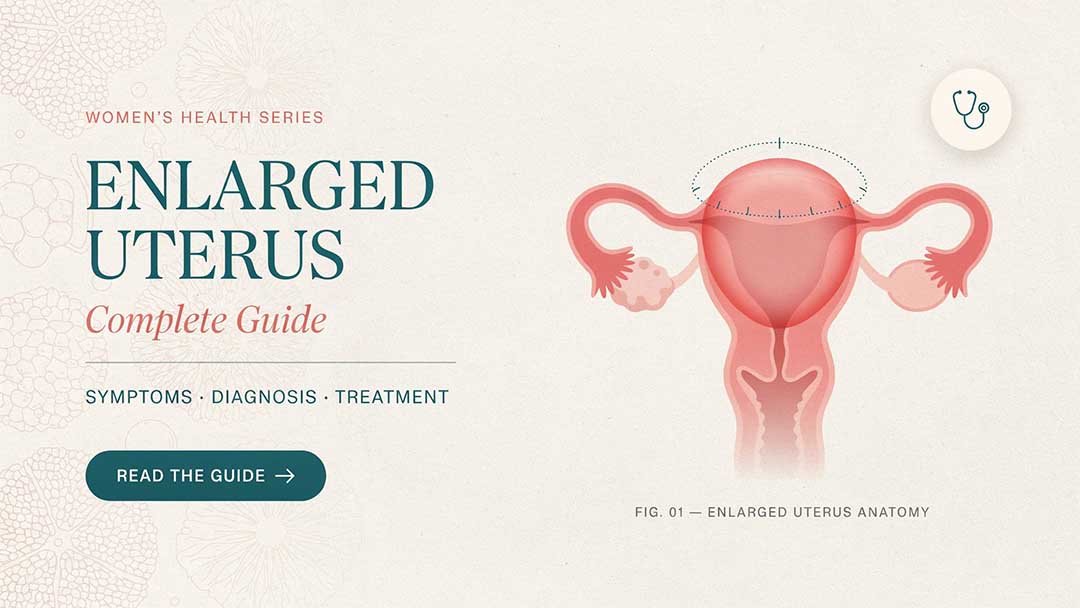
The enlarged uterus signifies nothing more than that the uterus (womb) is bigger than what is considered normal for a person’s age and reproductive stage. It’s not a sickness per se. It’s a physical finding, usually seen during a pelvic exam or imaging study that points to an underlying reason.
Doctors may use other terminology to describe this disease . In certain circumstances , they may use ‘ swollen womb’or’bulky uterus’. Some patients have even searched for ‘ puffy uterus’after reading their ultrasound report or hearing it spoken informally . These basically all refer to the same concept – the uterus has enlarged beyond its normal size or shape.
Average Uterus Size for Reference
To understand what “enlarged” means, it helps to know the average uterus size:
- Non-pregnant, reproductive-age women: roughly 7–8 cm long, 4–5 cm wide, and 2–3 cm thick — often compared to the size of a small pear
- Women who have given birth: slightly larger due to previous stretching
- Postmenopausal women: typically smaller, as hormone levels drop and tissue naturally shrinks
When imaging shows measurements notably above these ranges, or when the uterus feels bulky during a physical exam, doctors classify it as enlarged.
Typical Reasons for an Enlarged Womb
There is not just one reason that the uterus gets bigger. There are a number of conditions, some minor and some to be watched closely, that can be the cause.
1. Fibroids of the uterus
Fibroids are noncancerous (benign) growths that form inside or on the wall of the uterus. They are one of the commonest causes of an enlarged uterus and affect a high proportion of women at some time before the menopause. Fibroids can be as little as a pea or large enough to affect the shape of the uterus.
2. Endometriosis Disease
Adenomyosis is a disorder in which the endometrial tissue, which normally lines the inside of the uterus, begins to grow abnormally into the muscular wall of the uterus. It causes the walls of the uterus to thicken, and this is the reason adenomyosis is a common explanation for a diagnosis of a “bulky” or bigger uterus.
- Typical symptoms of adenomyosis include:
Heavy or lengthy periods
Severe menstruation pains that get worse over time
Chronic Pelvic Pain – Not Just Related to Your Period
You can have heaviness, pressure, or fullness in the lower abdomen.
Dyspareunia
Sometimes adenomyosis may be confused with fibroids or endometriosis due to the overlapping symptoms, thus correct imaging is needed to guarantee a clear diagnosis.
3. Pregnancy.
This is the commonest cause of enlargement of uterus. The uterus grows greatly during pregnancy to accommodate the growing baby. If an enlargement is found unexpectedly, one of the first things a doctor will rule out is pregnancy.
4. Hyperplasia of the Endometrium
The illness is characterized by an overgrowth of the uterine lining and is frequently associated with a hormonal imbalance, namely, an excess of estrogen compared to progesterone. Some types can raise the risk of endometrial cancer if they are not treated, thus quick diagnosis is important.
5. Ovarian Cysts or Masses Pushing on the Uterus
Sometimes the problem is not the uterus itself. Sometimes a mass on a nearby ovary might press on the uterus and make it look larger on imaging.
6. Endometrial or Uterine Cancer
Uterine enlargement is less frequently a symptom of malignancy, particularly in postmenopausal women with sudden bleeding. That’s why any new or unexpected growth, especially after menopause, should be checked up by a doctor right away.
Symptoms That May Accompany an Enlarged Uterus
Not everyone with an enlarged uterus notices symptoms — some cases are found incidentally during a routine exam. If symptoms appear, they can vary from person to person and may include.
- Heavy, prolonged, or irregular menstrual bleeding
- Pelvic pain or a persistent dull ache
- A visible or palpable feeling of fullness in the lower belly
- Needing to urinate more often when an enlarged uterus places additional pressure on the bladder
- Constipation or bloating, from pressure on the bowel
- Lower back pain
- Pain during sex
- Fatigue, particularly if heavy bleeding leads to anemia
If you’re experiencing several of these symptoms together, it’s worth scheduling an appointment rather than waiting for them to resolve on their own.
How is Enlarged Uterus diagnosed?
For an appropriate diagnosis, you usually need a combination of the following:
Pelvic Exam.
Your doctor feels the size, shape and hardness of your uterus by hand. That’s the first hint that something needs to be looked at more carefully.
Ultrasound
Ultrasound is the most common imaging test used to assess the uterus and look for fibroids, cysts or areas of tissue that are thickened.
MRI
MRI provides a more detailed view and is particularly beneficial to differentiate fibroids from adenomyosis when ultrasonography is inconclusive.
Endometrial Biopsy
If there is abnormal bleeding, a small sample of tissue from the lining of the uterus may be obtained to rule out hyperplasia or malignancy.
Blood Testing
They can evaluate hormone levels and assess for ane
Treatment Options for an Enlarged Uterus
Your treatment relies entirely on what is causing it, how severe your symptoms are, and whether you wish to maintain your fertility.
Careful waiting
If the enlargement is mild and not producing symptoms, your doctor may just recommend monitoring it with frequent checks or ultrasounds.
Medicines
Hormonal therapies (birth control pills, progestin therapy or GnRH agonists) may help shrink fibroids or lessen adenomyosis symptoms
Your doctor may prescribe tranexamic acid to assist manage and lessen heavy menstrual bleeding.
Pain medicines, such as NSAIDs, can assist reduce cramping and pain.
Minimally Invasive Surgery
Uterine artery embolization eventually shrinks fibroids by cutting off blood supply
Endometrial ablation involves removing or destroying the lining of the uterus to prevent excessive bleeding
One newer, non-surgical, treatment option for fibroids is MRI guided focused ultrasound.
Surgical Treatment
Myomectomy eliminates fibroids but preserves the uterus, commonly selected by women who desire to have children later.
Hysterectomy involves the removal of the entire uterus and is usually employed for severe instances, especially when other therapies have proven unsuccessful or conception is not a concern
Your doctor will help you talk through these possibilities based on your particular illness, age, how severe your symptoms are, and your future family planning goals
Enlarged Uterus vs. Normal Variations: When to Worry
Not every case of an enlarged uterus is cause for alarm. Some women naturally have a slightly larger uterus without any underlying disease. However, you should see a doctor promptly if you notice:
- Sudden or severe pelvic pain
- Bleeding after menopause
- Rapid increase in abdominal size
- Unexplained weight loss alongside pelvic symptoms
- Heavy bleeding that leads to dizziness or fatigue
These signs don’t automatically mean something serious, but they warrant timely evaluation rather than a wait-and-see approach.
Living With an Enlarged Uterus: Practical Tips
If you’ve been diagnosed and are managing symptoms, a few lifestyle adjustments can help:
- Track your cycle using an app to spot patterns in bleeding and pain
- Stay iron-conscious if you have heavy periods, since anemia is common
- Use heat therapy for cramping and pelvic discomfort
- Stay active — moderate exercise can help with bloating and mood
- Communicate openly with your doctor about how symptoms affect your daily life, not just clinical measurements
Frequently Asked Questions
1. I’m not pregnant, but my uterus is swollen. What does this mean?
The cause is more typically a benign one like fibroids or adenomyosis, but hormone imbalances and less often serious disorders might be the cause as well. A pelvic exam, sometimes with an ultrasound, can assist determine what may be causing the uterus to be larger.
2. Can an enlarged uterus return to normal size?
Yes, frequently. If the cause is something that can be treated, like medication or surgeries to shrink fibroids, then the uterus can get smaller. The pregnancy swelling will go away on its own after birth.
3. Is bulky uterus same as enlarged uterus?
Bulky uterus is a phrase often used interchangeably with enlarged uterus. In general, bulky uterus describes a uniformly larger than average uterus, most commonly arising owing to adenomyosis or fibroids.
4. Does having a larger uterus influence fertility?
It can, depending on the source and location of any growths. Fibroids or adenomyosis in the uterine cavity might make it harder to conceive or to carry a pregnancy. Many women with these problems do successfully conceive, sometimes with the help of medication.
5. What are the differences between fibroids and adenomyosis?
Fibroids are solid growths that are separate and distinct, occurring within or on the uterus. Adenomyosis is when the lining of the uterus grows into the muscle wall, creating a diffuse thickening, rather than a discrete mass.
6. Does an enlarged uterus mean cancer?
It can, however it is much less often than benign reasons. Postmenopausal bleeding associated with an enlarged uterus should be promptly checked to exclude malignancy.
7. What is the difference between adenomyosis and endometriosis?
Endometriosis is where similar tissue grows outside the uterus, such as on the ovaries or lining of the pelvis. Adenomyosis is where the lining tissue of the uterus grows into the uterine muscle itself.
CONCLUSIONS
An enlarged uterus is a finding, not a diagnosis – it might be due to fibroids, adenomyosis, hormonal imbalances, pregnancy or sometimes more serious problems. The best ways to receive the right therapy are to understand the usual size of the uterus, to recognize the symptoms early, and to have a proper diagnosis using pelvic exams and imaging. Whether you choose to monitor, take medication or have a procedure, consistent communication with your healthcare professional can help ensure that choices are made with your own circumstances, symptoms and goals in mind. If you have new or worsening pelvic symptoms, don’t wait—timely evaluation can make all the difference in diagnosis and peace of mind.