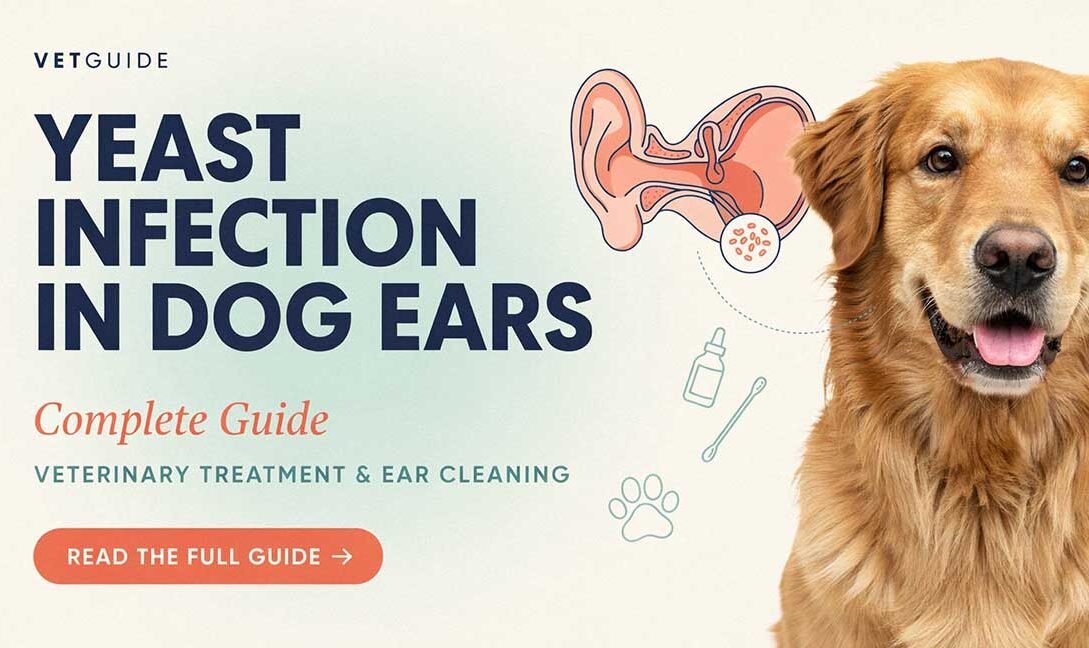
If your dog has been shaking their head or clawing at their ears, or you have detected a musty sour smell coming from their ear canal, you may be dealing with a yeast infection. This is one of the most common reasons dog owners end up at the vet, and frankly, it is also one of the most misunderstood problems in canine health.
Years of research on companion animal health issues and discussions with veterinary professionals have led to one conclusion – yeast infections in dog’s ears are manageable, but they need to be treated properly from the beginning. Get it incorrectly and you have an issue that will keep coming back to annoy you and your dog.
This book takes you through everything you need to know – what causes it, how to recognize it, how to treat it, and how to keep it from coming back
What Causes Yeast Infections in Dogs’ Ears? A Clear Guide for Pet Owners?
A yeast infection in a dog’s ear occurs when Malassezia pachydermatis, a fungus that normally dwells on your dog’s skin and in their ears, overgrows. This yeast is harmless in tiny concentrations. It is normal skin flora of your dog. The difficulty begins when anything upsets the natural balance – dampness, allergies, hormonal changes or a compromised immune response – and the yeast population goes haywire.
Bacterial ear infections frequently come with a yellow or greenish discharge. Yeast infections have a characteristic, sweet-and-sour smell with a brown, waxy deposit.
Featured Snippet Quick Definition Ready
Yeast infection dog ear: A build-up of Malassezia yeast in the ear canal which leads to inflammation, itching, odor and discharge. It is not communicable to other pets or people and is usually caused by excess moisture, allergies or an underlying skin condition .
Symptoms of Yeast Infection in Dog Ears
This is considerably easier to cure if it is caught early. Search for:
Constantly shaking or tilting the head
Pawing at ear or rubbing ear on furniture/carpet
A strong musty or “corn chip” type of smell
Waxy discharge, dark brown or reddish brown.
Redness or swelling inside the flap of the ear
Crusty or scabby skin around the ear hole
Sensitivity of the ear to touch
Chronic cases may show hair loss around base of ear
Some dog breeds are more susceptible to ear yeast infections than others. Dogs with floppy ears – such as cocker spaniels, basset hounds and Labrador retrievers – are more prone to trapping moisture, which creates a warm, humid environment that yeast thrives in. The risk is particularly higher for dogs that swim often or dwell in humid settings.
What Causes Yeast Overgrowth in a Dog’s Ears?
Knowing the underlying cause is important because treating the infection without addressing the underlying cause nearly guaranties it will return.
1. Too much moisture
Water left in the ear canal after baths, swimming or grooming creates the perfect breeding habitat. Yeast loves warm, moist, dark places – and a dog’s ear canal is the perfect breeding ground.
2. Allergies
This is perhaps the biggest underlying force. Environmental allergies (pollen, dust mites, mold) and food allergies both alter the skin’s oil production and pH, producing a yeast overgrowth. If your dog is suffering from recurring ear infections, allergy testing may be the missing piece of the jigsaw.
3. Imbalances in Hormones
Conditions that change skin chemistry and immunological function, such as hypothyroidism or Cushing’s illness, predispose to overgrowth of yeast.
4. The Ear Anatomy
Dogs with narrow ear canals or thick, floppy ears have limited ventilation, trapping humidity inside.
5. Immune System Suppression
Puppies, senior dogs or dogs on immunosuppressive medicine have less natural resistance to yeast overgrowth.
Yeast Infection Dog Ear vs. Bacterial Ear Infection
Owners often confuse the two, but they’re not the same, and treatment differs.
| Feature | Yeast Infection | Bacterial Infection |
|---|---|---|
| Odor | Musty, sweet, “corn chip” smell | Sharp, foul, sometimes rotten |
| Discharge color | Brown, waxy | Yellow or green, pus-like |
| Onset | Often gradual | Can be sudden and severe |
| Pain level | Itchy, mild to moderate discomfort | Often more painful |
| Common trigger | Moisture, allergies | Often secondary to yeast or injury |
A vet exam with a microscope (called ear cytology) is the only reliable way to tell them apart — and sometimes both are present at once.
How to Treat Dog’s Ear Yeast Infection
This is where precision truly counts. True yeast overgrowth is rarely cured by home treatments alone once symptoms are present.
1. Receive an appropriate diagnosis
It’s worth a vet visit before you start any treatment. They will usually take a swab and look at it under a microscope to establish that yeast is the problem (not germs or ear mites). One step means weeks of guessing are over.
Step 2 – Thoroughly Clean The Ear
The first line of defense is usually a vet-approved ear cleaner that breaks down wax and dries the canal. “Look for cleansers with mild acidifying or drying agents.
- How to clean ears (basic procedure):
Fill the ear canal with cleanser (but do not put the nozzle directly in the canal)
Massage the bottom of the ear for 20-30 seconds – you should hear a squishing sound
Let him move his head to dislodge debris
Remove visible debris with a cotton ball or soft cloth (not a cotton swab down in the canal)
Repeat only as often as recommended by your vet – over-cleaning can irritate the skin further
Step 3: Use Antifungal Medication
Veterinarians often prescribe topical antifungal ear drops that contain substances like miconazole, clotrimazole or nystatin. In more severe or systemic disease, oral antifungal treatment may be added.
Treatment is usually anywhere from 1-4 weeks depending on intensity. Even if you start feeling better early on, it is important to finish the whole course of medication because one of the biggest reasons yeast infections come back is stopping too soon.
Step 4: Address the Root Cause
This is the stage that most owners miss, and this is why infections come back. If allergies are causing the yeast overgrowth, your vet might recommend:
- Try a hypoallergenic or limited ingredient diet.
Antihistamines or other medications that control allergies
Regular cleansing of the ear maintenance even when there are no indications
How to Treat Yeast Infection in Dogs (Beyond the Ears)
Yeast overgrowth isn’t limited to the ears. It’s worth understanding the bigger picture.
Yeast in Dogs Skin
Yeast infections often show up on the skin too — particularly in armpits, groin, paws, and skin folds. Signs of yeast in dogs skin include:
- Greasy, flaky patches
- Red or darkened skin
- A musty odor similar to the ear version
- Persistent licking or chewing at paws or skin folds
- In long-lasting cases, the ear skin may become noticeably thick, rough, and leathery
Treatment for skin yeast overlaps with ear treatment: medicated shampoos (often containing chlorhexidine or miconazole), topical antifungal creams, and addressing the same underlying allergy or hormonal triggers.
Dietary Support
While diet alone won’t cure an active infection, reducing simple carbohydrates and sugars in your dog’s diet may help manage yeast populations long-term, since yeast feeds on sugar. This isn’t a replacement for medical treatment, but it can be a useful supporting habit once the infection clears.
How to Treat Dog Ear Infection at Home Safely
If your vet has confirmed it’s a mild yeast issue and given you the green light for at-home management, here are safe supportive practices:
- Keep ears dry after baths and swimming using a vet-approved drying solution
- Clean ears weekly for dogs prone to infections, even without symptoms
- Trim excess ear hair in breeds with hairy ear canals to improve airflow
- Avoid inserting anything deep into the ear canal — this can cause injury or push debris further in
- Never use human ear drops or hydrogen peroxide without vet guidance, as these can damage delicate ear tissue
Important: home care should support veterinary treatment, not replace it, especially for moderate to severe cases.
When to See a Vet Immediately
Seek prompt veterinary care if you notice any of the following warning signs:
- Ear discharge with blood
- Your dog crying out in pain when the ear is touched
- Swelling that closes off the ear canal
- Loss of balance, head tilt that doesn’t resolve, or unusual eye movements (this can signal a middle or inner ear infection)
- No improvement after a few days of prescribed treatment
These signs can point to a more serious infection that’s spread beyond the outer ear canal.
Preventing Future Yeast Infections
Prevention is genuinely the best strategy here. Once you know your dog is prone to yeast overgrowth, a simple routine goes a long way:
- Carefully dry your dog’s ears after every bath or swimming session to help keep excess moisture from encouraging yeast growth
- Schedule routine ear checks during grooming
- Manage underlying allergies with your vet’s guidance
- Use a maintenance ear cleanser on a regular schedule if recommended
- Watch for early signs and act quickly rather than waiting
Frequently Asked Questions (FAQ’s)
1. What is the scent of yeast infection in a dog’s ear?
It often smells musty, sugary or like “corn chips.” This odor is one of the most noticeable early indications of yeast overgrowth.
2. Can I use apple cider vinegar on my dog’s yeast infection?
Diluted apple cider vinegar is sometimes used as a mild at-home rinse, but should never be used in place of veterinary-prescribed therapy for an active illness, and might hurt inflamed or torn skin. Always consult your vet first.
3. How long does it take to get rid of a yeast infection in a dog’s ear?
Regular treatment may respond in 1 to 2 weeks in mild situations. More severe or chronic infections could take 3-4 weeks or longer, particularly if an underlying allergy needs to be addressed also.
4. Is a dog ear yeast infection communicable to other pets or humans?
No. Malassezia yeast is normally found on your dog’s skin and is not considered communicable to other pets or people in regular household settings.
5. Why does my dog get yeast infections in the same ear?
Recurrent infections are frequently a sign that an underlying cause has not been addressed — most commonly allergies, ear anatomy or excess moisture. Rather than just treating each flare up as it occurs it is recommended addressing long term treatment with your vet.
6. Can nutrition truly influence yeast infections in dogs?
Diet alone won’t cure an infection but dietary allergies are a big trigger for yeast overgrowth in many dogs. In food-sensitive dogs, a veterinary supervised diet trial can greatly reduce recurrence.
7. What is the difference between yeast in the skin versus yeast in the ears?
They’re the same type of yeast, just in different areas. Yeast on the skin is common in skin folds, paws and armpits, but ear yeast is limited to the ear canal. Both have comparable symptoms – smell, redness and irritation — and often go hand in hand in allergy-prone dogs.
Conclusion
Yeast infections are a common and annoying problem in the ears of dogs, but the good news is that once you know what’s causing them, they are extremely controllable. The secret is to combine a correct veterinarian diagnosis with regular cleaning of the ears, the suitable antifungal therapy and attention to the underlying cause, whether it allergies, dampness or hormonal imbalance. There’s no need to guess. Take the complete course of medication and develop a simple maintenance plan from there. Do that and most dogs go from scratching their ears constantly to comfy, itch-free ears for good.