
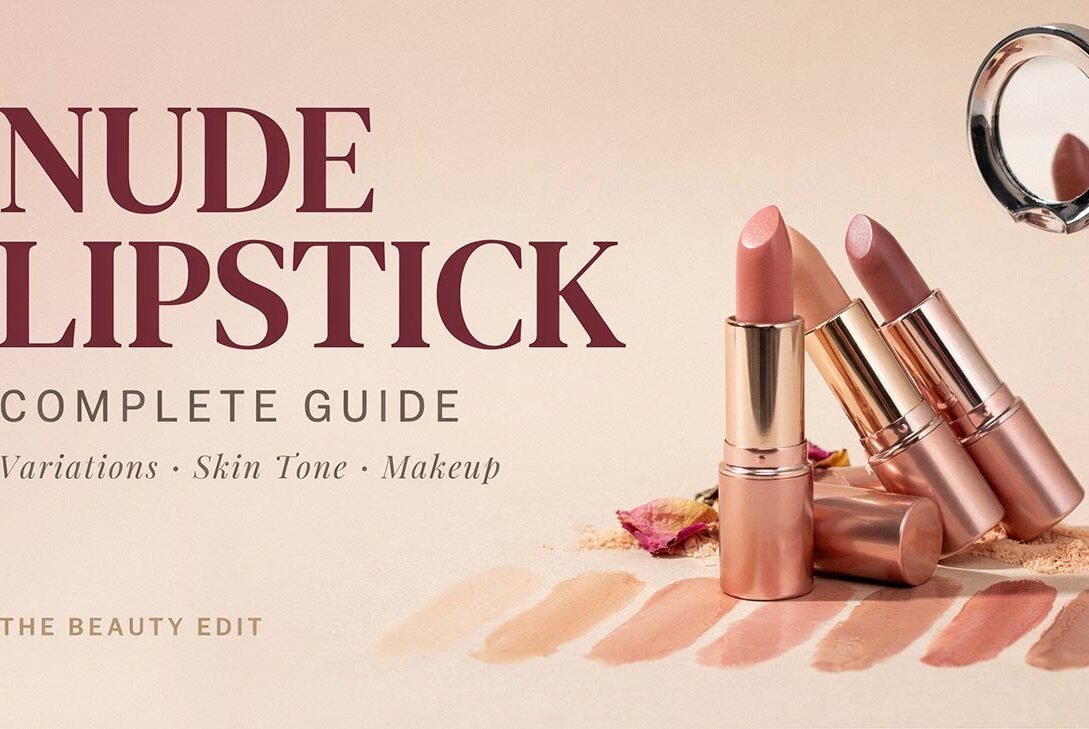
Nude lipstick has earned a permanent spot in almost every makeup bag, and for good reason. It’s versatile, timeless, and flatters nearly any look, from a bare-faced morning look to a full glam evening face. But finding the right nude isn’t as simple as picking up the first beige tube you see. The wrong shade can wash you out, make you look tired, or clash with your undertone. The right one, though, can make your lips look naturally fuller, healthier, and more polished without screaming “I’m wearing lipstick.”
This guide breaks down everything you need to know about nude lipstick: what it actually means, how to pick the right variation for your skin tone, and how to wear it so it works with your features instead of against them.
What Is Nude Lipstick, Exactly?
A nude lipstick is a shade that closely mimics the natural color of lips, only slightly enhanced. It’s not one specific color. It’s a category that spans light beige, soft pink, warm caramel, deep brown, and everything in between.
The idea behind nude lipstick isn’t to hide your lips. It’s to create a “your lips but better” effect. Think of it as the makeup equivalent of a good concealer — subtle, natural-looking, but noticeably improved.
Key point for featured snippets: Nude lipstick is defined by its relationship to your own skin tone, not by a fixed shade name. A nude that looks perfect on fair skin might look chalky on deep skin, and a nude that looks rich on deep skin might look overly dark on fair skin.
Why Nude Lipstick Remains a Makeup Staple
Nude lipstick has stayed popular for decades, and it’s not just a trend. There are practical reasons makeup artists keep it in their kits:
- It works for every occasion — office meetings, weddings, casual weekends, or job interviews
- It pairs with any eye makeup, from a smoky eye to a bold winged liner, without competing for attention
- It photographs well, which is why it’s a favorite for professional headshots and bridal makeup
- It requires less precision than bold reds or dark plums, since minor imperfections in application are less noticeable
Makeup artists often describe nude lipstick as the “blank canvas” shade — one that lets the rest of your makeup or outfit take center stage.
The Main Variations of Nude Lipstick
Not all nudes are created equal. Understanding the variations helps you shop smarter instead of guessing.
1. Pink-Toned Nudes
These have a soft rosy undertone and tend to suit cooler skin tones. They give a fresh, “no-makeup makeup” finish and are often the safest starting point for beginners.
2. Peach and Coral Nudes
Warmer and slightly brighter, these work beautifully on medium skin tones with golden or warm undertones. They add a subtle glow without looking overly dramatic.
3. Beige and Tan Nudes
These are the classic, true-to-name nudes — closer to sand or light tan. They tend to suit fair to medium skin tones with neutral undertones.
4. Caramel and Mocha Nudes
Deeper and warmer, these shades work well on medium to deep skin tones. They have enough pigment to show up clearly without looking harsh.
5. Brown and Chocolate Nudes
The deepest end of the nude spectrum, these suit deep skin tones best. They add richness and dimension rather than washing the lips out, which is a common complaint when deeper skin tones try lighter nudes.
Don’t Skip Depth — It Matters More Than People Think
Undertone tells you the direction of the shade; depth tells you how far to go. A pink-nude that’s technically “correct” for a cool undertone can still fail if it’s several shades lighter than your actual skin
Step 1: Identify Your Undertone
Look at the veins on your wrist in natural light.
- Veins with a blue or violet cast are typically a sign that you fall into the cool undertone category
- Green veins usually mean a warm undertone
- If your veins seem to sit somewhere between blue and green, that’s usually a sign you’re working with a neutral undertone
Step 2: Match Undertone to Lipstick Base
- Cool undertones generally look best in pink or mauve-based nudes
- Warm undertones generally look best in peach, caramel, or golden-brown nudes
- Neutral undertones have the most flexibility and can wear both, though beige-based nudes are a safe default
Step 3: Consider Depth, Not Just Tone
Skin depth matters as much as undertone. A common mistake is choosing a nude based only on undertone while ignoring how light or deep the shade is compared to your actual skin.
- Fair skin tones typically look best in lighter pink or beige nudes
- Medium skin tones often suit peach, tan, or caramel shades
- Deep skin tones usually look most flattering in chocolate, espresso, or deep berry-nude blends
A simple rule many makeup artists follow: the lipstick shade should sit close to your natural lip color or one to two shades darker. Going lighter than your natural lip tone is what usually causes that washed-out, corpse-like effect people try to avoid.
Matching Nude Lipstick to Makeup Looks
Nude lipstick isn’t a one-look product. How you pair it changes the entire effect.
Everyday Natural Look
Pair a soft nude with minimal eye makeup, a light coat of mascara, and a natural blush. This is the classic five-minute face.
Office or Professional Look
Choose a matte or satin nude in a beige or caramel tone. Matte finishes tend to look more polished and last longer through meetings and long workdays.
Bold Eye, Neutral Lip Look
When wearing a smoky eye or a graphic liner, a nude lip balances the face so the eyes stay the focal point. Pink-toned nudes work particularly well here since they soften strong eye makeup.
Bridal or Event Makeup
Many makeup artists recommend a slightly deeper or pink-mauve nude for photos, since very light nudes can sometimes disappear under flash photography.
Matte, Satin, or Glossy: Which Finish Should You Choose?
The finish changes how a nude shade reads on the lips.
- Matte nudes look more sophisticated and last longer, but can emphasize dry patches if lips aren’t prepped
- Satin nudes offer a balance of pigment and shine, making them beginner-friendly
- Glossy nudes look youthful and fresh, ideal for daytime or casual looks, though they typically need more frequent reapplication
If you have dry lips, prepping with a gentle lip scrub and balm before applying a matte nude makes a noticeable difference in how smooth the finish looks.
Common Mistakes to Avoid With Nude Lipstick
- Choosing a shade lighter than your natural lip color, which often creates an unnatural, flat appearance
- Skipping lip liner, especially with matte nudes, which can lead to feathering or an undefined lip shape
- Ignoring undertone, which is the most common reason a nude “doesn’t work” on someone
- Not testing in natural light, since store lighting can distort how a shade actually looks
Tips From Makeup Professionals
Makeup artists often suggest swatching nude lipstick on the lips rather than the hand, since lip skin has a different texture and pigmentation than the back of your hand. It’s also helpful to apply a small amount of concealer around the lip line before lipstick application, as this helps the true color of the nude shade show up more accurately and prevents any residual lip pigmentation from altering the final look.
Another practical tip: keep two nudes in your collection — one a shade lighter for daytime and one a shade deeper for evening. This small adjustment can make your makeup collection feel more versatile without buying dozens of similar shades.
Frequently Asked Questions
1. What is considered a true nude lipstick?
A true nude lipstick is one that closely matches or slightly enhances your natural lip color, rather than a fixed universal shade. It varies from person to person based on skin tone and undertone.
2. Does nude lipstick suit all skin tones?
Yes, but the specific shade must match. Nude lipstick works for every skin tone as long as the undertone and depth are chosen correctly — there is no single “one nude fits all” shade.
3. Why does my nude lipstick look ashy or grey?
This usually happens when the shade is too light for your skin tone or has the wrong undertone. Switching to a warmer or slightly deeper nude often solves this issue.
4. Can I wear nude lipstick with bold eye makeup?
Yes. In fact, nude lips are commonly paired with smoky eyes or bold eyeliner looks because they balance the face and keep the eyes as the main focus.
5. Is matte or glossy nude lipstick better for daily wear?
Both work well, but satin or glossy nudes tend to be more forgiving for daily wear since they’re less likely to emphasize dry lips than a full matte finish.
6. How do I make nude lipstick last longer?
Exfoliate lips beforehand, apply a lip liner in a matching shade, blot after the first layer, and set with a light dusting of translucent powder if needed.
7. What’s the difference between nude and beige lipstick?
Beige is one specific shade within the broader nude category. Nude lipstick includes beige, but also pink, peach, caramel, and brown-based shades depending on skin tone.
Final Thoughts
Nude lipstick isn’t about following a trend — it’s about finding the shade that mirrors and enhances your own natural coloring. The key takeaway is simple: match the lipstick to your skin’s undertone and depth, not to what looks good on someone else. Once you find that shade, nude lipstick becomes one of the easiest, most reliable products in your entire makeup routine, suited for everything from a quick everyday look to a full evening look