
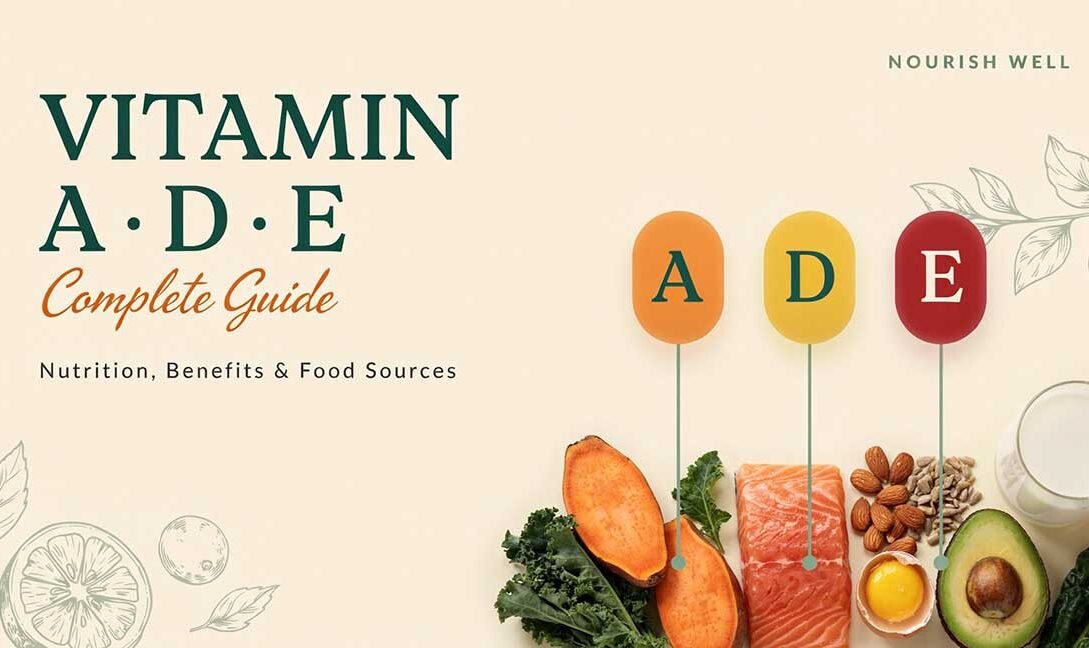
Vitamins don’t often get a fair shake in everyday conversation. People talk about protein, carbs, and calories, but the fat-soluble vitamins—A, D, and E—quietly run the show behind the scenes. They keep your eyes working, your bones strong, your skin resilient, and your immune system alert. Yet most people couldn’t tell you what these vitamins actually do or where to find them in real food.
This guide explains everything clearly and simply, making the key information easy to understand. No jargon-heavy textbook talk, no recycled listicle fluff—just a clear, practical look at vitamin A, D, and E, why your body needs them, and how to get enough without overthinking it.
What Are Vitamin A, D, and E?
Vitamin A, D, and E belong to a group called fat-soluble vitamins, meaning your body absorbs them best when you eat them alongside some dietary fat. Unlike water-soluble vitamins (like vitamin C or the B vitamins), these three get stored in your liver and fatty tissue, so your body can draw on reserves when intake dips.
Here’s the quick definition version, perfect if you’re skimming:
- Vitamin A supports vision, immune defense, and skin health.
- Vitamin D supports calcium absorption, helping maintain strong, healthy bones and proper skeletal function.
- Vitamin E works as a powerful antioxidant, helping shield your cells from oxidative stress and everyday cellular damage.
Each one plays a distinct role, but together they form a kind of protective triangle for your body’s tissues, immune system, and long-term health.
Vitamin A: The Vision and Immunity Vitamin
Vitamin A comes in two forms. Preformed vitamin A (retinol) is found in animal products, while provitamin A (beta-carotene) comes from colorful fruits and vegetables. Your body converts beta-carotene into usable vitamin A as needed.
Benefits of Vitamin A
- Maintains healthy night vision and overall eye function
- Supports immune response against infections
- Promotes healthy skin cell turnover
- Supports reproductive function and contributes to healthy fetal growth and development during pregnancy
A deficiency in vitamin A can lead to night blindness, dry eyes, and increased susceptibility to infections. On the flip side, too much preformed vitamin A—especially from supplements—can be toxic, so food-first is usually the smarter approach.
Food Sources of Vitamin A
- Liver and organ meats
- Egg yolks
- Sweet potatoes
- Carrots
- Spinach and kale
- Mangoes and cantaloupe
Vitamin D: The Sunshine Vitamin
Vitamin D is unusual because your skin actually makes it when exposed to sunlight. That’s why it’s nicknamed the “sunshine vitamin.” But between office jobs, sunscreen use, and cloudy climates, a huge number of people worldwide run low on it.
Benefits of Vitamin D
- Helps the body absorb calcium and phosphorus
- Supports bone density and strength
- Plays a role in muscle function
- Contributes to immune system regulation
- May influence mood and energy levels
Low vitamin D is linked to weakened bones, increased fracture risk, and fatigue. Many doctors now recommend routine blood testing, especially for people who spend most of their time indoors.
Food Sources of Vitamin D
- Fatty fish like salmon, mackerel, and sardines
- Egg yolks
- Fortified milk and plant-based milk
- Fortified cereals
- Mushrooms exposed to UV light
- Cod liver oil
Sunlight exposure for roughly 10 to 30 minutes a few times a week can also help, though this varies based on skin tone, location, and season.
Vitamin E: The Antioxidant Protector
Vitamin E is best known for its antioxidant properties. It helps neutralize free radicals—unstable molecules that can damage cells over time and contribute to aging and chronic disease.
Benefits of Vitamin E
- Protects cell membranes from oxidative stress
- Supports skin health and wound healing
- Plays a role in immune function
- May support eye health alongside vitamin A
Vitamin E is also popular in skincare. That’s where products like A and D ointment with vitamin E come into play—commonly used for minor skin irritation, diaper rash, and dry or chapped skin. These ointments combine the healing properties of vitamin A and D with the protective, moisturizing benefits of vitamin E, making them a household staple in many medicine cabinets.
Food Sources of Vitamin E
- Sunflower seeds
- Almonds and hazelnuts
- Spinach and broccoli
- Vegetable oils like sunflower and safflower oil
- Avocado
Sources of Vitamin A, B, C, D, E, and K: A Bigger Picture
While A, D, and E get plenty of attention, they don’t work alone. Your body relies on a full spectrum of vitamins to function properly. Here’s a simplified breakdown of the sources of vitamin A B C D E and K, so you can see how they fit together on your plate.
| Vitamin | Key Role | Common Food Sources |
|---|---|---|
| A | Vision, immunity | Carrots, liver, sweet potatoes |
| B (complex) | Energy metabolism | Whole grains, eggs, legumes |
| C | Collagen, immunity | Citrus fruits, bell peppers, strawberries |
| D | Bone health | Fatty fish, fortified dairy, sunlight |
| E | Antioxidant protection | Nuts, seeds, vegetable oils |
| K | Blood clotting, bone health | Leafy greens, broccoli, fermented foods |
Looking at the sources of vitamin A D E and K specifically, you’ll notice a pattern: leafy greens, healthy fats, nuts, and seeds show up again and again. That’s not a coincidence—these fat-soluble vitamins tend to cluster in similar food groups because they need dietary fat for absorption.
Vitamin A, B, C, D, E, and Zinc: Building a Stronger Immune System
When people ask about immune support, the conversation often expands beyond vitamins alone. Vitamin A B C D E and zinc together form a well-rounded nutritional approach to immune health.
Zinc, a mineral rather than a vitamin, works closely with these vitamins to support wound healing, immune cell function, and even taste and smell. A diet lacking in zinc can weaken immune response, similar to deficiencies in vitamin A or D.
Foods rich in zinc include:
- Oysters and shellfish
- Beef and poultry
- Pumpkin seeds
- Chickpeas and lentils
- Cashews
Combining these zinc sources with vitamin-rich foods creates a more complete nutritional foundation, rather than relying on any single nutrient to do all the work.
How to Get Enough Vitamin A, D, and E Naturally
You don’t need a cabinet full of supplements to meet your needs. For most healthy adults, a varied diet covers the basics. Here’s a practical approach:
- Eat colorful produce daily. Orange, red, and dark green vegetables usually signal high vitamin A content.
- Include healthy fats with meals. Since these are fat-soluble vitamins, pairing them with olive oil, avocado, or nuts improves absorption.
- Get some sunlight. Even brief, regular sun exposure supports natural vitamin D production.
- Snack on nuts and seeds. They’re a simple way to boost vitamin E intake without extra effort.
- Consider fortified foods. Milk, cereal, and plant-based alternatives often have added vitamin D.
If you suspect a deficiency, a blood test through your healthcare provider is the most reliable way to know for sure. Guessing based on symptoms alone can be misleading, since fatigue, dry skin, or frequent colds can stem from many different causes.
Should You Take Supplements?
Supplements can help when diet alone isn’t enough, particularly for vitamin D in regions with limited sunlight. However, fat-soluble vitamins are stored in the body, which means excessive supplementation can lead to toxicity over time. This is different from water-soluble vitamins, which the body typically flushes out.
Before starting any supplement routine, it’s worth speaking with a healthcare provider or registered dietitian. They can assess your actual levels and recommend appropriate dosages rather than relying on generic labels.
Frequently Asked Questions
1. What is the main difference between vitamin A, D, and E?
Vitamin A primarily supports vision and immunity, vitamin D supports bone health and calcium absorption, and vitamin E acts as an antioxidant protecting cells from damage. All three are fat-soluble, meaning they’re best absorbed with dietary fat.
2. Can I take vitamin A, D, and E together?
Yes, many multivitamins combine these three since they share similar absorption pathways. Taking them together with a meal containing healthy fats can improve how well your body absorbs them.
3. What foods are highest in vitamin A, D, and E combined?
Few single foods contain high amounts of all three, but egg yolks, fatty fish, and fortified dairy products offer a reasonable combination. Pairing animal-based sources with plant-based foods like nuts and leafy greens rounds out your intake.
4. What is A and D ointment with vitamin E used for?
This type of ointment is commonly used to soothe minor skin irritations, chapped skin, and diaper rash. The combination is meant to support the skin’s natural barrier and moisture retention, though it should be used as directed and isn’t a treatment for serious skin conditions.
5. How do I know if I’m deficient in vitamin A, D, or E?
Common signs include fatigue, frequent infections, dry skin, or vision changes, but these symptoms overlap with many other conditions. A blood test is the most accurate way to confirm a deficiency.
6. Is it better to get these vitamins from food or supplements?
Whole foods are generally the safer, more balanced option since they come with additional nutrients and a lower risk of overdose. Supplements are useful when dietary intake or sun exposure isn’t sufficient, but they should be used thoughtfully.
7. Do vitamin A, D, E, and zinc work together for immunity?
Yes, these nutrients support different aspects of immune function, from skin barrier protection to white blood cell activity. A balanced diet that includes all of them tends to support stronger, more consistent immune health than focusing on just one.
Final Thoughts
Vitamin A, D, and E aren’t flashy, trending nutrients, but they’re foundational to how your body functions every single day. From protecting your vision and skin to supporting strong bones and a resilient immune system, these fat-soluble vitamins deserve more attention than they typically get.
The good news is that meeting your needs doesn’t require complicated meal plans or expensive supplements. A diet built around colorful vegetables, healthy fats, nuts, seeds, and occasional sunlight goes a long way. And when combined with other essentials like vitamin C, the B vitamins, vitamin K, and zinc, you’re giving your body a well-rounded foundation for long-term health.
If something feels off—persistent fatigue, skin changes, or frequent illness—don’t guess. A simple conversation with your doctor and a blood test can clarify what your body actually needs, rather than relying on trial and error