Your eyesight flutters. You see a shimmering patch or your vision turns grey. And a few minutes later, boom, it’s gone and you’re like, what just happened?
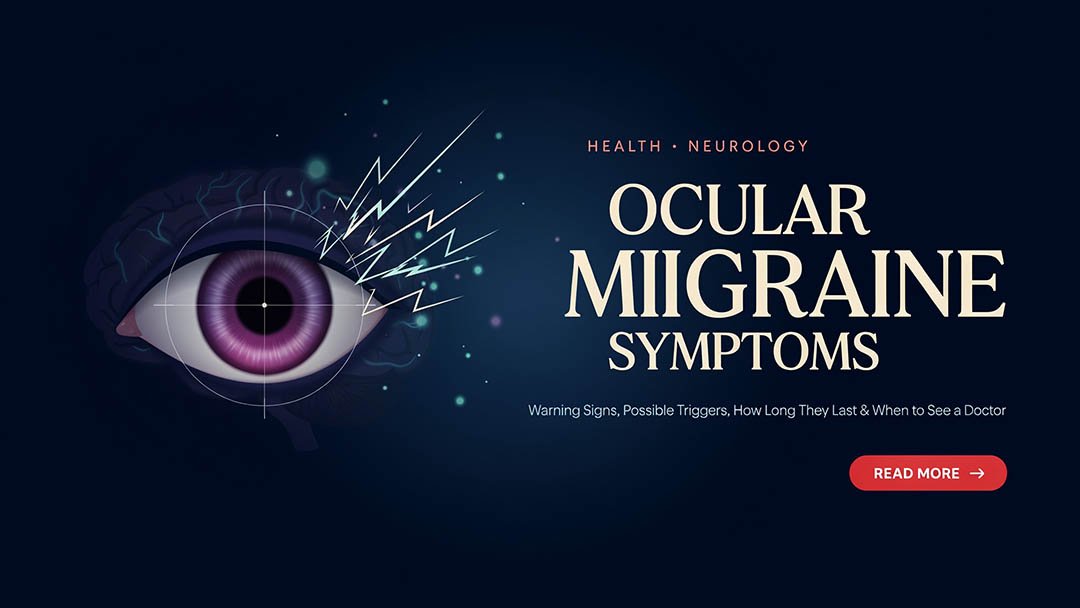
These kinds of episodes are known as ocular migraines. They are normally harmless, however they may appear like non-harmful conditions. In this tutorial you’ll learn the symptoms of an ocular migraine, how long it usually lasts, what could trigger one and what warning signs imply you should be checked out soon.
What Is an Ocular Migraine?
An ocular migraine is a transient visual disturbance that may or may not be accompanied by a headache, such as flashing lights, blind spots, or shimmering shapes. Usually, the problem works itself out after an hour.
The phrase is misleading, however, because it applies to two unrelated conditions:
- Migraine with aura: the most prevalent cause. The disruption begins in the brain’s visual processing centers and involves both eyes.
Retinal migraine: A less common form that affects only one eye. It is believed to entail decreased blood flow or spasm of the retina or the arteries which supply it.
Doctors tend to like these more specific phrases. Most people who search for “ocular migraine” are describing a visual aura. A simple test, described below, will tell you which you have.
Ocular Migraine Symptoms: What You Might Notice
Ocular migraine symptoms can vary from one person to another, with each individual experiencing different visual changes and levels of discomfort.
Typical visual symptoms
Flashes or flickering lights (also called camera flashes or heat shimmer)
Zigzag or jagged lines sometimes in the shape of a crescent that steadily increases
areas of diminished or absent eyesight (blind spots or scotomas)
Vision that is blurred or hazy
Shining stars or sparkles
tunnel vision, when your vision gets dark on the sides
Temporary visual loss, partial or complete, in one eye (more typical with retinal migraine)
Signs that may go with it
- Headache behind the eye or on one side of the head, which may be present during the episode or up to an hour following Headache with blurred vision, often throbbing, pressure or sensitivity to light
Sick feeling (nausea)
Sound sensitivity
Transient lightheadedness or mental cloudiness
Not everyone has headaches. Some just get the visual disturbance, which is frequently dubbed a “silent” or acephalgic migraine.
How the visual disturbance usually unfolds
A pattern is noticed by many people. A small area of impaired vision emerges near the center of vision. It stretches out for a few minutes, usually in a shimmering arc, and then fades away. “Doctors often explain this pattern as a gradual onset, with symptoms emerging slowly and spreading progressively over time. It usually has a different look than the immediate curtain-like shadow of a retinal tear
Ocular Migraine vs. Retinal Migraine: How to Tell the Difference
A simple self-check can help you describe your episode to a doctor:
- When the disturbance starts, cover one eye.
- Then cover the other.
If the disturbance appears in both eyes, it is more likely a migraine aura from the brain. If it appears in only one eye, it may be a retinal migraine, and it should be evaluated by an eye doctor or physician, because a few more serious conditions also cause one-eyed vision loss.
This check is not a diagnosis. It is useful information to share, nothing more.
How Long Do Ocular Migraines Last?
Most ocular migraine episodes last between 5 and 60 minutes. Visual aura typically builds over 5 to 20 minutes and resolves within an hour. Retinal migraine episodes also tend to be brief, though the headache that follows, if there is one, can last several hours to a few days.
| Feature | Typical duration |
|---|---|
| Visual aura (both eyes) | 20–60 minutes |
| Retinal migraine (one eye) | A few minutes to an hour |
| Headache phase, if present | 4–72 hours |
| Recovery (“hangover”) feeling | Up to a day |
If vision changes last longer than an hour, that is not typical and deserves prompt medical attention.
What Causes Ocular Migraines?
Researchers don’t know exactly how it works. The dominant idea of migraine aura is that a wave of altered electrical activity, called cortical spreading depression, moves slowly across the visual cortex. Retinal migraine – thought to be caused by transient blood flow abnormalities in the retina
What is better understood is what tends to set episodes off.
Common triggers
- Stress or abrupt alleviation of stress
Poor sleep or sleep irregularity
Bright or flashing light, including glare, screens, and sunshine on water
Dehydration or missed meals
Hormonal changes, such as those associated to menstruation or birth control
Caffeine or alcohol (particularly red wine) or sudden removal of caffeine
Strong odours
Intense exercise, heat or high altitude
Some foods, but mixed evidence and triggers are personal
Who is more likely to get them?
- A personal history of migraines or a family tendency to experience them.
Women (particularly in their 20s to 40s) People under 40
Those with certain illnesses, including lupus or sickle cell disease, which might alter blood vessels, said medical sources.
Migraine with aura is also associated with a small increased long-term risk of stroke in select individuals, especially in those who smoke and use estrogen-containing contraception. This is a reason to bring your episodes to a doctor’s attention, not a reason to panic.
Could It Be Something Else? Conditions That Mimic Ocular Migraine
This is the article’s most significant part. Flashing lights, fuzzy vision or eye pain can be the result of several diseases and some of these are emergencies.
- Retinal tear or detachment. Sudden flashes of light, a shower of fresh floaters, or a curtain-like shadow sweeping across your vision. Most of the time it is painless and doesn’t go after 30 minutes. Wants immediate care.
Transient ischaemic attack (TIA) or stroke: Loss of vision with weakness, numbness, facial droop, confusion or difficulty speaking.
Acute angle-closure glaucoma: Severe eye pain, red eye, halos around lights, nausea. Needs immediate care.
Giant cell arteritis: Vision changes in adults over 50 with tenderness of the scalp, pain in the jaw when chewing and tiredness. If not promptly evaluated and treated, certain underlying eye conditions may lead to lasting vision loss or permanent blindness.
Optic neuritis: Pain when moving eye and faded colours.
Carotid artery disease: Brief episodes of losing sight in one eye, like a shade being pulled down.
When to Seek Medical Help
Get urgent medical help if you notice any of these potentially serious symptoms.
- Loss of vision lasting longer than 1 hour
A sudden, terrible headache that is unlike any you have had before Weakness, numbness or drooping on one side of the body or face
– Slurred speech or trouble choosing words
Confusion, fainting or difficulty walking
A dark veil or shadow over your vision, or a quick burst of floaters.
Intense eye pain, redness and halos
Book an appointment soon if:
- It’s your first episode.
Episodes are increasing in frequency or duration
You are over 50 and you have new visual symptoms
You had a reoccurring one-eyed affliction
Episodes interfere with employment, driving or daily activities
When in doubt, treat sudden vision changes as urgent. It’s far better to be told it’s a harmless migraine than to miss a problem that threatens your sight.
How Doctors Diagnose Ocular Migraines
There’s no single test for ocular migraine. The diagnosis is generally made from your description of the experience and by ruling out alternative reasons. Questions may include:
- What you saw, where you saw it, and how long
Whether one or both eyes were involved
Any headache, nausea, or symptoms
Family history, medicines and lifestyle triggers
An eye doctor may do a dilated eye exam to look at the retina and optic nerve. Your doctor may run blood tests or imaging, such as an MRI or vascular investigations, to rule out other illnesses based on your history.
A symptom diary may be useful. Note the time, date, length, what you saw and what occurred prior.
What to Do in an Attack:
There’s no quick fix, but here are a few things you can do to make an episode more comfortable:
- Stop what you’re doing. Don’t drive or do anything harmful until your vision returns to normal.
Be quiet in a dark place. Turning off lights and sounds can help a lot.
Gently shut your eyes and breathe in slowly to help yourself relax.
If you miss a meal, drink some water and eat a modest snack.
Record the time the application started so you can figure out the length of time.If you have a headache, some people find that over-the-counter pain drugs work. Follow the label. When in doubt, ask a chemist or doctor. If you have seizures often, your doctor can talk to you about treatment options to prevent and treat them that are right for you.
Preventing Ocular Migraines
You can’t always prevent episodes, but you can reduce how often they occur by avoiding identified triggers:
- Stick to a regular sleep routine
Eat proper meals and keep hydrated
Limit alcohol and avoid caffeine
• take screen breaks • minimise glare
If it’s sunny, wear sunglasses.
Find stress-relief practices that work for you, including walking, stretching or breathing exercises
No smoking.
After a few weeks your diary will typically show you patterns you had not noticed before.
Frequently Asked Questions
What are the symptoms of ocular migraine?
The main symptoms are flashing lights, shimmering or zigzag patterns, blind patches and blurred vision, and usually last less than an hour. A headache may follow but not always.
How long does a migraine in the eye last?
Most last from 5 to 60 minutes. If you have visual symptoms that linger more than one hour, get medical attention right once.
Is a headache behind the eye caused by a migraine?
Yes, Some persons have throbbing or pressure pain behind one eye during the visual disruption or soon afterward. Some people experience these symptoms without feeling any pain whatsoever.
When is a headache with blurry vision a migraine?
No. Common reason is migraine, although head discomfort with blurred vision can also be caused by eye strain, sinus problems, glaucoma, high blood pressure or neurological diseases. If symptoms develop suddenly or are severe, they should be evaluated by a medical professional.
Is an ocular migraine dangerous?
Typical occurrences are not harmful and usually do not leave lasting damage. The issue is that more serious illnesses can seem very similar. Though it is a rare condition, retinal migraine can sometimes be associated with permanent visual impairments and that’s why appropriate evaluation is important.
Can ocular migraines be triggered by stress or screen time?
Common factors mentioned are stress, lack of sleep, glare and long hours at a screen. Each person has different triggers thus the best way to know is to track your own.
What’s the difference between an ocular migraine and a regular migraine?
Usually, a migraine leads to head pain with nausea and sensitivity to light being possible. An ocular migraine is focused on transient visual disturbances with or without headache.
Conclusion
The symptoms of ocular migraine flashing lights, glittery patterns, blind spots, and temporary clouded vision are usually temporary and benign. Most episodes last an hour or less, and many people find that regulating sleep, hydration, stress, and light exposure lessens the frequency.
The most important thing is to know the exceptions. Emergencies are loss of vision that persists, a shadow like a curtain, abrupt severe head pain, or any weakness or speech problems. If your episodes are new, frequent or in just one eye, consult a doctor for a complete workup.