If you’ve ever dealt with an eye injury, a lazy eye diagnosis, or recovery after surgery, chances are someone has recommended an eye patch. It sounds simple enough — cover the eye, let it heal or let the other eye do the work. But there’s actually a lot more to using an eye patch correctly than most people realize, from choosing the right material to figuring out how to wear one with glasses.
This guide walks through everything you need to know about eye patches: what they’re used for, the different types available, how to wear one safely (including with glasses), and the precautions that actually matter. Whether you’re shopping for eye patches for sale or trying to understand why your doctor suggested one, this article covers it in plain language.
What Is an Eye Patch and Why Do People Use One?
An eye patch is a small covering worn over one eye to block vision temporarily or protect the eye from external contact. It’s held in place either by an elastic strap, an adhesive backing, or by hooking over the ears like eyeglasses frames.
People use a patch eye covering for a few main reasons:
- Medical treatment — to correct amblyopia (commonly called lazy eye) in children by forcing the weaker eye to work harder
- Post-surgery protection — to shield the eye after cataract surgery, LASIK, or other procedures while it heals
- Injury recovery — to protect a scratched cornea, a chemical splash, or a foreign object injury from further irritation
- Infection control — to reduce light sensitivity and limit contact with an infected eye
- Double vision management — some adults use a patch to eliminate double vision (diplopia) caused by nerve issues or muscle imbalance
Each of these situations calls for a slightly different type of patch, and using the wrong kind can slow down recovery or cause discomfort.
Types of Eye Patches Available Today
There’s actually a surprising amount of variety when it comes to eye patches. Knowing the differences helps you pick the right one, especially if you’re browsing eye patches for sale online or at a pharmacy.
1. Adhesive Eye Patches
These stick directly to the skin around the eye using a hypoallergenic adhesive. They’re common after eye surgery because they create a secure, light-blocking seal. Ophthalmologists often recommend these for the first 24 hours post-operation since they can’t slip out of place during sleep.
2. Fabric or Cloth Eye Patches
Soft, reusable patches made from cotton or felt, usually held on with an elastic band. These are gentler on sensitive skin and are a popular choice for children undergoing amblyopia therapy, since kids tend to tolerate fabric better than adhesive strips.
3. Eye Patch With Glasses (Clip-On or Frame-Mounted)
For people who wear prescription glasses, an eye patch with glasses is designed to clip onto or slide over one lens instead of covering the whole eye area with a separate strap. This is one of the most searched solutions because standard patches often don’t sit comfortably under glasses frames.
4. Pirate-Style Patches
The classic black patch with an elastic band. These are widely available, inexpensive, and reusable, but they’re generally better suited for short-term or cosmetic use rather than strict medical treatment, since they don’t always create a full seal against light or debris.
5. Silicone Suction Patches
A newer option that uses a soft silicone rim to create a light seal around the eye socket without adhesive or straps. These are popular for vision therapy exercises and can be washed and reused.
Eye Patch for Glasses: Solving a Common Frustration
One of the most common complaints people search for is how to manage an eye patch for glasses users. Wearing a bulky patch under glasses can push the frames off-center, fog up the lens, or simply feel uncomfortable after a few hours. Here’s how people typically solve this:
- Lens-cover patches — a small opaque cover that clips directly onto the eyeglass lens, so you don’t need a separate strap at all
- Slim adhesive patches — thinner adhesive patches sit flatter against the skin, reducing the bulge under the frame
- Adjustable strap patches — some patches come with straps that sit above or below the temple arm of the glasses instead of directly over it, which prevents the frame from tilting
If you wear glasses regularly, it’s worth choosing a patch specifically labeled for glasses compatibility rather than trying to force a standard patch to fit. It saves a lot of daily frustration and keeps the seal more consistent.
How to Wear an Eye Patch Correctly
Wearing a patch might look self-explanatory, but doing it correctly makes a real difference in comfort and healing time.
Step-by-Step Application
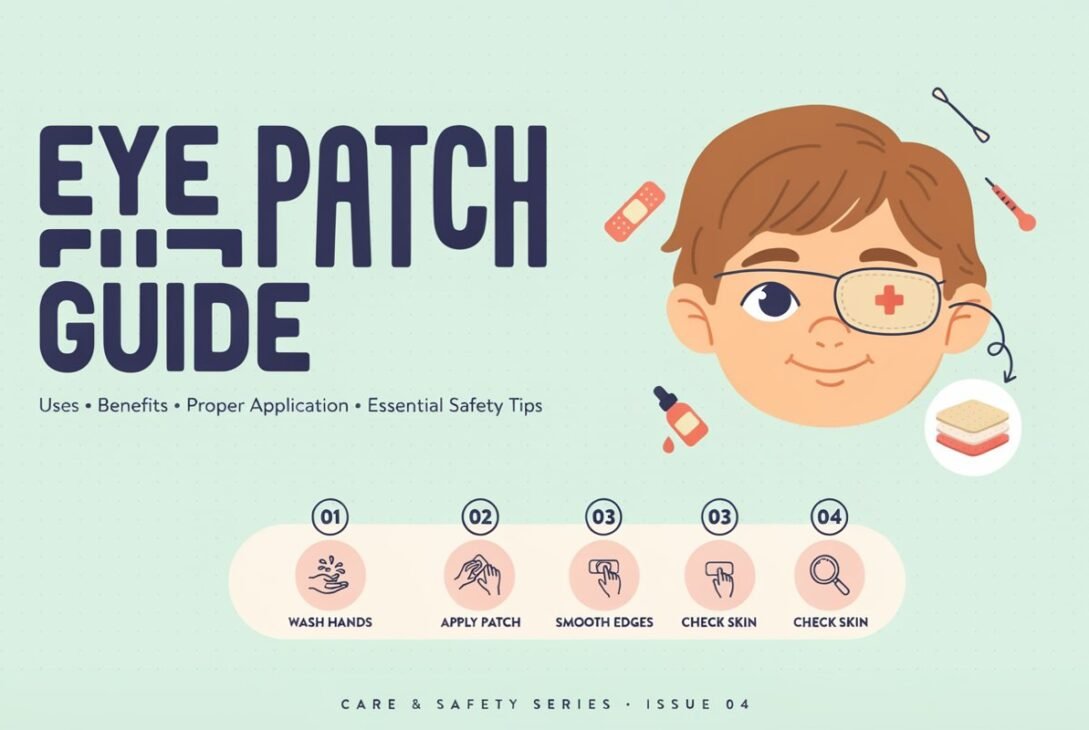
- Wash your hands thoroughly before touching the area around your eye.
- Clean the skin gently if using an adhesive patch, and make sure it’s completely dry.
- Close the eye fully before placing the patch — this matters if a doctor has instructed full closure for healing.
- Position the patch so it covers the entire eye area without pressing directly on the eyeball.
- Secure the edges smoothly against the skin to avoid gaps where light or debris can enter.
- Check comfort — it should feel snug, not tight enough to cause a headache or skin irritation.
How Long Should You Wear It?
This depends entirely on the reason for the patch:
- Amblyopia treatment: Often a few hours a day, following the schedule set by an eye doctor
- Post-surgery care: Usually continuous wear for the first 24 hours, then as advised
- Injury protection: Until the injury is assessed by a professional, generally a few days
- Infection: As directed, since covering an infected eye without proper cleaning can sometimes trap bacteria
There’s no single “correct” duration — always follow what an eye care professional recommends for your specific situation.
Safety Precautions to Keep in Mind
An eye patch is a simple tool, but using it carelessly can cause more harm than good. Here are the precautions that matter most.
Don’t Patch an Untreated Injury Without Guidance
If you’ve had a chemical splash, a deep scratch, or something lodged in the eye, covering it before a professional evaluation can hide worsening symptoms. Always get injuries assessed first.
Watch for Skin Irritation
Adhesive patches, especially with daily use, can irritate sensitive skin. Redness, itching, or a rash around the patch area is a signal to switch to a fabric or silicone option, or to consult a doctor about a different adhesive type.
Avoid Wearing a Patch While Driving Unless Cleared
Depth perception changes significantly with one eye covered. If you’re patching an eye for medical reasons and need to drive, get clearance from your doctor first and take extra caution with distances and blind spots.
Keep It Clean
Reusable fabric or silicone patches should be washed regularly. Bacteria buildup on a patch that sits against the eye area daily can lead to infections, particularly after surgery when the eye is more vulnerable.
Don’t Self-Diagnose the Need for a Patch
Patching isn’t a universal fix for eye discomfort. Using one without understanding the underlying cause — blurry vision, persistent pain, or sudden vision loss — can delay proper treatment. See an eye care provider if symptoms are unclear or persistent.
Eye Patch for Kids vs. Adults: Key Differences
Amblyopia therapy in children usually requires consistent daily wear over weeks or months, prescribed by a pediatric ophthalmologist. Because children resist wearing patches, manufacturers make colorful, cartoon-printed fabric versions to improve compliance.
Adults, on the other hand, more often need a patch for short-term recovery (surgery, injury) or for managing double vision. Adult patches tend to prioritize a secure medical seal over comfort features like patterns, though comfort still matters for anyone wearing one for extended periods.
Where to Buy Eye Patches: What to Look For
When browsing eye patches for sale, whether online or at a pharmacy, keep these points in mind:
- Check for hypoallergenic adhesive if you have sensitive skin
- Look for a proper light-blocking seal, especially for post-surgical use
- Confirm sizing — patches made for adults often don’t fit children properly and vice versa
- Glasses-compatible options are worth the extra cost if you wear prescription lenses daily
- Reusable vs. disposable — disposable adhesive patches are more hygienic for surgical recovery, while reusable fabric or silicone patches are more economical for long-term therapy
Pharmacies typically stock basic disposable patches, while specialty medical suppliers carry a wider range including glasses-compatible and pediatric designs.
Frequently Asked Questions
1. What is the main purpose of wearing an eye patch?
An eye patch is mainly used to protect a healing or injured eye, treat amblyopia by strengthening a weaker eye, or manage double vision by blocking input from one eye.
2. Can I wear an eye patch with glasses?
Yes. There are patches specifically designed to clip onto glasses lenses or sit comfortably around the frame, making them more practical than standard patches for people who need vision correction.
3. How long should a child wear an eye patch for lazy eye treatment?
This varies by case and is determined by a pediatric ophthalmologist, often ranging from two to six hours a day depending on the severity of the amblyopia.
4. Is it safe to sleep with an eye patch on?
For post-surgical patches specifically recommended by a doctor for overnight wear, yes. For general use, check with your eye care provider, since some patches aren’t designed for extended, unsupervised wear.
5. Can wearing an eye patch fix blurry vision permanently?
No. A patch doesn’t correct refractive errors like nearsightedness. It’s a treatment tool for specific conditions such as amblyopia, not a substitute for corrective lenses or other vision treatment.
6. What should I do if my skin reacts to an adhesive eye patch?
Remove it gently, clean the area, and switch to a fabric or silicone alternative. If irritation persists, consult a doctor or pharmacist about hypoallergenic options.
7. Are reusable eye patches as effective as disposable ones?
For therapy purposes like amblyopia treatment, reusable fabric patches work well as long as they’re kept clean. For post-surgical recovery, disposable adhesive patches are usually preferred for hygiene reasons.
Conclusion
An eye patch might look like a simple accessory, but choosing the right type and wearing it correctly can make a real difference in comfort, healing time, and treatment success. From adhesive patches used after surgery to glasses-friendly clip-on options for daily wearers, there’s a version suited to almost every situation. The most important step, though, is understanding why you need one — whether it’s for amblyopia therapy, injury protection, or post-operative care — and following guidance from an eye care professional rather than guessing. When used correctly and paired with the right precautions, an eye patch remains one of the simplest and most effective tools in everyday eye care.