Waking up with a sore back on the upper left side can throw off your whole day. Maybe it’s a dull ache that flares when you reach for a coffee mug. Maybe it’s a sharp twinge every time you take a deep breath. Either way, you want answers — not another article that talks in circles.
This guide breaks down what actually causes upper left back pain, how to tell the difference between a pulled muscle and something more serious, and what you can do about it starting today.
Why Does My Back Hurt? The Short Answer
Before we zoom in on the left side specifically, it helps to understand back pain in general. Most back pain — including upper back pain — comes down to one of a few root causes:
- Muscle strain or overuse from lifting, twisting, or repetitive movement
- Poor posture, particularly from spending extended hours at a desk or frequently bending over a phone, can place extra strain on the muscles of the upper back
- Joint or disc irritation in the spine
- Nerve compression, which can send pain radiating outward
- Referred pain from an organ or structure near the back (less common, but important to rule out)
Upper back pain behaves differently than lower back pain because the upper spine (thoracic spine) is more rigid and connected to your rib cage. That connection is actually a clue — it’s part of why pain here can sometimes affect your breathing, and why location on the left versus right side can matter.
What Causes a Sore Back on the Upper Left Side?
The upper left side of your back sits near your shoulder blade, the left side of your rib cage, and a portion of your thoracic spine. Several everyday and medical factors can cause soreness in this exact spot.
1. Muscle Strain Between the Shoulder Blades
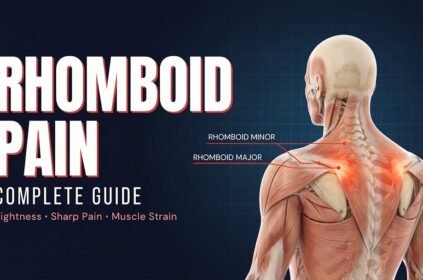
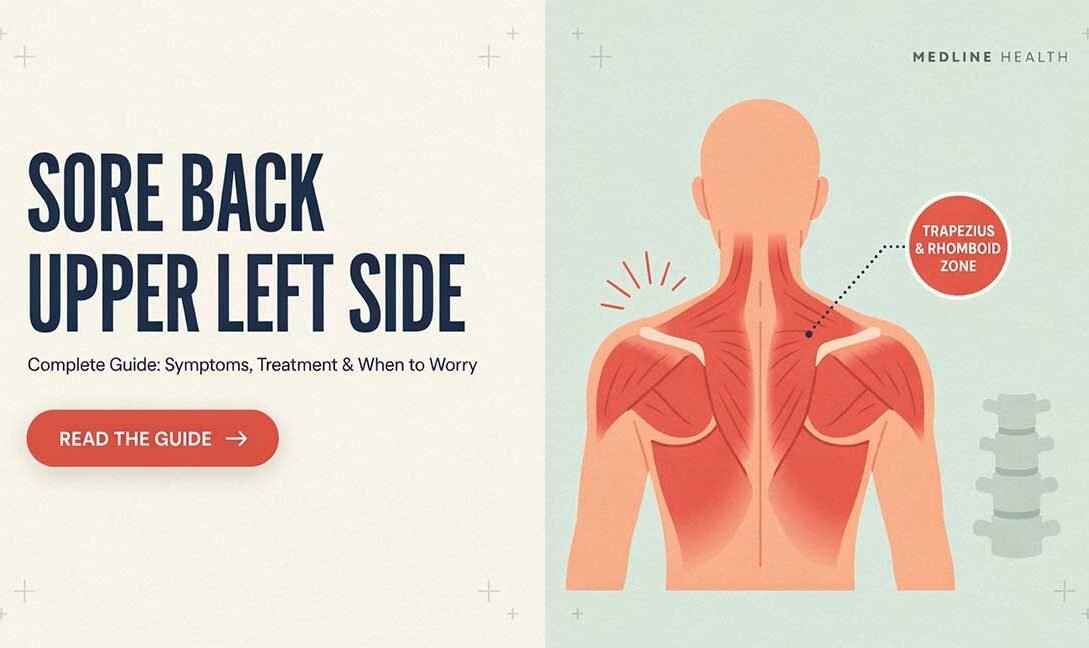
Out of everything on this list, this is what trips people up most often. The muscles that stabilize your left shoulder blade — the rhomboids and trapezius — are easy to strain. Carrying a heavy bag on one shoulder, sleeping in an awkward position, or an intense workout can all leave this area sore for a few days.
Typical signs: a localized, achy pain that worsens with movement and improves with rest or gentle stretching.
2. Poor Posture and Desk Habits
Sitting hunched forward for hours pulls your shoulder blades apart and overstretches the muscles on your upper back. Over time, this creates chronic tightness and soreness, often felt more on one side than the other depending on how you sit, which hand you use for your mouse, or which shoulder you favor.
3. Pinched Nerve or Disc Irritation
A nerve irritated in the thoracic spine can cause pain that feels like it’s sitting deep in the upper left back, sometimes wrapping around toward the chest. This can happen from disc degeneration, a sudden awkward movement, or long-term poor spinal alignment.
4. Costochondritis
“It’s caused by irritation in the cartilage bridging your ribs and sternum. While the pain is usually felt at the front of the chest, it can radiate to the upper back, including the left side, and often gets worse with deep breaths or coughing.
5. Referred Pain From Internal Organs
Because the heart, lungs, and stomach sit close to the left side of the upper torso, pain from these organs can sometimes be felt in the back rather than where you’d expect. This is why doctors take left-sided back pain seriously, especially when it comes on suddenly or is paired with other symptoms.
6. Gallbladder or Digestive Issues (Less Common on the Left)
Interestingly, gallbladder pain typically refers to the right side, which is one reason upper right side back pain and upper left side back pain are usually investigated differently by doctors. If your pain is on the right instead, digestive causes move higher up the list of possibilities.
Upper Back Hurts to Breathe: Should You Be Concerned?
If your upper back hurts specifically when you inhale, cough, or move a certain way, take note of the pattern. This symptom has a range of possible explanations, from mild to serious.
Common, less serious causes:
- Strain in the intercostal muscles, the small connective muscles that flex with your rib cage each time you inhale
- Costochondritis
- Tight upper back muscles pulling on the rib cage during a deep breath
Causes that need prompt medical attention:
- A rib fracture or bruised rib
- Pleurisy, which occurs when the thin lining surrounding the lungs becomes inflamed, can cause sharp or painful discomfort, especially when breathing deeply or coughing
- A pulmonary embolism, a potentially life-threatening condition in which a blood clot blocks blood flow in the lungs, can cause sudden chest or upper-back pain along with breathing difficulties
- Heart-related issues, particularly if pain is on the left side and comes with pressure in the chest
If breathing pain is mild, comes and goes, and matches a recent physical activity, it’s likely muscular. If it’s sudden, severe, or paired with shortness of breath, it deserves urgent evaluation.
Sore Back Upper Left Side: Symptoms to Pay Attention To
Not all upper left back pain looks the same. Tracking your specific symptoms can help you and your doctor narrow down the cause faster.
- Dull, aching pain that worsens with certain movements → usually muscular
- Sharp, stabbing pain with breathing → possible rib, lung, or cartilage involvement
- Burning or tingling that radiates down the arm → possible nerve involvement
- Pain with pressure, sweating, or nausea → seek emergency care immediately, as this can signal a cardiac event
- Pain that’s worse in the morning and eases with movement → often linked to posture or joint stiffness
- Pain triggered by a specific incident (lifting, a fall, a workout) → likely a strain or minor injury
Upper Back Pain vs. General Back Pains: What’s Different?
People often use “back pains” as a catch-all term, but upper back pain has its own patterns compared to lower back pain.
| Feature | Upper Back Pain | Lower Back Pain |
|---|---|---|
| Common cause | Posture, muscle strain, rib involvement | Disc issues, muscle strain, joint wear |
| Movement impact | Often affects breathing and shoulder movement | Often affects bending and lifting |
| Risk of organ referral | Higher (heart, lungs, ribs nearby) | Lower, but can involve kidneys |
| Typical relief | Stretching, posture correction | Rest, core strengthening |
Understanding this distinction helps you describe your symptoms more accurately to a healthcare provider, which speeds up diagnosis.
How to Treat a Sore Upper Left Back at Home
For pain that’s mild, recent, and not paired with warning signs, home care is usually the first and most effective step.
Step-by-Step Relief Approach
- Rest the area, but don’t stay still for too long. Gentle movement keeps muscles from stiffening further.
- Apply ice for the first 48 hours if the pain started suddenly, then switch to heat afterward to relax tight muscles.
- Stretch gently. Shoulder blade squeezes, cat-cow stretches, and chest-opening stretches can relieve tension between the shoulder blades.
- Correct your posture. Adjust your desk chair, monitor height, and phone habits to reduce ongoing strain.
- Use over-the-counter pain relief if needed, following the label instructions, to manage discomfort while the tissue heals.
- Try a supportive pillow while sleeping to keep your spine aligned overnight.
Most muscular soreness improves within a few days to two weeks with consistent home care.
When Back Pain Becomes a Red Flag
Most upper left back pain is harmless and resolves on its own. But certain symptoms mean you should seek medical care right away rather than waiting it out.
Treat it as an emergency and seek care immediately if your back pain is joined by.
- Chest pain, pressure, or tightness
- Shortness of breath
- Nausea, sweating, or lightheadedness
- Pain radiating down the left arm or into the jaw
- Sudden, severe pain with no clear cause
See a doctor soon (not necessarily an emergency) if you notice:
- Pain lasting longer than two to three weeks despite home care
- Numbness or tingling that spreads down the arm
- Discomfort strong enough to pull you out of sleep on a regular basis
- Fever alongside back pain
- Pain following a fall, accident, or direct injury
Trust your instincts here. If something feels different from a typical muscle ache, it’s always reasonable to get it checked.
Preventing Upper Left Back Pain From Coming Back
Once your soreness resolves, a few habit changes can lower the odds of it returning:
- Strengthen your upper back and core with light resistance training two to three times a week
- Take standing or stretching breaks every 30–45 minutes if you work at a desk
- Set up your workstation so your screen is at eye level and your shoulders stay relaxed
- Give your shoulders a break by alternating which side carries the weight
- Warm up before workouts and stretch afterward
- Stay hydrated, since dehydration can contribute to muscle stiffness
Small, consistent changes tend to outperform occasional intense fixes when it comes to long-term back health.
Frequently Asked Questions
1. Why does my back hurt specifically on the upper left side and not the right?
It often comes down to which muscles you use more, how you sleep, or one-sided habits like carrying a bag on the same shoulder daily. Less commonly, it can relate to organs positioned on the left side of the torso, such as the heart or lungs.
2. Is upper left back pain a sign of a heart problem?
It can be, especially if paired with chest pressure, shortness of breath, or arm pain. However, most upper left back pain is muscular. If you have any doubt, especially with additional symptoms, seek medical evaluation rather than guessing.
3. Why does my upper back hurt to breathe?
This is usually caused by a strained muscle between the ribs, costochondritis, or general muscle tightness pulling on the rib cage. In rarer cases, it can indicate a rib injury or lung issue, so persistent or severe breathing pain should be checked by a doctor.
4. How long does a sore upper back from muscle strain usually last?
Mild strains typically improve within a few days to two weeks with rest, gentle stretching, and posture correction. If pain persists beyond three weeks, it’s worth getting evaluated.
5. What’s the difference between upper left and upper right side back pain?
Left-sided pain is more often linked to muscular causes or, in rare cases, heart and lung referral. Right-sided pain is more commonly associated with muscle strain or, occasionally, gallbladder issues, since the gallbladder sits on the right side of the body.
6. Can poor posture alone cause upper back pain?
Yes. Prolonged sitting, forward head posture, and hunching over screens are among the most common causes of upper back soreness, particularly between the shoulder blades.
7. How do I know when it’s time to stop self-treating and get checked out?
If pain doesn’t improve after two to three weeks of consistent home care, worsens over time, or comes with numbness, fever, or breathing difficulty, it’s time to get a professional evaluation.
Conclusion
A sore back on the upper left side is usually nothing more than a strained muscle or the result of everyday posture habits. Ice, gentle stretching, posture adjustments, and a little patience resolve most cases within a couple of weeks. That said, your body sends signals for a reason. Pain paired with breathing trouble, chest pressure, or symptoms spreading down your arm is your cue to stop guessing and get checked out. Paying attention to how your pain behaves — not just where it is — is the fastest way to know whether you’re dealing with a simple strain or something that needs a doctor’s eye.