If your shoulders live somewhere near your ears and you’ve been putting off self-care for “someday,” Swedish massage is probably the gentlest, most approachable entry point into the world of therapeutic bodywork. It’s the massage style most people picture when they hear the word “massage” — and there’s a good reason for that.
This guide breaks down what Swedish massage actually is, how it works, what happens during a session, and how it compares to deeper forms of bodywork like deep tissue massage. Whether you’ve never had a professional massage before or you’re trying to figure out which style fits your body’s needs, you’ll find real, practical answers here.
What Is Swedish Massage?
Swedish massage is a full-body relaxation massage built on long, flowing strokes, kneading, and gentle pressure applied to the muscles and connective tissue. It’s designed to ease tension, improve circulation, and calm the nervous system — without the intensity of deep tissue work.
The technique was popularized in the early 19th century by Swedish physiologist Per Henrik Ling, though the exact history is debated among massage historians. What’s not debated is its lasting influence: nearly every modern Western massage modality borrows at least one technique from the Swedish method.
At its core, Swedish massage therapy focuses on:
- Relaxing the entire body
- Increasing blood flow and oxygen circulation
- Releasing mild to moderate muscle tension
- Promoting a sense of calm through rhythmic, gentle pressure
It’s often the first massage style recommended to beginners because it introduces the body to touch therapy without overwhelming the nervous system.
The Five Core Swedish Massage Techniques
Understanding the techniques helps explain why Swedish massage feels the way it does. A licensed massage therapist typically moves through five foundational strokes during a session.
1. Effleurage (Long Gliding Strokes)
This is usually how a session begins and ends. Effleurage uses light to medium pressure with open palms gliding along the length of a muscle. It warms up the tissue and helps the client settle into a relaxed state.
2. Petrissage (Kneading)
Petrissage involves lifting, rolling, and squeezing the muscle tissue, similar to kneading dough. This technique helps release deeper layers of tension while still staying within a comfortable pressure range.
3. Friction
Friction uses small, circular movements with the fingers or thumbs, often applied to smaller areas like the neck, shoulders, or lower back. It targets localized tightness without the intensity of deep tissue techniques.
4. Tapotement (Rhythmic Tapping)
This percussive technique includes light tapping, cupping, or hacking motions. It’s stimulating rather than sedating, and is often used to energize muscles before the massage winds down.
5. Vibration
Therapists use their hands to create a shaking or trembling motion over muscle tissue. It’s brief but effective at loosening tight spots and encouraging relaxation.
Together, these techniques create the smooth, wave-like rhythm that defines a Swedish massage session.
Swedish Massage Benefits
The benefits of Swedish massage go beyond simple relaxation, even though relaxation is the primary goal. Based on general findings in massage therapy research and clinical observation, regular sessions may support:
- Reduced muscle tension — Gentle kneading helps loosen tight muscles from daily stress or poor posture.
- Improved blood circulation — Long strokes encourage blood flow, which can help deliver oxygen and nutrients to tissues.
- Lower stress and anxiety levels — The rhythmic, predictable pressure activates the parasympathetic nervous system, the body’s natural “rest and digest” state.
- Better sleep quality — Many clients report falling asleep more easily after a session, likely due to lowered cortisol and reduced muscular tension.
- Increased flexibility — Loosened muscles and improved circulation can support a slightly greater range of motion.
- Relief from mild headaches — Tension in the neck and shoulders is a common headache trigger, and Swedish massage directly targets this area.
- Enhanced mood — Touch therapy has been associated with increased release of serotonin and dopamine, both linked to improved mood.
It’s worth noting that while these benefits are widely reported, massage should be viewed as a complementary wellness practice, not a replacement for medical treatment.
Swedish Massage for Relaxation: Why It Works So Well
Swedish massage for relaxation isn’t just marketing language — there’s a physiological reason it works. Think of the nervous system as having two gears — an “on alert” mode that kicks in during stress, and a “wind down” mode that takes over once the body feels safe. Most people spend the majority of their waking hours in a mildly activated sympathetic state, especially with constant screen time, deadlines, and daily stressors.
The slow, predictable rhythm of Swedish massage signals safety to the nervous system. This shift toward parasympathetic dominance is what causes:
- Slower heart rate
- Reduced blood pressure
- Muscle relaxation
- A general sense of calm that can last for hours or days after the session
This is why Swedish massage is often recommended for people dealing with chronic low-level stress, occasional insomnia, or general burnout — even if they don’t have a specific injury or muscular complaint.
What Happens During a Swedish Massage: A Step-by-Step Look at Your Session
If you’ve never booked a massage before, knowing what happens can ease any nervousness.
Before the Session
Your therapist will usually ask a few questions about your health history, areas of tension, and pressure preferences. This is the time to mention any injuries, allergies to massage oils, or areas you’d prefer to avoid.
During the Session
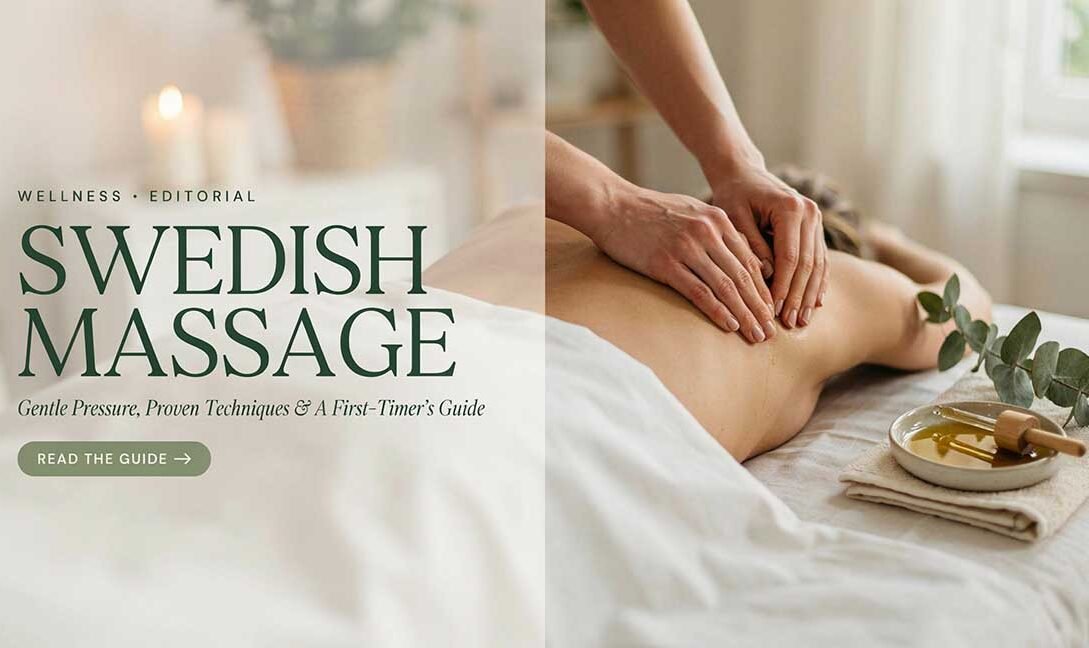
You’ll lie on a padded table, typically undressed to your comfort level and covered with a sheet, with only the area being worked on uncovered at any time. The therapist applies massage oil or lotion and begins with lighter strokes, gradually working through each major muscle group — back, shoulders, arms, legs, and sometimes the scalp and feet.
A Swedish massage appointment generally runs for about 30 to 90 minutes, depending on your preferences and the type of session you choose.
After the Session
It’s common to feel a little groggy or extremely relaxed immediately afterward. Drinking water is generally recommended to support circulation and help the body process the increased blood flow. Mild soreness, similar to a light workout, can occur but should fade within a day.
Swedish Massage vs Deep Tissue Massage
This is one of the most common points of confusion for first-time clients, so let’s clear it up directly.
| Feature | Swedish Massage | Deep Tissue Massage |
|---|---|---|
| Pressure level | Light to medium | Firm to intense |
| Primary goal | Relaxation, stress relief | Muscle rehabilitation, chronic tension relief |
| Technique focus | Long, flowing strokes | Slow, targeted pressure on deeper muscle layers |
| Best for | First-timers, stress, general wellness | Chronic pain, sports recovery, muscle knots |
| Post-session feeling | Relaxed, light soreness (rare) | Noticeable soreness, similar to post-workout |
Neither style is objectively “better” — they simply serve different purposes. Swedish massage is ideal when your main goal is stress reduction, mental relaxation, and gentle physical relief. Deep tissue massage is better suited for chronic pain, sports injuries, or deeply embedded muscle tension that requires sustained, firmer pressure.
Some therapists also offer a hybrid approach, using Swedish techniques as a warm-up before shifting into firmer, targeted pressure — giving you a blend of both relaxation and deeper relief in one session.
Who Should Consider Swedish Massage?
Swedish massage is a good fit for:
- People new to massage therapy
- Anyone dealing with everyday stress or mild tension
- Those recovering from mild muscle fatigue
- People who prefer a gentler experience than the firm pressure used in deep tissue massage
- People looking to improve sleep quality
- Anyone wanting a calming self-care ritual
It’s generally considered safe for most healthy adults. However, pregnant individuals, people with certain skin conditions, recent injuries, or specific medical conditions should consult a doctor before booking a session, and inform their therapist ahead of time.
How Often Should You Get a Swedish Massage?
There’s no universal answer, since it depends on your goals and lifestyle. As a general guideline:
- For stress management: Once every 2–4 weeks
- For chronic tension or high-stress periods: Weekly or biweekly
- For general wellness maintenance: Once a month
Many people find that consistency matters more than frequency. A monthly massage practiced regularly often delivers better long-term results than occasional, sporadic sessions.
Frequently Asked Questions
What is Swedish massage best for?
Swedish massage is best for relaxation, stress reduction, and easing mild to moderate muscle tension. It’s also a good starting point for anyone new to professional massage therapy.
Does Swedish massage hurt?
No. Swedish massage uses gentle to moderate pressure and should not cause pain. Some mild soreness afterward is possible but temporary, similar to the feeling after light exercise.
How Much Time Should You Expect for a Swedish Massage Session?
Most sessions run between 30 and 90 minutes, with 60 minutes being the most common length for a full-body treatment.
Is Swedish massage the same as a regular massage?
Swedish massage is often what people mean when they say “regular massage” in Western countries, since it’s the foundational style most spas and clinics offer.
Can You Ask for Deeper Pressure During a Swedish Massage Session?
Yes. While Swedish massage is traditionally gentle, therapists can adjust pressure based on your comfort level. Always communicate your preferences before and during the session.
What should I wear during a Swedish massage?
Most clients undress to their comfort level and are draped with a sheet throughout the session, with only the area being massaged uncovered at a time. You can adjust the pressure at any time to keep the massage comfortable and relaxing.
Is Swedish massage good for anxiety and stress?
Yes. The rhythmic, calming strokes activate the parasympathetic nervous system, which is associated with reduced stress hormones and a greater sense of calm.
Final Thoughts
Swedish massage remains one of the most trusted, widely practiced forms of therapeutic bodywork — and for good reason. It offers a gentle, effective way to release tension, support circulation, and give your nervous system a genuine break from daily stress. Whether you’re booking your first-ever massage or returning to a technique you already love, understanding the strokes, benefits, and what to expect can help you get the most out of every session.
If you’re unsure which style suits you best, a quick conversation with a licensed massage therapist before booking can help match the technique to your specific needs — gentle relaxation, deeper muscle work, or something in between