Somewhere between a delicate green tea and a bold black tea sits oolong — a category that confuses a lot of tea drinkers, especially when it comes to caffeine. If you’ve ever wondered why one cup of oolong leaves you buzzing while another barely registers, you’re not imagining things. The caffeine content in oolong tea shifts based on several factors, and understanding them can help you drink smarter, whether you’re chasing an energy boost or trying to wind down.
This guide breaks down everything you need to know about oolong tea caffeine content, how it compares to other teas, and how brewing choices change what ends up in your cup.
What Is Oolong Tea, Exactly?
Oolong tea comes from the same plant as green and black tea — Camellia sinensis. What sets oolong apart is oxidation. While green tea is barely oxidized and black tea is fully oxidized, oolong sits in the middle, typically oxidized somewhere between 8% and 80%, depending on the style.
This partial oxidation gives oolong its signature complexity. Some oolongs taste light and floral, closer to green tea. Others taste rich, roasted, and almost malty, closer to black tea. That variation isn’t just about flavor — it also affects caffeine levels, which is where a lot of people get confused.
Does Oolong Tea Have Caffeine?
Yes, oolong tea has caffeine. There’s no way around it — all true teas made from Camellia sinensis contain caffeine naturally. The plant produces caffeine as a natural defense mechanism against insects, and that compound carries through into every cup, regardless of processing method.
That said, the amount of oolong caffeine varies more than people expect.
Quick answer for featured snippets:
A standard 8-ounce cup of oolong tea contains approximately 30 to 50 milligrams of caffeine, though it can range as high as 70 milligrams depending on the leaf quality, oxidation level, and brew time.
Oolong Tea Caffeine Content Compared to Other Teas
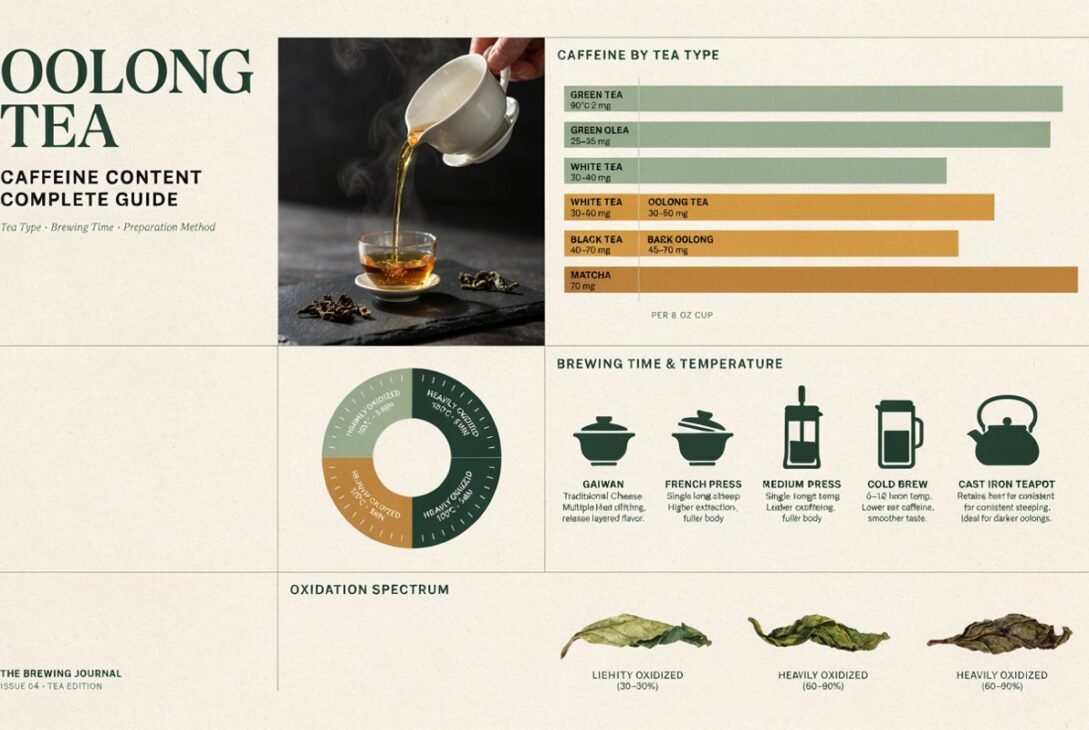
Here’s a general comparison to give you context (values are approximate, per 8-ounce cup):
- White tea: 15–30 mg
- Green tea: 20–45 mg
- Oolong tea: 30–50 mg (sometimes up to 70 mg)
- Black tea: 40–70 mg
- Coffee: 95–200 mg
Notice that oolong sits comfortably between green and black tea, which makes sense given its middle-ground oxidation process. It’s a solid choice if you want more energy than green tea offers but without the jolt of black coffee.
What Affects Oolong Caffeine Levels?
This is where things get genuinely interesting, and where most generic articles stop short. Caffeine content isn’t fixed — it’s influenced by several variables you can actually control.
1. Tea Type and Oxidation Level
Lightly oxidized oolongs, like Tie Guan Yin, tend to have slightly lower caffeine than darkly oxidized oolongs, like Da Hong Pao or Wuyi rock oolongs. Generally speaking, more oxidized and roasted oolongs lean toward the higher end of the caffeine range, similar to black tea.
2. Leaf Quality and Part of the Plant
Younger leaves and buds naturally contain more caffeine than older, mature leaves. Premium oolongs made from tender young leaves picked early in the season often have higher caffeine content than lower-grade teas made from coarser leaves.
3. Brewing Temperature
Caffeine is highly soluble in hot water. The hotter the water, the faster and more thoroughly caffeine extracts from the leaves. Water brewed close to boiling (200–212°F) pulls out more caffeine than water brewed at lower temperatures (170–185°F), which is more typical for delicate oolongs.
4. Brewing Time
Most people don’t realize how much this one factor matters. A short steep of 1 to 2 minutes releases far less caffeine than a steep of 4 to 5 minutes. If you’re sensitive to caffeine, cutting your steep time is one of the easiest ways to reduce it without changing the tea itself.
5. Amount of Tea Leaves Used
More leaves per cup means more caffeine extracted, plain and simple. Using a heaping teaspoon instead of a level one can noticeably shift the caffeine content of your brew.
6. Number of Infusions
Oolong tea is famous for being re-steeped multiple times, especially in gongfu-style brewing. The first infusion typically carries the most caffeine. Each subsequent steep releases progressively less, which is useful to know if you’re drinking oolong throughout the day and want to taper your intake naturally.
How Brewing Method Changes Caffeine Extraction
Western-Style Brewing
This is the method most people use at home: one teaspoon of leaves per cup, steeped for 3 to 5 minutes in hot water. This method tends to extract a moderate-to-high amount of caffeine since the leaves sit in water for longer with more surface contact.
Gongfu-Style Brewing
Popular in Chinese tea culture, this method uses more leaves but much shorter steep times — often just 15 to 30 seconds per infusion, repeated several times. Interestingly, this can result in lower caffeine per individual cup, even though the tea leaves themselves are more concentrated, because contact time is so brief.
Cold Brew Oolong
Steeping oolong in cold or room-temperature water for several hours (usually overnight in the fridge) extracts caffeine much more slowly. Cold brew oolong generally has less caffeine than hot-brewed versions, along with a smoother, less bitter taste.
Oolong Tea Benefits Beyond Caffeine
While caffeine content is often the first thing people search for, oolong tea offers a broader range of potential health benefits worth understanding.
- Antioxidant support: Oolong contains polyphenols, including catechins and theaflavins, which help combat oxidative stress in the body.
- Metabolic support: Some research suggests compounds in oolong may support fat oxidation and metabolic rate, which is part of why oolong tea weight loss claims are so common in wellness circles.
- Heart health: Regular tea consumption, including oolong, has been associated with improved cholesterol markers in several observational studies.
- Mental alertness: The combination of caffeine and L-theanine in oolong provides a calmer, more sustained form of alertness compared to coffee, without the sharp crash.
- Digestive support: Many oolong drinkers report that it feels gentler on the stomach compared to coffee, likely due to its lower acidity and moderate caffeine load.
It’s worth noting that while these benefits are supported by preliminary research, oolong tea isn’t a substitute for medical treatment or a standalone weight loss solution. It works best as part of a balanced diet and lifestyle.
Oolong Tea and Weight Loss: What the Research Actually Shows
Oolong tea weight loss claims circulate widely online, so it’s worth addressing directly and honestly. Some studies have found that oolong tea may modestly increase energy expenditure and fat oxidation, likely due to its combination of caffeine and catechins. However, the effect size in most studies is small, and oolong tea should be viewed as a complementary habit rather than a primary weight loss strategy. Pairing it with regular movement and a balanced diet is where any real benefit is likely to show up.
So, What’s a Safe Amount of Oolong Tea to Drink Each Day?
Most health guidelines suggest that up to 400 milligrams of caffeine per day is generally safe for healthy adults. Given that oolong contains roughly 30–50 mg per cup, that works out to approximately 6 to 8 cups a day for most people — though individual tolerance varies significantly based on body weight, sensitivity, and other caffeine sources in your diet.
If you’re pregnant, breastfeeding, or sensitive to caffeine, it’s worth keeping intake lower and checking with a healthcare provider about what’s appropriate for your situation.
Where to Buy Oolong Tea
If you’re ready to try oolong for yourself, quality matters more than most people realize. Here’s what to look for when figuring out where to buy oolong tea:
- Specialty tea shops: Often carry single-origin oolongs with clear sourcing information and oxidation levels listed.
- Asian grocery stores: Frequently offer authentic, reasonably priced oolong varieties, particularly Taiwanese and Chinese styles.
- Online tea retailers: Many reputable online sellers specialize in loose-leaf oolong and provide detailed harvest and origin information.
- Direct from tea farms or cooperatives: Some smaller producers sell directly online, offering fresher, more traceable tea.
Whichever source you choose, look for loose-leaf oolong over tea bags when possible. Loose leaves tend to retain more flavor and allow for multiple infusions, giving you better value and a more nuanced cup.
Frequently Asked Questions
Does oolong tea have more caffeine than green tea?
Generally, yes. Oolong tea tends to have slightly more caffeine than green tea due to its longer oxidation process, though the ranges do overlap depending on brewing method and leaf quality.
Is oolong tea a good coffee substitute?
For many people, yes. Oolong offers a moderate caffeine boost combined with L-theanine, which can produce a calmer, more focused form of alertness compared to coffee’s sharper spike and crash.
Can I drink oolong tea at night?
It’s not recommended close to bedtime for most people, since it still contains meaningful caffeine. Opt for an herbal tea instead if you’re drinking something in the evening.
Does steeping oolong tea longer increase caffeine?
Yes. Longer steep times and hotter water both increase caffeine extraction. Shortening your steep time is an easy way to reduce caffeine without switching teas.
Is oolong tea good for weight loss?
Oolong may offer modest support for metabolism and fat oxidation, but it works best alongside a healthy diet and exercise rather than as a standalone solution.
What’s a reasonable number of cups of oolong tea to have in a day?
Most healthy adults can safely enjoy 4 to 6 cups a day, staying within general caffeine safety guidelines, though personal tolerance varies.
Where can I buy high-quality oolong tea?
Specialty tea shops, Asian grocery stores, and reputable online tea retailers are all reliable places to find quality loose-leaf oolong.
Final Thoughts
Oolong tea caffeine content isn’t a fixed number — it’s shaped by the type of oolong, how it’s brewed, and how long the leaves steep. Generally falling between green and black tea, oolong offers a balanced caffeine experience along with potential benefits for metabolism, heart health, and mental focus. Whether you’re brewing it Western-style, gongfu-style, or cold, understanding these variables lets you tailor your cup to your own energy needs and taste preferences.