Cheddar cheese sits in nearly every refrigerator in America, yet most shoppers grab the mild version without ever asking what makes it different from its sharper siblings. That gap in knowledge matters more than you’d think. The aging process, the flavor development, and even the nutritional profile shift depending on which cheddar you choose.
This guide breaks down everything worth knowing about mild cheddar cheese — from how it’s made to how it compares nutritionally, plus practical tips for buying, storing, and cooking with it.
What Is Mild Cheddar Cheese?
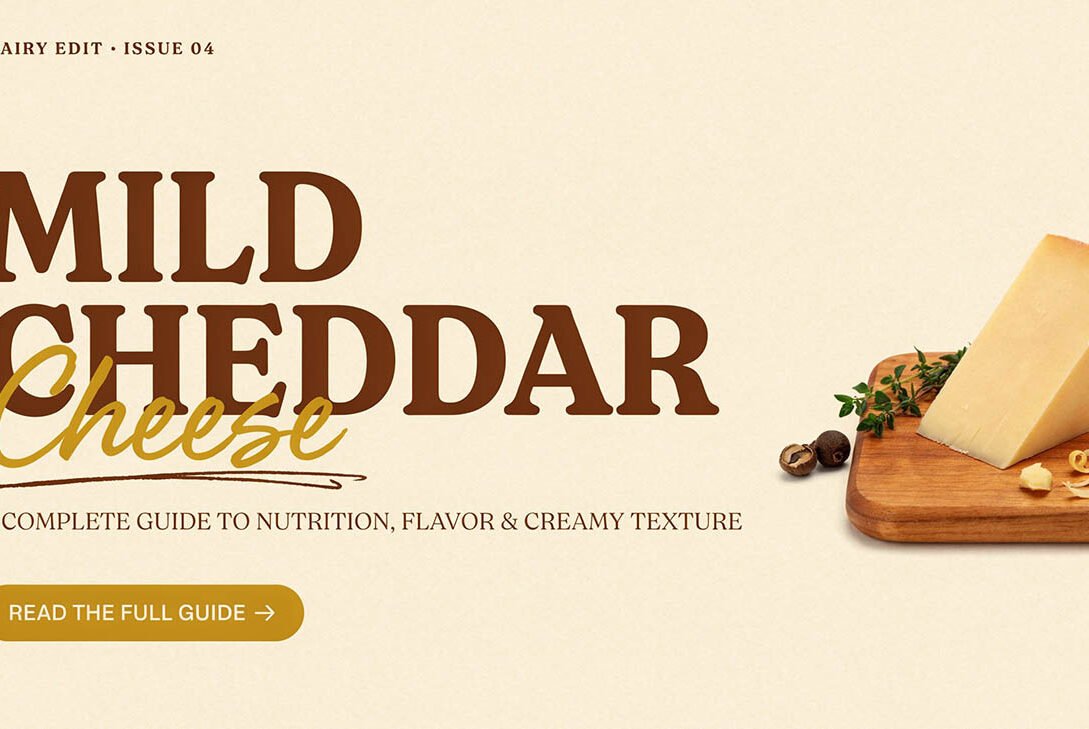
Mild cheddar is cheddar cheese aged for a short period, typically one to three months. That short aging window is the entire secret behind its personality: a smooth, buttery flavor with just a hint of tang, paired with a soft, creamy texture that melts easily.
Cheddar itself originated in the English village of Cheddar in Somerset, and the name now refers to a specific cheesemaking process called “cheddaring,” where curds are cut, stacked, and pressed to remove moisture. Every cheddar — mild, medium, sharp, or extra sharp — starts from this same process. What separates them is time.
Quick definition: Mild cheddar cheese is a young, semi-hard cow’s milk cheese with a pale yellow to orange color, a subtle tangy flavor, and a soft, creamy bite, aged for roughly 1–3 months.
How Mild Cheddar Differs From Other Cheddar Varieties
Understanding the aging spectrum helps explain why mild cheddar tastes the way it does.
- Mild cheddar — barely a few months old, still young and tender on the palate.
- Medium cheddar — Aged 4 to 8 months. Slightly firmer, more noticeable tang.
- Sharp cheddar — Aged 9 to 14 months. Firmer texture, pronounced bite.
- Extra sharp cheddar — Aged 15 months or longer. Crumbly, intense, sometimes slightly grainy from calcium lactate crystals.
As cheddar ages, moisture evaporates and lactic acid bacteria continue breaking down proteins and fats. This process concentrates flavor compounds, which is why older cheddar tastes stronger and feels drier. Mild cheddar skips most of that transformation, which is exactly why it appeals to people who want cheese flavor without an overwhelming punch.
Flavor Profile: Why Mild Cheddar Tastes the Way It Does
Mild cheddar has a flavor that’s often described as buttery, slightly sweet, and lightly tangy. It lacks the sharp, almost peppery bite that develops in aged cheddar. Because the fermentation process hasn’t had time to fully mature, the cheese retains more of the milk’s natural sweetness.
This makes mild cheddar one of the most versatile cheeses on the market. It doesn’t compete with other flavors in a dish — it complements them. That’s part of why it’s the default choice in kid-friendly recipes, sandwiches, and dishes where you want cheese as a background note rather than the star.
Texture: The Creamy Factor
Texture is where mild cheddar really sets itself apart. Because it hasn’t lost much moisture during aging, mild cheddar has a higher water content than sharp or extra sharp varieties. This translates to:
- A softer, more pliable bite
- Smoother melting behavior
- Easier slicing without crumbling
- A creamier mouthfeel overall
If you’ve ever wondered why mild cheddar melts so evenly in a grilled cheese sandwich while extra sharp cheddar can turn slightly oily or separate, moisture content is the answer.
Nutritional Profile of Mild Cheddar Cheese
Cheddar cheese, regardless of aging, is a nutrient-dense food. Here’s what a standard 1-ounce (28-gram) serving of mild cheddar typically provides:
- Calories: Approximately 110–120
- Protein: About 6–7 grams
- Fat: Around 9 grams (roughly 6 grams saturated)
- Calcium: Roughly 200 mg (about 15–20% of daily value)
- Sodium: Approximately 175–190 mg
- Carbohydrates: Less than 1 gram
These numbers can vary slightly by brand, but the overall nutritional shape stays consistent across mild, medium, and sharp cheddar. Aging affects flavor and texture far more than it affects the core nutrient breakdown, since aging is primarily about moisture loss and enzymatic activity, not calorie or fat content.
Is Mild Cheddar Healthy?
Cheddar cheese, including the mild variety, can fit into a balanced diet. It’s a solid source of:
- Calcium and phosphorus — a mineral duo your bones rely on to stay strong and dense over time
- Protein, which supports muscle maintenance and satiety
- Vitamin B12, needed for nerve function and red blood cell formation
- Vitamin A, especially generous in whole-milk versions, which supports healthy vision and skin
That said, cheddar is also relatively high in saturated fat and sodium. Federal dietary guidance suggests keeping saturated fat under roughly 10% of your daily calorie intake — a good reminder to watch how much you’re piling onto that sandwich. A one- or two-ounce serving is generally considered reasonable for most adults as part of a varied diet.
People managing cholesterol, blood pressure, or lactose intolerance should talk to a registered dietitian or physician about how much dairy fits their individual needs, since cheddar contains both fat and lactose, though aged cheeses tend to have less lactose than fresh dairy products.
Mild Cheddar vs. Sharp Cheddar: Which Should You Choose?
This is one of the most common questions in the dairy aisle, and the honest answer is: it depends on what you’re making.
Choose mild cheddar when:
- You want a cheese that melts smoothly and evenly
- You’re cooking for kids or picky eaters
- The dish already has strong flavors and you don’t want the cheese to compete
- You’re making mac and cheese, quesadillas, or grilled cheese
Choose sharp cheddar when:
- You want that cheese flavor to really announce itself on the plate
-
- You’re topping something simple, like crackers or a baked potato
- You want a more complex, tangy finish
Neither is objectively “better” — they simply serve different culinary purposes.
Best Ways to Use Mild Cheddar Cheese
Mild cheddar’s meltability and gentle flavor make it a kitchen workhorse. Some of the best applications include:
- Grilled cheese sandwiches — melts evenly without becoming greasy
- Mac and cheese — creates a smooth, creamy sauce base
- Quesadillas and tacos — blends well with spices without overpowering them
- Omelets and scrambled eggs — adds richness without dominating
- Casseroles — melts uniformly throughout the dish
- School lunches and snack trays — mild flavor appeals to children
- Burgers — provides classic cheeseburger flavor without sharpness
How to Store Mild Cheddar for Maximum Freshness
Proper storage extends both flavor and shelf life. A few practical tips:
- Skip the plastic wrap — it traps moisture and invites mold. Reach for wax paper or dedicated cheese paper instead, so the cheese can breathe a little while staying protected
- Store it in the warmest part of the refrigerator, usually the door or a dedicated cheese drawer, at around 35–45°F.
- Once opened, use within 1–2 weeks for the best texture and flavor.
- If mold appears on a block of hard cheese like cheddar, it’s generally safe to cut off at least an inch around and below the spot, according to USDA food safety guidance, since the dense texture slows mold penetration.
How Mild Cheddar Is Made: A Quick Overview
Understanding the production process adds context to why mild cheddar tastes the way it does.
- Milk pasteurization — Cow’s milk is heated to eliminate harmful bacteria.
- Culturing — Bacterial cultures are added to convert lactose into lactic acid.
- Coagulation — Rennet is added to separate the milk into curds and whey.
- Cheddaring — Curds are cut, stacked, and turned to expel whey and develop texture.
- Milling and salting — Curds are milled into smaller pieces and salted for flavor and preservation.
- Pressing — The salted curds are pressed into blocks.
- Aging — The cheese rests for 1 to 3 months to develop its mild characteristics.
Because the aging period is short, mild cheddar retains more moisture and a gentler flavor compared to cheeses aged for a year or more.
Frequently Asked Questions
1. What does mild cheddar cheese taste like?
Mild cheddar has a soft, buttery, slightly tangy flavor with a mild creaminess. It lacks the sharp bite found in aged cheddar varieties.
2. Is mild cheddar cheese healthy?
Yes, in moderation. It provides calcium, protein, and vitamin B12, but it’s also relatively high in saturated fat and sodium, so portion control matters.
3. What’s the difference between mild and sharp cheddar?
The main difference is aging time. Mild cheddar ages 1–3 months and has a soft texture with gentle flavor, while sharp cheddar ages 9–14 months and develops a firmer texture with a stronger, tangier taste.
4. Does mild cheddar melt better than sharp cheddar?
Generally, yes. Mild cheddar has higher moisture content, which allows it to melt more smoothly and evenly, making it ideal for grilled cheese and mac and cheese.
5. Can lactose-intolerant people eat mild cheddar?
Aged cheeses like cheddar naturally contain less lactose than fresh dairy products, but individual tolerance varies. Those with lactose intolerance should consult a healthcare provider about appropriate portions.
6. How long does mild cheddar last after opening?
Properly stored and wrapped, opened mild cheddar typically stays fresh for 1–2 weeks in the refrigerator.
7. Is mild cheddar the same as white cheddar?
Not necessarily. Color depends on whether annatto (a natural coloring agent) is added, not on aging time. Both mild and sharp cheddar can be produced as white or orange varieties.
Conclusion
Mild cheddar cheese earns its popularity honestly. Its short aging process delivers a creamy texture, a gentle tangy flavor, and reliable melting performance that makes it a go-to choice for everyday cooking. Nutritionally, it holds its own alongside other cheddar varieties, offering calcium, protein, and essential vitamins, provided it’s enjoyed in reasonable portions.
Whether you’re building a grilled cheese sandwich, stirring together a pot of mac and cheese, or simply stocking your fridge with a dependable staple, mild cheddar delivers consistent, crowd-pleasing results without demanding much thought. Understanding what sets it apart from sharper varieties helps you pick the right cheese for the right dish — and that’s really all good cooking comes down to