You wake up with a stuffy nose and itchy throat and tickling in your chest. Do you have a cold or are your allergies acting up? They look similar, but the causes, timing and therapies are different. If you guess wrong you get the wrong drug or you wait too long for care.
This guide separates allergies versus cold, what causes each and what genuinely helps.
Allergies vs Cold: The Quick Answer
Cold is a viral infection of the nose and throat Allergies happen when your immune system reacts to a stimulus that is harmless, like pollen, dust mites, or pet dander.
The quickest ways to tell them apart:
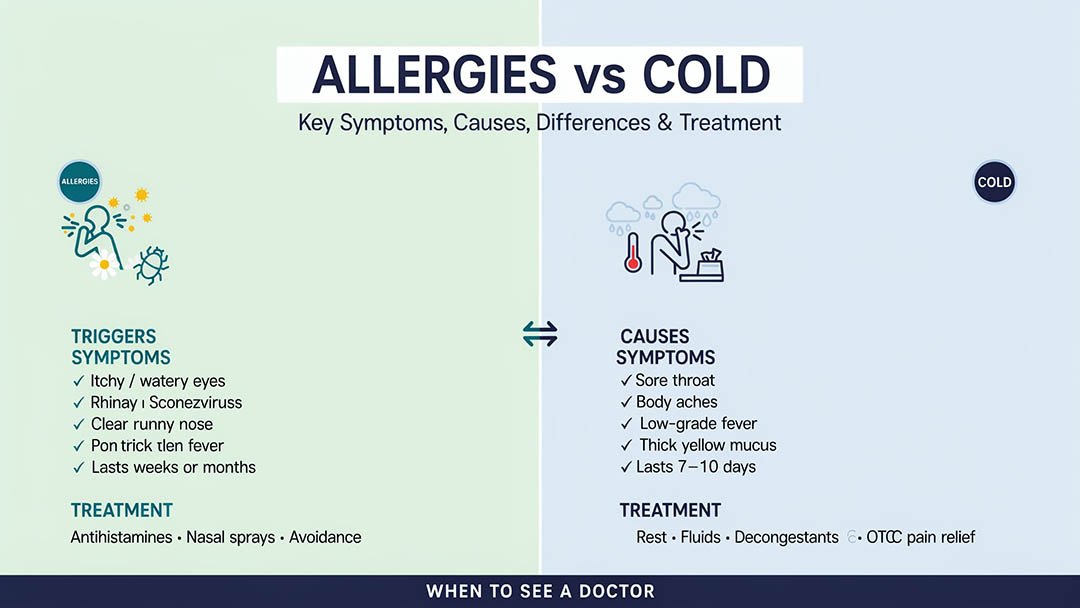
- Duration: Usually colds last from a week to 10 days. Allergies might linger for weeks or months as long as you are exposed to the trigger.
Fever: Sometimes colds come with a low-grade fever. Never allergies.
Itching: Itching of the eyes, nose or throat are good signs of allergies.
Body aches: Aches and fatigue are typical with colds and rare with allergies.
Mucus – Allergies tend to cause thin clear mucus. Colds usually start clear, then thicken or turn yellow.
Allergies vs Cold Symptoms: A Side-by-Side Comparison
Many symptoms overlap, which is why people keep searching “is it a cold or is it allergies.” Here is how they compare.
| Symptom | Cold | Allergies |
|---|---|---|
| Runny or stuffy nose | Common | Common |
| Sneezing | Common | Very common, often in bursts |
| Itchy eyes or nose | Rare | Very common |
| Watery eyes | Occasional | Common |
| Sore throat | Common, often early | Mild scratchiness from drainage |
| Cough | Common, may be wet | Common, usually dry |
| Fever | Sometimes, usually low | Never |
| Body aches | Common | Rare |
| Fatigue | Common | Mild to moderate |
| Typical duration | 7 to 10 days | Weeks to months |
| Onset | Gradual, over a day or two | Sudden, right after exposure |
Avoid relying on just one symptom to determine whether you have allergies or a cold. Look at the whole pattern and how long it lasts.
What Causes a Cold?
There are more than 200 viruses that can cause a common cold with the rhinoviruses being the most common. You get them by breathing in droplets from an infected person or touching a contaminated surface and then touching your face.
Adults normally get two or three colds a year, and kids even more. Colds are common in the autumn and winter, partially because people are indoors more often, and more closely together
A cold progresses in stages:
- Days 1 to 2: Scratchy or sore throat, fatigue, sneezing.
- Days 3 to 5: Congestion and runny nose peak. Cough may start.
- Days 6 to 10: Symptoms fade, though a lingering cough can last longer.
What Causes Allergies?
Hay fever, or allergic rhinitis, is a condition that occurs when your immune system overreacts to something that isn’t harmful. Your body releases histamine and other substances that cause swelling, mucous and itching.
Common triggers are:
- Seasonal: Tree pollen in spring; grass pollen in summer; ragweed in late summer and autumn.
Year-round: Dust mites, pet dander, mould spores, cockroach droppings.
What makes symptoms worse: Smoke, strong scents, air pollution.
Allergies are not communicable, they are typically inherited. If you have eczema or asthma you are more likely to have allergic rhinitis too.
How to Tell Whether Your Symptoms Are Caused by a Cold or Allergies
If you are not sure, following questions will help.
How long have you had these symptoms?
If it’s been more than two weeks and no real change, then it’s more probable allergies. A cold takes a nice turn and suddenly it’s gone.
Were the symptoms sudden?
Allergy symptoms usually appear within minutes of exposure, such walking into a dusty room or stepping outside on a high-pollen morning. Colds come on slowly.
Do you get symptoms in patterns?
If you feel worse when you are outdoors, among dogs or at the same time of year, consider allergies. Another hint is symptoms that improve when you travel or change situations.
Any itch?
Itching is the most helpful clue of all. A cold doesn’t usually cause your eyes, ears, or the roof of your mouth itch. They often do.
Do You Have a Fever or Muscle and Body Pain?
Either one indicates an infection. They are not allergy-related.
Sore Throat and Watery Eyes: What They Usually Mean
A sore throat with watery eyes is one of the more puzzling combos out there.
With allergies, a sore throat is usually more scratchy or rough from postnasal drip and often feels better after you’ve been up and drinking water. The itching and redness usually arrive with watery eyes, and all three happen at the same time.
A sore throat is often the first sign of a cold and it may be more painful when you swallow. Congestion may cause the eyes to moisten somewhat, but they rarely itch.
See a health care professional if your sore throat is severe or lasts longer than a few days, or if you have a fever, white patches in the throat, or swollen glands. Strep throat needs testing, and possibly antibiotics
Allergy Cough vs Cold Cough
Allergy coughs are generally dry and tickly. It’s caused either by postnasal drip irritating your throat or by allergic irritation in the airways. It’s generally worst at nite or in the morning, and is often accompanied by sneezing or itchy eyes.
A cold cough may start out dry and then become moist or productive as the cold progresses. Often it comes with other indicators of infection, such as aches, weariness or fever, and it normally clears up in a week or two.
If you have a cough lasting longer than 3 weeks, wheezing, shortness of breath or chest tightness see your doctor. Allergies can trigger asthma, and asthma that is left untreated can be dangerous
Difference Between a Cold and a Sinus Infection
A cold can become a sinus infection (sinusitis) and the two are often confused. Both give you stuffiness and a runny nose. The difference is in length, intensity and face symptoms. Most colds are limited to the nose and throat and last about 10 days.
Sinus infection is an inflammation of the obstructed sinus passages. It often brings with it:
- Pain or pressure in the face, forehead, or around the eyes
Thick green or yellow discharge from the nose
Loss of the sense of smell
Bad breath or pain in the upper teeth
Symptoms that continue more than 10 days, or that improve and then worsen
Most sinus infections are caused by viruses and typically clear up on their own without the need for antibiotic treatment. If symptoms persist for more than 10 days without improvement, or are severe with a high fever for three or four days, or improve and then suddenly worsen, doctors usually think of a bacterial infection. Allergies can also trigger sinusitis by causing your nasal passages to become inflamed and obstructed.
How to Treat a Cold
A cold has no cure, therefore therapy is aimed at comfort while your body fights the virus.
- Rest and fluids. Water, broth and warm tea help thin the mucus and soothe a sore throat.
Saline nasal spray or rinse: A drug-free way to clear congestion. For flushing use distilled, sterilised or previously boiled water.
Pain remedies. Acetaminophen or ibuprofen may relieve pains and fever when taken as advised.
Throat soothers: Warm salt water gargles, honey in tea (not for infants under one year of age), and lozenges for older children and adults.
Humidifier Moist air can help relieve a dry throat and congested nose.
Colds are viral and antibiotics do not act on viruses. Always check with a doctor or chemist before providing cold drugs to young children, as many are not suggested for youngsters under four.
How to Treat Allergies
Allergy treatment has two parts: reducing exposure and controlling symptoms.
Reduce your exposure
- Check daily pollen counts. Spend less time outdoors when pollen counts are high..
Keep windows closed and run the air conditioner with a clean filter.
Take a shower and put on fresh clothes after spending time outdoors to remove lingering pollen and other allergens
Wash your sheets and pillowcases once a week using hot water to help eliminate dust mites and reduce allergen buildup.
Have a HEPA filter . Maintain low indoor humidity levels to discourage mold growth and reduce exposure to mold spores .
Control the symptoms
- Antihistamines: Good for sneezing, itching, and runny nose. There are several newer, non-drowsy choices available over the counter.
For continuing nasal discomfort, steroid nasal sprays are generally the most appropriate approach. They function best with regular use.
Eye drops Antihistamine Relieve itchy, watery eyes
Allergy testing and immunotherapy: If you have chronic or severe allergies, an allergist can help you discover what triggers your allergies. Allergy injections or pills might gradually diminish your sensitivity
When to See a Doctor
Seek medical care if:
- Symptoms linger longer than 10 days without improvement
You have a fever higher than 101.3 degrees Fahrenheit (38.5 degrees Celsius) or you have a fever that lasts longer than a few days
You feel severe face pain, a strong headache or swelling around your eye
You are breathing rapidly or wheezing
Allergy symptoms do not get better with medication and interfere with sleep or daily life
Symptoms reoccur or you can’t determine the cause
Get emergency help right away for trouble breathing, swelling of the face or throat, or a rapid allergic reaction after a sting or food. Those can be signs of anaphylaxis.
Can You Have Both at Once?
Yes. Allergies can inflame and irritate your nasal lining which makes it easier for infections to occur. You can also experience allergy symptoms and then have a cold on top of it. If you suddenly develop new symptoms such as fever or body aches, a cold may be developing.
FAQs (Frequently Asked Questions)
Allergies or cold without a test: How can I know?
Watch period, Itching, Fever, Mucus. No temperature. Itchy eyes. Symptoms linger for weeks? Allergies. Symptoms such as fever and body aches that disappear within 10 days suggest a cold. If you’re still not sure, a doctor can evaluate you and arrange allergy tests.
Can allergens induce sore throats and watery eyes?
Yes. Postnasal drip can often make your throat feel scratchy . Allergic responses can sometimes make your eyes itchy and runny . If you have fever or bodily aches, it can indicate an infection.
I have an allergic cough with no other symptoms. Why?
Or you could have a dry cough, even if your nose feels OK, because of postnasal drip or moderate airway inflammation. If your cough lasts for weeks or is accompanied by wheezing, consult a doctor to rule out allergic asthma or some other reason.
How Is a Cold Different Than a Sinus Infection?
A cold usually clears up in around 10 days. A sinus infection typically lasts longer and is commonly accompanied by facial pain or pressure, thick, discoloured mucus, and a decreased sense of smell. Both can have identical symptoms, therefore duration and progression are important.
Cold are contagious, allergies aren’t?
Uh huh. Colds are transmitted via droplets and contaminated surfaces. “Allergies develop when the immune system overreacts to specific substances, and they cannot be passed from one person to another.
Can allergy symptoms turn into a cold?
No, allergies can’t transform into a cold. You need a virus for a cold. But allergies can make you more susceptible to infections, and you can have both.
How long do cold/allergy symptoms last?
Colds often last for around 7 to 10 days, but you may have a lingering cough. Seasonal allergies can endure for weeks or months, depending on how long the pollen season lasts.
Conclusion.
Allergies and colds have many symptoms, but a few indicators typically indicate which is the source. Allergies are itchy clear mucous no fever and symptoms lasting for weeks. Fever, pains and a short illness that resolves in a week or so are signs of a cold. If symptoms linger more than 10 days, worsen after getting better, or are associated with severe discomfort or problems breathing, a sinus infection or other illness may be involved.
Deal with the problem, not the symptoms, and you’ll save yourself time and pain. If you are unsure, a healthcare provider can help you figure out which one you have.
This content is intended for informational and educational purposes only and should not replace guidance, diagnosis, or treatment from a qualified healthcare professional.