Introduction
Body fat isn’t just extra padding; it keeps you going by cushioning your organs, storing energy, and keeping hormones in check. Get too much or too little, though, and health issues creep in fast. Figuring out the six level of fatness helps you see exactly where you fit, sidestep stuff like heart disease, and nail your fitness goals without the guesswork. Kick off with our health guide—it dives into weight management essentials. Trust me, tracking body fat percentage crushes vague scale readings every time.
What Is Body Fat?
Body fat acts as your body’s fuel reserve and protector. It splits into two main types: subcutaneous fat sits under your skin, giving shape and warmth, while visceral fat hides deep around organs, fuelling inflammation if it builds up.
Pinch your belly—that’s subcutaneous fat you’re feeling, and it’s pretty chill in moderation. But visceral fat? That sneaky stuff deep inside ties straight to metabolic headaches like diabetes. Once you get the difference, you can zero in on the right fixes in your daily routine.
Why Body Fat Levels Matter
High body fat ramps up health risks—you face diabetes, heart issues, or joint pain. Low levels crash your energy or mess with immunity. Spotting your spot in the six levels of fatness guides you away from obesity stages toward a healthy body fat range.
Fitness folks chase athletic body fat for peak performance, but average levels suit daily life. Hormonal balance thrives here too—women need more for reproduction and men for testosterone. Track it, and you’ll optimise the fat vs. muscle ratio for real results.
The 6 Levels of Body Fat Explained
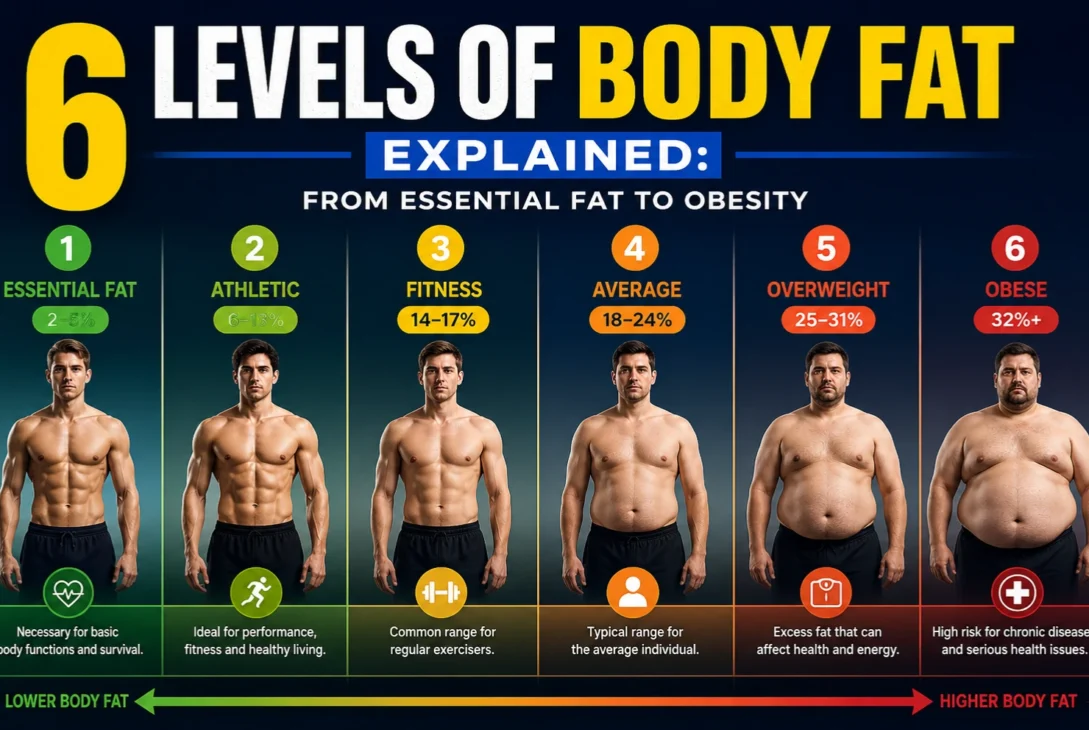
These six levels of fatness break down body fat percentage chart ranges for men and women. They range from vital minimums to danger zones. Use this fat classification levels guide to gauge your metabolic health.
1. Essential Fat
Essential fat keeps you alive—think 3-5% for men and 10-13% for women. It protects organs, insulates nerves, and powers cell functions. Drop below, and you risk hormone crashes or organ failure; athletes rarely dip here long-term.
2. Athletic Level
Athletes rock 6-13% body fat for guys or 14-20% for gals—perfect for raw speed and power. Think of a sprinter’s ripped, lean build; that’s athletic body fat fueling epic endurance without any extra fluff. You hold onto it with hardcore training and sticking to clean, real food.
3. Fitness Level
Fitness enthusiasts land at 14-17% (men) or 21-24% (women). This falls into the six levels of fatness framework for active folks—it looks toned and feels energetic. You sustain it with steady workouts and balanced plates.
4. Average Level
Most people hover at 18-24% (men) or 25-31% (women)—your average body fat. It’s fine for daily tasks, but creeping up hints at overweight category risks. Lifestyle tweaks keep you here without stress.
5. Overweight Level
Overweight starts at 25-31% (men) or 32-38% (women). Health flags wave—extra visceral fat strains your heart and spikes cholesterol. Within the six levels of fatness, this urges action before obesity looms.
6. Obesity Level
Obesity kicks in above 32% (men) or 39% (women), split into class 1 (mild), class 2 (serious), and class 3 (extreme). It packs high risks like strokes or sleep apnoea. The six levels of fatness cap here—reverse it fast for longevity.
| Level | Men (% Body Fat) | Women (% Body Fat) | Key Traits |
|---|---|---|---|
| 1. Essential | 3-5 | 10-13 | Survival minimum |
| 2. Athletic | 6-13 | 14-20 | Peak performance |
| 3. Fitness | 14-17 | 21-24 | Toned, active |
| 4. Average | 18-24 | 25-31 | Everyday normal |
| 5. Overweight | 25-31 | 32-38 | Rising risks |
| 6. Obesity | 32+ | 39+ | High danger |
Body Fat vs BMI: What’s the Difference?
BMI guesses fat from height and weight, but it misses fat vs muscle ratio – a buff guy scores “overweight” despite low fat. Body fat measures directly via percentage, nailing the six levels of fatness accurately. BMI vs body fat? Fat wins for precision, especially athletes.
quick;Rely on both: BMI screens quick, body fat dives deep. Skip BMI alone—it lumps muscle with flab. True insight comes from combining them for your health snapshot.
How to Measure Body Fat
Grab callipers for a cheap pinch test—pros use them on key spots like abs. Smart scales zap bioelectrical signals for home ease, though they’re less spot-on. DEXA scans give gold-standard reads, like X-rays for fat mapping.
Pick what fits your wallet and goals. Track trends over months, not days. These methods reveal your place in the six levels of fatness better than a mirror.
Tips to Maintain Healthy Body Fat
Eat whole foods—load up on veggies, proteins, and healthy fats to hit a healthy body fat range. Cut sugars; they pile on visceral fat fast. Pair it with strength training three times weekly to build muscle and burn more at rest.
Move daily: walk 10,000 steps and mix cardio and weights. Sleep well and manage stress—these curb cortisol-driven fat storage. These steps lock in the six levels of fatness you want.
Conclusion
The six levels of fatness from essential fat to obesity show why body fat trumps weight alone. Know your level, measure smart, and tweak habits for metabolic health. Start today—you’ve got this for lasting vitality.