Psoriasis vs Eczema Complete Guide: Treatments, Itchy & Inflamed Skin
If you’re staring at a red, itchy patch of skin and typing “psoriasis vs eczema” into a search bar at midnight, you’re not alone. Millions of people deal with this exact confusion every year. Both conditions cause redness, itching, and inflammation, but they are different diseases with different causes, different triggers, and different treatment paths.
This guide breaks down the real differences, so you can talk to your dermatologist with confidence instead of guessing.
What Is Psoriasis?
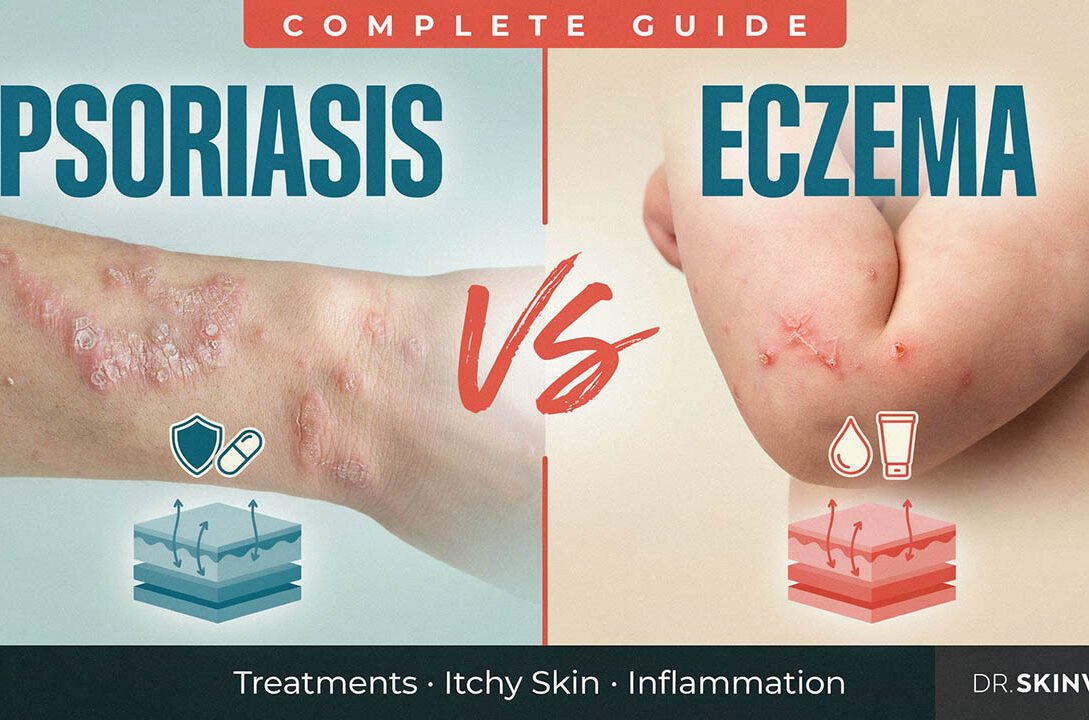
Psoriasis is a chronic autoimmune condition. Your immune system mistakenly speeds up skin cell production, causing cells to pile up on the surface faster than the body can shed them. The result is thick, scaly patches, often silvery-white, that sit on top of red, inflamed skin.
Psoriasis typically shows up on the:
- Elbows and knees
- Scalp
- Lower back
- Nails (pitting or discoloration)
It’s not contagious, and it tends to run in families. Genetics plus environmental triggers — stress, infections, cold weather, certain medications — usually kick off a flare.
What Is Eczema?
Eczema, also called atopic dermatitis, is primarily a problem with the skin barrier. When that barrier is weak, moisture escapes and irritants get in more easily. This leads to dry, cracked, intensely itchy skin.
Eczema commonly appears:
- Inside the elbows and behind the knees
- On the face, especially in children
- On the hands and neck
Eczema often starts in early childhood and is closely linked to allergies, asthma, and hay fever — a connection doctors call the “atopic triad.”
Psoriasis vs Eczema: Key Differences at a Glance
A few quick signs can help you tell which one you’re dealing with:
| Feature | Psoriasis | Eczema |
|---|---|---|
| Cause | Autoimmune (overactive immune response) | Skin barrier dysfunction |
| Texture | Thick, scaly, well-defined plaques | Dry, cracked, sometimes weepy |
| Itch level | Moderate to severe | Often intense, especially at night |
| Common age of onset | Adults (15–35 most common) | Infancy or early childhood |
| Typical locations | Elbows, knees, scalp, nails | Inside elbows, behind knees, face |
| Family history link | Strong genetic component | Linked to allergies and asthma |
This table alone answers most of the “what’s the difference” searches, but the real-world experience is a bit more layered — so let’s go deeper.
How the Skin Actually Looks and Feels
One of the fastest ways to tell these two apart is by touch and appearance.
Psoriasis patches feel raised and rough, almost like sandpaper. The scales can flake off, and picking at them may cause pinpoint bleeding — a sign called the Auspitz sign, which dermatologists use during diagnosis.
Eczema patches feel dry, sometimes leathery from constant scratching, and can ooze or crust during a flare. Skin often looks red on lighter tones and darker brown, purple, or gray on deeper skin tones — an important distinction, since eczema is frequently underdiagnosed in people with darker skin because textbooks historically focused on lighter-skin presentations.
Triggers: What Sets Off a Flare
Understanding your triggers is often more useful than any cream.
Common Psoriasis Triggers
- Skin injury (cuts, sunburn, vaccinations) — known as the Koebner phenomenon
- Infections, especially strep throat
- Stress
- Smoking and heavy alcohol use
- Specific medications — lithium being a well-known example, along with certain blood pressure treatments — can trigger flares in some people
Common Eczema Triggers
- Harsh soaps, detergents, and fragrances
- Wool or synthetic fabrics
- Sweat and heat
- Dust mites, pet dander, pollen
- Stress and lack of sleep
Keeping a simple trigger diary for a few weeks — noting flares alongside food, weather, stress levels, and products used — is one of the most practical things a person can do before their next doctor’s visit.
Diagnosis: How Doctors Tell Them Apart
A dermatologist usually starts with a visual exam and a detailed history. Since both conditions can look similar in early stages, doctors may check:
- Family history of autoimmune disease or allergies
- Nail changes (more typical of psoriasis)
- Location and symmetry of patches
- Response to previous treatments
- In unclear cases, a skin biopsy
Self-diagnosis based on photos found online is risky. Fungal infections, contact dermatitis, and even certain skin cancers can mimic both conditions in early stages, which is why a professional opinion matters.
Treatment Options: Psoriasis vs Eczema
Treatment overlaps in some areas but diverges significantly depending on the underlying cause.
Psoriasis Treatment Approaches
- Topical corticosteroids to reduce inflammation
- Prescription vitamin D creams, which work by putting the brakes on overactive skin cell production
- Phototherapy (controlled UVB light exposure)
- Systemic medications like methotrexate for moderate-to-severe cases
- Biologics that target specific immune pathways (such as IL-17 or IL-23 inhibitors), often used when other treatments fail
Eczema Treatment Approaches
- Daily moisturizing with thick, fragrance-free emollients — this is the foundation of eczema care
- Topical corticosteroids for flare-ups
- Non-steroid options like calcineurin inhibitors, often preferred for thinner skin around the face and neck
- Antihistamines to ease nighttime itching
- Biologic injectables like dupilumab, prescribed for moderate-to-severe atopic dermatitis that hasn’t responded well to other treatments
- Identifying and avoiding triggers long-term
Notice the overlap: both conditions may use corticosteroids and biologics, but the underlying strategy differs. Psoriasis treatment focuses on calming an overactive immune system. Eczema treatment focuses on repairing and protecting the skin barrier.
Can You Have Both Psoriasis and Eczema?
Yes. It’s uncommon but not impossible. Some people develop both conditions, especially if they have a strong family history of autoimmune or allergic disease. This is one more reason professional diagnosis matters — treating one condition with the wrong approach can sometimes worsen the other.
Lifestyle Tips That Help Both Conditions
Regardless of which condition you’re managing, a few habits consistently help:
- Moisturize daily, ideally right after bathing while skin is still damp
- Use lukewarm water, not hot, for showers and baths
- Choose fragrance-free products for skin and laundry
- Manage stress through sleep, exercise, or relaxation techniques
- Avoid scratching — keep nails trimmed and consider cotton gloves at night for children
- Wear breathable fabrics like cotton
These small, consistent habits often reduce flare frequency more than people expect.
When to See a Doctor
Book an appointment if:
- Symptoms don’t improve with over-the-counter creams after two weeks
- Skin becomes painful, swollen, or shows signs of infection (warmth, pus, fever)
- Itching disrupts sleep regularly
- Joint pain accompanies skin symptoms (a possible sign of psoriatic arthritis)
- You’re unsure which condition you’re dealing with
Early, accurate diagnosis leads to faster relief and prevents complications.
Frequently Asked Questions
1. What’s the core difference between these two skin conditions?
Psoriasis is an autoimmune condition causing thick, scaly plaques, while eczema is a skin barrier problem causing dry, itchy, sometimes weepy patches. Psoriasis usually appears on elbows, knees, and scalp; eczema favors the inside of joints and the face.
2. Which is more painful, psoriasis or eczema?
Psoriasis often causes more physical discomfort due to thick, cracked plaques, while eczema tends to cause more intense itching. Pain and itch levels vary widely from person to person.
3. Can eczema turn into psoriasis?
No. They are distinct conditions with different underlying causes, and one does not transform into the other. However, a person can have both simultaneously.
4. Is psoriasis or eczema contagious?
Neither condition is contagious. You cannot catch psoriasis or eczema from touching someone who has it.
5. Does diet affect psoriasis or eczema?
Diet doesn’t cause either condition, but some people notice certain foods worsen flares. An anti-inflammatory diet may help some individuals, though results vary and should be discussed with a healthcare provider.
6. Can psoriasis or eczema be cured permanently?
Neither has a permanent cure yet, but both are highly manageable with the right treatment plan. With the right approach, extended periods of clear or nearly clear skin are entirely achievable.
7. Does stress make psoriasis or eczema worse?
Yes. Stress is a well-documented trigger for flares in both conditions. Stress management techniques are often recommended alongside medical treatment.
Conclusion
Psoriasis and eczema may look similar at first glance, but they come from different roots — one from an overactive immune system, the other from a compromised skin barrier. Knowing the difference matters because it directly shapes the right treatment approach. If you’re dealing with persistent redness, itching, or scaling, don’t rely on guesswork. A dermatologist can confirm the diagnosis and build a treatment plan suited to your skin, your triggers, and your lifestyle. With consistent care, both conditions are very manageable, and clear, comfortable skin is a realistic goal.