Vibration plates have moved from physical therapy clinics into home gyms, and for good reason. These compact machines promise faster muscle activation, better circulation, and workouts that take a fraction of the usual time. But do they actually work, and are they safe for everyday use?
This guide breaks down everything you need to know about vibration plate exercises — how they work, who benefits most, safety precautions, and a practical training plan you can start today.
What Is a Vibration Plate?
A vibration plate is a fitness device with a platform that oscillates rapidly, typically between 20 and 50 times per second. Whether you’re standing, sitting, or mid-exercise, the vibration triggers your muscles into quick, automatic contract-and-release cycles. This is the tonic vibration reflex at work, and it’s the whole reason these plates feel more intense than they look.
There are two main types:
- Oscillating plates – tilt side to side like a seesaw, mimicking a natural walking motion
- Linear (vertical) plates – move straight up and down uniformly, often used for strength-focused training
Both types aim to stimulate more muscle fibers than standing still or exercising on a stable surface.
How Vibration Plate Exercises Work
When the platform vibrates, your body reacts instinctively to maintain balance. This triggers rapid, reflexive muscle contractions — sometimes 20 to 50 times per second — which is far more than what happens during a typical bodyweight exercise.
This mechanism is why even simple movements, like standing in a half-squat, can feel more intense on a vibration plate than on solid ground. Your stabilizer muscles, core, and legs all engage to keep you steady.
Physical therapists have used this technology for decades to help patients regain muscle strength after injury or surgery, particularly when traditional resistance training isn’t yet possible.
Benefits of Vibration Plate Training
1. Increased Muscle Activation
Research published in sports science journals has shown that whole-body vibration can increase muscle activity compared to performing the same exercise on a stable surface. This makes short sessions potentially more efficient.
2. Improved Circulation
The rapid muscle contractions during vibration exercise act like a pump, encouraging blood flow. Many users report a warm, energized feeling in their legs shortly after a session.
3. Better Balance and Coordination
Because your body constantly adjusts to the vibration, these plates are commonly used in balance training programs, especially for older adults working to reduce fall risk.
4. Time-Efficient Workouts
Trainers generally settle on 10 to 20 minutes as the ideal range, which says a lot for a workout that doesn’t demand a huge chunk of your day. For people with limited time, this can be a practical addition to a broader fitness routine — though it shouldn’t fully replace traditional strength training.
5. Support for Recovery and Mobility
Low-intensity vibration plate use is sometimes recommended by physical therapists to help with lymphatic drainage, joint stiffness, and post-workout muscle recovery.
Who Should Try Vibration Plate Exercises?
Vibration training can be a useful addition for:
- Beginners easing into a fitness routine
- Older adults focused on balance and bone density support
- Athletes looking to supplement warm-ups or recovery
- People with limited mobility working under professional guidance
- Busy individuals wanting shorter, efficient sessions
It is not a replacement for cardiovascular exercise or progressive resistance training if your goal is significant muscle growth or major fat loss.
Best Vibration Plate Exercises for Beginners
Start with these foundational movements. Hold each position for 30–60 seconds, and rest as needed between exercises.
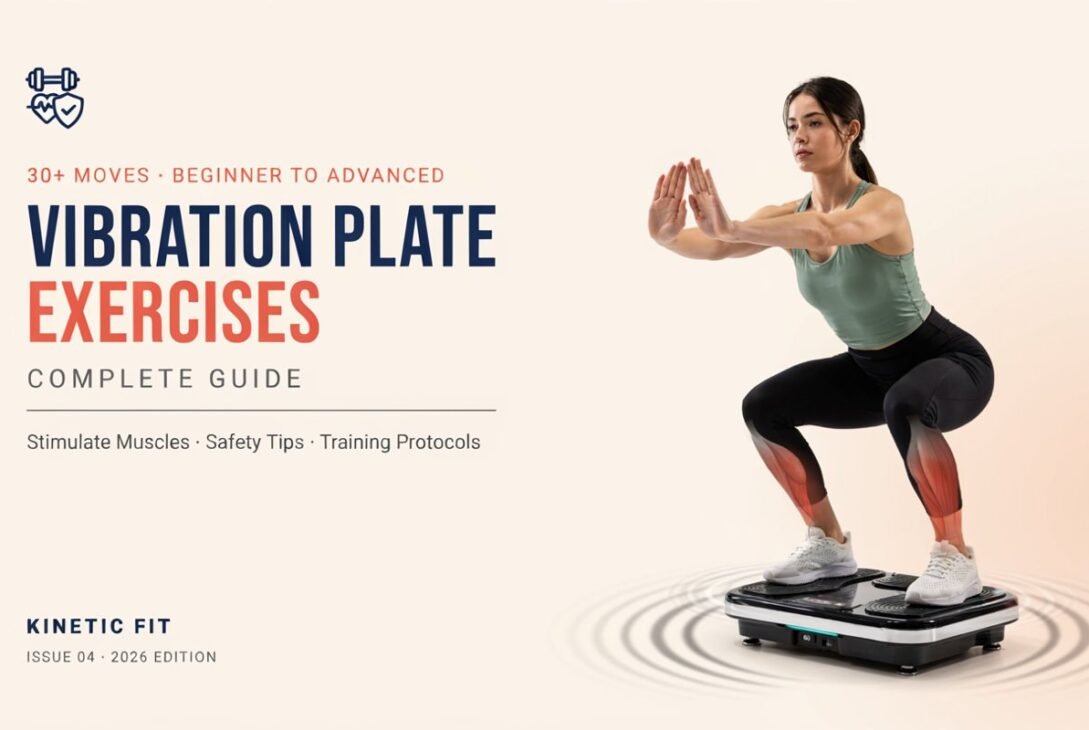
1. Static Squat
Stand with feet shoulder-width apart, knees slightly bent, as if sitting into a chair. This activates the quads, glutes, and hamstrings.
2. Calf Raises
Rise onto your toes and hold, or perform slow controlled reps. Great for activating the lower leg muscles and improving ankle stability.
3. Push-Up Position (Plank)
Place hands on the plate in a push-up stance to target the chest, shoulders, and core through added instability.
4. Lunges
Step one foot forward into a lunge position with the back foot elevated slightly if the plate allows. This challenges balance and single-leg strength.
5. Seated Position
Sit on the edge of the plate with feet flat for a gentler introduction, particularly useful for older adults or those returning from injury.
Intermediate and Advanced Variations
Once comfortable, you can add:
- Single-leg squats for increased balance demand
- Dynamic push-ups with hands on the plate
- Resistance band combinations for upper body work
- Higher frequency settings for more intense muscle stimulation
Always increase intensity gradually. Jumping to high frequencies too soon can cause unnecessary strain.
Safety Tips for Vibration Plate Training
Vibration plates are generally safe for healthy adults, but certain precautions matter.
Who Should Avoid or Consult a Doctor First
- Pregnant individuals
- Implanted devices like pacemakers don’t mix well with vibration therapy, so check with your cardiologist before stepping on the plate
- Those with recent surgeries, fractures, or joint replacements
- Individuals with severe cardiovascular conditions
- People with epilepsy or seizure disorders
- Those with acute hernias or spinal issues
If any of these apply to you, speak with a healthcare provider before starting vibration plate exercises.
General Safety Guidelines
- Start with low intensity. Give your body a chance to catch up — adapting to the vibration stimulus doesn’t happen in a single session.
- Wear proper footwear or go barefoot with good grip, following the manufacturer’s instructions.
- Keep sessions short initially — 10 minutes is plenty for beginners.
- Never lock your knees on the plate. A slight bend absorbs the vibration through your muscles rather than letting it slam into your joints.
- Stay hydrated, as with any workout.
- Don’t use it daily at high intensity. Muscles need recovery time, just like with weight training.
- Stop immediately if you feel dizziness, numbness, or joint pain.
Common Mistakes to Avoid
Many beginners make the same errors when starting vibration plate training:
- Locking the knees — this sends vibration force directly into the joints instead of the muscles.
- Standing flat-footed without engagement — passive standing reduces the benefit; you need active muscle engagement.
- Overtraining — more vibration isn’t always better. Recovery matters.
- Ignoring form — poor posture during squats or lunges on a vibrating surface increases injury risk.
- Expecting rapid fat loss — vibration plates support a fitness routine; they don’t replace calorie management and cardiovascular exercise for weight loss goals.
Sample Weekly Vibration Plate Training Plan
Here’s a simple structure for beginners over two weeks:
Week 1 (Adaptation Phase)
- 3 sessions, 10 minutes each
- Low frequency setting
- Focus on static squat, calf raises, seated position
Week 2 (Progression Phase)
- 3–4 sessions, 12–15 minutes each
- Moderate frequency
- Add lunges and plank position
- Increase hold times slightly
As your body adapts, you can extend sessions to 20 minutes and incorporate more dynamic movements, always prioritizing form over speed or intensity.
Vibration Plate vs. Traditional Strength Training
| Factor | Vibration Plate | Traditional Strength Training |
|---|---|---|
| Time per session | 10–20 minutes | 30–60 minutes |
| Muscle activation | Reflexive, whole-body | Targeted, progressive overload |
| Equipment needed | Minimal | Weights, machines, or bands |
| Best for | Supplementing routines, recovery, balance | Building significant strength and muscle mass |
| Learning curve | Low | Moderate to high |
The most effective approach for most people combines both — using vibration plates as a complement to, not a replacement for, resistance training and cardio.
Frequently Asked Questions
Do vibration plates actually build muscle?
They stimulate muscle activation and can improve tone and strength, particularly in beginners or those recovering from inactivity. However, for significant muscle growth, they work best alongside traditional resistance training rather than as a standalone method.
What’s the ideal frequency for vibration plate workouts?
Most people benefit from 3 to 4 sessions per week, with rest days in between to allow muscle recovery, similar to any strength-focused workout routine.
Can vibration plates help with weight loss?
They can support a weight loss plan by increasing muscle engagement and calorie expenditure during sessions, but they should be combined with a balanced diet and regular cardiovascular exercise for meaningful fat loss.
Are vibration plates safe for beginners?
Yes, when used correctly. Start with low intensity, short sessions, and proper form. Anyone with an existing medical condition should get clearance from a healthcare provider before adding vibration training to their routine
How much time should I actually spend on a vibration plate?
Beginners should start with 10 minutes per session, gradually increasing to 15–20 minutes as their body adapts to the vibration stimulus.
Can I use a vibration plate every day?
Daily use at low intensity is generally considered safe for healthy adults, but high-intensity sessions should be spaced out to allow muscle recovery, just as with any strength training.
Do vibration plates help with cellulite or circulation?
Many users report improved circulation from increased blood flow during sessions. While some claim benefits for skin appearance, scientific evidence on cellulite reduction specifically is limited, so it shouldn’t be relied on as a primary solution.
Conclusion
Vibration plate exercises offer a practical, time-efficient way to boost muscle activation, support circulation, and improve balance — especially for beginners, older adults, or anyone easing back into fitness. They’re not a magic shortcut to fat loss or a full replacement for strength training, but used correctly and safely, they can be a valuable addition to a well-rounded fitness routine.
The best approach is simple: go slow at first, focus on technique over intensity, and stay tuned in to how your body responds. With consistency, vibration plate training can become a sustainable part of your long-term health and fitness journey