
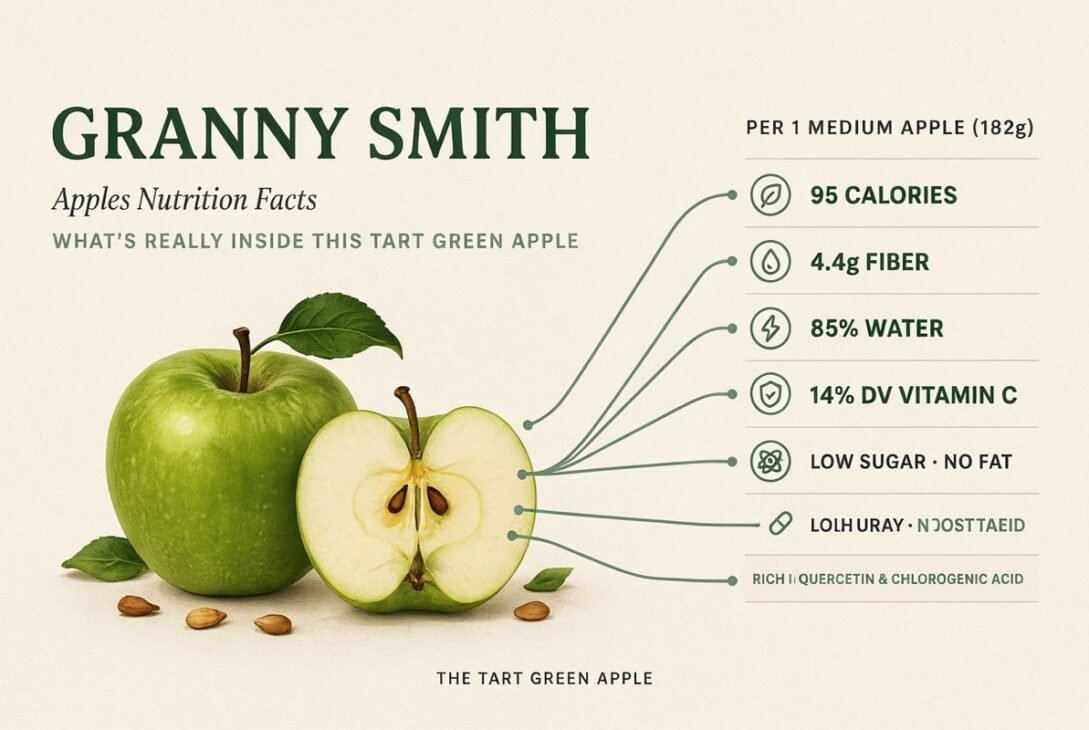
Granny Smith Apples Nutrition Facts: What’s Really Inside This Tart Green Apple
Few fruits divide opinion quite like the Granny Smith apple. Its bright green skin and sharp, tart bite make it instantly recognizable in any grocery store aisle. But beyond its distinctive flavor, this apple variety has earned a reputation as one of the healthiest options in the produce section. If you’ve ever wondered exactly what you’re getting nutritionally when you bite into one, you’re in the right place.
This guide breaks down everything you need to know about Granny Smith apple nutrition facts, including fiber content, carbohydrates, vitamins, and how this apple compares to other popular varieties.
What Makes Granny Smith Apples Different?
Granny Smith apples originated in Australia in the 1860s, discovered by a woman named Maria Ann Smith — hence the name. Unlike sweeter varieties like Fuji or Gala, Granny Smiths are known for their firm texture and tangy, almost sour taste. This lower natural sugar content is actually one of the reasons nutritionists often recommend them for people watching their blood sugar levels.
The skin is a vivid green, and the flesh stays crisp even after being cut, which is why it’s a popular choice for baking, salads, and snacking alike.
Granny Smith Apple Nutrition Facts: The Basics
A medium-sized Granny Smith apple (about 100 grams, roughly the size of a tennis ball) contains approximately:
- Calories: 52-58 kcal
- Water content: 85-86%
- Carbohydrates: 13-14 grams
- Dietary fiber: 2.4-2.6 grams
- Sugars: 9-10 grams
- Protein: 0.3 grams
- Fat: 0.2 grams
These numbers make Granny Smith apples a low-calorie, nutrient-dense snack that fits comfortably into almost any eating plan, whether you’re focused on weight management, heart health, or simply eating more whole foods.
Carbohydrates in Granny Smith Apples
Carbohydrates are the primary macronutrient in any apple, and Granny Smiths are no exception. However, what sets them apart is the balance between fiber and natural sugar.
Natural Sugar Content
Compared to other apple varieties, Granny Smiths tend to have slightly less sugar. A Fuji apple, for example, can contain up to 15-19 grams of sugar per 100 grams, while a Granny Smith typically stays closer to 9-10 grams. This is one reason people managing diabetes or following low-glycemic diets often gravitate toward this variety.
Glycemic Index
Granny Smith apples have a glycemic index (GI) of around 34-39, which is considered low. Foods with a low GI cause a slower, more gradual rise in blood sugar, making them a smarter choice for people trying to maintain stable energy levels throughout the day.
Fiber Content: Why It Matters
Fiber is where Granny Smith apples really shine. A single apple provides roughly 10% of the recommended daily fiber intake for adults, according to general dietary guidelines.
There are two types of fiber found in apples:
- Soluble fiber (pectin): Helps slow digestion, supports healthy cholesterol levels, and keeps blood sugar steady.
- Insoluble fiber: Adds bulk to digestion and supports regular bowel movements.
Most of the fiber sits in the skin, so eating the apple whole — rather than peeling it — maximizes the nutritional benefit. This fiber content also contributes to satiety, meaning a Granny Smith apple can help curb hunger between meals without adding significant calories.
Vitamins and Minerals in Granny Smith Apples
While apples aren’t typically thought of as vitamin powerhouses, Granny Smiths still offer a meaningful nutritional contribution.
Vitamin C
A medium Granny Smith apple provides about 8-10 milligrams of vitamin C, roughly 10% of the daily recommended value. Vitamin C supports immune function, skin health, and acts as an antioxidant that helps protect cells from damage.
Vitamin A
Small amounts of vitamin A are present, supporting eye health and immune function.
Potassium
Potassium levels in Granny Smith apples hover around 115-120 milligrams per 100 grams — not as high as a banana, but still a useful addition to a balanced diet. Potassium plays a key role in regulating blood pressure and supporting proper muscle and nerve function.
Other Trace Nutrients
You’ll also find small amounts of:
- Vitamin K (important for blood clotting)
- Calcium
- Magnesium
- B-complex vitamins like folate and riboflavin
While none of these are present in extremely high quantities, the cumulative effect of eating apples regularly contributes to a well-rounded micronutrient intake.
Antioxidants: The Hidden Benefit
Granny Smith apples are particularly rich in polyphenols and flavonoids, plant compounds known for their antioxidant properties. Some research has suggested that green apple varieties, including Granny Smith, may contain higher concentrations of certain antioxidants compared to sweeter, red-skinned apples. Over time, this antioxidant activity may help the body fend off the kind of cellular wear and tear linked to conditions like heart disease and certain cancers.
Granny Smith vs. Other Apple Varieties: A Quick Comparison
| Nutrient (per 100g) | Granny Smith | Red Delicious | Fuji |
|---|---|---|---|
| Calories | 52-58 | 60-65 | 65-70 |
| Sugar | 9-10g | 12-14g | 15-19g |
| Fiber | 2.4-2.6g | 2.1g | 1.9g |
| Glycemic Index | Low (34-39) | Medium | Medium-High |
This comparison highlights why Granny Smith apples are frequently recommended in diabetic-friendly and weight-conscious meal plans — they deliver satisfying crunch and volume without the higher sugar load of some other varieties.
Health Benefits of Eating Granny Smith Apples
Supports Digestive Health
Thanks to their fiber content, Granny Smith apples support healthy digestion and can help prevent constipation when eaten as part of a balanced diet.
May Support Blood Sugar Management
The combination of low sugar content and low glycemic index makes this apple a sensible choice for people monitoring their glucose levels, though individual responses can vary.
Supports Heart Health
Soluble fiber and antioxidants found in Granny Smith apples may contribute to healthier cholesterol levels and reduced inflammation, both of which play a role in cardiovascular health.
A Smart Snack for Weight Management
With high water content, fiber, and relatively few calories, Granny Smith apples are naturally filling. This makes them an effective snack option for people trying to manage their weight without feeling deprived.
How to Incorporate Granny Smith Apples Into Your Diet
- Slice and pair with peanut or almond butter for a balanced snack
- Add to salads for a tart, crunchy contrast
- Use in baking — their firm texture holds up well in pies and crisps
- Blend into smoothies for natural sweetness without excess sugar
- Eat whole with the skin on to maximize fiber intake
Frequently Asked Questions
1. How many calories are in a Granny Smith apple?
A medium Granny Smith apple contains approximately 52-58 calories, making it a low-calorie snack option.
2. Are Granny Smith apples good for weight loss?
Yes. Their high fiber and water content promote fullness, while their lower sugar content compared to other apple varieties makes them a smart choice for calorie-conscious eating.
3. How much sugar is in a Granny Smith apple?
A Granny Smith apple typically contains about 9-10 grams of sugar per 100 grams, less than many sweeter apple varieties like Fuji or Gala.
4. Is Granny Smith apple good for diabetics?
Many nutritionists consider Granny Smith apples a favorable choice for people with diabetes due to their low glycemic index and lower sugar content, though portion control still matters.
5. Does a Granny Smith Apple Have a Lot of Fiber?
A medium apple provides roughly 2.4 to 2.6 grams of fiber, contributing meaningfully toward daily fiber needs.
6. Should I eat the skin of a Granny Smith apple?
Yes. Most of the apple’s fiber and antioxidant content is concentrated in the skin, so eating it whole provides the greatest nutritional benefit.
7. What vitamins are in Granny Smith apples?
Granny Smith apples primarily provide vitamin C, along with smaller amounts of vitamin A, vitamin K, potassium, and B-complex vitamins.
Final Thoughts
Granny Smith apples offer a compelling nutritional profile: low in sugar, rich in fiber, and packed with beneficial antioxidants. Whether you’re managing blood sugar, watching your weight, or simply looking for a satisfying, crunchy snack, this tart green apple delivers real nutritional value without unnecessary calories. Adding it to your regular diet is a simple, evidence-based step toward better overall health