My neighbor kept one of these in her gym bag for months before I finally asked what it was. She pulled out a crumpled 5.3 oz cup and said, “Fifteen grams of protein, nothing fake in it. ” That was enough for me to look closer. The nutritional value of Oikos Triple Zero is the kind that rewards attention, so here’s every number worth knowing before you decide if it belongs in your regular rotation.
What is Oikos Triple Zero?
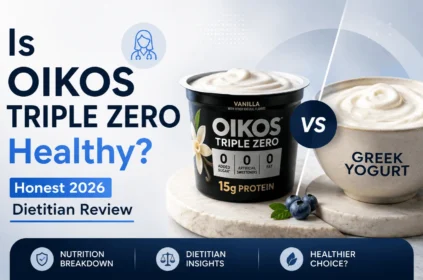
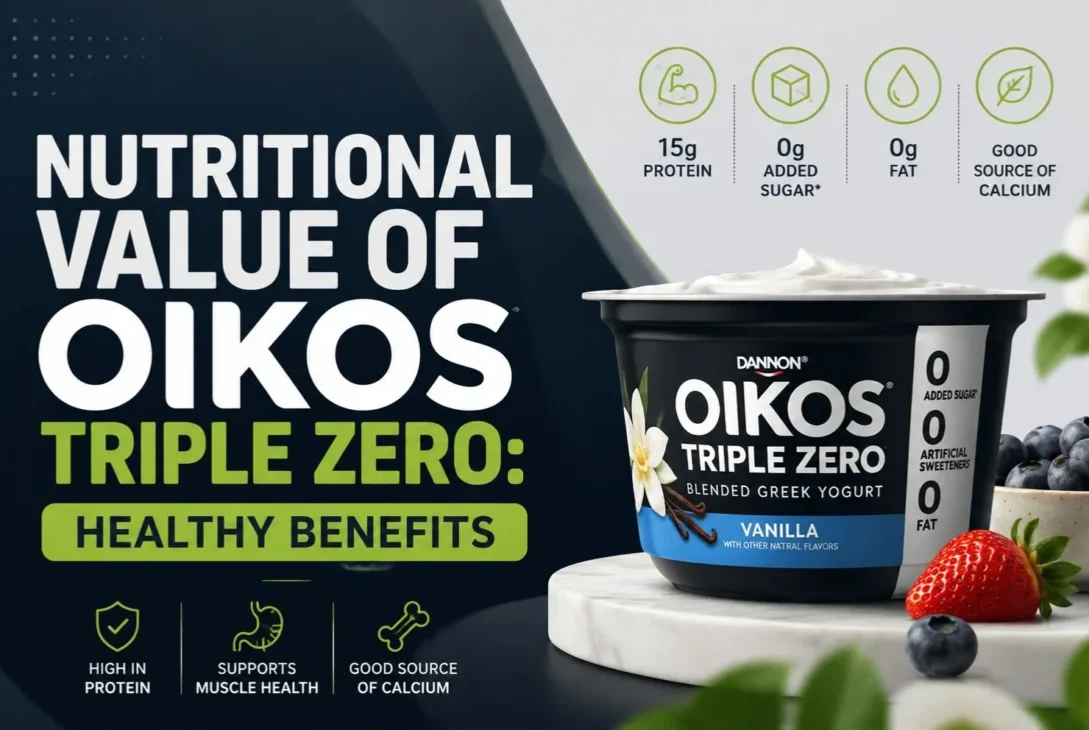
Dannon’s product. Nonfat Greek yogurt strained the traditional way, with stevia doing the sweetening instead of sugar or anything synthetic. The three zeros aren’t a vague marketing angle: 0 g added sugar, 0 artificial sweeteners, and 0% fat, all verified on the nutrition label.
A standard cup is 5.3 oz. You’ll find strawberry, vanilla, blueberry, and mixed berry on most shelves year round, with a seasonal option appearing occasionally. The nutrition profile stays nearly identical across flavors. Maybe 10 to 20 calories of variation between them, nothing more.
Macros: calories, protein, carbs, fat
The Oikos Triple Zero macros per serving hold up well against most packaged snacks at this price point. Greek yogurt has a long track record nutritionally, and the standard Greek yogurt nutrition data on the USDA FoodData Central database gives you a useful baseline for seeing exactly where Oikos lands relative to the category.
Calories per serving
Between 80 and 120 calories per cup depending on flavor. Vanilla tends to sit at the lower end. Fruit varieties run slightly higher, but the difference is small enough that it won’t change which one you reach for.
Protein content and benefits
Fifteen grams of protein per cup. That covers roughly 30% of the daily value from a container you can finish in three minutes. Mapping that against your daily protein needs shows just how much ground one cup covers: most adults need between 50g and 100g per day, so this single snack handles a meaningful share before you’ve touched anything else. The nutritional value of Oikos Triple Zero is built around this number. Everything else is secondary.
Carbohydrates and sugar details
Six to seven grams of total carbs per cup. About 5g of that is sugar, but it’s lactose, which is the sugar naturally present in dairy. The Oikos Triple Zero sugar content reflects milk, not syrups or added sweeteners. So the 0g added sugar claim is accurate. Oikos Triple Zero carbs and fat are both low enough to work across a wide range of eating styles without adjustment.
Micronutrients and vitamins
Most people clock the protein and stop reading. The Oikos Triple Zero nutrition facts have more going on if you look past the macros.
Calcium and vitamin D
Around 150mg of calcium and 2mcg of vitamin D per cup. These two work as a pair. Vitamin D is what your body uses to actually pull calcium into bone tissue, so having both together in one food is more useful than getting one without the other.
Sodium, potassium, and other minerals
Sodium runs at roughly 55 to 60 mg per serving, which is low for a pre-flavored packaged food. Potassium shows up in modest amounts. Iron is trace or absent depending on which flavor you pick up. Nothing alarming across the board.
How Oikos Triple Zero fits a healthy diet
How healthy Oikos Triple Zero is as a daily food depends on the eating pattern around it. Greek yogurt contains live active cultures, so it fits naturally alongside other gut-healthy foods that support digestion over time. And for anyone following or curious about a Mediterranean-style diet, high-protein, low-fat dairy already fits that pattern without requiring any modification.
For weight management
Is Oikos Triple Zero good for weight loss? Under 120 calories with 15g of protein is a combination that keeps hunger controlled between meals. Protein takes longer to digest than carbohydrates, which buys you more time before you’re hungry again, without eating more calories to get there.
For low sugar or diabetic-friendly diets
5 g of naturally occurring lactose carries a lower glycemic impact than the same amount of refined sugar. Zero added sugar means the Oikos Triple Zero nutrition label isn’t hiding anything in the fine print. Individual lactose response does vary, so if blood sugar management is your actual goal, check with your doctor before making this a daily staple.
For fitness and sports nutrition
Oikos Triple Zero for high-protein diet goals works particularly well as a post-workout option. Open the cup, eat it, and you’re done. Pair it with a banana or some berries if you want carbohydrates alongside the protein. The whole thing takes under two minutes and requires zero preparation.
Oikos Triple Zero vs other yogurts
Compared to regular Greek yogurt
Oikos Triple Zero, compared to regular yogurt, shows less fat and a cleaner sugar profile at comparable protein levels. Flavored full-fat Greek yogurt frequently carries added sugar that only becomes obvious once you read past the front of the packaging and into the ingredient list.
Compared to other “high protein” yogurts
The 15g protein claim is common in the yogurt aisle now. What most competing products don’t manage simultaneously is hitting that protein number while keeping added sugar at zero and skipping artificial sweeteners entirely. Oikos uses stevia to close that gap. Whether stevia’s flavor works for you is personal, but the formula is cleaner than most of what’s sitting next to it on the shelf.
How to eat Oikos Triple Zero for maximum benefits
Fresh berries work well as a topping. So do chia seeds, a small handful of walnuts, sliced almonds, or plain rolled oats if you want something more filling. Use it as a smoothie base when you want protein and natural thickness without reaching for powder. It fits into healthy family meals in more ways than just breakfast: it works as a dip base, a quick side, or something kids will actually eat without negotiation.
The one topping worth avoiding is high-sugar granola. Most store-bought versions carry between 12 and 18g of added sugar per serving. Pouring that over a 0g added sugar yogurt wipes out the entire reason you chose this one over something cheaper.
Frequently asked questions
Is Oikos Triple Zero low-calorie?
Yes. Most flavors fall between 80 and 120 calories per 5.3 oz cup.
Is it keto- or low-carb-friendly?
At 6 to 7g of carbs per cup, it fits moderate low-carb eating without issue. Strict keto runs tighter, so account for your other carb sources across the day before deciding.
Is it suitable for diabetics?
The 0g added sugar and modest total carbs make it a reasonable daily option for most people. Lactose response is individual, so confirm with your doctor if you’re actively managing blood sugar.
How much protein do you get per cup?
Fifteen grams per 5.3 oz serving. The Oikos Triple Zero protein content puts it among the highest in the single-serve yogurt category, and that number holds consistent across flavors.
Is Oikos Triple Zero gluten-free or allergen-friendly?
It’s gluten-free across the product line. Dairy is the only allergen. Anyone with a milk allergy or serious lactose intolerance should skip it.
The Oikos Triple Zero nutritional breakdown says what the label promises without anything buried underneath: 15g of protein, 0g added sugar, low fat, and real micronutrients in a container smaller than your hand. The Oikos Triple Zero yogurt health benefits don’t require interpretation. Read the back of the cup, and the numbers speak clearly enough on their own.