
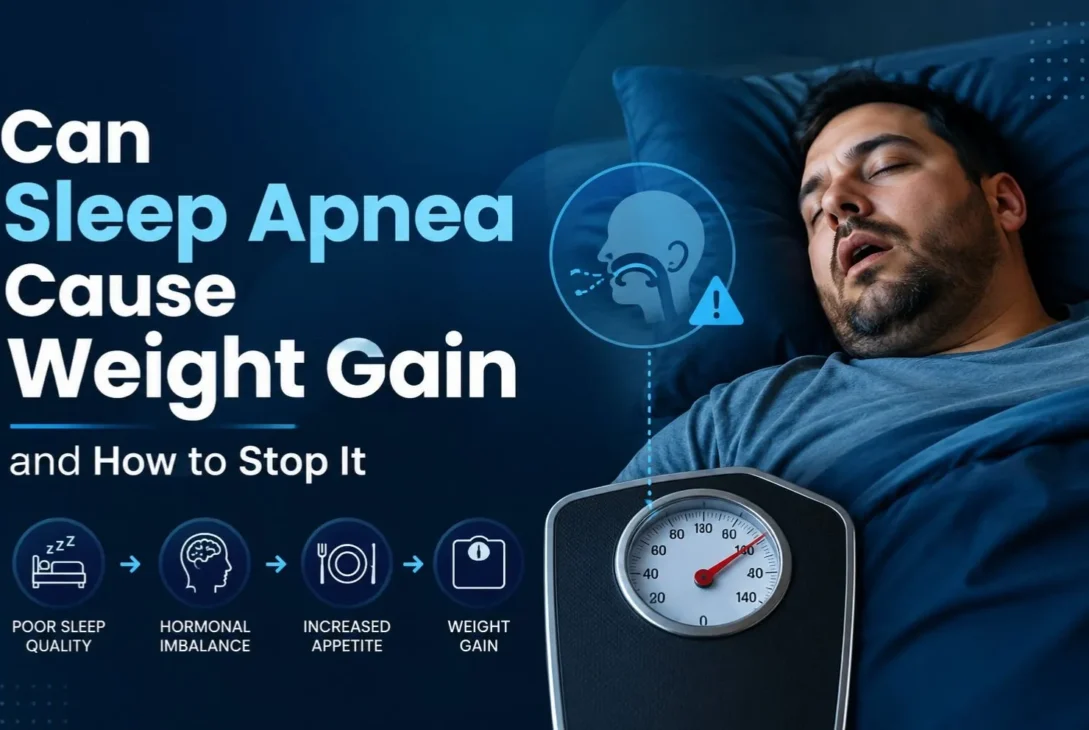
Waking up tired after a full night in bed is demoralizing. You drag through the day craving sugar, and the scale keeps climbing. That’s why so many people ask, “Can sleep apnea cause weight gain?” It can. Poor sleep changes how your body handles hunger, energy, and fat storage — and once that cycle starts, it’s genuinely hard to break.
How Sleep Apnea Affects Your Body
Sleep apnea doesn’t just wreck your nights. Low energy, foggy thinking, and fatigue that never lifts follow you into the day.
Most people dismiss the signs for years, chalking it up to stress or aging, while their sleep quietly gets worse.
What is obstructive sleep apnea (OSA)?
Obstructive sleep apnea happens when your airway gets blocked while you sleep. Breathing stops briefly, then restarts, sometimes with a gasp. Some people snore loudly; others have no idea it’s happening. Millions of American adults have OSA, and the link between sleep apnea and obesity is well-documented. Because the interruptions happen during sleep, most people go a long time without realizing the problem.
How breathing interruptions affect sleep quality
Your brain can’t rest properly when breathing keeps stopping through the night. Even after eight hours in bed, you miss the deep, restorative stages of sleep entirely—and wake up wiped out anyway. Over time, how lack of quality sleep causes weight gain becomes obvious through relentless fatigue and cravings. Building healthy sleep habits and learning how to improve deep sleep naturally can help interrupt that pattern.
The Link Between Sleep Apnea and Weight
The connection between sleep apnea and weight problems doesn’t get enough attention. Your body responds hard when sleep quality deteriorates night after night, and your hormones are among the first to feel it.
Hormonal changes and hunger signals
Poor sleep drops leptin, the hormone that signals fullness, while raising ghrelin, which drives hunger. That’s the core hormonal dynamic people with OSA and appetite hormone issues deal with: feeling hungry more often, even after eating enough. The link between hormones and sleep apnea is something doctors raise regularly, because the shift in eating behavior happens faster than most people realize.
Slower metabolism and insulin resistance
Sleep loss slows metabolism and impairs how the body processes blood sugar—which means more fat storage over time. Sleep apnea and insulin resistance tend to travel together for this reason. People with sleep apnea metabolism problems often gain weight even when their diet hasn’t meaningfully changed. After months of poor sleep, the body simply stops burning energy efficiently.
Fatigue, inactivity, and emotional eating
Exhaustion changes your daily habits in ways that stack up. Workouts get skipped. Cooking loses to takeout. Emotional eating fills the gaps. This is the pattern behind most obstructive sleep apnea weight gain stories: fatigue leads to inactivity, inactivity leads to stress eating, and stress eating makes everything worse. People describe feeling genuinely trapped in it.
The Two-Way Relationship: Weight and Sleep Apnea
Weight gain and sleep apnea make each other worse. That’s what makes losing weight feel so hard when sleep apnea goes untreated—your body is fighting the effort from multiple directions at once.
How excess weight increases sleep apnea risk
Extra fat around the neck narrows the airway as muscles relax during sleep. This physical change is how doctors typically explain sleep-related weight gain to patients. Is snoring linked to weight gain? In many cases, yes — weight gain directly raises the risk of airway blockage at night.
Why losing weight often improves sleep apnea
Even modest losses help. Dropping 5% to 10% of body weight often reduces snoring and breathing interruptions noticeably. Research on how weight affects sleep apnea consistently supports this. Better sleep, in turn, makes it easier to maintain the habits that keep weight down — so the cycle can run in a better direction, too.
Signs You Might Have Sleep Apnea
Loud snoring. Morning headaches. Nodding off in the afternoon. Waking up tired every day despite sleeping plenty. These are easy to dismiss for a while — until the fatigue becomes impossible to ignore.
Common symptoms of sleep apnea
The most common symptoms are loud snoring, dry mouth, excessive daytime sleepiness, gasping during sleep, and consistent morning exhaustion. Trouble with focus and memory is common too. If you’re reliably drained after a full night in bed, something’s off.
When to talk to a sleep specialist
If these symptoms keep happening — especially alongside weight gain or obesity — it’s worth talking to a doctor. Sleep studies sound uncomfortable, but most people adjust quickly, and a lot of people say getting a diagnosis was a relief after years of not understanding why they felt so worn down.
What You Can Do to Break the Cycle
Extreme plans tend to fail when you’re already running on empty. Small, consistent habits work better here.
Prioritize quality sleep and daytime habits
Regular bedtimes, less caffeine in the afternoon, no alcohol before bed, and sleeping on your side can all make a noticeable difference. These aren’t dramatic changes, but they add up. Building daily healthy habits gradually improves both how you sleep and how you function during the day.
Healthy weight management strategies
When you’re exhausted, aggressive dieting tends to collapse quickly. Daily walking, balanced meals, and some strength training build momentum without burning you out. If structured workouts feel like too much right now, there are low-barrier approaches to help you lose weight at home or start exercising again after a long break.
Treatment options for sleep apnea
CPAP therapy is one of the most common treatments for moderate to severe sleep apnea. Oral devices and positional therapy work for some people too. Treatment depends on severity. Most people notice real improvements in sleep and energy within a few weeks of starting care.