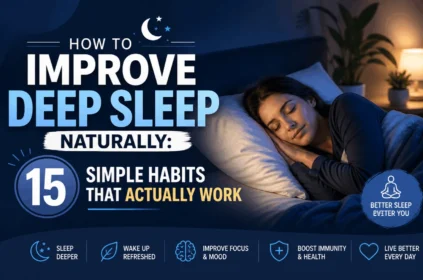

Most people blame their exhaustion on a packed schedule or too much screen time. And sure, those play a role. But strip it back far enough, and you’ll usually find the real problem hiding in plain sight—the way they sleep.
Not how long. How.
Why Sleep Habits Matter for Energy
Sleep looks passive. It isn’t. Your body is cycling through light sleep, deep sleep, and REM the entire time—repairing muscle, sorting through the day’s memories, and keeping your hormones from going haywire. Miss enough of that and the bill comes due: cloudy thinking, that mid-afternoon wall, and a bone-deep tiredness that a third cup of coffee doesn’t even touch.
The frustrating part? Most people try to solve it by sleeping more. But the real fix is sleeping better. Your body runs on rhythm, and when you protect that rhythm with solid daily health habits, everything—energy, focus, mood—starts to level out.
Core Sleep Habits to Adopt
Stick to a Consistent Schedule
Pick a bedtime. Pick a wake time. Then actually stick to both—yes, Saturday too. Your internal clock doesn’t take weekends off, and neither should you. Once your body learns when sleep is coming, it starts preparing for it automatically. Melatonin drops on cue. You fall asleep faster. Mornings stop feeling like punishment.
Create a Relaxing Bedtime Routine
Think of the 30 minutes before bed as a landing strip. You need to slow down before you can stop. A warm shower, some light reading, a few minutes of stretching — any of these work. What matters isn’t the specific activity. It’s doing something calm, repeatedly, until your brain learns that this means sleep is next. Simple. Boring, even. That’s the point.
Optimize Your Sleep Environment
Your bedroom has one job. Most people ask it to do approximately six things. Keep it cool—somewhere between 65 and 68°F is where your body actually drops into deep sleep most easily. Quiet enough that small sounds don’t pull you out of sleep. Quiet enough that small sounds don’t yank you awake. Blackout curtains, a white noise machine, a mattress that isn’t ten years past its prime — these aren’t indulgences. Getting your room right costs nothing and pays off faster than most sleep advice you’ll find anywhere.
Habits to Avoid for Better Rest
Limit Screens Before Bed
Your phone is lying to your brain. The blue light it throws off signals daylight, so melatonin stalls and your body stays in go mode well past when you wanted to wind down. By the time you actually put it down, you’ve quietly pushed your sleep back by an hour without noticing. Going screen-free 45 minutes before bed sounds like a hassle — until you do it for a few nights and notice you’re waking up feeling like an actual person again.
Cut Caffeine and Heavy Meals
Most people wildly underestimate how long caffeine actually lingers in their system. Its half-life sits at five to six hours, which means half of that 3 p.m. coffee is still circulating at 8 p.m., keeping your nervous system quietly wired. Late meals do something similar — your digestive system keeps running when everything else is trying to wind down. To avoid sleep disruptors that work against you without any warning signs, the Mayo Clinic recommends cutting caffeine in the afternoon and keeping late-night eating light.
Quick Tips to Track and Improve
Apps like Sleep Cycle or the sleep tools baked into most smartwatches hand you something genuinely useful—a clear picture of what’s actually happening while you’re out cold. You stop guessing why you feel wrecked on certain mornings and start seeing patterns. Maybe it’s the nights you ate late. Maybe it’s the nights you skipped your wind-down. The numbers tell you.
Morning sunlight is the other piece most people skip. Getting outside within 30 minutes of waking up helps lock your circadian rhythm in place and clears morning grogginess faster than a second coffee ever will. Stack that with some morning physical activity, and you’re building a morning that genuinely sets the tone for the day.
Good energy isn’t something you find in the morning. You build it the night before. Start with one habit from this list — just one — and give it a week. Chances are, you’ll feel the difference before the week is even out.