Oikos Triple Zero is everywhere right now. You’ll spot it on gym reels, weight-loss meal plans, and grocery store endcaps. But behind the bold packaging, one question keeps popping up. The Oikos Triple Zero vs. Greek yogurt debate has shoppers wondering if those high-protein cups can really replace plain Greek yogurt. As a dietitian, I’ve reviewed dozens of brands, and Triple Zero comes up in nearly every conversation. This registered dietitian’s yogurt review breaks down the real facts—the nutrition, the benefits, the trade-offs, and how each option stacks up. The verdict? Mostly thumbs up — but there’s one detail you should know first.
Quick Answer: Is Oikos Triple Zero Healthy?
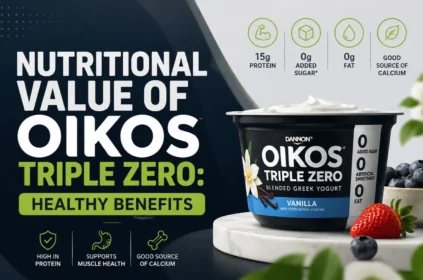
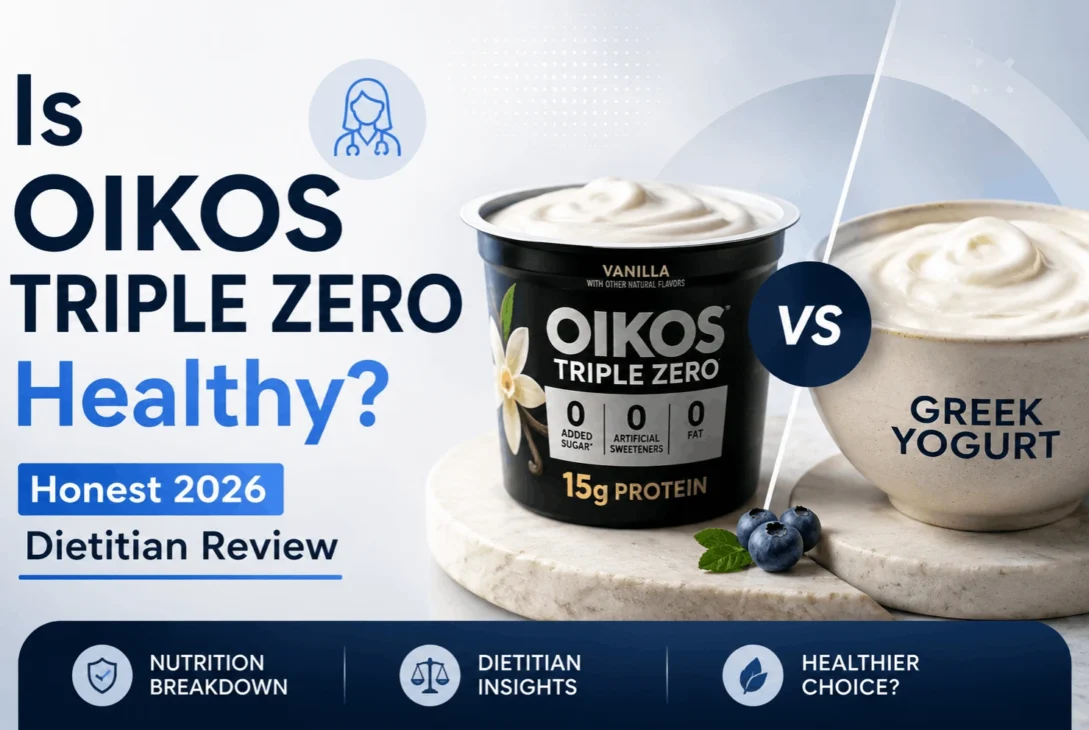
If you’ve been wondering about the Oikos Triple Zero vs. Greek yogurt question, the short answer is Triple Zero is healthy for most adults. Each 5.3-ounce cup packs 15 grams of protein, zero added sugar, and only 90 calories. It’s sweetened with stevia leaf extract, a plant-based non-nutritive sweetener, which is the one detail picky eaters should know about. If you avoid all sweetener substitutes or prefer minimally processed foods, plain Greek yogurt may suit you better. For everyone else, especially busy adults chasing more protein, it’s one of the better grab-and-go yogurts on shelves today.
Oikos Triple Zero Nutrition Facts
The Greek yogurt nutrition facts tell a tidy story. Here’s what’s inside one 5.3-ounce vanilla cup:
| Nutrient | Amount | % Daily Value |
|---|---|---|
| Calories | 90 | — |
| Total Fat | 0g | 0% |
| Total Carbs | 7g | 3% |
| Total Sugars | 6g (0g added) | — |
| Protein | 15g | 30% |
| Calcium | 150mg | 10% |
| Vitamin D | 2.0 mcg | 10% |
| Sodium | 65 mg | 3% |
For just 90 calories you’re getting nearly a third of your daily protein. That protein-to-calorie ratio is what sets Triple Zero apart from most flavored yogurts. The Oikos Triple Zero ingredients list is short: cultured nonfat milk, water, natural flavors, tapioca starch, stevia leaf extract, lemon juice concentrate, sea salt, and vitamin D3. Compare that to flavored yogurts loaded with 12 to 20 grams of added sugar. You can dig into nutrition facts for a fuller ingredient breakdown.
Health Benefits of Oikos Triple Zero
So in the Oikos Triple Zero vs. Greek yogurt face-off, does Triple Zero earn a spot in your fridge? Across four key areas, the answer leans yes. Here’s why.
High Protein Content (15g per cup)
Each 5.3-ounce cup delivers 15 grams of complete protein. That’s 30% of your daily value in a single snack-sized portion. Among high-protein yogurt brands, this puts Triple Zero near the top of the pack. Protein keeps you fuller longer, supports muscle repair after workouts, and helps stabilize energy through the afternoon slump. If you’re aiming for a 15g protein per cup yogurt benchmark at breakfast or as a snack, Triple Zero handles it without piling on calories or sugar.
Zero Added Sugar
Most flavored yogurts hide between 12 and 20 grams of added sugar per cup. Triple Zero contains 0 grams added. The small amount of natural sugar — around 6 grams — comes from the milk’s own lactose. Among 0g added sugar yogurt picks at the grocery store, this is one of the most reliable zero-sugar yogurt options out there. Less sugar means fewer empty calories, a smaller spike in blood sugar, and easier portion control after dinner.
Live and Active Probiotics
Like most Greek yogurts, Triple Zero contains live yogurt cultures—S. thermophilus and L. bulgaricus. These live-active probiotic yogurt strains support gut health, smooth digestion, and immune function. The role of probiotics in Greek yogurt has been studied for decades, with consistent evidence pointing to real benefits for the gut microbiome. It’s not a probiotic supplement, but it’s a tasty everyday source.
Low in Calories and Fat
At 90 calories per cup with 0 grams of fat, Triple Zero fits easily into most eating plans. That makes it one of the most popular low-calorie yogurt for weight loss choices on the market. You can stack it with fresh fruit, oats, or nut butter and still keep the snack under 250 calories — no guilt required.
Potential Drawbacks to Consider
Now for the not-so-perfect parts. Any honest Oikos Triple Zero vs. Greek yogurt review has to weigh a few caveats too. For a deeper clinical view, this dietitian’s Oikos Triple Zero review explains the sweetener and processing science.
Contains Stevia Sweetener
Triple Zero is sweetened with stevia leaf extract. While stevia is plant-based and not technically an artificial sweetener, it’s still a non-nutritive sweetener. Some people report a slight aftertaste, mild digestive sensitivity, or simply prefer to avoid sweetener substitutes altogether. If that’s you, plain Greek yogurt with fresh fruit is a cleaner pick.
Highly Processed Compared to Plain Greek Yogurt
Compared to traditional minimally processed Greek yogurt, Triple Zero is more refined. It contains tapioca starch as a thickener and added natural flavors for taste. None of these ingredients are harmful, but they do move it slightly further from a whole-food product. If clean-label eating is your priority, plain Fage or Stonyfield is closer to the ideal.
Not Ideal for Children or Sensitive Stomachs
Most pediatric dietitians suggest unsweetened, whole-milk yogurt for young children rather than stevia-sweetened nonfat versions. Adults with a sensitive stomach and yogurt history may also notice that non-nutritive sweeteners trigger bloating or gas. If you’ve reacted to artificial sweetener side effects before, test a small portion first.
Oikos Triple Zero vs Greek Yogurt: How It Stacks Up
Here’s how the Oikos Triple Zero vs. Greek yogurt comparison plays out against three other popular high-protein yogurt brands. The numbers below are for the vanilla or plain variety in a 5.3-ounce serving (Fage uses a 6-ounce cup).
| Brand | Protein | Added Sugar | Sweeteners | Approx. Price |
|---|---|---|---|---|
| Oikos Triple Zero | 15g | 0g | Stevia | $1.25 |
| Two Good Vanillas | 12g | 2g | Stevia | $1.30 |
| Chobani Zero Sugar | 11g | 0g | Allulose, monk fruit | $1.50 |
| Fage Total 0% | 18g | 0g (plain) | None | $1.65 |
For pure protein per dollar, Triple Zero wins. The Two Good yogurt nutrition profile sits close behind but has a touch of added sugar. A Chobani zero sugar comparison shows the lowest net carb option, while Fage Total 0% Greek yogurt is the cleanest with no sweeteners at all. If you’re weighing Yoplait vs. Oikos Triple Zero, Triple Zero has significantly more protein and less sugar per cup. For a quick Greek yogurt vs. regular yogurt rule of thumb, Greek yogurt typically packs nearly twice the protein.
Who Should Eat Oikos Triple Zero?
Triple Zero is built for specific people. It’s the ideal grab-and-go option if you fit one of these profiles.
Best for:
- Athletes needing a post-workout snack with fast protein
- Anyone tracking a calorie-controlled diet snack budget
- People focused on blood sugar management yogurt swaps
- Busy professionals who want protein without prep
Skip if:
- You avoid all non-nutritive sweeteners
- You want minimally processed Greek yogurt
- You’re feeding very young children
For athletes especially, Triple Zero fits right into your daily protein game plan. If you’re stuck on the Oikos Triple Zero vs. Greek yogurt choice, daily protein targets can help you decide which one fits your routine better.
Easy Ways to Enjoy Oikos Triple Zero
You don’t need a recipe to put Triple Zero to work. The vanilla flavor blends with almost anything sweet or savory, so it doubles as a snack, dessert, or meal upgrade.
- Smoothie base: Blend with frozen berries and spinach
- Parfait stack: Layer with granola and sliced banana
- Veggie dip: Mix with garlic, dill, and lemon juice
- Post-workout snack: Top with peanut butter and chia seeds
Each of these takes under three minutes to assemble. The high protein keeps you full, while the creamy texture feels more like dessert than diet food. Triple Zero also doubles as an easy athlete’s post-workout snack with no shaker bottle needed.
Frequently Asked Questions
Is Oikos Triple Zero good for weight loss?
Yes. With 90 calories, 15 grams of protein, and zero added sugar, Triple Zero is one of the best low-calorie yogurt for weight loss picks in the dairy aisle. The high protein helps curb hunger, and the small portion size makes calorie tracking simple. Pair it with fruit for a balanced snack.
Is Oikos Triple Zero keto-friendly?
Not really. Oikos Triple Zero’s keto-friendly status is borderline at best. Each cup has 6 to 7 grams of carbs, which can fit a relaxed low-carb plan but eats up a chunk of your daily allowance on strict keto. For deeper ketosis, plain full-fat Greek yogurt or Fage Total 5% is a stronger fit.
Is Oikos Triple Zero safe for diabetics?
Generally yes. Oikos Triple Zero being safe for diabetic use is well-supported because of the zero added sugar and stevia sweetener. The protein and modest carbs help with blood sugar management. Still, check with your doctor if you’re insulin-dependent or following a strict carb count. Pair it with nuts to slow digestion further.
Does Oikos Triple Zero have real fruit?
The vanilla variety doesn’t. Oikos Triple Zero real fruit options exist in flavors like strawberry, cherry, and peach, where small amounts of real fruit puree are included. For more fruit per cup, you’ll get better results by adding fresh berries yourself than relying on the flavor mix.
The Verdict
So in the Oikos Triple Zero vs. Greek yogurt showdown, where does Triple Zero land? For most adults, absolutely yes — it’s a healthy pick. It’s a high-protein, low-sugar, low-calorie snack that beats most yogurts on the shelf. The only real watch-out is the stevia sweetener, which doesn’t suit everyone. If clean labels matter most to you, choose plain Greek yogurt. For everyone else still asking if Oikos Triple Zero is healthy enough to keep buying, the answer is a clear yes.