Waking up with a red, swelling bump on your eyelid is not the best way to start the day. The first thing you might think about is the discomfort. You’re often second-guessing the people around you: your kids, your partner, your colleagues. And that’s when the big question comes – are styes contagious?
It’s a good question and one that eye physicians hear regularly. The short answer is that you don’t “catch” a stye like you would catch a cold, but the germs that cause a stye can be disseminated under the correct conditions. Let’s take a deeper look at what that implies, how styes are formed and what you can do to heal more quickly while protecting the people you live and work with.
What Is a Stye?
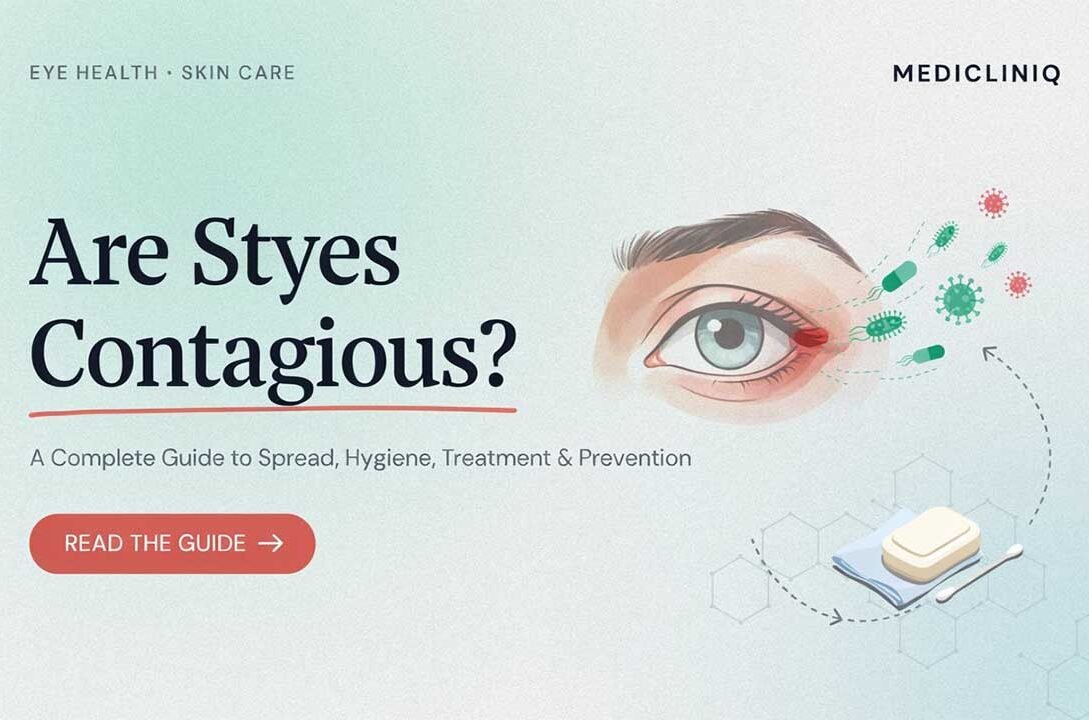
A stye, or hordeolum, is a tiny, painful bump that can grow on or inside the eyelid. This occurs when an oil gland or hair follicle at the base of the eyelash gets clogged and infected, typically by a form of bacteria called Staphylococcus aureus.
There are two main types:
- External stye – forms on the outer edge of the eyelid, near the eyelash follicle. This is the most common type.
- Internal stye – develops on the inner surface of the eyelid, affecting the oil-producing meibomian glands. These tend to be more painful and take longer to resolve.
Styes are different from a chalazion, which is a similar looking bump caused by a clogged gland, but is usually harmless and not caused by an active infection. Knowing the distinction is important since a chalazion usually requires a different strategy to care.
Are Styes Infectious? The real answer is
You cannot “catch” a sty by glancing at someone or sitting next to them. However, the bacteria that produce a stye can be passed from person to person or from one eye to the other by direct contact.
This typically happens through:
- Sharing towels, pillowcases, or washcloths
- Sharing eye makeup or makeup brushes
- Touching an infected eye, then touching another person’s eye or your own healthy eye
- Skin-to-skin contact combined with poor hand hygiene
So you can’t pass the stye from person to person but you can definitely pass the staph bacteria that causes it through contaminated objects or unwashed hands. That’s why hygiene is so important in both therapy and prevention.
Bottom line: It’s not the stye that’s the risk—it’s the bacteria. Treat it like any bacterial skin illness — wash your hands, keep your sheets clean and don’t share personal belongings.
Stye Common Symptoms
If you catch a stye early, you can start taking care of yourself sooner and prevent problems. A stye often causes these symptoms:
- A red, swollen lump that appears on the edge of the eyelid
Pain or discomfort, particularly while blinking or pressing on the afflicted area
A sandiness, as of something in the eye; - Light sensitivity
A little yellowish patch in the middle of the bump (pus accumulation)
Crusting on the eyelash line, particularly after sleeping
Usually just one eye will be affected. But it’s possible to get styes on both eyes at the same time, especially if the bacterium spreads from touching or sharing things.
If the swelling spreads beyond the eyelid, if there are changes in vision or a high temperature, this could be a more dangerous illness such as preseptal or orbital cellulitis and you should visit a doctor immediately.
What Works for Self Care of a Stye
Most styes dissolve without treatment after around 7 to 14 days. Self care is not meant to make it go away magically overnight, but to assist your body’s natural healing process while keeping the area clean.
1. Warm compresses:
This is the number one home cure. Soak a clean cloth in warm (not boiling) water and wring it out. Hold it gently against the closed eyelid for 10 to 15 minutes, three to four times a day. The heat aids in loosening the clogged gland and encouraging natural drainage.
2. Hands Off
You might be tempted to poke or squeeze the bump but doing so can push the bacteria farther in or even spread it to the opposite eye. Do not pop or squeeze a stye. It is one of the quickest ways to make an infection worse.
3. Ditch the Makeup and Contact Lenses
Do not wear eye make-up or contact lenses until the stye has totally healed. Both can trap bacteria against the eyelid and impede recovery, and both can become infected themselves.
4. Maintain Good Hand Hygiene
Wash your hands before and after touching your eye area or applying a compress. There is one practice that does more to prevent the spread of the infection than virtually anything else.
5. Linens should be clean
Change your pillowcase and use a new towel each day while the stye is active. Bacteria can live on fabric thus this decreases the likelihood of reinfection or spreading to others in your household.
6. OTC pain relief
If the discomfort is severe, a moderate over-the-counter pain medicine can aid while the compresses do their work. Always follow the directions on the label.
Ways to Help a Stye Heal Faster
While there’s no instant cure, there are steps that genuinely speed up recovery:
- Start warm compresses at the first sign of swelling. Early intervention shortens the healing timeline.
- Keep the eyelid clean using a gentle, tear-free cleanser designed for the eye area, or a diluted baby shampoo solution recommended by your eye doctor.
- Avoid rubbing your eyes throughout the day, especially with unwashed hands.
- Let it drain naturally. Many styes rupture and drain on their own after a few days of warm compresses. Once this happens, gently clean the area and continue good hygiene.
- Seek medical advice if the stye shows no improvement after one to two weeks or begins to worsen. In some cases, a doctor may prescribe antibiotic eye drops or ointment, and in rare, persistent cases, may need to drain it in-office.
Avoid the temptation to try unproven remedies like applying tea bags with sugar, toothpaste, or other kitchen “hacks” you might see online. These can irritate the delicate skin around the eye and sometimes introduce more bacteria rather than fewer.
How to Treat a Stye on Your Eye and When to See a Doctor
Most styes dissolve with self care, however visit an eye doctor or physician if:
- The stye is not getting better after 1-2 weeks of home treatment
The swelling spreads to the rest of the eyelid or face.
Your vision changes or you have ongoing pain
The stye continues to return to the same spot on the eyelid.
You have a fever . The swelling in the eye
The lump is abnormally huge or doesn’t drain
If the stye does not drain on its own, a doctor may prescribe an antibiotic ointment or drops for a bacterial infection or, in some situations, perform a brief in-office operation to release trapped pus. Long-term or recurrent styes may be caused by an underlying ailment such as blepharitis. This problem is best managed with a longer-term eyelid care regimen.
How to Prevent and Stop a Sty from Spreading
Prevention basically comes down to breaking the chain of contact, since sties are caused by germs that may be spread from person to person. You can make a real difference with a few simple everyday practices.
- Wash your hands often, especially before touching your face or the sensitive eye area
Do not share towels, pillows, eye makeup.
Remove your eye makeup well before you go to bed
Change your mascara and eye liner every 3 months
Disinfect and clean contact lenses as instructed. Do not wear contact lenses when sleeping.
Treat underlying skin problems such as blepharitis or rosacea which can increase the risk of styes
If anyone in the family has a stye, make sure they use a different towel and pillowcase until the stye is healed. It’s a minor change that makes it much less likely you’ll pass it on to others.
FAQs About Sties
1. Can you catch a stye by looking in someone’s eye?
No. Just looking or being in the same room as someone who has a stye won’t pass it on. It is spread through direct touch with the affected area or contact with contaminated things such as towels or cosmetics.
2. Can a sty migrate to the opposite eye?
Yes, if you touch your infected eye and then contact your other eye without first washing your hands, the bacteria can be transferred and cause a second stye.
3. How long does a sty normally last?
Most styes clear up with routine self-care (especially warm compresses) in 7 to 14 days.
4. Is it possible to remove a stye yourself?
No. Popping or squeezing a stye can push the infection deeper into the eyelid tissue and raise the risk of problems. Let it drain itself.
5. Do children acquire styes more often, and are they more communicable in children?
Children can have styes, and excellent hygiene is especially crucial in households with little children, who tend to touch their eyes and share things more easily.
6. Do styes come from stress?
Stress itself can not create a stye. However, it can weaken your immune system, which makes it easier for bacteria to take root when there is poor eyelid hygiene.
7. Can I use makeup while I have a stye?
Wait until the stye is entirely healed before applying eye makeup . Makeup and applicators can house bacteria and slow down the healing process .
Closing Words
Are they infectious, then? Not the usual way – you don’t catch one by being around someone who has it. However, the bacteria that cause styes can be spread by direct contact, using personal things, or touching your eyes with unwashed hands. Knowing this difference is crucial to treating your own stye successfully and protecting those around you.
Most styes will resolve on their own in one to two weeks without medical intervention with constant self-care including warm compresses, clean hands, fresh sheets, and patience. If symptoms persist or get worse, do not hesitate to consult an eye doctor. Not only will these tiny, practical procedures assist speed up your personal recovery, they will also help prevent the transmission of the germs to family members, roommates, or coworkers.