
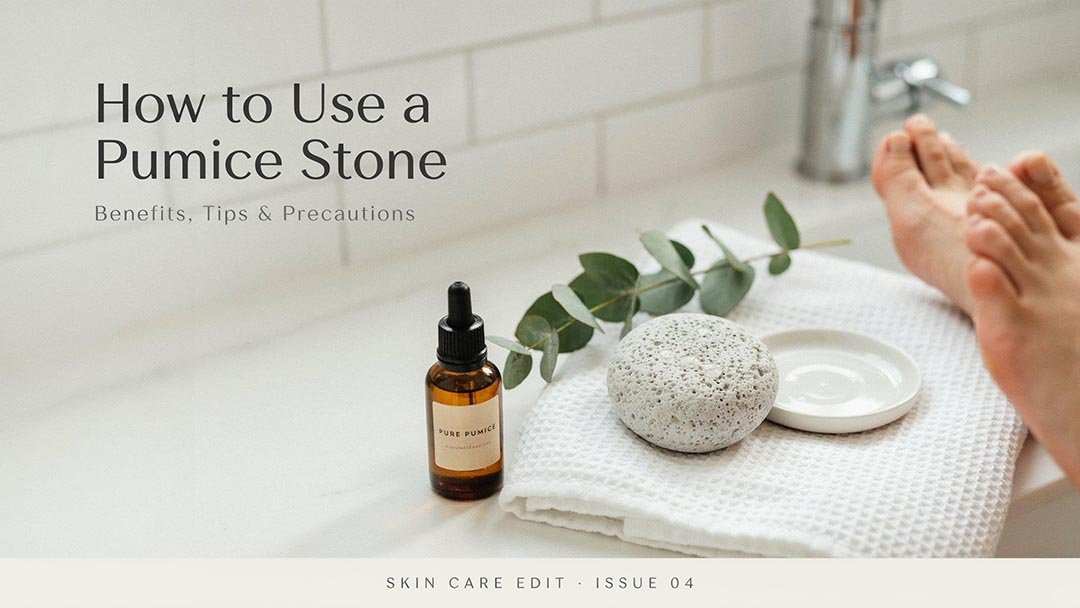
Pumice stone. Pumice stone is one of the oldest grooming gadgets still in constant use. Light, cheap and surprisingly effective on thick skins. Used correctly, it can leave your heels, elbows and calluses looking noticeably smoother. Used badly it might leave you with inflamed skin, small wounds or an infection.
In this post you will learn what a pumice stone is, how to use it step by step, where it works best and when to abandon it altogether
What Is a Pumice Stone?
A pumice stone is a light, porous volcanic rock used to remove dead skin. It is formed when gas-rich lava cools very quickly. The gas bubbles are trapped inside. So it has a foam like structure with plenty of tiny holes. Pumice has so many air spaces that some chunks will float on water.
These pockets of a similar nature give the stone its rough, abrasive surface. It strips away the dry, thicker outer skin layer, the stratum corneum. That’s why pumice has been used for foot care for centuries, and you can still get it in drugstores and spas.
Quick definition Pumice stone is a porous volcanic rock that is used as a light abrasive to exfoliate dead skin, soften calluses and smooth rough spots
Benefits of Using a Pumice Stone
Pumice is straightforward, yet it does a few things well.
- Smooths rough skin. It gets rid of the dead cells that cause itching heels and elbows.
Helps to minimise callus and corns With repeated attentive application, the thicker skin will eventually wear away.
Helps lotions sink in. Once the dry layer is gone, the moisturiser may reach the fresh skin more easily.
More comfortable. Thick calluses can cause pressure and irritation in your shoes. Thinning them can help with that.
Cost-effective. With appropriate care, one stone can survive for months.
No batteries or refills needed. It’s only a stone, not electrified foot files.
So, let’s be practical here. A pumice stone doesn’t repair damaged skin, cure fungal infections, or get to the root of calluses. It just touches the surface.
Pumice Stone vs. Other Exfoliating Tools
People often wonder whether pumice is the best choice. It depends on your skin and your goal.
| Tool | Best for | Things to know |
|---|---|---|
| Pumice stone | Calluses, rough heels | Natural, inexpensive, needs cleaning |
| Foot file (metal or emery) | Thick, stubborn skin | Can be harsh and easy to overdo |
| Electric callus remover | Quick results | Costs more, higher risk of over-removal |
| Sugar or salt scrub | Mild dryness | Gentle, but weak on real calluses |
| Chemical exfoliants (urea, salicylic acid) | Very thick or dry skin | Slower, but no scrubbing |
Pumice sits in the middle. It is stronger than a scrub and gentler than most metal files, which is why it suits beginners.
How to Use a Pumice Stone: A Step-by-Step Guide
If you read one section, read this one. Here’s the safe, effective routine.
Step 1: Soften the skin first?
Do not use pumice on dry skin.
Soak your feet in warm water for 10-15 minutes, or apply right after a shower when the skin is soft. Warm water is great, not hot. Hot water can dry out your skin.
Step 2: Wet the stone
Wet the pumice stone under running water A wet stone will slide more easily and is less likely to scratch.
Step 3: Rub in softly in small circles
Rub the stone gently, using small circles or short back and forth strokes over the rough spot. Let the stonework work. The more you push it, the faster it goes. It merely increases your likelihood of irritation.
Step 4: Review your progress regularly
Rinse the area for 20-30 seconds and stop. You should detect some small flakes of dead skin coming off. If the skin looks pink or feels sore, stop.
Step 5: Rinse well and dry thoroughly
Wash away the loose skin and pat the area dry. Check for dampness between your toes.
Step 6: Moisturise immediately
Use a heavy moisturiser. Look for ingredients such as urea, glycerin, shea butter or petroleum jelly. For heels, wear cotton socks afterward to help trap moisture overnight.
Step 7 Rinse and dry your rock.
Scrub the stone with a brush, soap and warm water to remove any adhered skin. Let air dry completely in a well ventilated location.
Quick checklist:
- Soak skin for 10 to 15 minutes
- Wet the stone
- Use light, circular motions
- Stop at the first sign of redness
- Rinse, dry, and moisturize
- Clean the stone after every use
How Often Should You Use a Pumice Stone?
Most people do well enough on once or twice a week. Usually less is more, but very thick calluses can take a little more at first. Over-exfoliating makes your body produce even thicker skin, which kind of defeats the purpose.
Leave a few days between treatments. If it still seems itchy wait longer.
Where You Can Use a Pumice Stone
Heel and foot
This is the old use. Calluses usually form on the heels, the balls of the feet and the sides of the big toes.
Knees and elbows
These parts are dry and roughen easily. Be a little gentler here, the skin’s thinner than on your heels.
Hands.
Some people use pumice on strong calluses on their hands or fingers, such from lifting weights or playing guitar. If your hands are cracked, go lightly and give it a miss.
Other applications
Pumice also appears in domestic cleaning, where it is used for rust marks and stains on tile or porcelain. Separate a stone for cleaning. Don’t use the same one on your skin.
Where You Should NOT Use a Pumice Stone
Pumice is for thick, dry, intact skin only. Avoid it on:
- Open cuts, sores, or blisters
- Sunburned or irritated skin
- Skin with rashes, eczema flare-ups, or psoriasis plaques
- Warts, which can spread if you rub them
- Your face, since facial skin is far too delicate
- Any area with infection, redness, or swelling
Precautions and Safety Tips
A pumice stone seems innocent, yet a few habits make a huge effect.
Don’t part with your stone. Pumice is permeable and catches skin cells and microorganisms. Sharing it can transmit fungal or bacterial illnesses.
Change it periodically. But even a good stone wears down and harbours bacteria over time. And it is wise to change it every few months. If it smells funny, turns colours or crumbles, get rid of it sooner.
Take additional care if you have diabetes. Diabetics may have decreased feeling in their feet and heal slower. A slight scratch might become a deep cut. The American Diabetes Association and many podiatrists recommend that persons with diabetes see their doctor or podiatrist before using any tool on their feet.
Be mindful of weak circulation or neuropathy. The same precaution applies. If you don’t feel pressure well, you may be rubbing too hard without realising it.
Skip it if you are on blood thinners or have delicate skin. The skin may rip or bruise more easily.
Do not attempt to take off a callus altogether at once. Be gentle with it so as not to hurt the healthy skin underneath.
How to take care of a pumice stone
A clean stone is preferable, and safer. After every use:
- Scrub with a stiff brush in warm soapy water.
Wash thoroughly.
Let it dry thoroughly. Open-air, not in a shower caddy that is closed.
Every once in a while, soak it in a solution of water and a little white vinegar, or boil it for a short time to disinfect it. Allow to cool before use.
If the stone ever starts to feel slimy or smell, replace it.
Common Errors to Avoid
Most pumice stone difficulties are caused by a few mistakes:
- For use on dry skin
Too much strain
Scrubbing too long in one session
Not following up with a moisturiser
With a dirty stone or a communal one
Treatment of painful/infected areas
Avoid these and you have avoided most of the drawbacks.
When to See a Doctor or Podiatrist
Home care has its boundaries. If you notice: * Consult a professional
- Callouses that grow back or hurt
Bleeding or infected-looking cracked heels
Thick, discoloured, or crumbly toenails
A growth you suspect might be a wart or maize that does not get better
Any foot problems if you have diabetes
A podiatrist can safely trim thick skin and check into the cause such as ill-fitting shoes or a gait problem.
Frequently Asked Questions
What is a pumice stone used for?
A pumice stone can be used to remove dead, tough skin from the heels, feet, elbows and calluses. It is also sometimes used as a cleaning agent for domestic surfaces.
Yes, you can use a pumice stone on dry skin.
It’s better not to. Dry skin is prone to tearing and irritation. First, soak your skin in warm water to soften the dead layer.
How often do I need to apply pumice stone on my feet?
Most people experience this once or twice a week. With daily use, the skin might become irritated and even thicker.
Is pumice stone safe for diabetics?
Not without medical guidance. Diabetes can lessen feeling and hinder recovery, so even small skin injuries might become significant. Consult your doctor or podiatrist before use.
How long does a pumice stone work?
With appropriate maintenance, a stone can last for several months. Replace sooner if it breaks, stinks, or stays wet.
Can you use a pumice stone on your face?
No. Your skin on your face is significantly thinner and more sensitive than the skin on your feet. A pumice stone is too harsh for him.
What is the difference between pumice stone and foot file?
Pumice stone is a natural volcanic rock that has a gentler, more even abrasion. A foot file is a metal or emery and often harsher so it removes skin faster and is easy to overdo.
Conclusion
An easy, low-cost solution to keep rough skin under control is a pumice stone. It’s not the tool, it’s the way you use it. Start by softening your skin, use light pressure, keep sessions brief, moisturise afterward and keep the stone clean . Do not use on damaged or infected skin, and consult with a specialist if you have diabetes, poor circulation or calluses that won’t go away.
Stick to those principles and you can enjoy softer heels and elbows without the aggravation.