You spent the day at the beach and failed to reapply your sunscreen and now you are miserable. Your skin is red and blistering, your head is pounding, and you can’t stop shaking. That’s generally what people mean when they say “sun poisoning.”
The name sounds scary and the illness might be serious. But the word is also often misused. In this tutorial, we explain what sun poisoning is, how to recognise the warning signs, what really helps and when you need a doctor.
What Is Sun Poisoning?
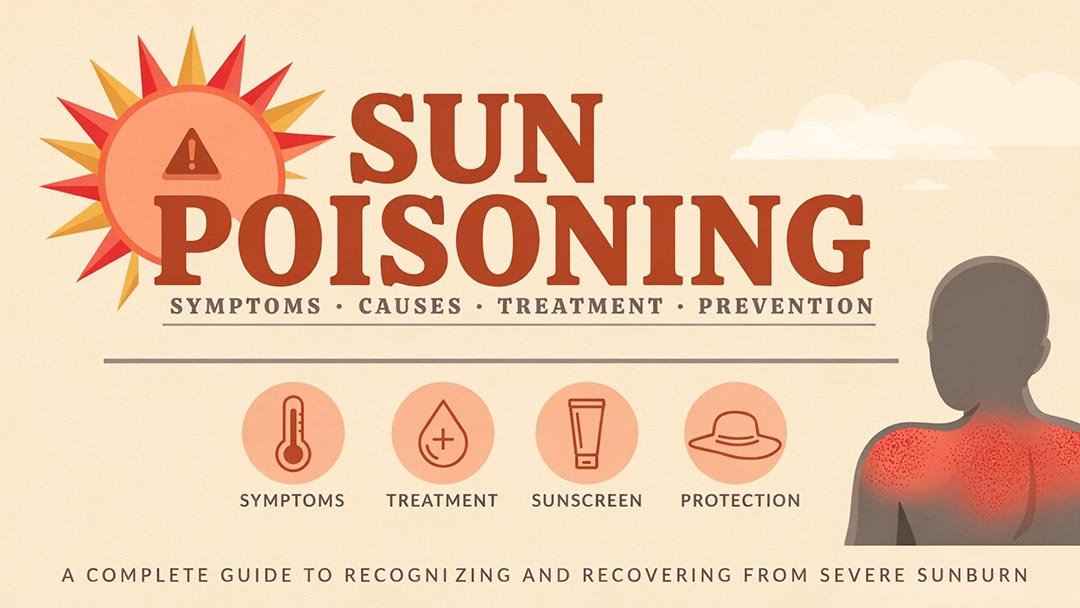
Sun poisoning is a layman’s phrase for a severe sunburn, or a severe skin reaction to sun exposure, that includes full body symptoms such as fever, nausea, chills, and dehydration.
The name is misleading, nothing is poisoning you. No toxin gets into your body. Doctors do not use the term “sun poisoning” as an official diagnosis. The term typically refers to one of two distinct conditions:
- A painful sunburn so severe that it causes blistering, oedema and flu-like symptoms.
Polymorphic light eruption (PMLE) or some other photosensitivity reaction, where the immune system overreacts to the sunshine and causes a rash.
Both are dramatic, both deserve attention. The difference is important since therapy and prevention are slightly different depending on the reason.
What Causes Sun Poisoning?
The culprit is ultraviolet (UV) radiation. UVB rays damage the outer layers of the skin and cause irritation. The UVA rays penetrate deeper and destroy the cells. When the dose is high enough, the body reacts with a significant inflammatory reaction that extends beyond the skin.
Common Triggers
Several situations make severe reactions more likely:
- Long periods of unprotected. Even a few hours in the midday sun may be sufficient for fair skin.
High UV index. The risk is increased in the tropics, at high altitude and in summer.
Reflections. UV rays reflect off water, sand and snow, increasing your dose.
Not reapplying. Sweat, swimming and towel drying remove sun protection.
Cloud cover. Up to 80 percent of UV radiation can penetrate light clouds, so gloomy days can still burn.
Photosensitising drugs. The cause may be sitting in your bathroom cabinet. Some common medicines make skin far more sensitive to sunlight. Several common drugs, including doxycycline, some anti-inflammatory tablets, diuretics, and retinoid creams or capsules, can leave your skin much more reactive to sunlight than usual, so a short time outdoors may be enough to cause a bad burn.
Photosensitising agents. You may react to the sun after contact with certain plants, lemon juice or scents.
Pre-existing conditions. People with Lupus and other autoimmune or skin conditions may be more sensitive to the sun.
Who Is at Higher Risk?
Anyone can get a severe burn, but some people are more vulnerable:
- Light skinned, light haired, light eyed persons
Infants and children
Those who burn easily or have had severe sunburns
Patients on photosensitising drugs
Individuals who have a family history of skin cancer or sun sensitivity
Sun Poisoning Symptoms: Signs to Watch For
Sun poisoning symptoms typically show up within a few hours of sun exposure and peak around 24 hours later. They can last several days.
Skin Symptoms
- Deep red, sore skin.
Large or spreading blisters
Swelling, especially of the face, hands or feet
Burn Healing: Peeling Skin
Itching, or a scorching, tight sensation
Whole-Body Signs of Sun Poisoning
This is what separates ordinary sunburn from sun poisoning. Look for:
- Pyrexia and rigours
Headache.
Nausea and/or vomiting
Dizziness or feeling faint
Weakness and fatigue
quick heart rate or quick breathing
Dry lips, black urine, or very little urine are signs of dehydration
Dizziness or feeling light-headed
If you experience several of these symptoms after spending time in the sun, take them seriously and seek medical advice if needed.
Sun Poisoning Rash: What It Looks Like
Not everybody gets a typical burn. In some people, sun poisoning can cause a rash, a common symptom of a photosensitivity reaction, not only a sunburn.
Common types of rash include:
Red, elevated and very itchy lumps or patches, usually on the chest, arms and legs
Groups of small blisters that may run together
Hives (raised, itchy welts) that develop between minutes to hours Scaly or crusty patches on sun-exposed parts of skin
Polymorphic light eruption is the most prevalent cause of this type of rash. It normally appears in spring or early summer, after the first good sunshine of the year and usually disappears in a week or two if you avoid the sun. Often the first signs of the disease appear on covered skin areas like the chest and upper arms.
A rash after time in the sun doesn’t always mean you simply stayed out too long. Sometimes the real cause is something else. If yours appeared soon after you began a new prescription, or it returns again and again, the cause may be a medication side effect or an underlying condition such as lupus. It’s worth getting checked.
Sunburn vs. Sun Poisoning: What’s the Difference?
| Feature | Regular Sunburn | Sun Poisoning |
|---|---|---|
| Skin | Red, tender, mild peeling | Severe redness, blisters, swelling |
| Whole-body symptoms | Rare | Fever, chills, nausea, dizziness |
| Pain level | Mild to moderate | Moderate to severe |
| Recovery time | 3 to 7 days | A week or longer |
| Medical care needed | Usually not | Sometimes |
Think of it as a spectrum. A mild burn sits at one end. A blistering burn with fever and dehydration sits at the other.
Sun Poisoning Treatment: What Helps
There is no fast fix. The treatment is aimed at cooling the skin, alleviating discomfort, protecting the wounded area and replacing lost fluids. Most mild to moderate cases will recover at home.
What to do immediately at home:
- Get out of the sun immediately. Seek shelter indoors or in heavy shade
Cool down your skin. Take a chilly (not ice-cold) shower or bath or use cool, damp cloths for 10 to 15 minutes at a time.
Drink lots of fluids. Water is the greatest. If you are vomiting or have been sweating badly, then oral rehydration liquids can help.
Use a mild moisturiser. Tight, dry skin can be soothed with unscented lotions or pure aloe vera gel.
Use an over-the-counter pain medication. Over-the-counter pain relievers can take the edge off. Ibuprofen eases both pain and inflammation, while acetaminophen (paracetamol) relieves pain only. Follow the dosage instructions on the label, and check with a pharmacist first if you have other health conditions or take other medicines.
Wear soft flowy clothes. Tight or scratchy clothing will aggravate burnt skin.
For localized itching, apply a small amount of low-strength hydrocortisone cream to the affected areas as needed.
What Not to Pack
- Do not pop the blisters. They cover the skin underneath. Also they lessen the danger of infection.
Don’t use petroleum products first of all, which trap heat.
Steer clear of benzocaine- or lidocaine-based products unless recommended by a healthcare professional, as they can trigger skin irritation or allergic reactionsDo not pull off skin that is flaking. Allow it to fall off naturally.
Do not sunbathe until your skin has healed totally.
Medical care
In more serious circumstances, a doctor may prescribe stronger choices such as:
- Corticosteroids, either oral or topical, to reduce inflammation
IV fluids for severe dehydration
Open blister burn care and dressings prescription strength
Antibiotics if the skin is infected.
When to See the Doctor
If any of the following symptoms appear, take them seriously and seek medical advice without delay
- Blisters spanning a huge area of your body
Fever over 101°F (38.3°C)
Severe headache, disorientation or lose consciousness
Symptoms of extreme dehydration
Intense pain that doesn’t go away with over-the-counter medicine
Watch for potential infection symptoms, such as pus, redness that continues to spread, red lines extending across the skin, or an area that feels unusually warm to the touch
A major burn in an infant or little child
Worsening of symptoms after 48 hours
If you’re not sure, get checked. Heat disease might be mistaken for sun poisoning. Heat stroke is a medical emergency.
How Long Does Sun Poisoning Last?
Most people start to feel better in two to three days and the skin usually heals in one to two weeks. Peeling generally begins around day 3-7. Deeper, blistering burns may take longer to heal and the skin may remain discoloured or sensitive for weeks.
Your healing will depend on the severity of the burn, how well you stay hydrated and if you keep the region covered from future UV exposure.
How to Prevent Sun Poisoning
Prevention is far easier than recovery. Good habits make the biggest difference.
Use Sunscreen Correctly
- Apply a broad-spectrum sunscreen with SPF 30 or higher.
Use around a shot glass (about an ounce) for your entire body.
Apply 15 minutes before sun exposure.
Apply liberally every 2 hours and after swimming or sweating heavily.
Pay attention to often-overlooked areas, including behind the ears, the neck, feet, the backs of your hands, and the scalp beneath your hair.
Smart Sun Practices
- Avoid noon exposure. UV exposure is typically strongest during the late morning and midday hours, especially between 10 a.m. and 4 p.m.. and 4 p.m. Seek If you can, get into the shade.
Use protective clothing. Wide-brimmed hats, long sleeves and UV-protective textiles assist.
Shield your eyes from harmful ultraviolet rays by wearing sunglasses with reliable UV protection.
Check the UV index in your location before you head out.
Keep hydrated throughout the day.
Avoid tanning beds. 8. They concentrate the UV and increase the risk of skin cancer.
If You Are Taking Medication
Check the label or ask your chemist if your medicine enhances sensitivity to sunlight. If it happens, take extra measures and think about covering up more than normal.
Long-Term Risks of Repeated Severe Sunburn
One terrible burn hurts. But repeated burns have enduring consequences.” Study after study has shown that getting severe sunburns, especially during childhood and the teen years, raises your lifelong risk for skin cancer, including melanoma. Prolonged exposure to sunlight can accelerate premature skin ageing, leading to fine lines, deeper wrinkles, rough or leathery texture, and uneven pigmentation such as dark spots.
Routine skin examinations at home or by a dermatologist can help detect unusual changes early, making it easier to address potential skin concerns before they worsen.
Frequently Asked Questions
What is sun poisoning in simple terms?
Sun poisoning also refers to a severe sunburn or skin reaction from the sun that causes symptoms such as fever, nausea, chills and dehydration. It’s not a medical diagnosis. It’s not real poisoning.
How Quickly Can Sun Poisoning Symptoms Appear After Spending Time in the Sun?
Skin redness and soreness usually start two to six hours after exposure and reach a peak in severity between 12 and 24 hours. Skin reactions caused by sensitivity to sunlight can develop shortly after exposure or take a few days to appear.
Quickest Way To Recover From Sun Poisoning
There is no fast treatment, but the quickest relief comes from chilling the skin, drinking lots of drinks, applying a light moisturiser and taking an over-the-counter pain killer. Severe cases require medical treatment.
Is it possible to develop sun poisoning on an overcast day?
Yes, UV rays can penetrate cloud cover, leaving your skin vulnerable to sunburn even on cloudy days. The risk may be greater at high elevations or near water, where UV exposure can be intensified by reflected sunlight.
Can sun poisoning rash spread?
Nope. The rash from sun exposure is an immunological or inflammatory reaction. It isn’t contagious, so it cannot spread from one person to another through direct contact.
I should pop the sun poisoning blisters?
Nope. Blisters are nature’s band-aids. Popping them can introduce infection and may slow down the healing process. If they break on their own, wash gently with mild soap and water and cover with a clean, non-stick dressing.
Can sun poisoning kill you?
This is not common, but in extreme circumstances immediate treatment may be required for dehydration, heat illness or infection. If symptoms are bad or getting worse, get help soon.
Conclusion
Sun poisoning is not really poisoning, but it is a real and occasionally deadly reaction to excess UV radiation. Usually it signifies a nasty sunburn or photosensitivity reaction and symptoms can range from blistering to a sun poisoning rash, fever, nausea and dehydration.
Most instances get better with cool compresses, drinks, moderate skin care, and rest. Watch for warning signs such as a high temperature, disorientation, extensive blisters or infection and get medical attention if they occur.
The best thing is to avoid it. Wear broad-spectrum sunscreen, reapply often, cover up, avoid peak sun hours and find out if drugs make you more vulnerable to sunlight.