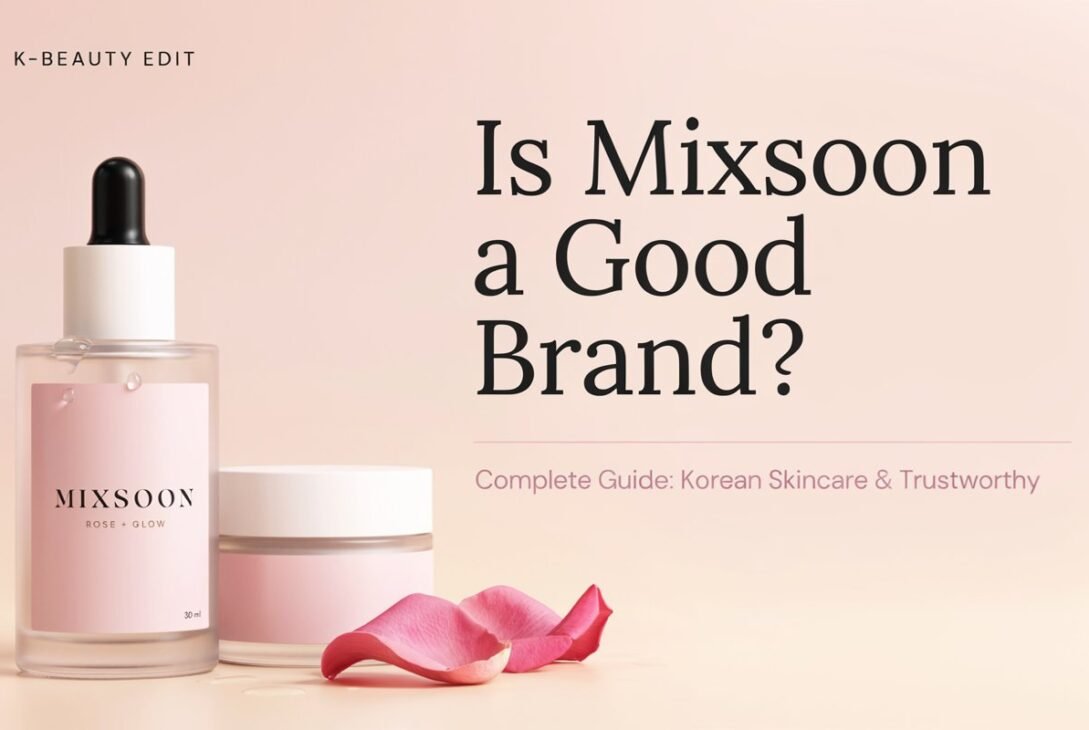
f you’ve spent any time browsing Korean skincare lately, you’ve probably seen Mixsoon pop up on your feed. The minimalist glass bottles, the bean-shaped logo, the “one ingredient, high concentration” promise — it’s everywhere right now. But hype doesn’t always mean quality, so it’s fair to ask: is Mixsoon a good brand, or is it just another trend riding the K-beauty wave?
Short answer: yes, Mixsoon is generally considered a good, trustworthy brand — especially for people who want simple, fermented, plant-based formulas without a long ingredient list. But like any skincare line, it’s not perfect for everyone. This guide breaks down exactly what Mixsoon is, how it’s formulated, who it works best for, and where it falls short, so you can decide for yourself.
What Is Mixsoon?
Mixsoon was founded by Soondy, a Korean content creator known for promoting minimalist, ingredient-focused skincare routines rather than the elaborate multi-step approach K-beauty is sometimes associated with. That philosophy shaped the brand directly: every Mixsoon product is built around a single hero ingredient, used in high concentration, without added fragrance, dye, or alcohol.
Product names reflect this directly — you won’t find vague marketing names, just straightforward labels like “Bean Essence” or “Centella Toner,” telling you exactly what’s inside.
The Flagship Product: Bean Essence
Mixsoon’s most talked-about product is the Bean Essence, built around fermented soybean extract (listed on ingredient labels as Glycine Soja Seed Ferment Filtrate) as the primary active ingredient. Fermented soy extracts are commonly used in Korean skincare for their hydrating and skin-barrier-supporting properties.
What Makes Mixsoon Different From Other K-Beauty Brands
Korean skincare is famous for multi-step routines and trend-driven ingredients (snail mucin one year, PDRN the next). Mixsoon deliberately swims against that current.
Single-Ingredient Philosophy
Most Mixsoon products are built around one dominant active rather than a cocktail. This isn’t laziness in formulation — it’s a design choice that lets you introduce new ingredients into your routine one at a time, which is exactly what dermatologists often recommend when patch-testing new actives.
Fermentation Over Synthetic Actives
Where a lot of Western brands lean on synthetic peptides or lab-engineered actives, Mixsoon leans heavily on traditional Korean fermentation techniques applied to beans, rice, and botanical extracts. The brand also states it uses low-temperature, high-frequency extraction methods rather than high-heat processing, aiming to preserve more of the plant’s original beneficial compounds.
Accessible Pricing
Compared to prestige K-beauty lines, Mixsoon sits in the affordable-to-mid-range bracket. You’re generally not paying a premium for packaging or marketing — the money goes toward the ingredient concentration itself, which is part of why value-conscious skincare communities have embraced it.
Key Ingredients Mixsoon Is Known For
If you’re new to the brand, these are the ingredients you’ll see most often across the lineup:
- Fermented soybean (Bean line) — supports hydration, skin elasticity, and a more even tone
- Centella Asiatica, better known in K-beauty circles as “cica” — a calming go-to for redness that also helps reinforce a weakened skin barrier over time
- Galactomyces ferment filtrate — brightens and softens texture
- Bifida ferment extract — a probiotic-derived ingredient that supports barrier hydration
- Heartleaf (Houttuynia Cordata) — calming for reactive or blemish-prone skin
- Glacier water — used as a lightweight hydrating base in several toners
Because each product is essentially a spotlight on one of these ingredients, you can mix and match based on your specific skin concern rather than committing to an entire system.
Who Should Try Mixsoon?
Mixsoon tends to work best for:
- People with sensitive or reactive skin who react badly to fragrance or heavily-preserved formulas
- Anyone recovering from a damaged or over-exfoliated skin barrier
- Beginners who want to learn what their skin actually responds to
- Skincare minimalists who prefer fewer, more intentional products
- Vegan or cruelty-free shoppers
It may be less ideal for people who specifically want potent, fast-acting actives like high-percentage retinoids, strong chemical exfoliants, or heavily fragranced, spa-like sensory products — Mixsoon simply isn’t formulated in that direction.
Is Mixsoon a Legitimate, Trustworthy Brand?
Yes. Mixsoon is a properly registered business based in South Korea, and its products are sold through verified retailers, including established K-beauty platforms that list business license and registration information. This isn’t a brand operating in a gray area — it has a clear, verifiable business presence.
Who Is Mixsoon Best Suited For?
Based on the ingredient philosophy and user feedback pattern, Mixsoon tends to work best for:
- People with sensitive or easily irritated skin who want simple, minimal-ingredient formulas
- Anyone looking to add hydration and a natural glow without a complicated multi-step routine
- Skincare users who prefer knowing exactly what’s in their products rather than long ingredient lists
It may be less ideal for:
- People specifically targeting active, inflammatory acne who may need stronger, more targeted actives
- Budget-conscious shoppers comparing strictly on price against other K-beauty single-ingredient lines
- Anyone sensitive to product texture, since the signature essence formula has a distinct, slightly tacky feel some users don’t enjoy
Frequently Asked Questions
Is Mixsoon a good brand for sensitive skin?
Yes. Mixsoon is widely regarded as one of the more sensitive-skin-friendly K-beauty brands because its formulas are fragrance-free, alcohol-free, and built around gentle, fermented ingredients rather than harsh actives.
Is Mixsoon a clean beauty brand?
Mixsoon is often described as a clean, minimalist beauty brand because it avoids added fragrance, dyes, and unnecessary filler ingredients. It focuses on a small number of active botanical and fermented ingredients per product.
Is Mixsoon vegan and cruelty-free?
Yes. Mixsoon uses no animal-derived ingredients and does not test on animals, making the entire line vegan and cruelty-free.
How long does it take to see results with Mixsoon?
Most users report noticeable improvements in hydration and tone within two to three weeks of consistent use. Because the formulas are gentle rather than aggressive, dramatic overnight results shouldn’t be expected.
What is Mixsoon’s best-selling product?
The Bean Essence and Soybean Milk Serum are consistently the brand’s most popular products, praised for their lightweight texture, gentle exfoliation, and hydration.
Is Mixsoon suitable for oily or acne-prone skin?
Yes, many of its products — particularly the fermented toners and heartleaf-based items — are lightweight and non-comedogenic, making them suitable for oily and blemish-prone skin types as well.
Where can I buy authentic Mixsoon products?
Mixsoon products are available through the brand’s official website and major authorized K-beauty retailers. Buying through unofficial third-party sellers increases the risk of counterfeit products, so it’s worth verifying the retailer before purchasing.
Final Verdict
So, is Mixsoon a good brand? Based on its ingredient transparency, gentle fermentation-based formulas, vegan and cruelty-free standards, and consistent positive feedback from skincare communities, the answer is yes — Mixsoon is a trustworthy, well-formulated Korean skincare brand, particularly for sensitive skin and skincare minimalists. It won’t replace targeted treatments for advanced concerns, but as a foundation for a calm, effective, and honest routine, it’s one of the more credible options in K-beauty today. As with any skincare brand, the best way to know if it’s right for you is to patch-test, start slow, and give your skin time to respond.