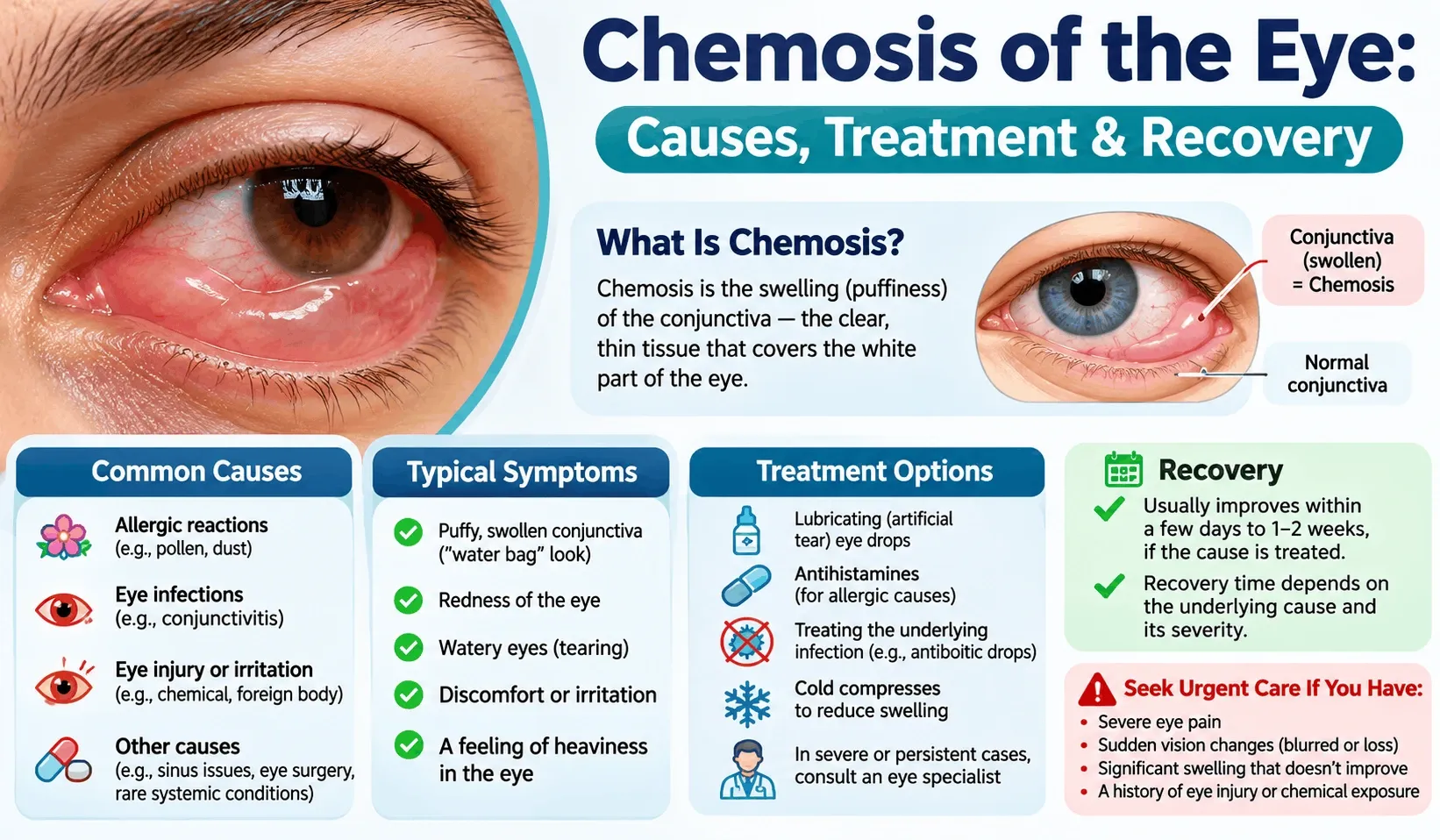
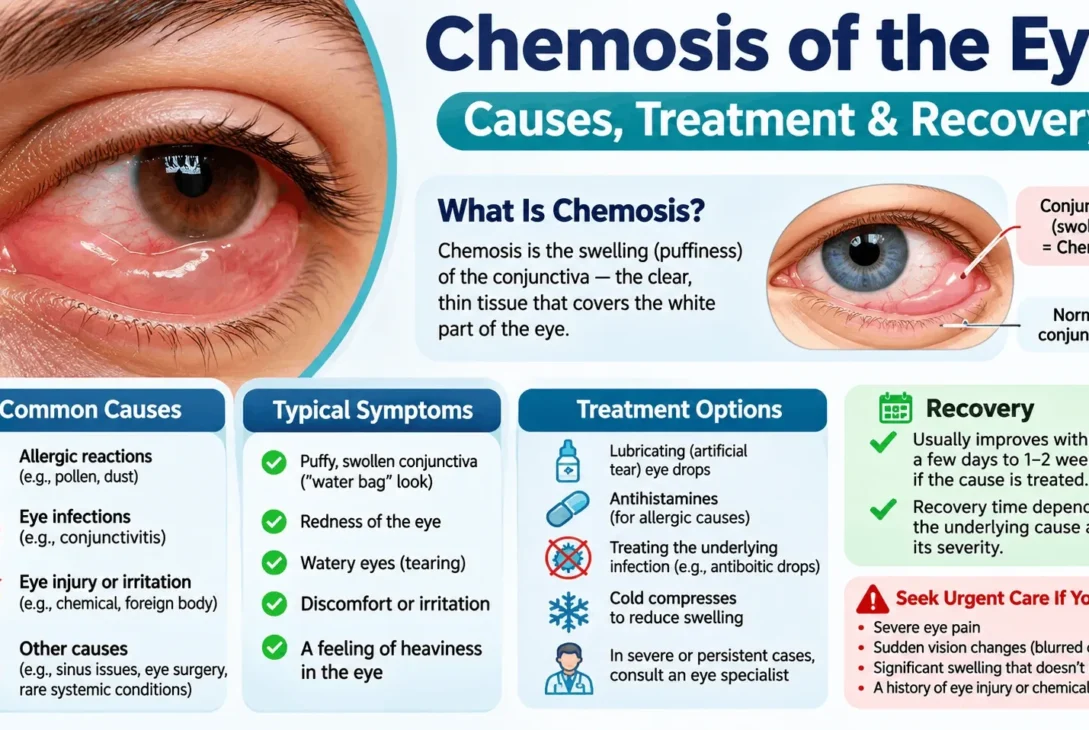
Chemosis of the eye is swelling of the conjunctiva, the thin tissue covering the white of your eye and lining your eyelids. It can look like a clear blister or a jelly-like bulge. Allergies and infections are common triggers, although eye rubbing and surgery can also cause it, according to MedlinePlus.
Treatment depends on the cause. Some episodes settle within days; others take weeks or longer. A useful recovery estimate starts with knowing why the tissue has swollen, rather than how dramatic it looks.
This article explains the possible causes and care options, but an eye examination is necessary to diagnose your own symptoms.
Symptoms that need urgent attention
Seek prompt medical care if swelling comes with eye pain, sensitivity to light, or blurred vision that remains after you wipe away discharge. Worsening symptoms also need assessment. The CDC’s guidance on pink eye treatment identifies these as reasons to contact a healthcare provider.
Some combinations need emergency care. Fever with pain when moving the eye, restricted eye movement, or an eye that bulges forward can indicate orbital cellulitis, an infection within the eye socket. The Merck Manual explains that this infection can threaten vision and requires hospital treatment.
Do not wait for a home remedy to work if you cannot close the affected eye completely. Breathing difficulty or fainting alongside swelling also warrants emergency help. MedlinePlus lists these accompanying symptoms as reasons to seek medical attention.
What chemosis looks and feels like
The swollen tissue may appear translucent, with a fluid-filled appearance on the eye’s surface. Severe swelling can interfere with eyelid closure. An examination helps establish whether that visible bulge is conjunctival swelling and what has caused it.
Other symptoms depend on the underlying problem. Allergic conjunctivitis commonly causes itching and watering in both eyes, sometimes with sneezing. Bacterial conjunctivitis can produce pus-like discharge that sticks the eyelids together. However, the CDC’s clinical overview warns that symptoms overlap, making diagnosis from appearance alone unreliable.
Chemosis describes swelling. Conjunctivitis describes inflammation of the same membrane, so the two can occur together. Seeing swelling does not tell you whether you need antibiotics.
What causes chemosis of the eye
Allergies and repeated rubbing
Pollen and dust mites can trigger allergic eye inflammation. Animal allergens are another possibility. Moorfields Eye Hospital explains that seasonal triggers can cause symptoms during particular months, while other allergens can cause trouble throughout the year.
Rubbing makes allergic eye symptoms worse. It can also contribute to chemosis itself, creating a reason to address the itch rather than repeatedly touching the eye.
Eye infections
Both viral and bacterial conjunctivitis can cause swelling. Viral illness may accompany a cold, while bacterial infection may produce thicker discharge. These clues help a clinician, but they cannot reliably identify the cause by themselves.
Contact lenses deserve particular attention. The CDC notes that contact lens wearers with bacterial conjunctivitis have a higher risk of bacterial keratitis, an infection of the cornea. Remove your lenses and arrange prompt eye assessment if you develop redness with swelling, especially when pain or vision changes occur.
Surgery and other causes
Eye surgery, including eyelid surgery, can lead to conjunctival swelling. After lower eyelid surgery, contributing factors can include surrounding swelling, exposure of the conjunctiva, and disrupted lymphatic drainage.
Less common causes include thyroid eye disease and reactions to medicines applied to the eye. Cleveland Clinic’s chemosis guide also describes injury and chemical irritation as possible triggers. Tell your clinician about any new eye drops, recent procedure, or exposure that preceded the swelling.
Treatment depends on the diagnosis
For mild inflammation, a cool compress and lubricating eye drops can ease discomfort. Prescription treatment depends on whether the problem involves an allergy, an infection, or another condition.
Comfort measures at home
The National Eye Institute recommends artificial tears and a cool washcloth for relief from pink eye symptoms. These measures can make an irritated eye more comfortable while the underlying problem settles.
Use a clean cloth on closed eyelids. Avoid rubbing. Stop wearing contact lenses while symptoms continue, and follow your eye doctor’s advice about restarting them. Home care should not delay assessment when pain, worsening redness, or a change in sight accompanies the swelling.
Allergy treatment
Reducing exposure to the trigger helps control allergic conjunctivitis. A pharmacist or clinician can advise on suitable allergy eye drops or an oral antihistamine.
Lubricating drops help with discomfort, but they do not stop the allergic reaction. Moorfields also notes that some anti-allergy drops need regular use and may take up to two weeks to work. Follow the instructions for the specific medicine instead of assuming every product provides immediate relief.
An eye specialist may prescribe steroid drops for severe allergic inflammation. Do not start prescription steroid drops without medical advice.
Infection treatment
Antibiotics do not treat viral conjunctivitis. Bacterial conjunctivitis sometimes improves without medication, although a doctor may prescribe antibiotics when appropriate. The National Eye Institute advises discussing that decision with your clinician.
An infection inside the eye socket requires a different level of care. Orbital cellulitis usually needs hospitalization and intravenous antibiotics; some patients need surgery for an abscess or other complications. Treating that condition with ordinary lubricating drops would leave the infection untreated.
How long does chemosis take to go away
There is no reliable recovery deadline for everyone. Cleveland Clinic describes a range from a few days to weeks or longer, depending on the underlying cause and treatment.
The distinction between symptom improvement and complete recovery matters. An eye may feel better before all the visible swelling has disappeared.
With infection, the National Eye Institute gives these general conjunctivitis timelines:
- Viral pink eye often improves within one to two weeks, although some cases take three weeks or longer.
- Bacterial pink eye commonly improves within two to five days, but complete resolution can take two weeks or more.
These figures describe conjunctivitis overall. They do not establish the exact day that an individual’s conjunctival swelling will disappear.
Recovery after surgery can take longer. A 2008 study of lower eyelid surgery reviewed 312 patients and reported a median chemosis duration of four weeks among those who developed it, with a range of one to twelve weeks. That finding applies to a particular surgical population, not every person with a swollen eye.
Contact your surgeon about postoperative swelling and follow the care plan they provide. Trouble closing the eye or a change in vision deserves prompt attention rather than waiting for the next routine appointment.
Can you pass it to someone else
Whether the condition spreads depends on its cause. Allergic conjunctivitis is not contagious, while viral and bacterial conjunctivitis can spread through contaminated hands or objects.
If infection is possible, wash your hands frequently and use separate towels. Avoid sharing eye makeup. The National Eye Institute recommends these measures to reduce transmission. A swollen eye alone does not establish whether someone is contagious.
What to tell your eye doctor
Before the appointment, note when the swelling started and whether anything seems to worsen it. Mention any discharge or changes in sight, and explain whether you recently had surgery or started a new eye product.
MedlinePlus describes symptom history and examination as part of the assessment. Ask your clinician what improvement should look like in your case and when to return if it does not happen. Leave with a follow-up plan, particularly if the swelling persists or keeps coming back.