An ingrown toenail can turn something as simple as putting on a sock into a painful chore. If you’ve been searching for relief, chances are someone has already told you to try an Epsom salt soak. It’s one of the oldest home remedies around, and for good reason — it actually works for mild to moderate cases. Get the technique wrong, and you’re basically just dunking your foot in salty water for no reason.
This guide walks through exactly how ingrown toenail Epsom salt soaks work, how to do them safely, and when soaking alone isn’t enough.
What Is an Ingrown Toenail?
An ingrown toenail happens when the edge or corner of a nail grows into the surrounding skin instead of over it. It most often affects the big toe, though any toenail can be affected. The result is redness, swelling, tenderness, and sometimes drainage or infection if left untreated.
Common causes include:
- Shaping nails into a curve, or clipping them too short, encourages the edges to grow inward instead of outward
- Wearing tight, narrow shoes that press on the toes
- Toe injuries, such as stubbing or dropping something heavy on the foot
- Naturally curved or thick toenails
- Poor foot hygiene combined with sweat and friction
Mild cases can often be managed at home. Severe or infected ones usually need a podiatrist.
Why Epsom Salt Is Used for Ingrown Toenails
Despite the name, Epsom salt has nothing to do with table salt. Behind the name is simply magnesium sulfate, a mineral compound that dissolves readily in warm water. When dissolved in warm water, it’s believed to help draw out fluid, soften hardened skin, and ease inflammation around the nail. While clinical research specifically on Epsom salt for ingrown toenails is limited, warm soaks in general are widely recommended by foot care professionals because heat and moisture soften tissue and improve circulation to the area.
In simple terms, an Epsom salt soak works by:
- Softening the skin around the ingrown nail so it’s less rigid and painful
- Reducing swelling through warm water immersion
- Helping cleanse the area of bacteria and debris
- Making it easier to gently lift or trim the nail edge afterward
It’s a supportive remedy, not a cure for infection. Hold onto that point, because it matters more than it might seem right now.
How to Do an Ingrown Toenail Epsom Salt Soak Safely
Doing this correctly makes a real difference in comfort and results. Here’s a step-by-step approach.
Step 1: Gather What You Need
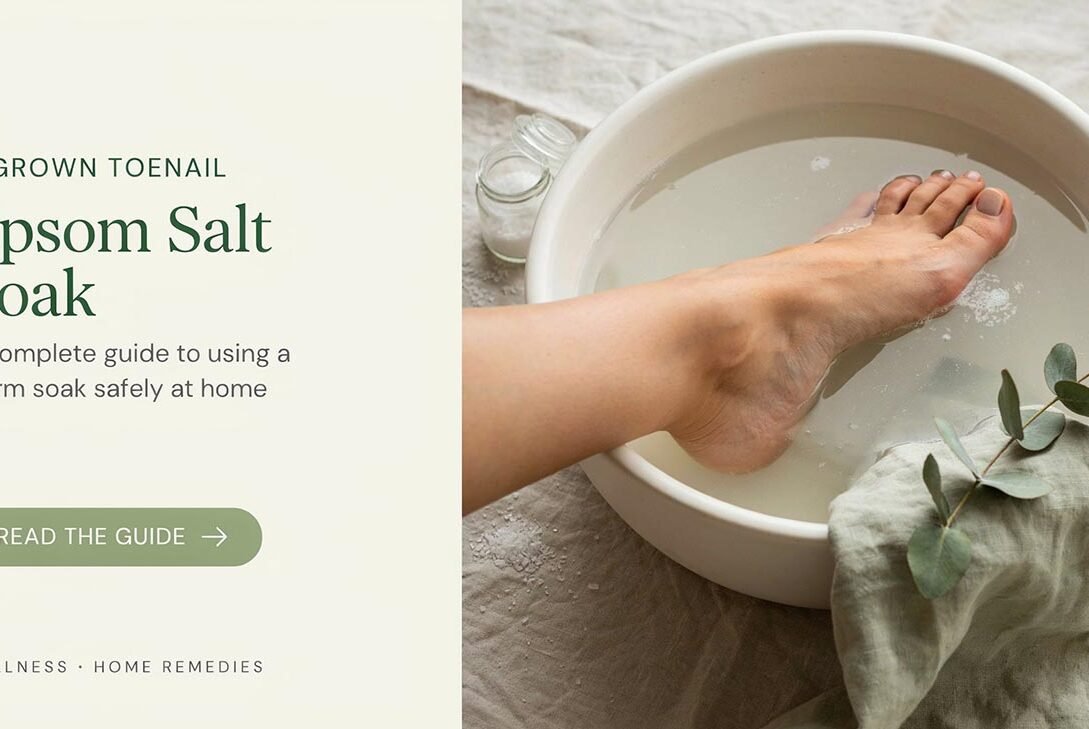
- A basin or tub large enough to fully submerge your foot
- Warm (not hot) water
- Plain Epsom salt, about 2 tablespoons per quart of water
- A clean towel
- Optional: a clean pair of socks for afterward
Step 2: Prepare the Soak
Fill the basin with warm water — comfortably warm, not scalding. Water that’s too hot can irritate already inflamed skin. Stir in the Epsom salt until it dissolves fully.
Step 3: Soak the Foot
Aim for a 15- to 20-minute soak, keeping the toe fully covered the whole time. Try to keep the toe fully underwater the whole time. Some people find it helpful to soak once in the morning and once in the evening, especially in the first few days when symptoms are worse.
Step 4: Dry and Care for the Toe
Pat the foot dry gently with a clean towel — don’t rub. Once dry, you can carefully try to lift the ingrown edge of the nail using a clean cotton swab, tucking a small piece of clean cotton or dental floss underneath to guide it away from the skin as it grows. Never force this if it’s too painful.
Step 5: Repeat Daily
Consistency matters more than intensity. Daily soaking for 3 to 7 days is typically enough to see improvement in mild cases. If there’s no change after a week, it’s time to see a professional.
Epsom Salt vs. Plain Warm Water Soaks
A common question is whether Epsom salt actually adds anything over a plain warm water soak. Here’s a straightforward comparison:
| Factor | Epsom Salt Soak | Plain Warm Water Soak |
|---|---|---|
| Softens skin | Yes | Yes |
| Reduces swelling | Often more noticeable | Mild effect |
| Cost | Very low | Free |
| Skin sensitivity risk | Low, but possible for sensitive skin | Minimal |
| Best for | Mild inflammation, general discomfort | Simple cleansing |
Both methods help. Epsom salt just tends to give a slightly stronger anti-inflammatory feel for many people, largely due to the magnesium content and the ritual of a longer, more deliberate soak.
When Epsom Salt Soaks Are Not Enough
Soaking helps with mild irritation, but it isn’t a substitute for medical care when things escalate. Watch for these warning signs:
- Increasing redness spreading beyond the toe
- Pus or foul-smelling discharge
- Red streaking up the foot or leg
- Fever or chills
- Severe pain that doesn’t improve with soaking
- Diabetes or poor circulation, which raises infection risk significantly
If any of these apply, stop relying on home care and see a doctor or podiatrist. Ingrown toenails in people with diabetes or circulatory issues can progress quickly and should never be self-treated with soaking alone.
Extra Tips for Faster Relief
- Wear open-toed shoes or sandals while healing to reduce pressure
- Avoid tight socks and narrow shoes until the nail improves
- Trim nails straight across, not curved, once healed
- Keep feet dry between soaks to avoid excess moisture buildup
- Avoid digging aggressively at the nail edge — this often makes things worse
Small adjustments like these speed up recovery and lower the chance of the same toe getting ingrown again.
Preventing Ingrown Toenails in the Future
Prevention is far easier than treatment. A few habits go a long way:
- Keep the cut flat and even, lining up with where the toe naturally ends.
- Don’t cut nails too short
- Pick shoes that let your toes spread out naturally, rather than ones that pinch or crowd them
- Check feet regularly if you have diabetes or nerve issues
- Treat minor toe injuries promptly
These habits, combined with good hygiene, dramatically reduce the odds of a repeat ingrown toenail.
Frequently Asked Questions
How long should I soak an ingrown toenail in Epsom salt?
Fifteen to twenty minutes is generally enough. Longer soaks don’t necessarily speed up healing and can dry out surrounding skin.
How many times a day should I soak my toe?
Two soaks a day — morning and evening — works well for most mild cases. Once daily is fine if symptoms are minor.
Can Epsom salt cure an infected ingrown toenail?
No. Epsom salt can ease inflammation and discomfort, but it does not treat bacterial infection. If you see pus, spreading redness, or fever, you need medical treatment, which may include antibiotics or a minor in-office procedure.
Is hot water better than warm water for soaking?
No. Hot water can irritate inflamed skin and increase discomfort. Comfortably warm water is safer and just as effective.
Are Epsom salt foot soaks okay for people with diabetes?
This should only be done under a doctor’s guidance. Diabetic feet are more prone to complications, and even minor ingrown toenails can become serious quickly.
How soon will I see improvement?
Many people notice reduced swelling and pain within 2 to 3 days of consistent soaking. Full resolution can take up to a week for mild cases.
When should I see a podiatrist instead of soaking at home?
If there’s no improvement after 5 to 7 days, or if you notice pus, spreading redness, or fever, see a podiatrist. Recurrent ingrown toenails may also benefit from a simple in-office procedure to prevent future episodes.
Conclusion
An ingrown toenail Epsom salt soak is a simple, low-cost way to ease mild pain and swelling at home. Done correctly — warm water, the right salt ratio, 15 to 20 minutes, once or twice daily — it can genuinely speed up comfort and healing within days. That said, it works best for mild cases without signs of infection. If pain worsens, pus appears, or you have a condition like diabetes that raises complication risk, don’t rely on soaking alone. See a healthcare provider so the issue gets treated properly before it becomes something bigger