Search for “parcha” and you will get a strange mix of results. One page shows a bright yellow fruit. Another talks about a slip of paper. A third explains how to roast peanuts. That is not a glitch. Parcha is a word with more than one life, and which meaning applies depends on where you heard it.
This guide sorts it out. You will learn what parcha means in Spanish and in Urdu, how parcha passion fruit differs from the passion fruit you may know, how to make a parcha drink at home, and how to parch peanuts in the oven. You will also find tips for tracking down parcha near you.
What Is Parcha?
Parcha is a word with different meanings in different languages and regions. The two most common are:
- Passion fruit. In Puerto Rico, the Dominican Republic, Venezuela and some other Spanish-speaking places, parcha is the everyday name for passion fruit.
- A slip, note or paper. In Urdu, Hindi and Punjabi (written پرچہ in Urdu), parcha means a small piece of paper, a chit, a note, or an exam paper.
There is also a third, unrelated search trail. People who type “parch peanuts” are looking for an English cooking term, which sounds close to parcha but comes from a different word entirely. It is covered below because so many people search for it together with parcha.
So if you ask “what is parcha,” the honest answer is: it depends on the language. Context is everything.
Quick comparison of the main meanings
| Meaning | Language or region | Example |
|---|---|---|
| Passion fruit | Caribbean and Latin American Spanish | jugo de parcha (passion fruit juice) |
| Slip of paper, chit, note | Urdu, Hindi, Punjabi | ek parcha de do (hand me a slip) |
| Exam or question paper | Urdu, South Asian English | Aaj ka parcha mushkil tha (today’s paper was hard) |
| Dry-roasted nuts (as “parched”) | Southern US English | parched peanuts |
Parcha Passion Fruit: The Tropical Meaning
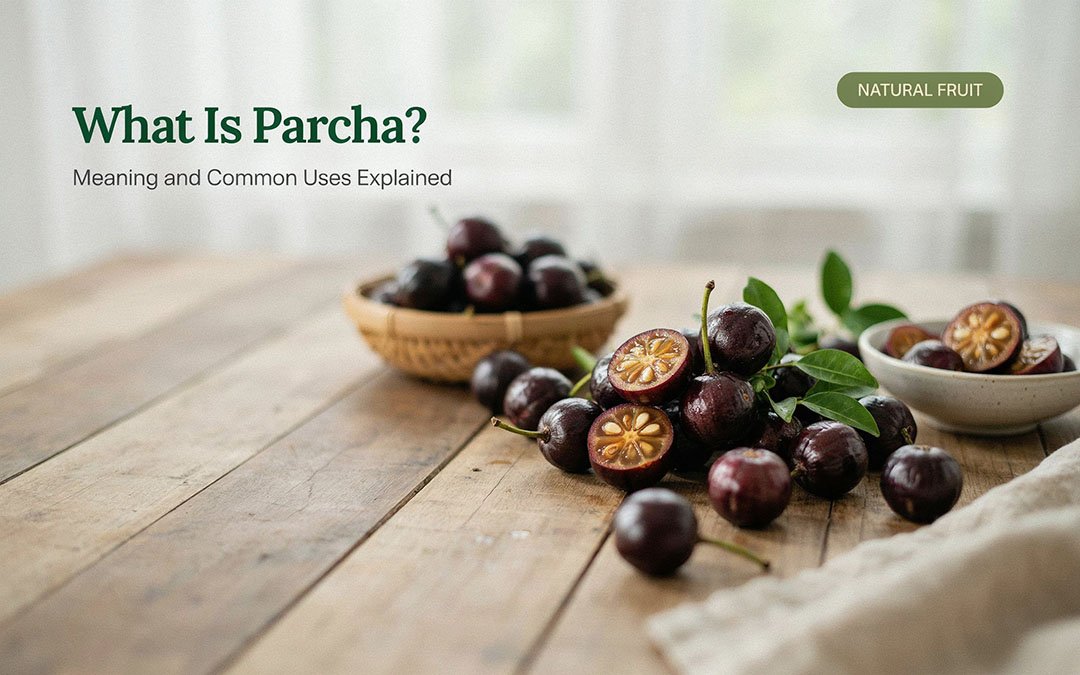
If you landed here looking for parcha passion fruit, you are in the right place. In much of the Caribbean, asking for parcha at a market gets you passion fruit, usually the purple or yellow varieties of Passiflora edulis.
What parcha looks and tastes like
A ripe parcha is about the size of an egg. The rind is thick and often wrinkled when the fruit is ready to eat. Cut it open and you will find jelly-like orange pulp packed around small dark seeds. Its taste is bright, tangy, and floral, with a subtle sweetness that becomes more pronounced as the fruit reaches full ripeness. A smooth, tight skin usually means it is not ripe yet. Wrinkles are a good sign.
Is parcha the same as maracuyá?
Yes, in most cases. Maracuyá is the more common Spanish word across South America and Mexico. Parcha is the Caribbean preference. Brazil uses maracujá, and English speakers say passion fruit. They all point to the same plant family.
Nutrition and benefits
Passion fruit pulp is a good source of dietary fiber and vitamin C, and it also provides some vitamin A and small amounts of potassium. The seeds are edible and add crunch along with extra fiber. Like any fruit, it works best as part of a varied diet. It is not a cure for anything, and anyone with a latex allergy should know that cross-reactions with some tropical fruits can occur. If you have food allergies, check with your doctor.
Parcha Drink: How People Actually Use It
The most popular use for parcha is juice. A parcha drink is simple, refreshing and very forgiving, which is why it shows up at family tables across the Caribbean.
Simple jugo de parcha
Here is a basic home method that needs no special equipment:
- Scoop the pulp and seeds from 4 to 6 ripe parchas into a blender.
- Add 2 cups of cold water.
- Pulse for just a few seconds. You want to loosen the pulp from the seeds, not grind the seeds into bits.
- Strain through a sieve into a pitcher.
- Sweeten with sugar, honey or simple syrup to taste. Start with 2 tablespoons and adjust.
- Serve over ice.
The pulse step matters. Blending too long makes the juice bitter and cloudy.
Ways to vary it
- Add a small amount of orange juice to create a smoother, more balanced flavor with a hint of citrus sweetness.
- Add sparkling water for a light soda-style drink.
- Freeze the juice in trays and use the cubes in iced tea or lemonade.
- Stir a spoonful of pulp into plain yogurt or over ice cream.
Bottled parcha juice and frozen pulp are also sold in many Latin grocery stores, which helps if fresh fruit is hard to find where you live.
Parcha in Urdu and Hindi: Slip, Note or Exam Paper
For millions of people in South Asia, parcha has nothing to do with fruit. Here the word describes something on paper.
Everyday uses
- A slip or chit. A shopkeeper writes your order on a parcha. A doctor hands you a prescription parcha.
- A note. Passing a small folded note in class is called passing a parcha.
- An exam paper. Students often say paper and parcha interchangeably, as in “the math parcha was tough.”
- An official slip. In parts of Pakistan, the word is also used for small administrative slips and records, including land revenue paperwork and complaint slips. The exact usage changes by province and office, so it is best to ask the office concerned what they mean.
The word originates from the Persian term parcheh, which refers to a piece, portion, or fragment of something. That origin explains why it covers any small piece of something, from cloth to paper.
How to Parch Peanuts (A Different Word, Same Search)
Many people searching for parcha are actually looking for how to parch peanuts. Although the two terms sound similar, they have entirely different origins and meanings. Parch is an English verb meaning to dry something with heat until it is toasted and crisp.
What does parching mean?
Parching is a dry-roasting method long used in the American South. Raw peanuts, often still in the shell, are heated without oil or added water until they turn dry, brown and nutty. The result is different from boiled peanuts, which are soft and salty, and different from oil-roasted snacks.
How to parch peanuts in the oven
This is the easiest home method. You need raw peanuts in the shell, a baking sheet and an oven.
- Preheat the oven to 350°F (175°C).
- Rinse and dry. Rinse the peanuts to remove dirt, then pat them dry with a towel.
- Spread them out. Arrange the peanuts evenly in one layer across a baking tray with raised edges to ensure they roast consistently.
- Roast for 20 to 30 minutes. Shake or stir the pan every 10 minutes so the peanuts toast evenly.
- Test one. Crack a shell, let the peanut cool for a minute and taste it. It should be dry, lightly browned and crunchy, not chewy or raw-tasting.
- Cool completely. Peanuts keep crisping as they cool, so do not overbake.
Some cooks prefer a lower oven temperature, around 300°F (150°C), for longer, which gives a deeper, more even roast. Ovens vary, so watch the first batch closely. Burnt peanuts turn bitter fast.
Tips for better results
- Choose fresh raw peanuts. Old ones roast unevenly.
- For salted peanuts, soak the shelled or in-shell nuts briefly in salty water first and dry them well before roasting.
- Store cooled peanuts in an airtight container. They stay fresh for a couple of weeks at room temperature and longer in the fridge.
- Never serve peanuts to anyone with a peanut allergy, and label homemade snacks clearly if you share them.
Parcha Near Me: How to Find It
What you can find nearby depends on what you want, so here is a practical guide.
- For passion fruit or parcha juice: Check Latin or Caribbean grocery stores, farmers’ markets and large supermarkets with a tropical produce section. Search maps for “maracuyá” or “passion fruit” as well, since stores often use those names. Frozen pulp is a good fallback.
- For parcha as a paper or slip: This usually means a government or school office. Search for the specific office you need, such as an exam board or revenue office, rather than the word parcha alone.
- For parched peanuts: Look for roadside stands in the American South, regional farm stores and some specialty grocers, or simply make them at home.
Tip: add a specific word to your search, like “parcha juice” or “passion fruit store,” and results will be far more accurate.
Frequently Asked Questions
What does parcha mean?
It depends on the language. In Caribbean Spanish, parcha means passion fruit. In Urdu and Hindi, it means a slip of paper, a note or an exam paper.
Is parcha the same as passion fruit?
In Puerto Rico, the Dominican Republic and Venezuela, yes. Parcha is simply a local name for passion fruit, also called maracuyá in other Spanish-speaking regions.
What does parcha taste like?
It is tart, tropical and slightly floral, with a sweetness that grows as the fruit ripens. Many people combine it with sugar or blend it with other fruit juices to create a smoother, more balanced taste.
Can you eat the seeds of parcha?
Yes. The seeds are edible and crunchy. Many people strain them out for juice, but they are fine to eat with a spoon straight from the fruit.
How do you parch peanuts in the oven?
Spread raw in-shell peanuts on a baking sheet and roast them at 350°F (175°C) for about 20 to 30 minutes, stirring every 10 minutes. Allow them to cool completely after cooking so they develop a light, crisp texture.
What is the difference between parched and boiled peanuts?
Parched peanuts are dry-roasted until crisp. Boiled peanuts are gently cooked in salted water until they become tender and soft throughout. The texture and flavor are completely different.
Where can I find parcha near me?
Try Latin grocery stores, farmers’ markets and supermarkets with tropical produce. Search for “passion fruit” or “maracuyá” if “parcha” brings up few results.
Conclusion
Parcha is a small word with a wide reach. To a Puerto Rican cook, it is a fragrant passion fruit that makes a great drink. To a student in Karachi or Lahore, it is a slip of paper or an exam sheet. And to anyone chasing the sound-alike search, it connects to the old Southern art of parching peanuts.
The best way to understand parcha is to check the context: the language, the region and what you are trying to do. Once you know that, the answer is simple, whether you are squeezing fruit, writing a note or roasting a tray of peanuts