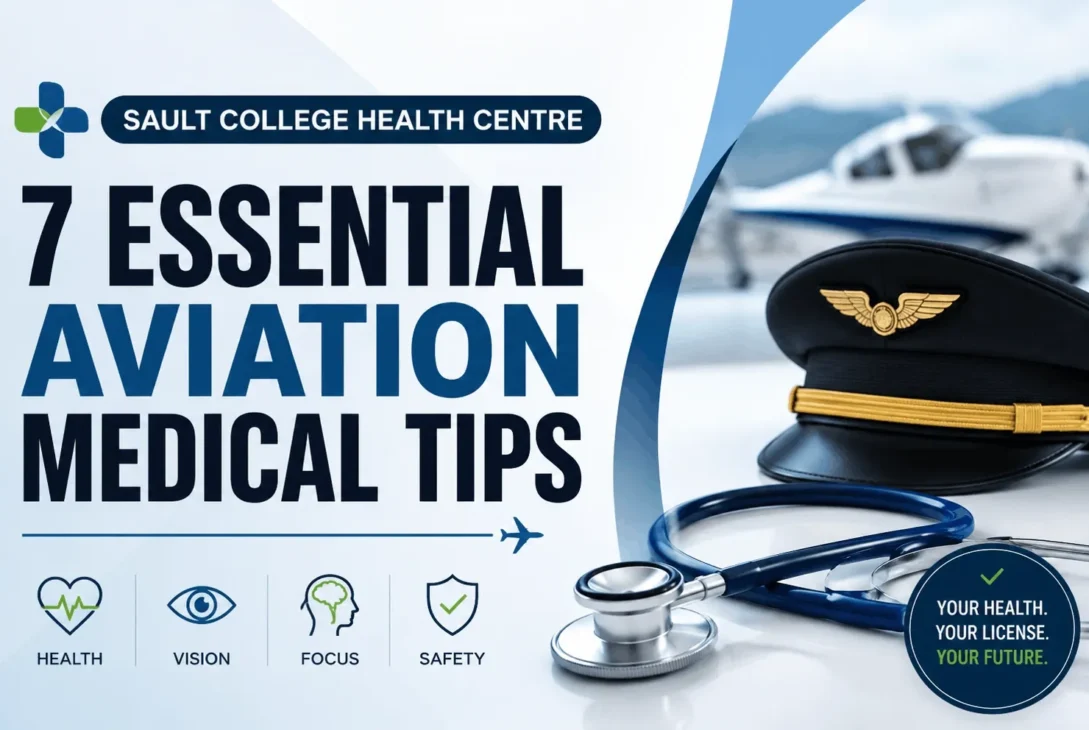
If you’re planning to enroll in Sault College’s Aviation Technology – Flight program, there’s one requirement you can’t afford to overlook: your aviation medical. It isn’t just a box to tick — it’s a legal prerequisite that directly affects your admission, your flight training, and your entire career path. This guide walks you through everything you need to know about the Sault College Health Centre aviation medical process, from what it is to how you get it done on time.
What Is an Aviation Medical and Why Does Sault College Require It
An aviation medical isn’t the same as a standard doctor’s visit. It’s a specialized health evaluation designed to confirm that you’re physically and mentally fit to operate an aircraft safely. Sault College requires it because aviation training involves real aircraft, real passengers, and real risk. Without proof of medical fitness, the college simply can’t allow you to fly.
The requirement isn’t arbitrary either. It’s rooted in Transport Canada regulations — the federal body that governs all civil aviation in Canada. Every student must meet these standards before they ever touch the controls of a plane.
Transport Canada Category 1 Medical Certificate Explained
The Transport Canada Category 1 Medical Certificate — often called the CAME — is the gold standard for pilot medical certification in Canada. It’s the most rigorous class of medical available and is required for anyone pursuing a commercial pilot licence. A Civil Aviation Medical Examiner (CAME) issues the certificate after evaluating your vision, hearing, cardiovascular health, neurological function, and general physical condition. You must submit this certificate to the Sault College Registrar’s Office by August 1st of your entry year.
Why the Medical Must Stay Active Throughout Your Studies
Your Category 1 certificate isn’t a one-time hurdle. It must remain valid for the full duration of your program. If it lapses at any point, you won’t be permitted to continue flight training. Sault College is clear on this: students who can’t maintain an active medical may not progress to the next semester. It’s not a technicality — it’s a hard rule rooted in aviation safety regulations.
Role of the Sault College Health Centre in Aviation Medicals
Many students assume the Sault College Health Centre aviation medical process begins and ends on campus. The reality is a little more nuanced. The Health Centre plays an important supporting role for aviation students — but it isn’t the place where your CAME examination takes place.
The centre is located in room A0174 on the main campus. Staff there are genuinely helpful for a wide range of health concerns that come up during your studies, from monitoring chronic conditions to handling prescription renewals. For aviation-specific needs, though, you’ll need to look beyond campus walls.
What Services the Health Centre Provides to Aviation Students
The Sault College Health Centre offers first aid, treatment for minor injuries and illnesses, blood pressure monitoring, health counselling, and referrals to appropriate external care. For aviation students, this is especially useful when you need documentation for immunizations, prescription assessments, or general fitness monitoring throughout the year. The staff can also guide you on which external professionals to contact for your CAME exam and help ensure your health records are properly filed with the college.
Is the Health Centre a Certified CAME Examination Site?
No — the Health Centre is not a certified Civil Aviation Medical Examiner site. Your Category 1 medical must be performed by a Transport Canada–authorized CAME, who may be located in Sault Ste. Marie or a nearby city. The Health Centre can assist with referrals and general health support, but the actual aviation medical examination must happen with a licensed examiner.
How to Obtain Your Aviation Medical for Sault College Enrollment
Getting your aviation medical isn’t complicated, but it does take time — sometimes more than students expect. The process involves booking with a CAME, completing a detailed health history, undergoing a physical examination, and then waiting for Transport Canada to process and issue your certificate. Start early. Processing delays are common and can take several months.
Don’t wait until you’ve received your acceptance letter to start. The college actively encourages applicants to begin the process as soon as possible.
Step-by-Step Process to Apply for a Category 1 CAME
Here’s a simplified breakdown of how the CAME application works:
- Locate a Transport Canada–authorized CAME in your region
- Book your appointment — these can fill up quickly, so plan ahead
- Complete the CAME medical application (Transport Canada Form 26-0297)
- Attend your examination — the CAME will assess all required health areas
- Wait for Transport Canada to review and issue your certificate
- Submit a copy to the Sault College Registrar’s Office before August 1st
Timeline and Why You Should Apply Early
The Transport Canada CAME application timeline can stretch from six weeks to several months, especially if additional testing is needed. Missing the August 1st deadline could delay or cancel your enrollment. The certificate must also be issued between September 1st of the prior year and August 31st of your program start date — so timing really does matter.
Where to Find a Civil Aviation Medical Examiner (CAME) Near You
Transport Canada maintains a public directory of authorized CAMEs across Canada. You can search by province or city to find a civil aviation medical examiner near you. There are CAME-qualified physicians available in and around Sault Ste. Marie, including the examiner listed at Sault College’s own Health Centre on aviation medical directories — though you should always confirm availability directly.
Medical Standards You Must Meet for Sault College’s Aviation Program
The Category 1 medical sets a high bar. You’ll need to meet specific thresholds across multiple health categories. It’s not about being an elite athlete — it’s about demonstrating that your health won’t create risk in a cockpit environment.
Conditions that are well-managed and documented may still be acceptable, depending on how they affect your fitness to fly. The key is full disclosure and working with your CAME honestly.
Vision, Hearing, and Cardiovascular Requirements
Your vision must meet minimum acuity standards, both corrected and uncorrected. Colour vision is also tested, as pilots need to distinguish navigational lights. Hearing must fall within acceptable thresholds, and your cardiovascular health — including blood pressure, heart rhythm, and electrocardiogram results — will be carefully reviewed. These commercial pilot medical fitness standards exist because in-flight impairment from any of these areas can be catastrophic.
Medications and Substance Use Policies for Aviation Students
Beyond physical fitness, pilots must also meet behavioral and mental health standards. Transport Canada takes substance use and psychiatric history seriously. Sault College’s own drug and alcohol policy prohibits aviation students from performing any flight-related duties within 48 hours of taking certain medications, unless approved in writing by a CAME or aviation-aware physician. Cannabis — in any form — is prohibited at all times, on or off duty. Full transparency with your examiner isn’t just good practice; it’s required.
Renewing Your Aviation Medical During the Program
Your aviation medical doesn’t last forever. For students under 40, Category 1 certificates are valid for 12 months. For those over 40, renewal is required every six months. Staying on top of your renewal schedule is part of being a responsible aviation student — and it directly affects your ability to complete your program on time.
Building daily habits that support medical fitness — like adequate sleep, regular exercise, and mindful eating — will make renewal exams significantly easier over time.
When to Renew Before Semester 5 Commercial Exam
Sault College requires students to renew their Category 1 certificate before writing the Transport Canada Commercial Written Exam in Semester 5. Don’t let this catch you off guard. Mark your renewal date in your calendar well in advance and book your CAME appointment at least two months before your certificate expires.
What Happens If Your Certificate Lapses
If your certificate expires during the program, you won’t be permitted to fly — and that means you can’t complete the flight hours required for your commercial licence. A lapse doesn’t automatically mean dismissal, but it does create a serious disruption. Contact the Sault College Registrar’s Office immediately if you’re at risk of a lapse, and work with your CAME to expedite renewal.
Tips for Passing Your Aviation Medical the First Time
Most students who fail or face delays do so not because of disqualifying conditions, but because of poor preparation or incomplete disclosure. Going into your CAME exam well-informed dramatically improves your chances of a clean, first-time pass.
Think of the aviation medical like a job interview — preparation matters, honesty matters, and showing up in your best condition matters.
Common Reasons Students Fail or Face Delays
The most common issues include undisclosed medical history, borderline blood pressure readings, colour vision deficiencies, and BMI or weight concerns related to aircraft manufacturer specifications. Some students also face delays simply because they booked their exam too late. Others fail to bring required documentation, such as existing prescription records or prior specialist reports. Know what to bring and what to disclose before you walk in the door.
How to Prepare Physically and Medically
In the weeks leading up to your exam, focus on consistent preventive health habits: get enough sleep, cut back on caffeine, manage your stress, and stay well-hydrated. If you have any ongoing conditions, consult your regular doctor beforehand and gather all relevant records. Being proactive here signals to the CAME examiner that you take your health — and your future as a pilot — seriously.
Frequently Asked Questions
Can the Sault College Health Centre perform my aviation medical exam?
No. The Health Centre provides general health support and referrals, but it isn’t an authorized CAME examination site. You’ll need to visit a Transport Canada–certified Civil Aviation Medical Examiner for your Category 1 certificate.
How long does the CAME process take?
It varies. Some students receive their certificate within a few weeks, but processing delays at Transport Canada can stretch the timeline to several months. Apply as early as possible to avoid missing the August 1st deadline.
What if I have a pre-existing medical condition?
Having a pre-existing condition doesn’t automatically disqualify you. Many conditions can be accommodated if they’re well-documented and well-managed. Be fully transparent with your CAME examiner and provide all relevant medical records.
Is the Category 1 medical the same in the USA and Canada?
No. Canada uses Transport Canada’s CAME system, while the USA uses the FAA’s Aviation Medical Examiner (AME) system with its own Class 1, 2, and 3 standards. If you hold a US medical, it won’t satisfy Sault College’s requirements — you must obtain a valid Transport Canada Category 1 certificate.