You don’t need a hospital visit to know how your body is doing. Many people wait until something feels wrong before paying attention to their health — and that’s understandable. But catching small changes early can make a big difference. The good news? Simple health check methods are easier than you think and require little to no equipment. Let’s walk through what you can do right now, at home, today.
Why Regular Self-Checks Matter
Most of us are reactive when it comes to health. We feel fine, so we assume everything is fine. But the body often sends quiet signals long before a problem becomes serious. Routine health monitoring gives you a baseline — something to compare against when things do shift. Think of it like checking your car’s oil. You don’t wait for smoke before you look under the hood.
Adopting preventive health habits is one of the smartest things you can do for your long-term wellbeing. Self-checks aren’t meant to replace your doctor — they’re meant to keep you informed between appointments. The earlier you spot something unusual, the more options you have. That’s a powerful position to be in.
Checking Your Heart Rate and Blood Pressure
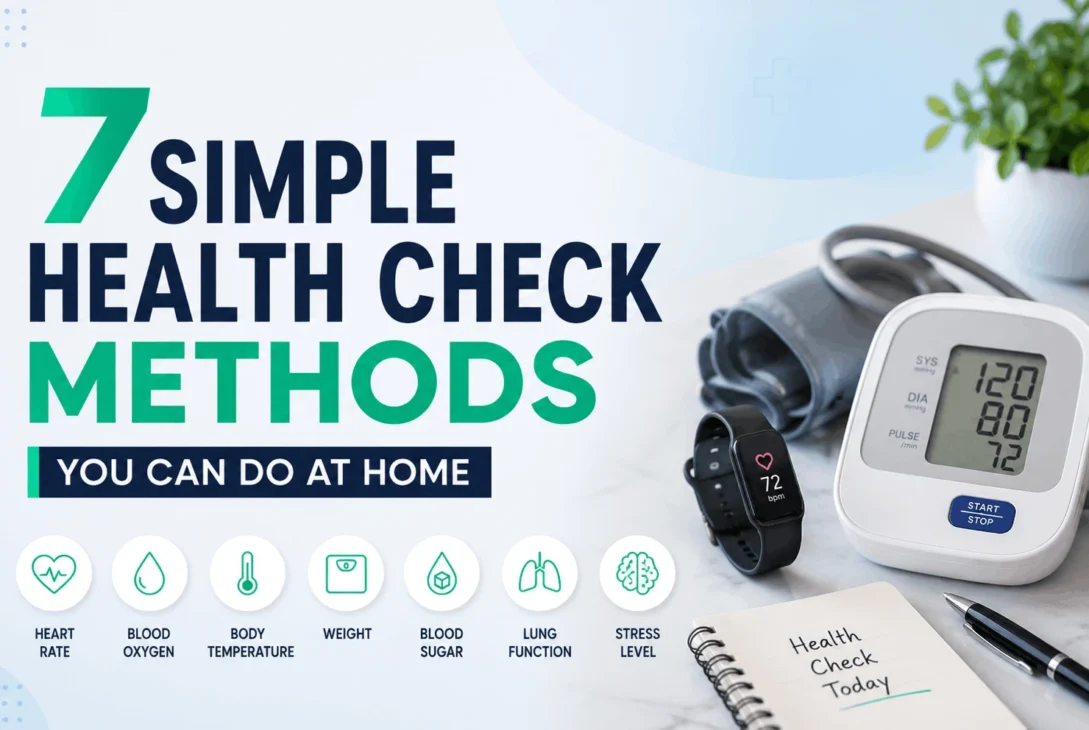
Your heart is working every second of every day, so it makes sense to check in with it regularly. Two of the most useful simple health check methods involve monitoring your resting heart rate and blood pressure — both are quick, painless and surprisingly revealing. Abnormal readings in either can flag stress, dehydration, or early cardiovascular concerns before symptoms appear.
You don’t need fancy equipment either. A basic blood pressure cuff (available for under $30) and two fingers on your wrist are all it takes. Done consistently at the same time each day, these two checks can build a clear picture of your cardiovascular health over weeks and months.
How to measure resting heart rate
Find your pulse on the inside of your wrist or the side of your neck. Count the beats for 30 seconds and double it. That’s your resting heart rate. For most adults, a healthy range sits between 60 and 100 beats per minute — though trained athletes often run lower. If you’re consistently above 100 at rest, it’s worth mentioning to your doctor.
Reading your blood pressure numbers
A blood pressure reading gives you two numbers: systolic (top) and diastolic (bottom). A healthy reading is generally around 120/80 mmHg or below. Readings consistently above 130/80 may indicate high blood pressure, which often has no symptoms. Blood pressure monitoring at home is one of the most underused wellness check tools available — and one of the most valuable.
Simple Weight and BMI Monitoring
Weight is one of the most visible health indicators, but it’s also one of the most misunderstood. Stepping on a scale tells you one number — it doesn’t tell you what that number is made of. That’s why pairing your weight with a BMI calculation and a waist-to-hip ratio gives you a much more complete picture of your body composition and health risk.
That said, no single number defines your health. Use these metrics as data points, not verdicts. Also check out our article on body fat percentage levels for a deeper look at what the numbers actually mean for your body.
How to calculate your BMI at home
BMI stands for Body Mass Index. Divide your weight in kilograms by your height in metres squared. A result between 18.5 and 24.9 is considered healthy. It’s a rough guide — not perfect — but it’s a useful starting point for a basic self health assessment, especially when tracked over time.
Waist-to-hip ratio: a better metric
Measure your waist at its narrowest point and your hips at their widest. Divide the waist measurement by the hip measurement. For women, a ratio below 0.85 is generally healthy; for men, below 0.90. Research consistently shows that this ratio is a stronger predictor of cardiovascular risk than BMI alone.
What Your Skin, Nails, and Eyes Can Tell You
Your skin is your largest organ and it communicates constantly. Changes in colour, texture, or appearance can reflect what’s happening internally — from nutrition deficiencies to circulation issues to early signs of systemic conditions. A quick skin and nail health check takes about two minutes and costs nothing.
Don’t ignore what’s right in front of you. Yellowing eyes, pale nail beds, or a sudden rash are all signs worth noting. They aren’t always cause for alarm but they’re data — and data helps. Monitor your health at home by getting into the habit of looking a little more closely at your body each week.
Warning signs in skin tone and texture
Look for new patches of unusual colour, persistent dryness that doesn’t respond to moisturiser, or moles that change shape or size. Pale or yellowish skin can sometimes indicate anaemia or liver issues. Consistently dry, flaky skin may point to thyroid imbalance or low essential fatty acids. These aren’t diagnoses — they’re flags worth raising with a professional.
Nail color and shape as health indicators
Healthy nails are smooth, pinkish, and consistent in colour. White spots, ridges, or a bluish tint can indicate different nutrient gaps or circulation concerns. Spoon-shaped nails (where the centre dips inward) are associated with iron-deficiency anaemia. It sounds obscure but it’s a classic body check tip that many doctors still use during routine examinations.
Monitoring Sleep and Energy Levels
Sleep is one of the most powerful health tools you have — and most people underestimate how much poor sleep affects everything else. Your heart rate, weight, mood, skin, immune function, and concentration are all directly tied to sleep quality. If something feels off across multiple areas of your health, poor sleep is often the common thread.
Tracking how you feel in the morning is a valid and useful sleep quality indicator. Do you wake up refreshed? Do you need three coffees to function? Do you hit an energy crash at 2pm every day? These patterns matter. For a deeper dive, read our guide on sleep quality and deep sleep to understand what your body actually needs overnight.
Signs you’re not getting quality sleep
If you regularly need more than 20 minutes to fall asleep, wake up multiple times during the night, or feel unrefreshed after 7–8 hours — something is disrupting your sleep cycle. Irritability, poor concentration, and persistent fatigue are also sleep quality indicators worth tracking. Keeping a simple sleep log for two weeks can reveal patterns you’d never notice otherwise.
Hydration Check: Reading Urine Color
It sounds unglamorous but your urine is one of the most honest health indicators your body produces. Pale yellow means you’re well hydrated. Dark yellow or amber suggests you need to drink more water. Very dark urine, especially with an unusual smell, can sometimes indicate a urinary tract issue or kidney stress worth investigating.
This urine color health guide is simple: aim for pale straw yellow throughout the day. First-morning urine is naturally darker — that’s normal. But if dark urine persists into the afternoon, you’re almost certainly not drinking enough. Learn more about why consistent hydration matters in our guide to daily water intake benefits.
When to Move Beyond Self-Checks and See a Doctor
Home health checks are incredibly useful but they have limits. If you consistently see readings outside the normal range — blood pressure above 140/90, heart rate persistently above 100, unexplained changes in skin or nails, or chronic fatigue that doesn’t improve — it’s time to see a professional. These simple health check methods are tools for awareness, not substitutes for medical diagnosis.
Think of your self-checks as an early warning system. They help you walk into a doctor’s appointment informed rather than uncertain. And that makes every conversation with your healthcare provider more productive. From here, the natural next step is putting what you’ve learned into action — start with our guide on how to build simple daily health habits to turn awareness into routine.
Frequently Asked Questions
How often should I do a self health check?
For most adults, checking blood pressure and resting heart rate once a week is plenty. A quick skin and nail check once a week takes under two minutes. Weigh yourself no more than once a week to avoid day-to-day fluctuations affecting your mindset. The goal is consistency over frequency — monthly trends matter more than daily numbers.
Are simple health check methods accurate?
They’re accurate enough to be genuinely useful when done consistently and correctly. Home blood pressure monitors, for example, are clinically validated and widely recommended by cardiologists for ongoing monitoring. No at-home method replaces a full medical examination but they give you real, actionable data between visits.
What tools do I need for an at-home health check?
Very little, honestly. A basic blood pressure cuff, a standard scale, and a tape measure cover most of the checks in this article. A pulse oximeter (under $20) is also worth having. Everything else — skin checks, urine colour, energy tracking — requires nothing but your own observation and a little consistency.