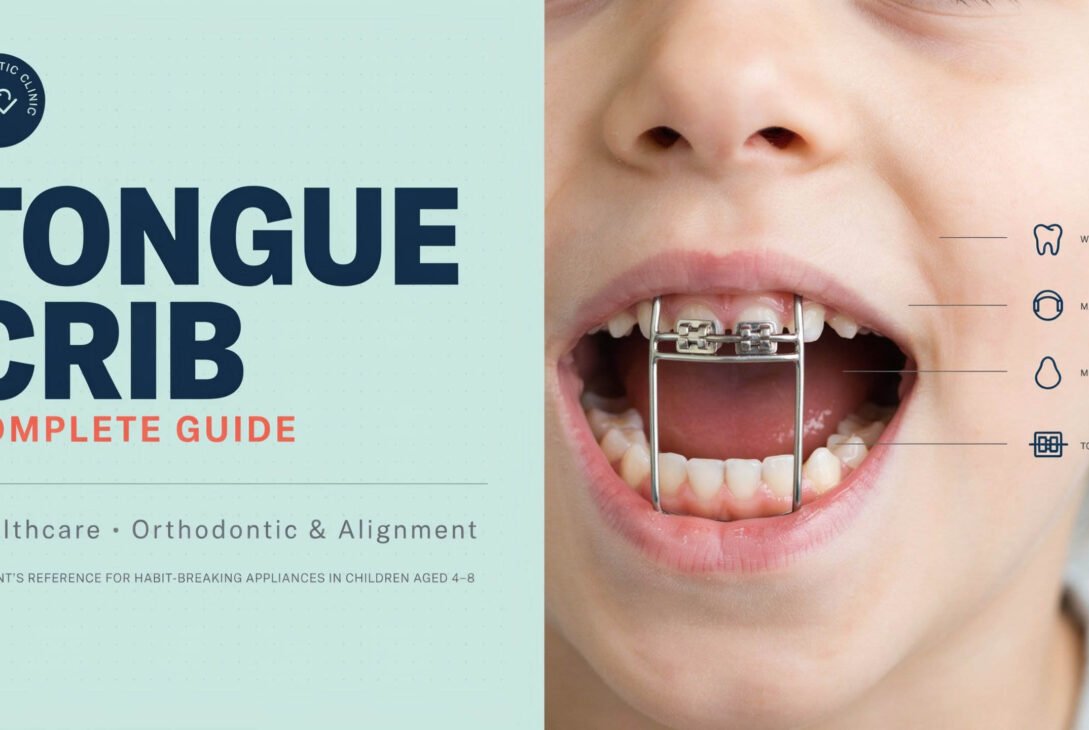
A tongue crib is a small orthodontic appliance designed to help correct harmful oral habits such as tongue thrusting and prolonged thumb sucking. Although it may look simple, this device plays an important role in improving bite alignment, supporting healthy jaw development, and making orthodontic treatment more successful.
Many people first hear about a tongue crib after an orthodontist notices that the tongue pushes against the front teeth during swallowing or speaking. Over time, this repeated pressure can contribute to problems such as an open bite, protruding front teeth, speech changes, and even relapse after braces.
This complete guide explains what a tongue crib is, how it works, who may benefit from it, the treatment process, possible side effects, maintenance tips, and answers to the most common questions patients and parents ask.
What Is a Tongue Crib?
A tongue crib is a fixed or removable orthodontic appliance that sits behind the upper front teeth. It acts as a gentle reminder rather than a painful barrier, encouraging the tongue to rest in the correct position instead of pushing against the teeth.
Featured Snippet Definition
Tongue crib: An orthodontic appliance placed behind the upper front teeth to discourage tongue thrusting and thumb sucking while promoting proper tongue posture, bite correction, and healthy dental alignment.
Unlike braces, which move teeth directly, a tongue crib mainly addresses the habits and muscle movements that may be causing orthodontic problems.
Why Is a Tongue Crib Used?
Orthodontists recommend a tongue crib when oral habits interfere with normal tooth alignment or jaw development.
Common reasons include:
- Tongue thrust during swallowing
- Thumb or finger sucking
- Persistent pacifier use
- Open bite correction
- Preventing orthodontic relapse
- Improving tongue posture
- Supporting speech therapy when appropriate
Correcting the underlying habit is often just as important as straightening the teeth. Without addressing the cause, teeth may gradually shift back even after orthodontic treatment.
How Does a Tongue Crib Work?
The appliance creates a physical reminder that encourages the tongue to remain farther back in the mouth during swallowing and at rest.
Instead of pressing against the front teeth, the tongue gradually learns a healthier resting position. As this new muscle pattern develops, unwanted pressure on the teeth decreases.
A tongue crib works by:
- Preventing forward tongue movement
- Discouraging thumb sucking
- Helping establish proper swallowing patterns
- Supporting stable orthodontic results
- Encouraging balanced oral muscle function
The appliance does not force the tongue into position. Rather, it helps retrain natural muscle habits over time.
Types of Tongue Cribs
Several designs are available depending on the patient’s age, oral habits, and orthodontic treatment plan.
Fixed Tongue Crib
A fixed tongue crib is attached to orthodontic bands on the upper molars.
Benefits
- Works continuously
- Cannot be removed by the patient
- Highly effective for children with persistent habits
- Requires little patient compliance
This is the most commonly prescribed option.
Removable Tongue Crib
A removable version resembles an orthodontic retainer.
Advantages
- Easier cleaning
- Can be removed during specific activities
- Suitable for selected patients
Because treatment depends on wearing it consistently, removable appliances may not be ideal for younger children.
Who Needs a Tongue Crib?
Not everyone with crooked teeth requires a tongue crib.
It is commonly recommended for:
Children
Children are the most frequent candidates because oral habits are easier to correct while the jaws are still developing.
Teenagers
Teenagers with tongue thrust or recurring orthodontic problems may benefit during braces treatment.
Adults
Although less common, adults with persistent tongue thrust, speech concerns, or orthodontic relapse may also receive a tongue crib alongside comprehensive treatment.
Conditions a Tongue Crib Can Help Treat
A tongue crib supports treatment for several orthodontic concerns.
Tongue Thrust
Tongue thrust occurs when the tongue moves forward and pushes against the front teeth during swallowing, which can gradually affect tooth positioning and bite development
This repeated force may gradually move teeth out of alignment.
Open Bite
An open bite develops when the upper and lower front teeth do not meet while biting down.
Tongue thrust is one of the most common contributing factors.
Thumb Sucking
Long-term thumb sucking can alter jaw growth and tooth position.
A tongue crib acts as a reminder that helps children stop the habit.
Pacifier Dependency
Extended pacifier use beyond the recommended age may affect dental development.
In some cases, orthodontists recommend a tongue crib after the habit has become difficult to break.
Tongue Crib vs Braces
Many people assume these appliances serve the same purpose, but they treat different problems.
| Tongue Crib | Braces |
|---|---|
| Corrects oral habits | Straightens teeth |
| Retrains tongue posture | Moves teeth into alignment |
| Helps stop thumb sucking | Corrects bite problems |
| Supports long-term stability | Improves appearance and function |
Many patients wear both appliances simultaneously for better long-term results.
What to Expect During Treatment
Treatment begins with a comprehensive orthodontic evaluation.
The orthodontist examines:
- Bite alignment
- Tongue movement
- Swallowing pattern
- Oral habits
- Jaw development
- Speech concerns if present
After placement, most patients need several days to adjust.
It is normal to notice:
- Mild soreness
- Increased saliva
- Temporary speech changes
- Tongue awareness
These effects usually improve within one to two weeks.
How Long Is a Tongue Crib Worn?
Treatment length varies depending on age, oral habits, and individual progress.
Most patients wear a tongue crib for:
- 6 months
- 9 months
- 12 months
- Occasionally longer for severe habits
The appliance generally remains in place until the habit has been consistently eliminated.
Removing it too early increases the chance of relapse.
Does a Tongue Crib Hurt?
Most patients experience discomfort rather than pain.
Common temporary symptoms include:
- Tongue irritation
- Mild pressure
- Difficulty pronouncing certain words
- Increased saliva
These symptoms typically improve as the tongue adapts.
If sharp pain, loose bands, or persistent sores develop, the orthodontist should evaluate the appliance promptly.
Eating with a Tongue Crib
Eating feels unusual at first but becomes easier after several days.
Foods that are easier during adjustment include:
- Yogurt
- Mashed potatoes
- Soup
- Pasta
- Rice
- Eggs
- Smoothies
Patients should avoid:
- Sticky candy
- Chewing gum
- Hard nuts
- Ice
- Popcorn kernels
- Very chewy foods
Following dietary instructions helps prevent damage to the appliance.
Cleaning and Caring for a Tongue Crib
Good oral hygiene is essential because food can collect around the appliance.
Daily care includes:
- Brush after every meal
- Clean around the wires carefully
- Floss using orthodontic floss threaders if recommended
- Rinse thoroughly
- Attend regular orthodontic appointments
Excellent oral hygiene reduces the risk of plaque buildup and gum inflammation during treatment.
Speech Changes After Placement
Some patients temporarily develop a slight lisp.
This happens because the tongue is adjusting to the new appliance.
Reading aloud, speaking slowly, and practicing difficult words usually speeds adaptation.
Speech typically returns to normal within a few weeks.
Benefits of a Tongue Crib
When used correctly, a tongue crib offers several important advantages.
Improved Bite Alignment
Reducing tongue pressure allows orthodontic treatment to progress more effectively.
Better Long-Term Stability
Correcting harmful habits lowers the chance that teeth will move back after braces.
Healthy Tongue Position
The appliance promotes proper resting posture, which supports normal swallowing patterns.
Stops Thumb Sucking
For many children, the appliance serves as a constant reminder that helps eliminate the habit.
Supports Jaw Development
Correct tongue posture contributes to balanced facial growth during childhood.
Possible Risks and Limitations
Tongue cribs are generally well tolerated, but like any orthodontic device, they have certain drawbacks that patients should be aware of.
Possible concerns include:
- Temporary discomfort
- Speech changes
- Food trapping
- Difficulty cleaning
- Broken wires if hard foods are eaten
- Need for patient cooperation with oral hygiene
Serious complications are uncommon when the appliance is properly maintained and monitored by an orthodontist.
Tips for a Successful Treatment
Patients are more likely to achieve successful outcomes by maintaining consistent daily oral care and following their orthodontist’s recommendations.
- Keep all orthodontic appointments.
- Brush thoroughly after meals.
- Avoid hard and sticky foods.
- Practice proper swallowing techniques if instructed.
- Complete any recommended speech therapy exercises.
- Notify the orthodontist if the appliance becomes loose.
Consistency is the key to lasting results.
Frequently Asked Questions
Does a tongue crib stop tongue thrust permanently?
A tongue crib helps retrain tongue posture and swallowing habits. Long-term success depends on consistently maintaining the corrected muscle pattern after treatment.
Can adults wear a tongue crib?
Yes. Adults with tongue thrust, orthodontic relapse, or bite problems may benefit from a tongue crib as part of a comprehensive orthodontic treatment plan.
Is a tongue crib painful?
Most patients experience only mild discomfort during the first few days. The mouth usually adapts quickly.
How long does it take to get used to a tongue crib?
For most people, the adjustment period lasts about one to two weeks before the tongue and mouth adapt to the new appliance.
Can I eat normally with a tongue crib?
Yes. Soft foods are easier during the first few days. Once adapted, most patients return to a fairly normal diet while avoiding hard, sticky, or chewy foods.
Does a tongue crib affect speech?
A temporary lisp is common immediately after placement. Regular speaking practice usually restores normal speech within a few weeks.
Is a tongue crib better than braces?
They serve different purposes. While a tongue crib focuses on correcting habits like tongue thrust and thumb sucking, braces work to straighten teeth and improve overall dental alignment. Using a tongue crib alongside braces often leads to better treatment outcomes by addressing the underlying habit while straightening the teeth.
Conclusion
A tongue crib is an effective orthodontic appliance for correcting tongue thrust, discouraging thumb sucking, and supporting healthy bite development. By addressing the muscle habits that contribute to dental misalignment, it helps create a more stable foundation for orthodontic treatment and reduces the likelihood of future relapse.
Although there is a short adjustment period, most patients adapt quickly and experience lasting benefits when they follow their orthodontist’s instructions. Maintaining good oral hygiene, attending regular checkups, and wearing the appliance for the recommended duration are essential for achieving the best possible results. Whether used alone or alongside braces, a tongue crib can play an important role in improving oral function, dental alignment, and long-term treatment success