Foot pain can make everyday activities feel uncomfortable, whether you’re walking to work, exercising, or simply standing for long periods. Two of the most common causes of thickened skin on the feet are corns and calluses. Although they may look similar, they are not the same condition. Understanding the difference between corn vs callus is essential because each develops differently and may require a different approach to treatment.
In most cases, both corns and calluses are harmless. They form because the skin protects itself from repeated friction or pressure. However, when left untreated, they can become painful and interfere with daily life. This guide explains everything you need to know, including symptoms, causes, treatments, prevention strategies, and when to seek medical care.
Corn vs Callus: Quick Definition (Featured Snippet)
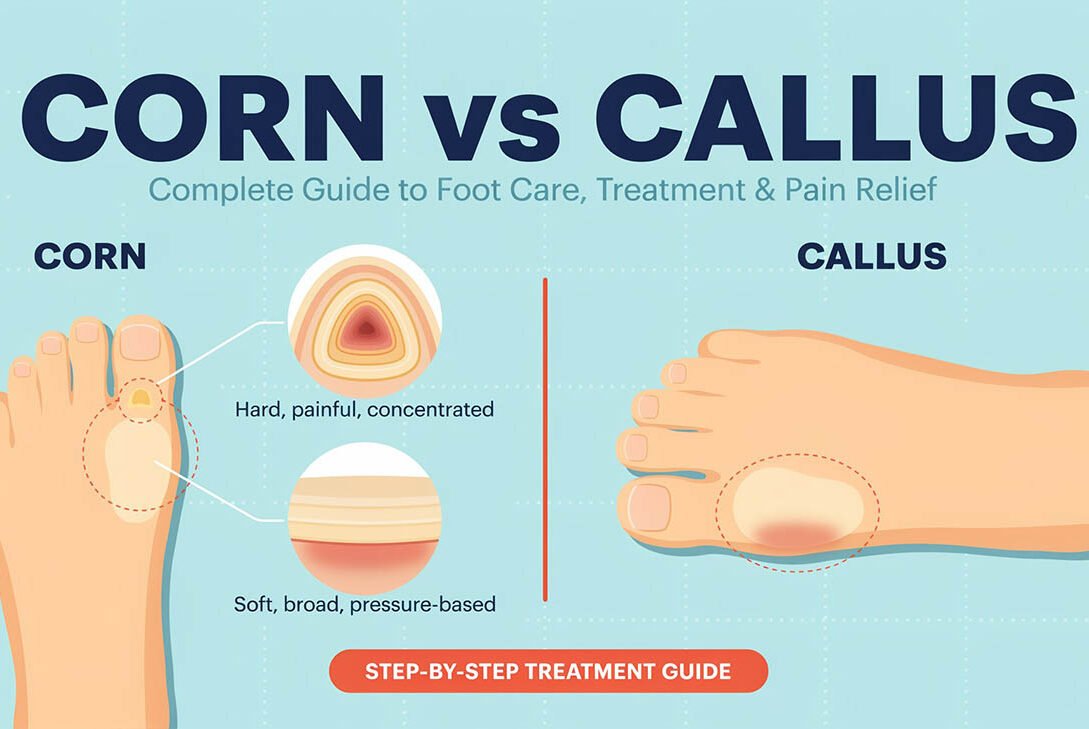
Corn: A corn is a small, thickened area of skin that usually develops on the toes or other bony parts of the foot due to concentrated pressure or friction. Corns often have a hard center and can be painful when pressed.
Callus: A callus is a larger, broader patch of hardened skin that develops on weight-bearing areas such as the heels or soles of the feet. Calluses are generally less painful than corns and serve as the skin’s natural protective response.
Corn vs Callus at a Glance
| Feature | Corn | Callus |
|---|---|---|
| Size | Small | Large |
| Shape | Round with a central core | Wide and irregular |
| Pain | Often painful | Usually painless |
| Location | Toes, sides of feet | Heels, balls of feet, palms |
| Cause | Focused pressure | Repeated friction and pressure |
| Appearance | Hard center with surrounding thick skin | Thick, rough, yellowish skin |
What Is a Corn?
A corn is a localized area of hardened skin that develops after repeated pressure on a specific point. Unlike a callus, a corn has a dense central core that pushes into deeper layers of the skin, making it painful.
Corns commonly appear on:
- Tops of toes
- Between toes
- Side of the little toe
- Areas where shoes rub repeatedly
Because corns press inward, they may cause discomfort even while wearing comfortable footwear.
What Is a Callus?
A callus is a broader area of thickened skin that develops to protect the body from repeated rubbing or pressure. Unlike corns, calluses rarely have a central core.
Common locations include:
- Bottom of the heel
- Ball of the foot
- Side of the big toe
- Hands from manual work or sports
Many people develop calluses naturally without experiencing any pain.
Corn vs Callus: The Main Differences
Although both conditions involve thickened skin, several features help distinguish them.
Size and Shape
Corns are typically small, round, and well-defined.
Calluses spread over a larger area and have irregular edges.
Pain Level
Corns often hurt because their hard core presses into underlying tissue.
Calluses usually feel rough but are less likely to cause pain unless they become very thick or cracked.
Location
Corns frequently develop on non-weight-bearing parts of the foot, especially the toes.
Calluses generally appear where body weight creates repeated pressure.
Texture
A corn feels firm with a distinct center.
A callus feels thick, rough, and evenly hardened.
What Causes Corns and Calluses?
Both conditions develop because the skin tries to protect itself from repeated stress.
Common causes include:
- Tight or poorly fitting shoes
- High heels
- Walking barefoot
- Repetitive sports activities
- Foot deformities such as bunions or hammertoes
- Long periods of standing
- Abnormal walking patterns
- Socks that bunch or create friction
The body responds by producing extra layers of skin, which gradually become thicker.
Risk Factors
Some people are more likely to develop corns or calluses.
Risk factors include:
- Aging
- Diabetes
- Poor circulation
- Arthritis
- Bunions
- Hammertoes
- Flat feet
- High arches
- Occupations requiring prolonged standing
- Running or athletic activities
People with diabetes should pay special attention to any changes in their feet because reduced sensation may prevent them from noticing injuries.
Symptoms of Corns
Symptoms may include:
- Small raised bump
- Hard center
- Tenderness when walking
- Pain with pressure
- Thick, rough skin
- Dry or flaky surface
Soft corns can also develop between the toes where moisture keeps the skin softer.
Symptoms of Calluses
Common symptoms include:
- Thickened skin
- Rough texture
- Yellow or gray appearance
- Reduced skin sensitivity
- Dryness
- Cracked heels in severe cases
Most calluses do not hurt unless they become excessively thick.
How Are Corns and Calluses Diagnosed?
Diagnosis is usually straightforward.
A healthcare provider examines the affected skin and asks about:
- Footwear
- Daily activities
- Pain level
- Walking habits
- Medical history
Sometimes the provider gently trims the thickened skin to determine whether another condition, such as a wart, is present.
Corn vs Callus Treatment
The best treatment focuses on removing the source of pressure while safely reducing thickened skin.
1. Better Footwear
Proper shoes are one of the most effective solutions.
Look for shoes with:
- Wide toe box
- Soft cushioning
- Good arch support
- Correct sizing
- Low heel height
Properly fitted shoes reduce friction and help prevent recurrence.
2. Protective Padding
Padding reduces pressure on sensitive areas.
Options include:
- Foam pads
- Silicone sleeves
- Toe separators
- Cushioned insoles
These products can make walking more comfortable while the skin heals.
3. Soaking the Feet
Warm water softens hardened skin.
A typical routine includes:
- Soak feet for 10–15 minutes.
- Dry thoroughly.
- Apply moisturizer afterward.
This makes thick skin easier to manage.
4. Gentle Exfoliation
After soaking, gently remove loose dead skin using:
- Pumice stone
- Foot file
Avoid excessive scrubbing because removing too much skin can lead to injury.
5. Moisturizing
Daily moisturizing keeps the skin flexible.
Creams containing ingredients such as:
- Urea
- Lactic acid
- Salicylic acid (when appropriate)
may help soften thick skin over time. People with diabetes should consult a healthcare professional before using medicated foot products.
6. Prescription Treatments
Persistent corns may require professional treatment.
Healthcare providers may recommend:
- Careful trimming
- Custom orthotics
- Prescription-strength keratolytic creams
- Correction of underlying foot problems
7. Surgery (Rare Cases)
Surgery is not performed to remove the corn itself.
Instead, surgery may be considered when a structural foot problem—such as a severe bunion or hammertoe—continues to create abnormal pressure despite conservative treatment.
Home Remedies That May Help
Many mild cases improve with simple home care.
Helpful measures include:
- Wearing properly fitted shoes
- Using cushioned insoles
- Applying moisturizing cream daily
- Wearing moisture-wicking socks
- Keeping feet clean and dry
- Reducing repetitive pressure
Avoid cutting corns or calluses yourself with blades or sharp tools, as this increases the risk of infection.
When Should You See a Doctor?
Medical evaluation is recommended if:
- Pain becomes severe.
- Walking becomes difficult.
- Redness or swelling develops.
- There is drainage or bleeding.
- Home treatment does not help.
- The thickened skin keeps returning.
- You have diabetes, nerve damage, or poor circulation.
Early treatment helps prevent complications.
Corn vs Callus in People With Diabetes
People with diabetes should never ignore foot changes.
Reduced circulation and nerve damage increase the risk of:
- Infection
- Skin ulcers
- Slow healing
- Serious complications
Daily foot inspection, proper footwear, and regular medical checkups are essential for protecting foot health.
How to Prevent Corns and Calluses
Preventing these conditions is often easier than treating them.
Wear Proper Shoes
Choose footwear that fits comfortably without squeezing the toes.
Use Cushioned Insoles
Supportive insoles distribute pressure more evenly across the foot.
Keep Feet Moisturized
Healthy skin is less likely to crack or become excessively thick.
Trim Toenails Regularly
Overgrown nails may alter walking patterns and increase pressure.
Wear Appropriate Socks
Well-fitting socks reduce friction and help manage moisture.
Address Foot Problems Early
Treat bunions, hammertoes, and gait issues before they contribute to chronic pressure.
Can Corns and Calluses Go Away Naturally?
Yes, they often improve once the source of friction or pressure is removed.
For example:
- Buying properly fitted shoes
- Using orthotics
- Changing exercise habits
- Wearing protective padding
However, long-standing or painful lesions may require professional care.
Corn vs Callus vs Plantar Wart
People sometimes confuse corns with plantar warts.
Here’s a simple comparison:
| Condition | Cause | Pain | Appearance |
|---|---|---|---|
| Corn | Pressure | Direct pressure hurts | Hard center |
| Callus | Friction | Usually mild | Broad thick skin |
| Plantar wart | Viral infection (HPV) | Side-to-side pressure hurts | Tiny black dots may be visible |
Because treatments differ, an accurate diagnosis is important.
Best Foot Care Routine for Healthy Feet
A simple daily routine can reduce your risk of developing corns and calluses.
- Wash your feet with mild soap.
- Dry carefully, especially between the toes.
- Apply moisturizer to dry areas.
- Inspect your feet for new thickened skin or irritation.
- Wear supportive shoes.
- Replace worn-out footwear when cushioning decreases.
- Use foot pads if pressure points develop.
Consistency is more effective than occasional intensive treatment.
Frequently Asked Questions
1. Which is more painful, a corn or a callus?
A corn is generally more painful because its hard central core presses into deeper layers of skin. Calluses are usually less painful unless they become very thick or crack.
2. Can I remove a corn at home?
Mild corns may improve with soaking, gentle filing, protective padding, and better footwear. Avoid cutting them yourself, especially if you have diabetes or poor circulation.
3. Are calluses good or bad?
Calluses are a normal protective response to repeated friction. However, if they become excessively thick, painful, or cracked, they should be treated.
4. Do corns come back?
Yes. If the source of pressure remains—such as tight shoes or an underlying foot deformity—corns often return even after treatment.
5. Should I pop or cut a corn?
No. Cutting or popping a corn yourself can cause bleeding, infection, and delayed healing.
6. Can wearing different shoes prevent corns?
Yes. Properly fitted shoes with adequate cushioning and a wide toe box significantly reduce friction and pressure.
7. Are corns and calluses contagious?
No. Corns and calluses are not infections and cannot spread from person to person.
Conclusion
Understanding the difference between corn vs callus helps you choose the right treatment and avoid unnecessary discomfort. Corns are small, concentrated areas of thickened skin with a painful central core, while calluses are larger patches that develop as the skin protects itself from ongoing friction. In many cases, simple changes such as wearing properly fitted shoes, using protective padding, moisturizing regularly, and reducing pressure on the feet can relieve symptoms and prevent recurrence. If pain persists, the skin becomes infected, or you have diabetes or poor circulation, seek prompt medical evaluation to protect your long-term foot health. Proper foot care today can help keep you comfortable, active, and pain-free in the future.