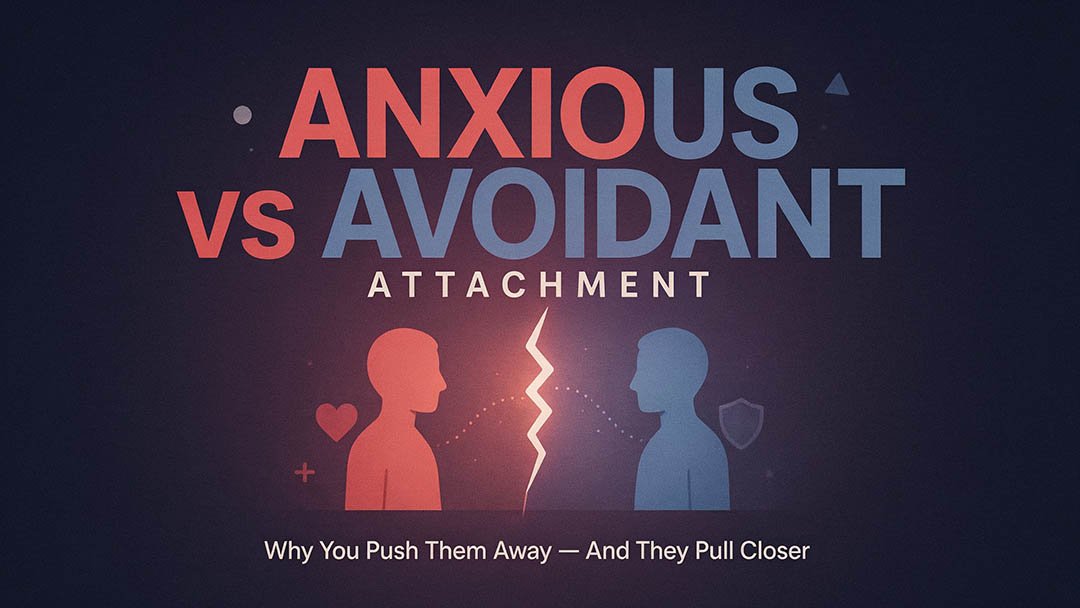
Do you sometimes seek intimacy in a relationship, only to freak out when someone comes too close? Or maybe you’ve dated someone who wants you fiercely one week and then pulls away the next. If this sounds similar, you may be looking at anxious avoidant attachment – one of the more difficult and painful attachment patterns to live with, and to love.
In this post we will be discussing what anxious avoidant attachment is, where it comes from, how it appears in our day to day lives and relationships, and most importantly, what you can do about it. The first real step to change is to notice this tendency in yourself or your spouse or your buddy.
What Is Avoidant Attachment (And Where Does “Anxious Avoidant” Fit In)?
Attachment theory, developed by psychologist John Bowlby and later built upon by Mary Ainsworth, explains how our early emotional bonds influence our adult relationships. There are four main attachment styles within this paradigm: Secure, Anxious (Preoccupied), Avoidant (Dismissive) and Disorganised (sometimes dubbed ‘Fearful-Avoidant’, or informally ‘Anxious Avoidant’).
So what is avoidant attachment? Those with a conventional avoidant attachment style tend to choose independence to connection. They tend to hide their desire to relate, to push partners away, and to feel uncomfortable with too much emotional openness.
Anxious avoidant attachment, or rather, disorganised or terrified avoidant attachment is distinct. It is an amalgam of two seemingly contradictory motivations: the anxious style’s profound dread of abandonment, and the avoidant style’s profound fear of engulfment or loss of independence. People with this tendency desperately seek closeness yet closeness seems threatening, too. The consequence is a push-pull dynamic – bringing a partner in, then pushing them away – that can seem draining and frustrating for all concerned.
Quick Answer: Anxious Avoidant Attachment in a sentence
Anxious avoidant (disorganised) attachment is a style in which a person both wants and fears connection, resulting in unexpected behaviour, such as seeking intimacy, then retreating for no reason.
Understanding the Different Attachment Styles
It helps to understand anxious-avoidant attachment by seeing how it ties in with the other attachment patterns that relationship researchers usually discuss:
Healthy Attachment
Individuals with a stable attachment style are comfortable with closeness and independence. They speak their needs honestly, trust their partners, and deal with dispute without a lot of fear or withdrawal.
“Anxious attachment”
Those with an anxious style are generally worried with the stability of a relationship, need intimacy and reassurance, and often worry about being abandoned, sometimes reading too much into little changes in a partner’s behaviour.
Avoidant Attachment
As discussed above, those with avoidant attachment value independence, tend to suppress emotional needs, and may withdraw when a connection begins to feel “too close.”
Disorganised Attachment (Anxious-Avoidant)
This style has characteristics of both anxious and avoidant patterns. It usually comes from inconsistent or scary early caregiving, when the same person who was a source of comfort was at times a cause of worry or uncertainty.
It’s not about putting yourself or your partner into a box, it’s about recognising the fundamental wants and concerns so you can respond to them productively.
What Causes Avoidant Attachment and Its Anxious-Avoidant Form?
Here’s a question people often ask: what generates avoidant attachment in the first place? Attachment styles are predominantly formed in early childhood, but can be reinforced or altered by later experiences.
Early Caregiving Experiences
If carers are constantly responsive to children’s needs, the result is a secure attachment. Avoidant patterns often develop when carers have been emotionally unavailable, have dismissed a kid’s feelings, or have discouraged the child from expressing needs.
Scary or Inconsistent Caregiving
Specifically the anxious avoidant or disorganised habit is often developed in situations when a carer was unpredictable, sometimes warm and sometimes terrifying, negligent or even the source of injury. The child learns that the one they need to be safe from is the one who is dangerous. This creates an internal tension that follows them for the rest of their life. They want intimacy but they fear proximity.
Recollections in Later Life
Attachment is not for life. Betrayal, trauma, toxic relationships, or experiencing heartbreak repeatedly in adulthood can also promote anxious-avoidant tendencies, even for someone who began out quite comfortable.
Nature and Nurture
Other experts point to a person’s inherent temperament and wider surroundings — chronic stress, instability or absence of a stable support network — as key variables, in addition to caring past.
How Anxious Avoidant Attachment Shows Up in Relationships
If you want to see this attachment styles relationships pattern in real life, this is what it often looks like:
- Hot-cold behaviour: Extreme attention, then abrupt distance or withdrawal
Trouble believing a partner’s motives, especially when no grounds for doubt exists
Fear of desertion and engulfment — being smothered when things get close, then worried when a partner pulls back
Difficulty expressing needs directly, typically expecting partner to ‘just know’
Self-sabotage: starting arguments, pushing people away just when things are going good
Having trouble coping with emotions in a fight — from shutting down to becoming overwhelmed
These behaviours are not a character flaw — they are a survival technique that was learnt and made sense in a previous setting, but often leads to conflict in adult relationships.
Coping Strategies and Ways to Build a More Secure Attachment Style
The good news is that attachment types are not a life sentence. People can, with knowledge and intentional effort, advance toward what psychologists have called “earned secure attachment.” Here’s how to begin.
1. Cultivate self-awareness
Begin to notice your patterns without judgement. When do you feel like pulling out? When does anxiety increase? Writing in a journal, or simply pausing to identify the feeling you are experiencing in that time, helps break automatic reflexes.
2. See a Therapist
Working with a therapist educated in attachment-based techniques like Emotionally Focused Therapy (EFT) or somatic-based trauma therapy can assist process the early experiences behind the pattern and develop new relational skills in a safe atmosphere.
3. Communicate Directly
Instead of shutting down or trying your spouse, try to put a name to it: “I’m feeling overwhelmed and I need some space, but I still care about this relationship.” Open communication removes the guess work from anxious-avoidant cycles.
4. Slow the Push-Pull Cycle
If you want to draw away or cling, just stop before you do. Address the fear, not the trigger. Ask yourself what it is you are really frightened of at that time, abandonment, loss of control, vulnerability, then deal with the fear.
5. Pick Secure, Stable Relationships
When you’re with securely bonded partners or friends, solid, honest, reliable people, your nervous system has the chance to reset its expectations of intimacy over time.
6. Use self-soothing strategies
Grounding exercises, mindfulness and breathwork can assist regulate the neurological system during times of relational stress, which can make it easier to be present, rather than shutting down or spiralling
Living with (or Loving Someone with) Anxious Avoidant Attachment
If you are in connection with a person with this tendency, patience and consistency are the key. Don’t take withdrawal personally, but do set your own boundaries – supporting someone doesn’t mean absorbing unhealthy behaviour. This is where couples counselling can be extremely helpful, providing both spouses with tools to end the cycle together rather than feeding it.
Frequently Asked Questions
Is disorganised attachment the same as nervous avoidant attachment?
Yes, “anxious avoidant” and “disorganised” or “fearful-avoidant” attachment are terms often used interchangeably in most modern psychology literature to refer to this coupled pattern of seeking and dreading intimacy at once.
Can an Anxious Avoidant Attachment have a healthy relationship?
Yep. With self-awareness, therapy, and a caring partner, people with this attachment style can learn to have secure, happy relationships over time.
How can I recognise whether I have an anxious avoidant attachment style?
You might need intimacy but then worry when you have it, have a hard time trusting your partners, tend to pull away just as a relationship gets more serious, or struggle to cope with your feelings during arguments. A competent therapist can confirm this with a good assessment.
Is anxious avoidant attachment just rooted in childhood?
Childhood caregiving is the most important factor, but adult experiences such as trauma, betrayal, or continuing unstable relationships can also influence or reinforce this pattern later in life.
How is anxious attachment different from anxious avoidant attachment?
Anxious attachment is generally about fear of abandonment and craving lots of reassurance. Anxious avoidant attachment is a more complicated and unpredictable pattern, when that fear is combined with an equally strong desire to retreat and avoid emotional connection.
Last Thoughts
Anxious avoidant attachment can feel like being torn between competing needs: the yearning for intimacy and the need to keep yourself safe from closeness. But this is not a static pattern. Through honest self evaluation, supporting connections and professional help when needed it is totally possible to develop toward a more secure, fulfilling way of relating to people.
If this pattern seems familiar, consider reaching out to a certified therapist who specialises in attachment treatment. Understanding your relationship patterns today is the first step to cultivating stronger, more secure ties tomorrow.