Ever suddenly hear a strange crackling, popping, or clicking noise in your ear and wonder what on earth is going on inside your head? You’re far from alone. This is one of the most common ear-related complaints people search for, and thankfully, it’s usually far less alarming than it sounds.
Crackling in ear sounds can show up out of nowhere—while chewing, swallowing, blowing your nose, or even just sitting quietly. For most people, it’s a temporary nuisance tied to pressure changes or mild congestion. But for others, it can be a sign of something that needs medical attention.
This guide breaks down everything you need to know: what causes that crackling sound in ear, how it relates to ear popping, why your ears are popping when you swallow, what clicking in ear might mean, and exactly when you should stop self-diagnosing and book a doctor’s appointment.
What Does Crackling in Ear Actually Mean?
Crackling in the ear is the sensation or sound of tiny pops, snaps, or static-like noises coming from within the ear canal or middle ear. It’s technically known as tinnitus in some cases, but more often it’s linked to the movement of air, fluid, or tissue near the eardrum.
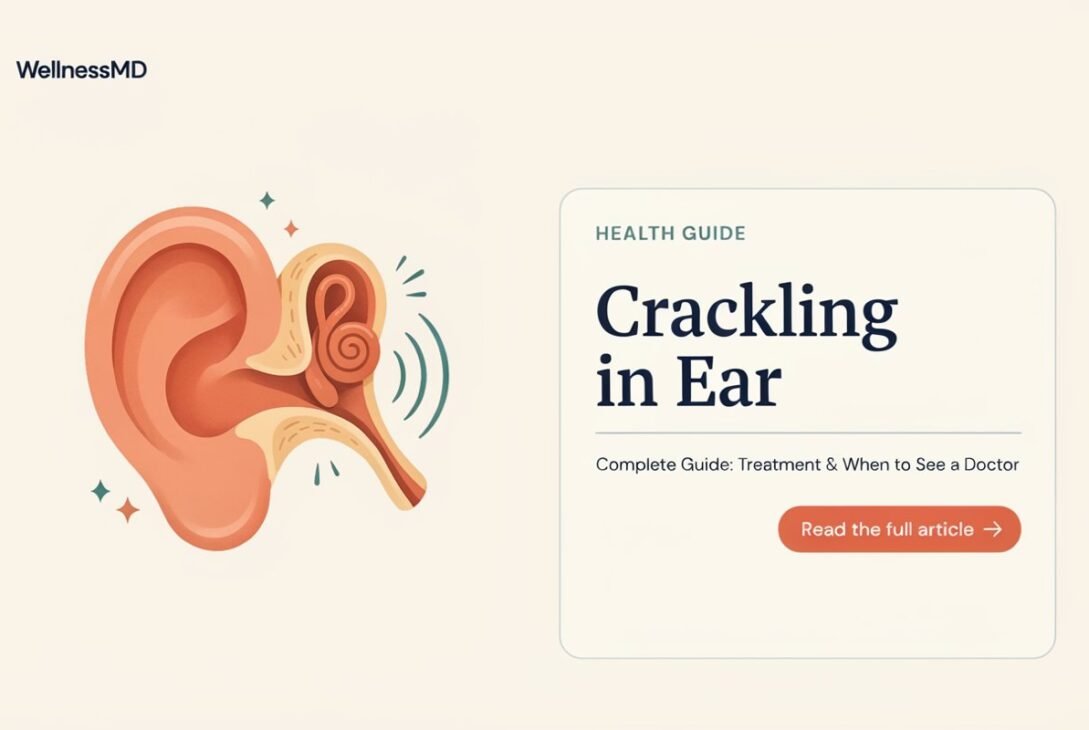
Think of your middle ear as a small, air-filled chamber. It’s connected to the back of your throat by a narrow passage called the Eustachian tube. This tube’s job is to equalize pressure between your middle ear and the outside world. When it doesn’t work smoothly—because of blockage, inflammation, or fluid buildup—you get that crackling, popping, or clicking sensation.
In short: Crackling in ear is usually a sign that your Eustachian tube or middle ear is reacting to a pressure imbalance, fluid, or minor irritation—not a serious illness on its own.
Common Causes of Crackling Sound in Ear
Understanding the root cause helps you figure out whether you need home care or a doctor’s visit. Here are the most frequent culprits.
1. Eustachian Tube Dysfunction
This is the number one reason behind crackling sound in ear. When the Eustachian tube becomes blocked or doesn’t open and close properly, air gets trapped, and pressure builds unevenly between your middle ear and the atmosphere. This often happens during:
- Colds or sinus infections
- Allergies
- Air travel (takeoff and landing)
- Rapid altitude changes (driving through mountains, scuba diving)
2. Earwax Buildup
Excess earwax can press against the eardrum or partially block the ear canal, creating crackling or muffled popping noises, especially when you move your jaw.
3. Temporomandibular Joint (TMJ) Issues
Because the jaw joint is located very close to the ear canal, jaw movement can sometimes affect sensations or sounds in the ear. If you have TMJ dysfunction, jaw clenching, or teeth grinding, you might notice clicking in ear that syncs with chewing or talking.
4. Fluid in the Middle Ear
Colds, sinus infections, and allergies can cause fluid to accumulate behind the eardrum. As this fluid shifts or drains, it often produces a crackling or bubbling sound.
5. Muscle Spasms Near the Ear
Two tiny muscles—the tensor tympani and stapedius—sit inside the middle ear. Occasionally, these muscles spasm involuntarily, creating a rhythmic clicking or crackling sensation. This is sometimes called middle ear myoclonus.
6. Swallowing and Yawning
This one explains why ears are popping when I swallow. Swallowing naturally triggers the Eustachian tube to open briefly, letting air flow through and equalizing pressure. That quick popping sound is completely normal and usually not a cause for concern.
Crackling s. Popping vs. Clicking: What’s the Difference?
People often use these words interchangeably, but they can hint at slightly different issues.
| Sound | Common Cause | Typical Trigger |
|---|---|---|
| Crackling | Fluid, wax, or Eustachian tube dysfunction | Congestion, colds, allergies |
| Popping | Pressure equalization | Swallowing, yawning, altitude change |
| Clicking | Muscle spasms or TMJ issues | Jaw movement, stress, chewing |
While these categories overlap, recognizing the pattern of your specific symptom can help you and your doctor pinpoint the cause faster.
Is Ear Popping Normal?
Yes, in most cases. Ear popping is your body’s natural way of balancing pressure. It’s the same sensation you feel when a plane takes off or lands. As long as it’s occasional, mild, and not paired with pain, dizziness, or hearing loss, it’s generally harmless.
However, frequent or persistent ear popping—especially when it happens without any obvious trigger like swallowing or altitude change—may point to Eustachian tube dysfunction or fluid buildup that deserves a closer look.
Why Are My Ears Popping When I Swallow?
This is one of the most searched variations of this topic, and the answer is refreshingly simple. When you swallow, your Eustachian tube opens for a split second to let air pass through and equalize pressure in your middle ear. That quick “pop” is just air moving through the tube.
This becomes noticeable—or even annoying—when:
- You have a cold or sinus congestion
- You’re recovering from an ear infection
- You’ve recently flown or changed altitude
- You have seasonal allergies causing mild swelling
If it happens constantly and is accompanied by ear fullness or muffled hearing, it may signal a mild case of Eustachian tube dysfunction rather than something dangerous.
Clicking in Ear: When It’s Muscle-Related
Clicking in ear that seems to have a rhythm—almost like a metronome—is often linked to those small muscles inside the middle ear contracting involuntarily. This condition, while unusual, is generally not dangerous. It can be triggered by:
- Fatigue
- Stress or anxiety
- Loud noise exposure
- Excessive caffeine intake
If the clicking is persistent and disruptive to daily life or sleep, it’s worth mentioning to an ENT (ear, nose, and throat) specialist.
Home Remedies to Relieve Crackling in Ear
Before rushing to the doctor, there are several safe, simple steps you can try at home if your symptoms are mild.
Try the Valsalva Maneuver
Pinch your nose shut, close your mouth, and gently blow as if you’re trying to pop your ears. This can help open a blocked Eustachian tube. Do this gently—too much pressure can cause harm.
Chew Gum or Yawn
Both actions activate the muscles that open the Eustachian tube, helping to equalize pressure naturally.
Stay Hydrated
Proper hydration helps thin mucus, making it easier for your body to clear congestion that may be affecting your ears.
Use a Warm Compress
Applying gentle warmth near the ear and jaw can relax tense muscles and ease mild discomfort from TMJ-related clicking.
Manage Allergies
If seasonal allergies are triggering swelling in your nasal passages and Eustachian tube, an antihistamine or saline nasal spray may help reduce crackling episodes.
Avoid Cotton Swabs
Using cotton swabs to clean your ears often pushes wax deeper, worsening blockage. Let your ears self-clean, or use safe over-the-counter ear drops designed to soften wax.
When to See a Doctor for Crackling in Ear
While most cases resolve on their own, certain symptoms signal it’s time for a professional evaluation. See a doctor if you experience:
- Persistent crackling that lasts more than a week or two
- Sudden or worsening hearing loss
- Ear pain, especially sharp or throbbing pain
- Discharge or fluid leaking from the ear
- Dizziness or balance problems
- Ringing (tinnitus) that doesn’t go away
- Symptoms following a head injury or loud noise exposure
- Recurring ear infections
An ENT specialist can perform a simple otoscopic exam to check your eardrum and ear canal, and may recommend a hearing test or tympanometry (a pressure test) if needed. Early evaluation is especially important if fluid buildup is suspected, since untreated middle ear infections can occasionally lead to complications.
How Doctors Diagnose the Cause
If you visit an ENT for persistent crackling or popping, here’s generally what to expect:
- Physical exam – The doctor examines your ear canal and eardrum using an otoscope.
- Hearing test (audiometry) – Evaluates your hearing ability across a range of frequencies and sound levels.
- Tympanometry – Assesses how your eardrum responds to air pressure changes.
- Nasal or throat exam – Since the Eustachian tube connects to the throat, doctors often check for swelling or blockages there too.
This step-by-step approach helps rule out infections, structural issues, or nerve-related causes.
Treatment Options Based on Cause
| Cause | Recommended Treatment |
|---|---|
| Eustachian tube dysfunction | Decongestants, nasal sprays, Valsalva maneuver |
| Earwax buildup | Ear drops, professional cleaning |
| TMJ dysfunction | Jaw exercises, night guards, physical therapy |
| Fluid in middle ear | Antihistamines, decongestants, sometimes antibiotics |
| Muscle spasms | Stress management, muscle relaxants (in select cases) |
Treatment is never one-size-fits-all—what works for congestion-related crackling won’t necessarily help TMJ-related clicking. That’s why an accurate diagnosis matters more than guessing based on symptoms alone.
Can Crackling in Ear Be Prevented?
While not every case is preventable, you can lower your risk with a few consistent habits:
- Treat colds and allergies promptly to avoid prolonged congestion
- Avoid inserting objects into your ear canal
- Practice gentle ear-popping techniques during flights or altitude changes
- Manage stress and jaw tension, especially if you grind your teeth
- Stay on top of regular ENT checkups if you have a history of ear issues
Frequently Asked Questions
1. Is crackling in ear dangerous?
In most cases, no. It’s usually caused by pressure changes, mild congestion, or earwax. However, if it’s persistent, painful, or paired with hearing loss, it’s best to get it checked.
2. Why does my ear crackle when I chew?
This is often linked to TMJ (jaw joint) movement or Eustachian tube activity, both of which are triggered by jaw motion during chewing.
3. Can allergies cause crackling in ear?
Yes. Allergies can cause swelling in the nasal passages and Eustachian tube, leading to pressure imbalance and crackling sounds.
4. How long does crackling in ear usually last?
For minor causes like a cold, it typically resolves within one to two weeks. If the symptoms continue beyond this period, it’s best to have them assessed by a healthcare professional.
5. Is it normal for ears to pop every time I swallow?
Occasional popping is normal. Frequent, noticeable popping with every swallow may suggest mild Eustachian tube dysfunction, especially if paired with ear fullness.
6. Can stress cause clicking in ear?
Yes, stress can contribute to muscle tension and spasms near the middle ear, resulting in clicking sensations.
7. Should I see an ENT or a general doctor first?
A general physician can assess mild symptoms, but if the issue persists or worsens, an ENT specialist offers more targeted diagnostic tools.
Final Thoughts
Crackling in ear, along with related sensations like ear popping, clicking in ear, and ears popping when you swallow, is usually the result of harmless pressure changes or temporary congestion. Your ears are remarkably good at self-regulating pressure, and most crackling episodes resolve on their own with simple home care.
That said, your ears are delicate, and persistent or worsening symptoms deserve attention. If the crackling persists for several weeks or occurs alongside pain, dizziness, or changes in hearing, seek medical advice rather than continuing to wait for it to resolve. Early diagnosis makes treatment simpler and helps protect your long-term hearing health.