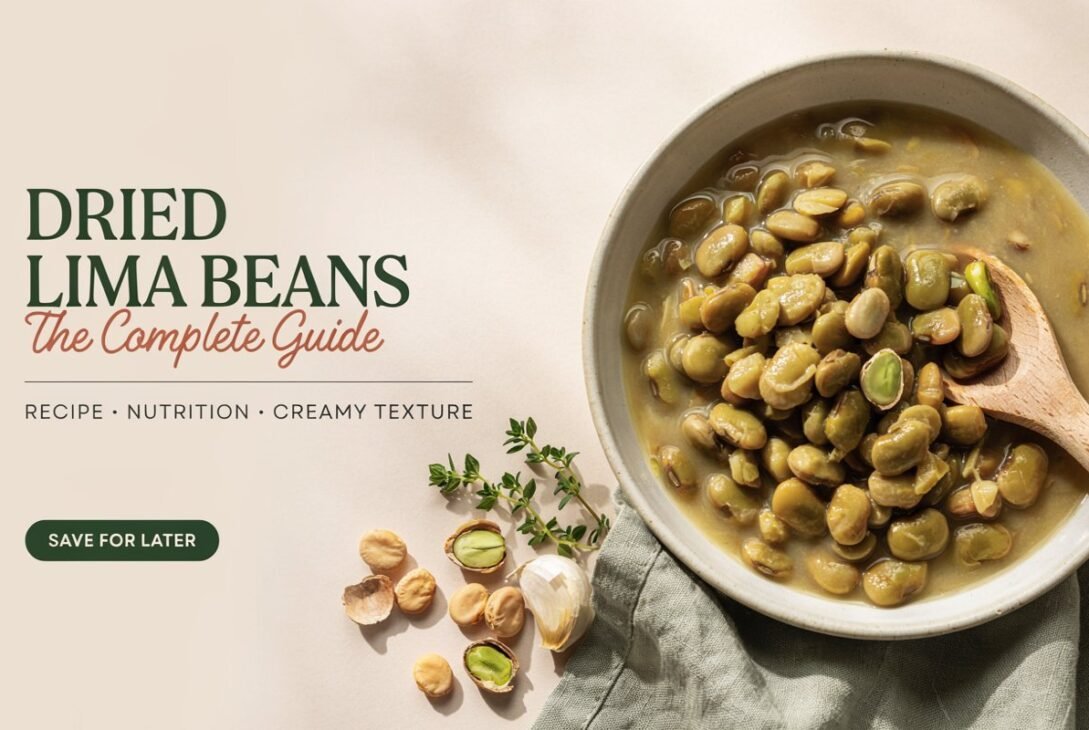
Few pantry staples deliver the buttery texture and mild, nutty flavor that dried lima beans bring to a meal. Also known as butter beans in many parts of the world, these pale green or white legumes have been a kitchen staple for centuries, prized for their creamy interior and versatility in soups, stews, and side dishes.
If you’ve ever wondered how to cook dried lima beans properly, why they turn out mushy or hard, or what makes them so nutritious, this guide walks through everything you need to know — from soaking techniques to nutritional breakdowns and a foolproof recipe.
What Are Dried Lima Beans?
Dried lima beans are the dehydrated seeds of the Phaseolus lunatus plant, native to Peru and cultivated for thousands of years across Central and South America. Today, they’re grown widely in the United States, particularly in California, as well as in parts of Africa and Asia.
There are two common types:
- Baby lima beans — smaller, slightly sweeter, and cook faster
- Large lima beans (butter beans) — bigger, starchier, and known for their signature creamy bite once cooked
Both varieties share a pale greenish-white color when dried and turn a soft, buttery texture once rehydrated and simmered.
Why Dried Lima Beans Deserve a Spot in Your Pantry
Unlike canned beans, dried lima beans offer better texture control, lower sodium content, and a fresher flavor once cooked. They’re also significantly cheaper per serving, making them a smart choice for budget-conscious cooks who still want a nutrient-dense meal.
Here’s what makes them stand out:
- Long shelf life (up to 2–3 years when stored properly)
- No added preservatives or sodium
- Naturally gluten-free and vegan
- Rich, creamy texture that holds up well in slow-cooked dishes
Nutritional Profile of Dried Lima Beans
Lima beans are considered a nutritional powerhouse among legumes. A single cooked cup (roughly 170 grams) provides:
- Protein: around 15 grams, making them a solid plant-based protein source
- Fiber: nearly 13 grams, supporting digestive health and satiety
- Iron: contributes to daily iron needs, important for energy metabolism
- Potassium: higher than a medium banana, supporting healthy blood pressure levels
- Folate: essential for cell growth and particularly important during pregnancy
- Low fat: virtually fat-free, with no cholesterol
Because of their high fiber and protein combination, lima beans digest slowly, which helps maintain steady blood sugar levels — a reason they’re often recommended in balanced, heart-healthy diets.
Are Dried Lima Beans Good for Weight Management?
Yes. Their fiber and protein content promote fullness, reducing the likelihood of overeating later in the day. A cup of cooked lima beans is filling, nutrient-dense, and relatively low in calories compared to the satiety it provides — making it a practical addition to weight-conscious meal planning.
How to Cook Dried Lima Beans (Step-by-Step)
Cooking dried lima beans isn’t complicated, but a few small missteps can lead to beans that are chalky, unevenly cooked, or take far longer than expected. Here’s the method experienced home cooks rely on.
Step 1: Sort and Rinse
Spread the beans on a flat surface and remove any shriveled pieces, small stones, or debris. Rinse thoroughly under cold water.
Step 2: Soak the Beans
Soaking is not strictly required, but it significantly reduces cooking time and improves texture consistency.
- Overnight soak: Cover beans with 3 inches of cold water and let sit for 8–12 hours.
- Quick soak: Boil beans for 2 minutes, then let sit off heat for 1 hour.
Drain and rinse before cooking either way.
Step 3: Simmer Until Tender
Place soaked beans in a pot, cover with fresh water (about 2 inches above the beans), and bring to a gentle boil. Reduce to a simmer and cook uncovered for 45–60 minutes, stirring occasionally.
Avoid adding salt or acidic ingredients like tomatoes early in the cooking process — they can toughen the bean skins and slow down softening. Add these only after the beans are tender.
Step 4: Check for Doneness
Beans are ready when they’re fully soft and creamy in the center, with no chalky bite remaining. If undercooked, continue simmering in 10-minute intervals.
Simple Creamy Dried Lima Beans Recipe
This classic Southern-style preparation highlights the beans’ natural creaminess without overpowering their flavor.
Ingredients:
- 2 cups dried lima beans, soaked
- 4 cups vegetable or chicken broth
- 1 small onion, diced
- 2 garlic cloves, minced
- 2 tablespoons olive oil or butter
- Salt and black pepper to taste
- Optional: smoked paprika or a bay leaf for depth
Instructions:
- Heat oil in a large pot and sauté onion and garlic until fragrant.
- Add soaked, drained lima beans and broth.
- Bring to a boil, then reduce heat and simmer uncovered for 45–60 minutes.
- Season with salt and pepper in the final 10 minutes of cooking.
- Stir gently — the beans should break slightly, thickening the broth into a creamy consistency.
- Serve warm as a side dish or over rice for a complete plant-based meal.
This method works well because slow simmering allows the starches inside the beans to release gradually, creating that signature velvety texture without turning the beans mushy or falling apart entirely.
Common Mistakes When Cooking Dried Lima Beans
Even experienced cooks run into a few recurring issues:
- Adding salt too early: This can toughen the bean’s outer layer, extending cooking time.
- Skipping the soak: Unsoaked beans can take twice as long to cook and may cook unevenly.
- Using old beans: Dried beans lose moisture over time. Beans older than 2 years may never fully soften, regardless of cooking time.
- Boiling too aggressively: A rolling boil can cause beans to break apart before the centers cook through. A gentle simmer is best.
Dried Lima Beans vs. Canned Lima Beans
| Factor | Dried Lima Beans | Canned Lima Beans |
|---|---|---|
| Sodium | Low (you control it) | Higher, unless low-sodium variety |
| Texture | Firmer, more customizable | Softer, pre-cooked |
| Cost | More economical per serving | Slightly higher per serving |
| Prep time | Requires soaking and cooking | Ready to use immediately |
| Flavor | Fresher, more neutral base | Slightly muted from canning process |
Dried beans give you more control over texture and seasoning, while canned beans offer convenience for quick weeknight meals.
How to Store Dried and Cooked Lima Beans
- Dried, uncooked beans: Store in an airtight container in a cool, dry pantry. They stay usable for up to 2–3 years, though freshness (and cooking time) is best within the first year.
- Cooked beans: Refrigerate in a sealed container for up to 5 days.
- Cooked lima beans aren’t just a fridge item — portion them into freezer bags and they’ll stay good for up to half a year. Portion them into freezer bags for easy future use in soups or stews.
Frequently Asked Questions
1. How long do dried lima beans take to cook?
On average, soaked lima beans take 45–60 minutes to fully soften. Beans that go into the pot unsoaked generally need an extra 1.5 to 2 hours to reach that same tender finish.
2. Do I need to soak dried lima beans before cooking?
Soaking isn’t mandatory, but it shortens cooking time, improves even cooking, and can make the beans easier to digest.
3. Why are my lima beans still hard after cooking?
This is usually due to old beans, hard water, or adding salt/acidic ingredients too early in the cooking process.
4. Are dried lima beans healthy?
Yes. They’re high in plant-based protein, fiber, iron, and potassium, while being naturally low in fat and cholesterol-free.
5. Can you eat lima beans raw?
No. Raw or undercooked lima beans contain naturally occurring compounds called linamarin, which can release cyanide compounds if not properly cooked. Make sure lima beans are fully cooked through every time before they hit your plate.
6. What’s the difference between lima beans and butter beans?
They’re essentially the same species. “Butter beans” typically refers to the larger, starchier variety, while “lima beans” is often used for the smaller, milder version — though naming varies by region.
7. Can dried lima beans be cooked in a slow cooker?
Yes. After soaking, cook on low for 6–8 hours or high for 3–4 hours, checking periodically for tenderness.
Conclusion
Dried lima beans are an affordable, nutrient-rich ingredient that reward a little patience with a rich, creamy texture unmatched by most other legumes. Whether you’re building a hearty soup, a simple seasoned side dish, or a plant-based protein source for the week, understanding proper soaking and simmering techniques makes all the difference. With the right preparation, dried lima beans transform from a humble pantry staple into a comforting, satisfying part of any meal.