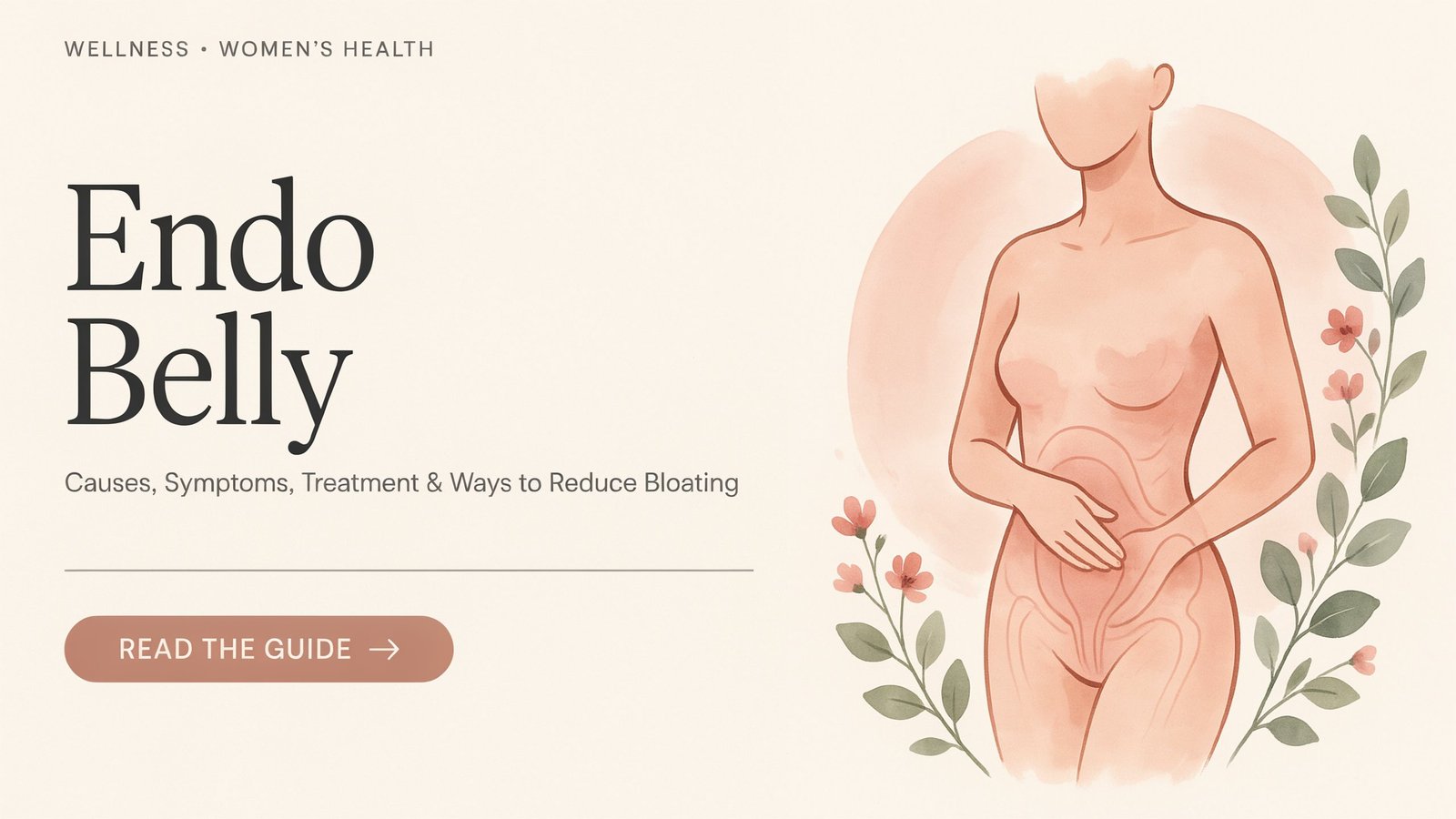
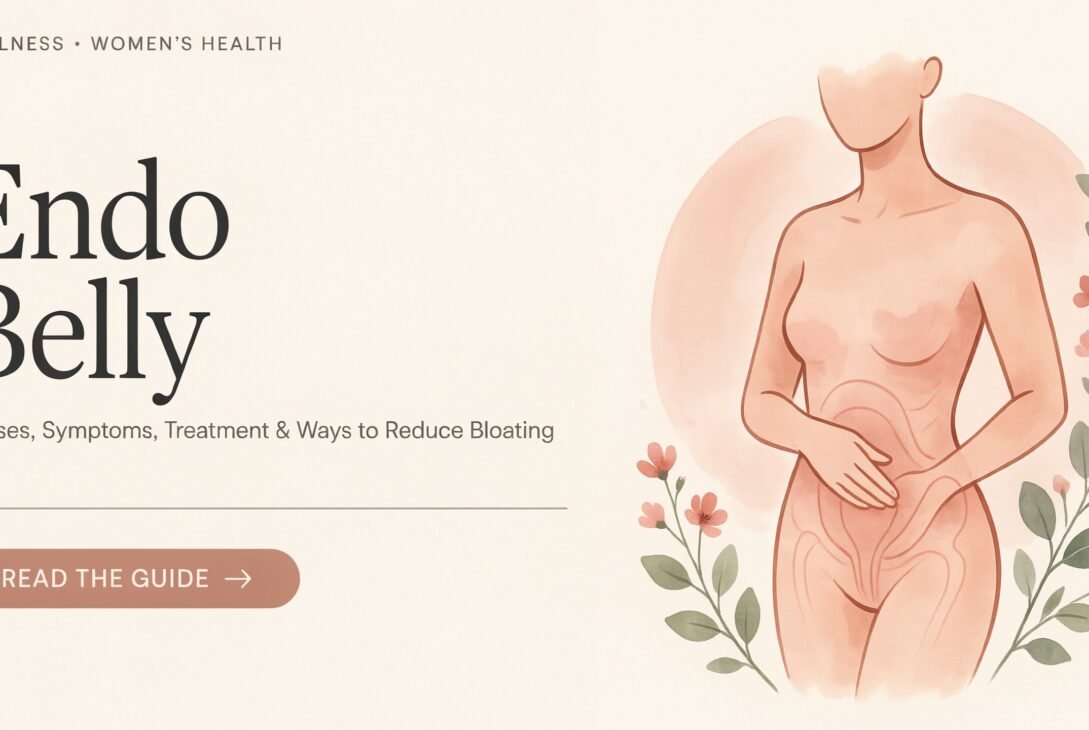
You wake up with a flat belly. By late afternoon your jeans start to feel snug. By evening you look many months pregnant and you have stomach aches. If this sounds familiar, you may be experiencing what the endometriosis community refers to as “endo belly.”
Here you will learn what endo belly is, what causes it, how it is different from regular bloat, and what you can do about it.
What Is Endo Belly?
Endo belly is a term used to describe serious, often painful, abdominal bloating and swelling in patients with endometriosis. This information is provided for educational purposes only and should not be considered a substitute for a professional medical diagnosis. Doctors commonly call it abdominal distension associated with endometriosis. It can come on abruptly, feel hard and tight to the touch, and typically occurs with cramping, nausea or pressure in the pelvis.
Endometriosis is a disorder where tissue like the lining of the uterus grows outside the uterus. The most common locations are the ovaries, fallopian tubes, the lining of the pelvis, and occasionally the intestine or bladder. The World Health Organization estimates that some 10% of women and girls of reproductive age globally are affected.
Not everyone who has endometriosis gets endo belly. But it is one of the most widely reported symptoms, and is often brushed off as “just gas” or “normal period bloat.”
Endometriosis Belly Symptoms to Watch For
An endometriosis belly looks and feels different from a normal full stomach. Common signs:
- Visible oedema that becomes worse during the day and improves overnight
Abdomen feels rigid, tight or painful
Bloating that grows worse right before or during your period
Swelling with pain in the pelvis or lower back
Constipation or diarrhoea Nausea
Pain with sex or bowel motions
Clothes that suddenly don’t fit anymore – even if you haven’t changed your weight
Fatigue out of sync with your day
Many folks see a trend. In the second half of the monthly cycle, bloating may gradually develop, reaching its maximum in the initial days of bleeding. In some it appears sporadically, making it more difficult to associate it with endometriosis.
Why Does My Uterus Feel Bloated?
This is one of the most commonly asked queries people type into search engines, and the answer is often more convoluted than the uterus itself. When people describe their uterus is bloated, they are usually talking to a feeling of heaviness, swelling or pressure low in the abdomen. It could be caused by a few things.
Inflammatory Reaction
Endometriosis is an inflammatory disease. Lesions affect the surrounding tissue and this irritation can produce swelling, water retention and a feeling of fullness. The inflammation might also spread to neighbouring organs, such as the intestines.
Changes in hormones
Oestrogen feeds endometriosis lesions, but it also alters how your body retains water and how your gut moves. The cycle might also worsen bloating at predictable times due to hormone fluctuations.
Adhesions and bowel disease
If endometriosis grows on or near the intestine, it might interfere with proper digestion. scar tissue, or adhesions, can also cause organs to stick together and prevent the passage of food and gas through the gut.
Overlap with digestive issues
Endometriosis and irritable bowel syndrome (IBS) share similar symptoms and studies suggest they often coexist.
Tightness of the pelvic floor
Chronic pain generally comes with stiff pelvic floor muscles. That tension can interfere with the smooth functioning of the gut, and can lead to bloating and discomfort.
Endometriosis and Gas: Is There a Connection?
Yeah. Gas and endometriosis are typically linked and it’s worth understanding why.
Your reproductive organs are right adjacent to your digestive system. Inflammation, adhesions or lesions in the pelvis can impede digestion and affect the contractions of the intestines. Bacteria have more time to ferment and produce more gas when food slows down. Gas trapped behind a sensitive, irritated gut can hurt shockingly badly.
There is another factor: many patients with endometriosis have visceral hypersensitivity . This means that the nerves in the intestines are too sensitive to typical levels of gas or straining. A volume of gas that might go ignored in another can feel acute and powerful.
Endometriosis Bloating vs. Regular Bloating
It helps to know the difference, because the two are treated differently.
| Feature | Regular bloating | Endometriosis bloating |
|---|---|---|
| Trigger | Usually a specific meal or habit | Often unpredictable or cycle-linked |
| Duration | Hours, sometimes a day | Can last days or recur constantly |
| Severity | Mild to moderate discomfort | Can be painful and very visible |
| Other symptoms | Sometimes gas or burping | Pelvic pain, painful periods, bowel changes |
| Response to diet changes | Usually improves | Often only partial improvement |
If your bloating keeps returning despite sensible diet changes, it is worth raising with a doctor.
Why You May Look Pregnant When Bloated
The “bloated look pregnant” feeling is real, and it can be frightening. In severe cases, the abdomen can protrude sufficiently that passersby will question about your due date. This is due to a combination of factors:
- The intestines expand and the abdominal wall pushes out from the gas and liquids.
Swelling in and around the pelvic organs is caused by inflammation.
The diaphragm and pelvic floor are not working together properly. Instead of relaxing to make space for a full gut, the muscles can bunch up, pushing the belly outward.
If there is any chance you might be pregnant, take a pregnancy test. If the swelling is sudden, fresh, or really painful, don’t wait for it to go away, get it checked out.
How Endo Belly Is Diagnosed
There is no test for endo belly per se. Instead, doctors search for the underlying reason. This usually begins with a full history of your symptoms and period and a pelvic exam.
Imaging helps. Transvaginal ultrasonography or MRI can see endometriomas (ovarian cysts) and some deeper abnormalities. However, normal scan does not exclude endometriosis, as superficial lesions are commonly missed. Laparoscopy, a minimally invasive procedure, has been the conventional means of confirming diagnosis, although many clinicians now initiate therapy based on symptoms and imaging.
Diagnosis can take years. The majority of studies reveal an average delay of seven to ten years from the onset of symptoms. If you’re feeling unheard, asking for a second opinion or an expert in endometriosis is reasonable
Endo Belly Treatment Options
Treatment depends on your symptoms, your age, and whether you want to become pregnant. The available options generally fall into several main categories.
Medical treatment
- Pain relievers: Over-the-counter anti-inflammatory drugs such as ibuprofen can ease cramping for some people.
- Hormonal therapy: Birth control pills, progestin-only options, hormonal IUDs, and GnRH agonists or antagonists aim to reduce or stop the hormonal cycle that feeds lesions. Less lesion activity can mean less inflammation and less bloating.
Operation
If the intestine is involved, endometriosis lesions can be excised or ablated to decrease pain and bloating. Results are variable and symptoms can reappear, so this is a decision to make with an expert surgeon.
Pelvic floor treatment
A trained therapist can show you how to loosen tight pelvic muscles and enhance breathing mechanics. This helps so many individuals with pain and bloating.
Management of coexisting conditions
If you have IBS or SIBO as well, addressing them can make a big difference. This is something to discuss with a gastroenterologist .
Ways to Reduce Endometriosis Bloating at Home
Home strategies will not cure endometriosis, but they can take the edge off flare-ups.
Try these practical steps:
- Eat smaller, more frequent meals. Eating large portions at once may place extra strain on a sensitive digestive system.
- Keep a symptom and food diary for a few weeks. Patterns often appear that you would otherwise miss.
- Consider a low-FODMAP trial under the guidance of a dietitian. This approach limits certain fermentable carbohydrates and is well studied for IBS. Evidence specific to endometriosis is still limited, and the diet should not be followed long term without support.
- Limit common gas triggers such as carbonated drinks, chewing gum, and very large portions of beans or cruciferous vegetables, if these bother you.
- Use gentle heat. A heating pad on the lower abdomen can relax muscles and ease cramping.
- Move your body. Walking, stretching, or gentle yoga can help gas move through the gut.
- Practice slow diaphragmatic breathing. It supports the pelvic floor and may reduce the tight feeling in the belly.
- Stay hydrated and eat enough fiber, since constipation makes bloating worse.
- Wear comfortable clothing during flare-ups. It sounds minor, but pressure on a swollen abdomen adds to the pain.
When to See a Doctor
If bloating is regular, painful, or interfering with everyday life, schedule an appointment. Get medical help right away if you have:
- Severe stomach discomfort, sudden
Bloating with fever
Vomiting repeatedly
Blood in your stool or severe, unexplained bleeding
Involuntary weight loss
Persistent and new bloating, especially above age 40
There are other illnesses that can cause persistent bloating as well, including ovarian cancer, so this symptom should never be presumed to be endometriosis without assessment.
Frequently Asked Questions
What is endo belly caused by?
Endo belly is a combination of inflammation, hormonal changes, gastrointestinal slowing, adhesions and nerve sensitivity that goes along with endometriosis. It might be compounded by overlapping intestinal problems like IBS.
How long does endo belly last?
It depends. Some take a few hours, and some settle overnight. It can last on for days for some especially around menstruation. If you have bloating that does not go away, consult your doctor.
Can Endometriosis Cause a Pregnant-Looking Belly?
Yes The swelling might be so bad that the abdomen bulges out like a pregnant bump. It usually decreases away as the flare progresses.
Does endometriosis cause bloating?
Yes it can. Inflammation and abnormalities in bowel movements can cause more gas. A sensitive stomach can make even typical quantities feel unpleasant.
Can endo belly be cured via diet?
No. Diet can’t heal Endometriosis. Changing diet helps with bloating for some people, but this doesn’t work for everyone and often medical therapy is still needed.
Is endo belly a symptom of something wrong?
It is normally a symptom of endometriosis, not an emergency. But sudden acute swelling, fever, vomiting or chronic unexplained bloating requires medical treatment to rule out other causes.
Conclusion
Endo belly is not just a regular stomach ache. It’s a very real and often painful symptom of endometriosis, caused by inflammation, hormones, and changes in how the gut acts. The first step to relief is recognising the pattern.
Home routines like as eating smaller meals, moderate heat, activity, and pelvic floor care can help to reduce flare-ups. If you cooperate with a healthcare provider on hormone medication, possibly surgery or care for linked gut issues, this usually leads to longer-term improvement. If your bloating is frequent, uncomfortable or inexplicable you deserve to have a comprehensive evaluation and you shouldn’t have to accept it as normal