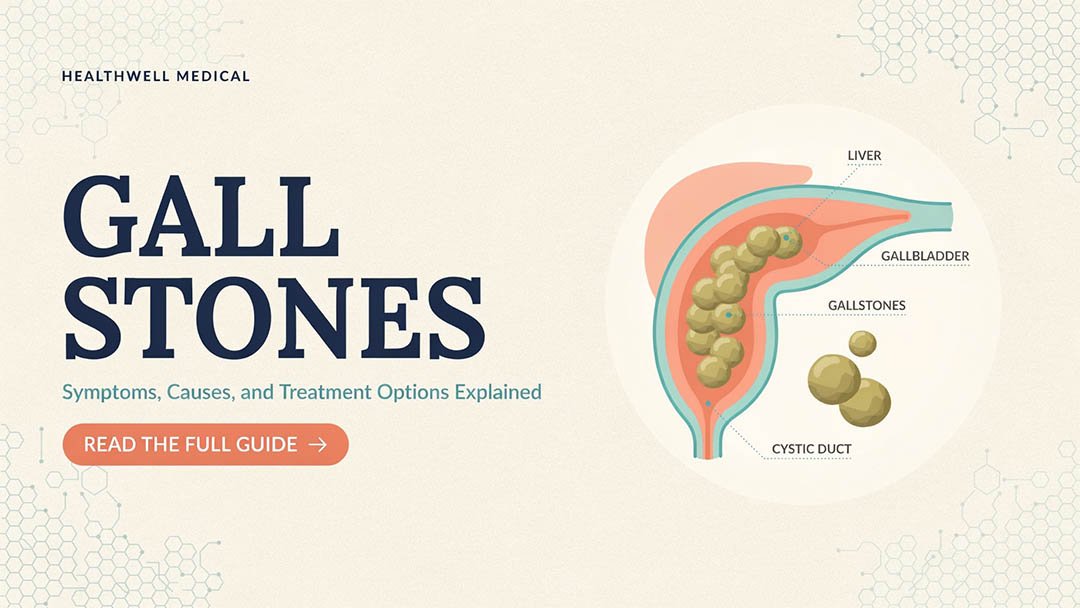
Have you ever experienced a strong, gripping discomfort beneath your right ribs after eating a large meal and wondered if gall stones were to blame? This illness is much more frequent than most people think, and often it passes unreported until it suddenly doesn’t. In this guide, we’ll cover what gall stones are, how to recognize gall stone symptoms, what causes gall bladder stones, and what treatment options – including whether a gall bladder stone can be removed without surgery – are realistically available today.
This page is for general education and awareness. This is not a substitute for a correct diagnosis from a doctor and anyone with persistent abdominal pain should not self-diagnose but instead consult a medical expert
What Are Gall Stones?
Gall stones are hard, tiny deposits that develop in the gall bladder – a small pear shaped organ nestled under the liver, which contains bile, a fluid which digests fats. If the ratio of substances in the bile is upset, part of this fluid can solidify to form stones.
The size of these stones varies greatly. They can be as small as a grain of sand or as big as a golf ball. In the gallbladder, there may be one huge stone or dozens of tiny stones sitting together.
There are two general sorts to be aware of:
- Cholesterol stones – the most frequent form, made largely of solid cholesterol that didn’t breakdown effectively in bile.
Pigment stones – smaller, darker stones created when bile has too much bilirubin, commonly connected to liver illness or some blood problems.
Many people have gall stones for years without knowing they have them. Problems generally don’t arise until a stone lodges in a duct and stops the regular flow of bile.
Common Gall Stone Symptoms
Not all people with gall stones have discomfort – a considerable number of instances are regarded as ‘silent’ stones, detected only during an unrelated scan. But when symptoms do appear, they follow a familiar pattern.
Early Warning Signs
- Sudden, severe discomfort in the upper right or middle part of the abdomen
Pain that radiates to the right shoulder or between the shoulder blades
Increased discomfort after eating greasy or fried food
Nausea or vomiting with a pain attack
Bloating and indigestion that won’t go away with typical solutions
This type of pain is sometimes referred to as a “gallbladder attack” or biliary colic. It might continue from a few minutes to many hours and can grow more common over time if the underlying stones are not treated.
Signs That Need Urgent Medical Attention
There are some indications that indicate a complication rather than a normal gallbladder attack and should never be ignored:
- Fever with stomach pain
Yellow skin or eyes (jaundice)
Dark urine and clay colored feces
Constant vomiting and unable to keep fluids down
Pain that doesn’t go away after 5 to 6 hours
If any of them pop up, it’s time for an emergency room visit, not a wait and see approach. Blocked bile ducts can cause infections of the gallbladder or pancreas, and both need rapid treatment.
What Causes Gall Bladder Stones?
Bile contains cholesterol, bile salts and a pigment called bilirubin which all are in a delicate chemical balance. Gall bladder stones occur when the equilibrium goes too far in one direction or the other.
The Contributing Factors
- Excess of cholesterol in bile. If the liver makes more cholesterol than the bile can breakdown, the excess cholesterol will form stones over time.
Bilirubin too high. Some of these include liver cirrhosis and some infections or blood diseases which increase bilirubin levels and encourage the formation of pigment stones.
A gallbladder that doesn’t drain well. If the gallbladder doesn’t empty entirely or often enough, bile might stay there and become more concentrated, increasing the chance of stones forming.
Risk Factors That Increase the Odds
Some groups are at far greater risk of having gall stones:
- Pregnant women, women on hormone therapy, and women taking birth control pills, due to higher amounts of estrogen
People above the age of 40, since risk increases continuously with age
Overweight or obese individuals. Excess weight increases the amount of cholesterol in bile,
People who lose a lot of weight very quickly, for example after bariatric surgery or rigorous dieting
Those having a family history of gallstones
High triglycerides or diabetes mellitus.
People who consume a diet rich in refined carbohydrate and lacking in fiber
None of them guaranties that someone will get stones, but they do change the probabilities. Interestingly, slow and steady weight loss is protective, while crash dieting really can raise risk – something that surprises many people trying to eat healthier.
How Gall Stones Are Diagnosed
Typically, a doctor will start with a physical exam and examination of symptoms, then confirm concerns with imaging or blood work:
- Abdominal ultrasound – most popular and reliable first test. Can detect stones with high accuracy.
CT scan – if issues such as obstruction or inflammation are detected
MRCP (MR cholangiopancreatography) — comprehensive scan of the bile ducts, beneficial if a stone may have passed out of the gallbladder.
Blood testing – to screen for infection, inflammation or blockage of bile flow.
It is important to have an appropriate diagnosis because gall stone symptoms often overlap with other digestive conditions such as acid reflux, ulcers, or irritable bowel syndrome
Treatment Options for Gall Stones
Treatment really relies on whether the stones are creating problems, the size of the stones and the person’s general health.”
Active surveillance
Doctors often advocate watching gall stones that have been detected incidentally if they are not causing pain. Silent stones are typically silent. Unnecessary surgery has its own risks.
Medicines
For some people, oral medicines that contain bile acids (for example, ursodeoxycholic acid) can gently dissolve tiny cholesterol stones. This method is usually used for those who cannot have surgery as it might take months or years for this to be effective and stones tend to recur once the medicine is stopped.
Surgery: Gallbladder removal
The most definite treatment is surgical removal of the gallbladder, called a cholecystectomy. There are two main ways of doing this:
- Laparoscopic cholecystectomy – done through a few small cuts with a camera and special tools; now the usual procedure for most patients, with minimal scarring and faster recovery
Open cholecystectomy: a more conventional operation with a bigger incision, generally used for complex situations or where laparoscopic surgery is not safe
The good news is that the gallbladder is not a vital organ. With the bile removed the bile goes directly from the liver to the intestine and most patients get back to normal digestion in a few weeks.
Can Gall Bladder Stone Be Removed Without Surgery?
It’s one of the questions asked most often on the subject. The honest answer is: yes, occasionally, but with actual constraints.
There are non-surgical options:
- Oral dissolving therapy, as above, works for tiny cholesterol stones in people with a functioning gallbladder, but the chances of success are modest and recurrence is common.
Shock wave lithotripsy is a procedure that uses sound waves to break stones into tiny pieces that are easier to pass. It is little utilized today as it works only on certain types of stone and typically requires medication afterward.
Endoscopic treatments (ERCP) can successfully remove stones that have migrated into the bile duct without having to remove the gallbladder itself, especially if a stone is obstructing the duct and causing jaundice or pancreatitis.
What non-surgical treatments just can’t accomplish is to offer a permanent solution. If the gallbladder is left in place, the conditions that caused the original stone are often still there, thus new stones can form again. Surgery, however, removes the root of the disease altogether.
If you want to avoid surgery, it’s worth having a frank discussion with a gastroenterologist about the size, quantity and type of stones involved – these factors really matter in determining if non-surgical therapy is viable.
Diet and Lifestyle Tips for Gallbladder Health
While diet alone can’t dissolve existing stones, certain habits do support gallbladder health and may lower the chance of new stones forming:
- Eat regular, balanced meals rather than skipping meals or fasting for long stretches
- Include more fiber-rich foods like vegetables, fruits, and whole grains
- Choose healthy fats such as olive oil and nuts over fried and heavily processed foods
- Maintain a steady, moderate pace when trying to lose weight
- Stay well hydrated throughout the day
- Limit sugary drinks and refined carbohydrates
These changes won’t guarantee stones never form, but they do support overall digestive and metabolic health, which lowers risk over time.
FAQs
1. Most common cause of gall stones?
The most common cause is an imbalance in the chemistry of the bile — usually too much cholesterol compared to the bile salts needed to keep it dissolved. This leads to the formation of crystals within the gallbladder over time.
2. What are the first symptoms of gallstones?
The first symptoms are usually a sharp pain in the upper right area of the stomach after eating, especially if the food is fatty, bloating and nausea.
3. Can gallbladder stones disappear on their own?
Sometimes little stones go through the system without treatment but most stones don’t just disappear on their own. This is distinct than dissolving, as the stones may be completely silent and never produce symptoms.
4. What are the risks of gallbladder surgery?
Laparoscopic cholecystectomy is a regular, safe, low-risk operation for most patients with an excellent safety record and rapid recovery. As with any operation, the risk to each individual relies on the general state of health and therefore a thorough pre-operative assessment is important.
5. Is it possible to eliminate gall bladder stone without surgery permanently?
Sometimes stones are treated non-surgically using medications or procedures such as ERCP . Non-surgical treatments do not include removing the gallbladder , and the chance of developing additional stones after surgery is less than after non-surgical treatment .
6. What foods are bad for gall stones?
Gall stones sufferers often have a low tolerance for fried foods, fatty cuts of meat, full-fat dairy, and highly processed snack foods. This is because digesting fat puts extra demands on the gallbladder.
7. How long does discomfort from a gallbladder attack generally last?
Typical episode: Average duration is 30 minutes to a few hours. If the pain continues for more than six hours, or is accompanied by fever, get medical attention at once.
Summary
Gall stones are a common problem, but one that is often misunderstood. They might lay dormant for years without any problems or they can cause acute, intense pain that lands someone in the ER. Knowing gall stone symptoms early, and the difference between a typical gallbladder attack and a medical emergency, makes a big difference in outcomes. For patients with repeated symptoms, surgical removal is the most dependable long-term option, but non-surgical treatments have a role for some patients. If you suspect gall bladder stones, the safest next step is to get a proper evaluation from a specialist who can look at your particular case and make recommendations for the appropriate course of action.