If you or someone you know has just been told that you require a permacath for dialysis, you undoubtedly have a dozen questions rushing through your head. Does it sting? Can you take a shower? How long is it? Is it better or worse than a fistula?
This guide will answer all of that, simply. It’s written for patients, caregivers, and anyone researching dialysis access options before a big decision. Nothing here replaces advice from your nephrologist or dialysis nurse — but it will help you walk into that conversation already informed.
What Is a Permacath?
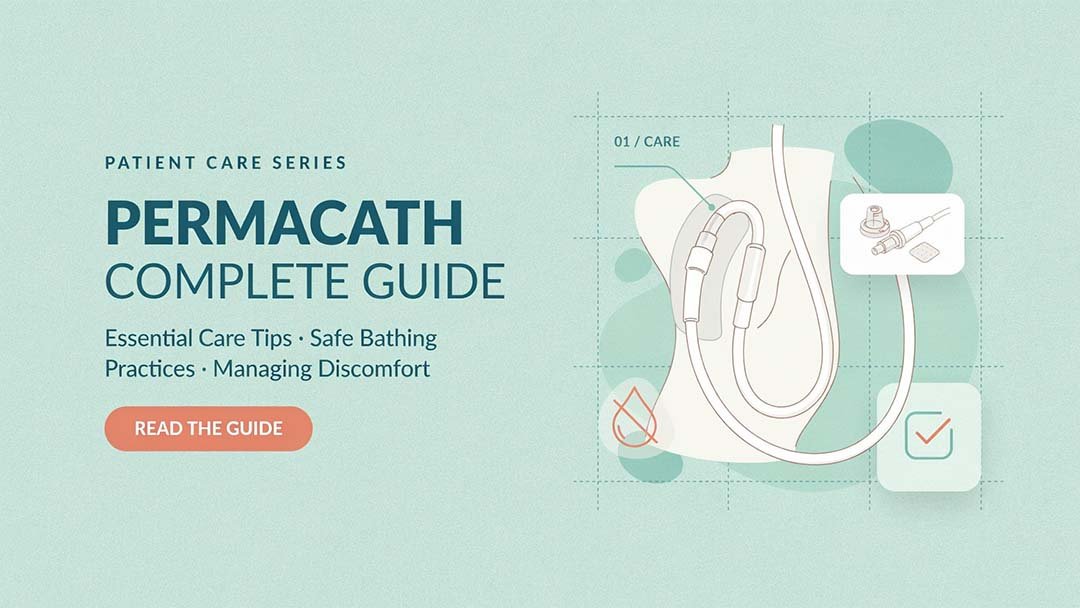
Permacath, permcath or tunneled dialysis catheter is a soft, flexible tube that is put into a big vein, usually the internal jugular vein in the neck, to allow blood to flow in and out of the body during hemodialysis. A permacath differs from a temporary catheter in that it is “tunneled” under the skin for several centimeters before entering the vein. This tunnel is important because most patients don’t know it: it minimizes the likelihood of infection and helps keep the catheter more firmly in place.
The catheter has two lumens (channels) – one pulls blood out to the dialysis machine, the other returns cleaned blood to the body. There is a delicate cuff inside the skin along the tunnel. Over a few weeks, the cuff encourages tissue to develop around it and attaches the catheter. That’s why permacaths can stay in place for months, sometimes longer, with adequate care.
In short, a permacath is:
- A tunneled, cuffed catheter used for hemodialysis
- Placed in a large central vein, most often in the neck
- Designed for longer-term use than a standard dialysis catheter
- An option when a fistula or graft isn’t ready or isn’t possible
Why Doctors Recommend a Permacath
Not everyone is a candidate for a fistula right away. A permacath is typically used when:
- Dialysis needs to start urgently and there’s no time to prepare a fistula
- A patient’s veins are too small or damaged for a fistula or graft
- A fistula or graft is still maturing and isn’t ready for use
- Someone has a limited life expectancy and a less invasive option is preferred
- Peritoneal dialysis isn’t suitable and a bridge to a permanent access is needed
Nephrologists generally view catheters as a starting point rather than a final destination, mainly because of infection risk. Still, for many patients, a permacath is a practical and often life-saving solution.
Permacath vs Fistula: Which Is Better?
This is one of the most common questions patients ask, and the honest answer is: it depends on your situation. Here’s a straightforward comparison.
Permacath vs Fistula — Key Differences
| Factor | Permacath | Fistula |
|---|---|---|
| Time to use | Ready almost immediately | Needs 6–12 weeks to mature |
| Infection risk | Higher | Lower |
| Blood flow rate | Generally lower | Generally higher, more efficient dialysis |
| Comfort | Visible external tube, needs care | No external tube once healed |
| Lifespan | Months (with good care) | Years, often decades |
| Surgery required | Minor procedure | Surgical creation of a vein-artery connection |
| Daily maintenance | Regular dressing changes, dry care | Minimal once matured |
A fistula, created by surgically joining an artery and a vein, is widely considered the gold standard for long-term dialysis access because it carries a lower infection risk and supports better blood flow. However, it takes weeks to mature and isn’t always surgically possible for every patient.
A permacath fills the gap — it works right away and doesn’t require the vein-artery healing process. Many patients use a permacath temporarily while their fistula matures, then transition once the fistula is ready for regular use.
If your care team has suggested a permacath, it doesn’t mean you’re stuck with it forever. It’s often a stepping stone, not a permanent decision.
Daily Care for Your Permacath
Proper daily care is the single biggest factor in avoiding infection and keeping your catheter functioning well. Dialysis centers train patients and caregivers on this, but here’s a general overview of what’s involved.
1. Keep the Dressing Clean and Dry
The exit site — where the catheter comes out of the skin — needs a sterile, occlusive dressing at all times. This is usually changed by a trained nurse during each dialysis session, or at least weekly if you’re not on dialysis that often. Never remove or reapply the dressing yourself unless you’ve been specifically trained to do so.
2. Watch for Warning Signs
Check the exit site regularly for:
- Redness, swelling, or warmth around the site
- Pus, unusual discharge, or a foul smell
- Fever or chills, especially during or after dialysis
- Pain that’s getting worse rather than better
- The catheter looking loose, twisted, or pulled
Any of these signs should prompt an immediate call to your dialysis unit — don’t wait for your next scheduled appointment.
3. Secure the Catheter
The external part of the permacath should always be taped or clipped securely to your chest to prevent tugging, which can dislodge the cuff or cause pain. Avoid clothing that rubs against the site, and be mindful during sleep so you don’t pull on the tubing.
4. Avoid Touching the Caps
The catheter caps and clamps should never be opened except by trained dialysis staff. This connection point is one of the most common sources of catheter-related bloodstream infection if handled improperly.
5. Hand Hygiene Around the Site
Anyone touching the dressing or area near the permacath — caregivers included — should wash hands thoroughly first. This simple step meaningfully reduces infection risk.
Bathing and Showering With a Permacath
This is one of the most searched questions, and for good reason — daily hygiene doesn’t stop just because you have a catheter.
Can You Shower With a Permacath?
Yes, but with precautions. The dressing and exit site must stay completely dry. Most dialysis units recommend:
- Covering the catheter and dressing with a waterproof cover or specially designed catheter shower shield
- Keeping the water stream away from the chest area where the catheter sits
- Avoiding long, hot showers that increase moisture buildup under the dressing
- Patting the surrounding skin dry gently if any water reaches nearby areas
What About Bathing in a Tub or Swimming?
Submerging the catheter in bathwater, a swimming pool, or any standing water is not recommended. Water increases the risk of bacteria reaching the exit site, and a soaked dressing loses its protective barrier. If the dressing does get wet or comes loose, it should be changed by a trained professional as soon as possible — not left in place.
Practical Bathing Tips
- Shower toward the end of your dressing-change cycle, not right after a fresh change, so you’re not risking a brand-new dressing
- Keep a spare waterproof cover on hand at home
- If you notice the dressing has lifted at the edges, contact your care team rather than trying to reseal it yourself
Managing Discomfort With a Permacath
Some tenderness after insertion is normal and usually settles within a few days. But ongoing or worsening discomfort deserves attention.
Common Causes of Discomfort
- Fresh insertion soreness — mild pain at the insertion and tunnel site for the first week is typical
- Catheter movement — if it isn’t secured well, tugging can cause ongoing irritation
- Positional pain — some patients feel discomfort when turning the neck or lying on the catheter side
- Early infection — pain that increases rather than decreases can signal a problem
Ways to Ease Discomfort
- Use securement devices or dressings designed to stabilize the catheter
- Sleep on the opposite side of the catheter when possible
- Wear loose-fitting clothing near the collarbone and neck area
- Ask your care team about approved pain relief if soreness is significant
- Report any sharp, sudden, or worsening pain immediately rather than waiting it out
Mild ache is expected. Sharp, escalating, or spreading pain is not something to manage on your own — it needs a clinical evaluation.
Perm Catheter Price: What Influences the Cost
Perm catheter pricing varies greatly by geography, type of hospital and healthcare system. Generally costs are impacted by:
- The technique itself of insertion (typically done under local anesthetic, occasionally with imaging guidance)
Hospital or clinic facility charge
The catheter device and any imaging utilized during placement (e.g., ultrasound or fluoroscopy)
Follow-up care: dressing changes and maintenance visits
Whether the procedure takes place in an outpatient setting or requires hospital admission
The cost of insertion varies significantly among nations, from a few hundred to more than a thousand dollars (or the equivalent in the local currency), including facility and physician fees. For individuals with chronic renal disease, a large part of this expense is generally subsidized by government health plans, insurance coverage or dialysis center packages. Because prices are not standardized around the world, it is always better to verify directly with your treating hospital or insurance provider for a precise quote unique to your case
How Long Does a Permacath Last?
If a permacath is looked after carefully, it can work successfully for several months. Some persist more than a year, although most guidelines in nephrology recommend moving to a fistula or graft as soon as medically possible, mainly to reduce the longer term risk of infection and clotting. Your care team will evaluate the rates of blood flow during dialysis. If the flow decreases, the catheter may need to be cared for or replace
Frequently Asked Questions
1. What is the difference between a permacath and a temporary dialysis catheter?
A temporary catheter is used for days to a few weeks and is not tunneled under the skin. A permacath is a tunneled, cuffed catheter, so it can be safely in place for months.
2. Does inserting a permacath hurt?
In local anesthetic, the process is performed, thus most people will feel pressure rather than acute pain during insertion. Mild discomfort following is normal and usually resolves within a week.
3. Can I sleep properly with permacath?
Yes, most patients sleep well after they get used to it. Sleeping on the side away from the catheter and securing the tubing minimizes the possibility of unintentional pulling.
4. How Frequently Should a Permacath Dressing Be Replaced?
Usually at each dialysis session, or at least once a week by a qualified nurse. It must also be changed straight away if it gets damp, loose or dirty.
5. Once the fistula is ready, may the permacath be removed?
Yes. Your care team will remove the permacath when your fistula or graft is developed and ready for regular use. This is a simple process.
6. What are the greatest hazards of having a permacath?
The biggest hazards are catheter related bloodstream infection and clot formation (thrombosis) inside the catheter which is why strict hygiene and monitoring matters so much.
7. Are a permacath and PICC line the same thing?
Nope. A PICC line is put into a vein in the arm for drugs or feeding, not for dialysis. A permacath is constructed to tolerate the high blood flow rates required for hemodialysis.
Summary
If a fistula can’t be placed immediately due to time constraints or vein health, the permacath is frequently the quickest and most practical approach to start dialysis. There are risks — infection and discomfort are real — but with daily care, cautious washing practices and fast response to warning indications, most patients do manage it securely for months at a time. Understanding the differences between it and a fistula, what influences the cost, and how to navigate day-to-day activities such as showering, leaves you much better equipped to interact with your care team and make informed decisions regarding your dialysis access. Always keep an open channel of contact with your nephrologist or dialysis nurse – they know your situation the best and catching little concerns early can prevent significant difficulties later on.