
Cartilage piercings have moved from the fringes of counterculture to the mainstream style staple, and the helix piercing is at the center of this transition. Go to any piercing shop these days and you’ll see how many clients request this by name, frequently after seeing a curated “ear stack” on someone they follow online. But behind the beauty comes a piercing that acts very different from a basic lobe piercing and knowing that distinction is what really makes or breaks your healing process into either an easy ride or months of pain.
In this article, we’ll cover everything you need to know about helix piercings before you have one, during the healing process, and once you’re healed. We’ll talk about what to expect in terms of discomfort, realistic healing times, correct aftercare, and how to choose jewellery that supports your healing tissue instead of hindering it.
What Is a Helix Piercing?
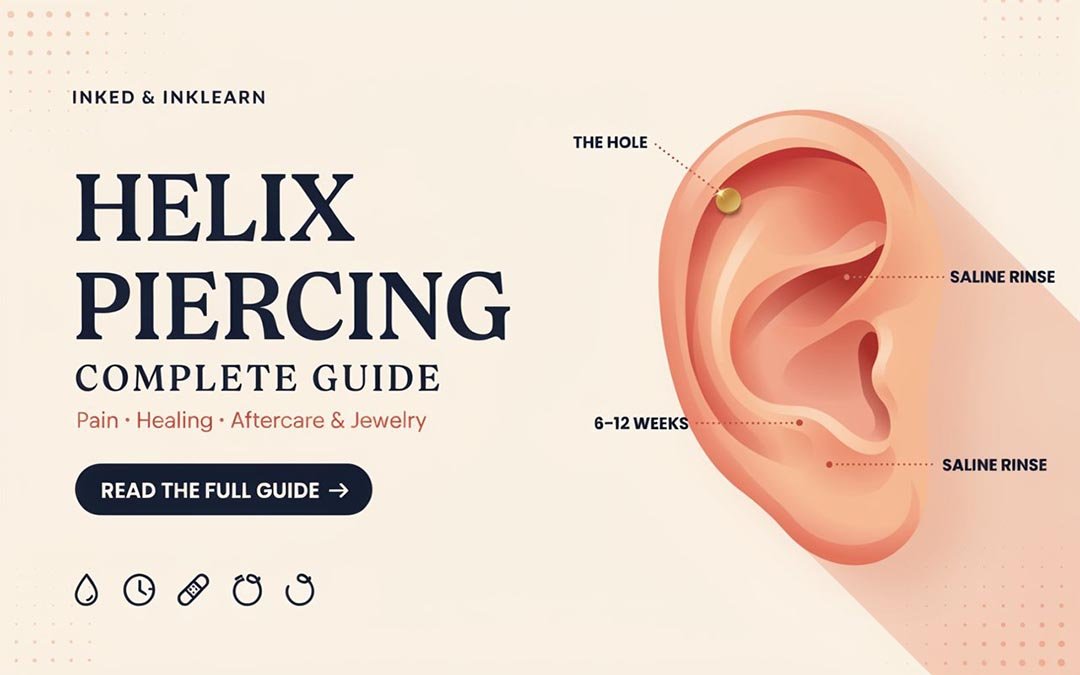
A helix piercing is located on the upper outer ear curve and goes through cartilage, not soft lobe tissue. It’s one of the most requested styles for upper ear cartilage piercings, thanks to how well it mixes with other ear piercings — lobes, tragus, conch — for a layered, personalised look.
A helix piercing goes through cartilage rather than fatty tissue, thus it will heal slower, swell more quickly, and respond more violently to bad aftercare or low-quality jewellery. That one difference is also why cartilage piercings generally have tougher aftercare regulations compared to lobe piercings
Types of Helix Ear Piercings
You don’t want to have a helix piercing that looks like everyone else’s and knowing the variations enables you to tell them exactly what you want at a consultation.
Standard Helix – one piercing in the upper outer rim of the ear.
Forward helix – on the front of the ear, closer to the face, normally in pairs.
Double helix piercing — two piercings on the same ridge of cartilage, a few millimetres apart to create a stacked look.
Triple helix – three piercings in a row for a larger tailored look
Flat helix (snug helix) – found on the flatter part of the cartilage, not on the rounded edge.
The double helix ear piercing has been particularly trendy as it gives that layered, journalistic effect without the necessity to pierce various sections of the ear. Some people get both piercings done in one sitting, while some wait to heal the first one fully before adding the second, which a lot of expert piercers really recommend to prevent overall swelling and aggravation
Does Helix Piercing Hurt?
Let’s address this directly, since it’s usually the first question anyone actually wants answered: does helix piercing hurt more than other piercings?
Generally, yes — cartilage piercings tend to hurt more than lobe piercings, though less than most people expect. Pain during the procedure itself is usually described as a sharp pinch or firm pressure lasting only a few seconds. What follows afterward — a dull, warm throb for the rest of the day — tends to bother people more than the actual piercing moment.
On a typical 1-to-10 pain scale, most people rate a helix piercing around a 4 to 6. A few factors influence where you’ll fall on that scale:
- Piercer technique — a hollow needle causes far less trauma than a piercing gun, which is why reputable studios never use guns on cartilage.
- Individual pain tolerance — this varies widely and isn’t something to feel self-conscious about.
- Anxiety levels — tension in the body often amplifies the sensation of pain.
- Aftercare in the first 48 hours — bumping or sleeping on a fresh piercing can reignite soreness.
Practical advice: eat a healthy meal before you go, drink plenty of water and avoid alcohol or blood thinners for at least 24 hours before your visit. These little steps really do help with bleeding and perceived pain.
How long does it take for a helix piercing to heal?
The main difference between helix and lobe piercings is the healing time and here is where a lot of the difficulties actually occur, often because individuals think they are healed quicker than they are
| Healing Stage | Timeframe | What to Expect |
|---|---|---|
| Initial healing | Weeks 1–4 | Redness, tenderness, mild swelling, occasional clear discharge |
| Surface healing | Months 2–3 | Looks healed on the outside, but tissue underneath is still forming |
| Stabilization | Months 4–6 | Most helix piercings feel fully settled |
| Full internal healing | Up to 12 months | Especially common with double or triple helix piercings |
This extended timeline is completely normal for cartilage. Unlike earlobes, cartilage has limited blood flow, which slows down cell regeneration significantly.
The number one reason for bumps, migration or rejection is trying to fast-track the healing process. This can happen by changing your jewellery too soon, too much cleaning or disregarding irritation.
Helix Piercing Aftercare Step by Step Instructions
After all, you don’t want a helix piercing that looks like everyone else’s, and knowing the variances allows you to tell them exactly what you want at a consultation
- Standard Helix – one piercing in the upper outer rim of the ear.
Forward helix – on the front of the ear, closer to the face, normally in pairs.
Double helix piercing — two piercings on the same ridge of cartilage, a few millimetres apart to create a stacked look.
Triple helix – three piercings in a row for a larger tailored look
Flat helix (snug helix) – found on the flatter part of the cartilage, not on the rounded edge.
Avoid harsh products entirely — alcohol, hydrogen peroxide, and antibacterial ointments dry out tissue and can actually delay healing rather than speed it up.
Normal Healing vs. Warning Signs
It helps to know what’s expected versus what needs attention:
Normal during healing:
- Mild redness or warmth
- Slight tenderness when touched
- Small amounts of clear or whitish discharge (this is lymph fluid, not pus)
Signs to see a piercer or doctor:
- Spreading redness beyond the piercing site
- Increasing pain after the first week, rather than gradual improvement
- Thick yellow or green discharge with odor
- Fever or noticeable swelling of the whole ear
Trust the trajectory, not the moment. Healing is rarely a straight line — some days feel better than others, and that alone isn’t a red flag.
When Can I Change My Helix Piercing?
This is one of the most common questions piercers hear, and also one of the most frequently rushed. So — when can I change my helix piercing without risking damage?
As a general guideline:
- Single helix piercing: wait a minimum of 3 to 6 months
- Double or triple helix piercing: wait closer to 6 to 9 months, since healing multiple piercings in close proximity takes longer
Even if the piercing looks fully healed on the surface within a few weeks, the internal channel — called the fistula — needs significantly more time to stabilize. Changing jewelry too early is one of the most common causes of setbacks in cartilage healing.
Before swapping jewelry, check for these signs of readiness:
- No pain, tenderness, or discharge for several consecutive weeks
- No redness or visible swelling
- Jewelry moves smoothly without resistance or pain
If you’re uncertain, it’s worth having a professional piercer perform the first jewelry change. They can properly assess the tissue and catch early irritation that’s easy to miss on your own.
Choosing the Right Helix Piercing Jewelry
Jewelry quality has a direct impact on healing outcomes — this isn’t just an aesthetic decision.
For the initial piercing, prioritize:
- Implant-grade titanium or solid 14k+ gold (avoid nickel-heavy alloys, a common cause of irritation)
- A flat-back stud or properly sized cartilage hoop that accounts for initial swelling
- Correct gauge, typically 18g or 16g for most helix piercings
Once fully healed, your options expand:
- Small hoops or clickers for a delicate, minimalist look
- Stacked studs for a curated multi-piercing aesthetic
- Chain-style connectors linking helix to lobe for a trend-forward statement
- Gemstone or huggie-style hoops for everyday versatility
For a double helix ear piercing specifically, coordinating metals while varying stud sizes slightly tends to create a more intentional, balanced look than mismatched pieces.
Frequently Asked Questions
Is a helix piercing more painful than a lobe piercing?
More or less, yeah. Because cartilage is thicker and has less blood flow than earlobes, the discomfort at first and the healing time are usually worse and longer.
Can I sleep on my helix?
It’s suggested you don’t sleep right on it for the first couple weeks. Pressure may cause oedema, delayed healing or displacement of jewellery.
Why do I have a lump on my helix piercing?
Small bumps are often caused by pressure, discomfort or tight jewellery. Most clear up with regular saline aftercare but persistent or enlarging pimples should be evaluated by a piercer.
How many piercings can I have done in one session?
It is contingent upon your pain tolerance and how your body deals with healing several piercings at once. Many piercers will propose a double or triple helix over several sessions to reduce overall swelling.
Can you wear earbuds with a healed helix piercing?
Pressure based earbuds should be avoided until recovery is well on its way as they can irritate the site and introduce bacteria.
If I take my jewellery out of my helix piercing will the hole close?
Yes, particularly the first year. Even yet, cartilage piercings can shrink or close faster than lobe piercings if left empty for long periods of time.
Is it common for my helix piercing to bleed a bit after?
Light bleeding is usual on the day of the piercing. If it goes on for days or starts again later, this is not normal and needs to be checked.
Final Thoughts
A helix piercing rewards patience. The pain is manageable, the aftercare is straightforward once you understand the basics, and the healing timeline — while longer than a lobe piercing — is entirely predictable when you follow proper care. Whether you’re getting a single piercing or building toward a double helix ear piercing look, the combination of a skilled, licensed piercer, quality jewelry, and consistent aftercare is what ultimately determines your results