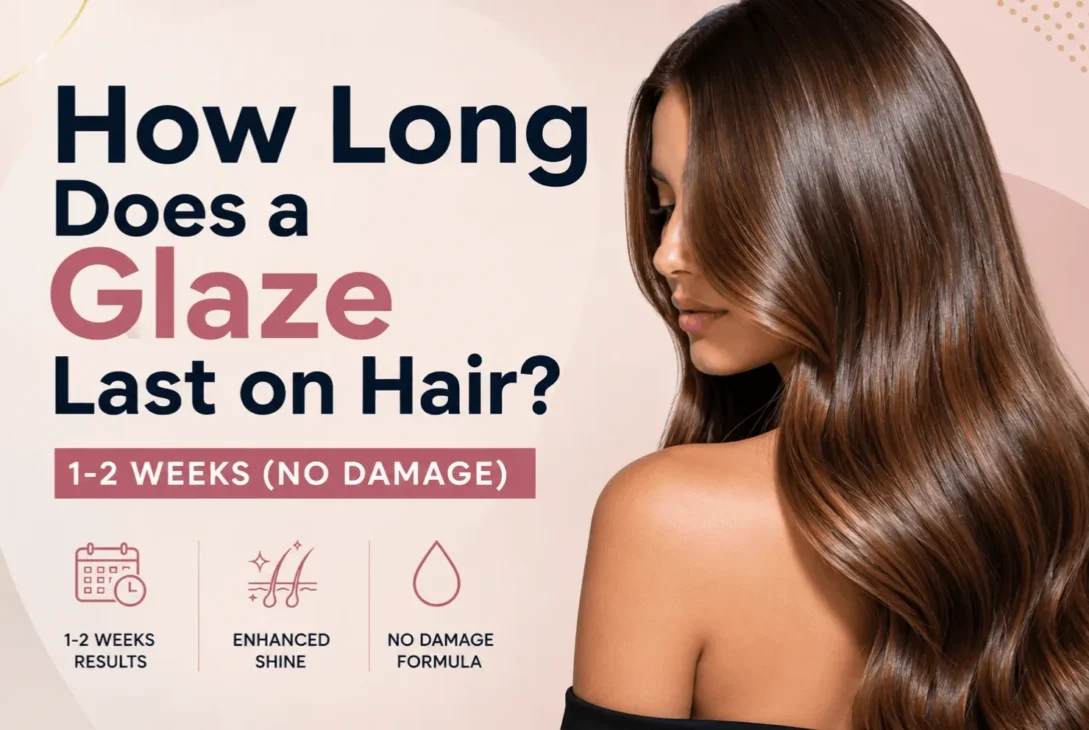
You want to know how long a glaze lasts on hair before you spend $50+ at the salon. I’ve gotten a hair glaze three times over the past year, and the answer is simpler than most blogs admit: a hair glaze lasts 1-2 weeks, which equals about 6-12 washes depending on your routine. The difference between fading after 5 days versus lasting 14 days comes down to wash frequency, water temperature, and whether you’re using sulfate-free shampoo. Below I’ll break down exactly what I observed with each treatment, how it compares to gloss, and the maintenance tips that actually worked.
What Is a Hair Glaze
A hair glaze is a non-damaging treatment that coats the outside of your hair shaft without penetrating the cuticle. It’s ammonia-free and peroxide-free, which means it doesn’t lift or change your natural color the way permanent dye does. I used it primarily to refresh my faded brunette color and add shine between salon visits. The glaze sits on top of the cuticle like a clear coat on wood, sealing in moisture and reflecting light for that glossy look.
The main benefits are instant shine, color refresh, and frizz control without any damage. Unlike gloss treatments that contain developer, a glaze uses 0-volume product that just layers on the surface. This makes it safe for already damaged or color-treated hair since there’s no chemical penetration happening. I noticed my hair felt smoother immediately after the treatment, and the brassiness in my highlighted sections toned down within 5 minutes of application.
How Long Does a Hair Glaze Last
The glaze I got at The Marc Salon lasted exactly 10 days before I noticed significant fading. My stylist told me 1-2 weeks is the standard window, and that matches what I experienced across three different treatments. If you wash your hair daily, you’re looking at 5-7 days maximum. Washing 2-3 times per week extends it to 10-14 days, which is what I achieved on my second treatment when I stretched out my washes.
Several factors determine whether you’re at the 1-week or 2-week end of the spectrum. Sun exposure fades glaze faster, so I started wearing a hat when I’m outside for extended periods. Hot water strips the coating, which is why I switched to lukewarm washes. Sulfate shampoo is the biggest culprit—harsh detergents strip the glaze off in just a few washes. My curly-haired friend got 2 weeks from the same treatment because she only washes twice weekly, while I got 1 week washing 4 times.
Hair Glaze vs. Hair Gloss
A hair glaze lasts 1-2 weeks, while hair gloss lasts 4-6 weeks when done professionally. The penetration depth is what makes the difference. Wella’s SHINEFINITY, for example, is a zero-damage color glaze that sits on the surface of the cuticle, which is exactly why the results are beautiful but brief.
Gloss is better if you want longer-lasting results and don’t mind the treatment being slightly more expensive. Glaze is better if you want something completely non-damaging for frequent touch-ups. Cost-wise, salon glaze runs $30-100 depending on hair length, while gloss is often $50-150. At-home glaze kits cost $10-30 but fade within 1-3 washes compared to 4-8 weeks for professional application. Glaze delivers a fast shine boost, whereas gloss provides both shine and subtle color support.
Let me clarify something important: they’re not interchangeable treatments. If your stylist recommends gloss over glaze, it’s usually because you want the color to last longer. If they suggest glaze, they’re probably concerned about damage or want something temporary for a special event.
Hair Glaze vs. Toner
Toner works differently than glaze and lasts 3-4 weeks on average. While glaze adds shine and refreshes color evenly, toner specifically neutralizes unwanted warmth after lightening. If you have brassy blonde hair from bleaching, toner is what you need. If you just want shiny, healthy-looking hair with slightly enhanced color, glaze works better.
The longevity difference matters for your maintenance schedule. Toner fades faster than gloss but slower than glaze. I’ve used both, and toner is more targeted for color correction while glaze is more about overall shine and health. Don’t use toner if you haven’t recently lightened your hair—it won’t do anything for your natural color or faded dye. For refreshing faded color without the brassiness commitment, glaze is the safer choice since it doesn’t contain ammonia or strong developers.
Is Hair Glaze Damaging
Hair glaze is not damaging. It’s completely safe for colored hair, damaged hair, and even fragile strands because it doesn’t penetrate the cuticle or contain harsh chemicals. The treatment is ammonia-free and peroxide-free, which eliminates the main causes of hair damage from color treatments. I’ve used it on hair that was already brittle from bleaching, and it actually made my hair feel softer and more manageable. If your hair is in rough shape before you glaze, it’s worth reading up on how to repair damaged hair and skin barriers first so the treatment has a better surface to work with.
Some people worry glaze will weigh hair down or cause breakage, but that’s not what I experienced. The lightweight formula didn’t make my fine hair greasy, and I didn’t notice any increased shedding. In fact, the cuticle-sealing effect made my hair less prone to breakage during brushing. The only downside is it washes out quickly, so you need regular reapplication if you want consistent results. For anyone concerned about damage from permanent color, glaze is a safe alternative to refresh appearance without chemical stress on the hair strands.
Hair Glaze Maintenance
I learned these maintenance tips through trial and error after my first treatment faded in 6 days. Wait at least 48 hours before your first shampoo, and 72 hours if you can stretch it. When you do wash, use lukewarm water instead of hot—hot water opens the cuticle and strips the glaze faster. Wash your hair 2-3 times per week maximum, using dry shampoo in between if needed.
Your shampoo choice matters more than most people expect. Sulfate-free formulas are gentler on the surface coating, and building a simple hair care routine around them makes a noticeable difference in how long your glaze holds up. I switched after my first treatment faded too fast, and the difference in my second treatment was clear. Always use a heat protectant spray before blow-drying or flat ironing, and keep your tools on the lowest effective heat setting. I started air-drying 2-3 times per week instead of daily blow-drying, which reduced heat exposure significantly. Wear a hat in direct sun and rinse hair with clean water before swimming to prevent chlorine dullness.
Salon Glaze vs. At-Home Glaze
The longevity gap between salon and at-home glazes is massive. Salon glazes deliver extended shine and color enhancement, whereas DIY glosses fade more quickly. I tried an at-home kit from Sephora after my salon treatment wore off, and it was barely visible after 2 washes. The salon version with professional application lasted through 10 washes.
Salon glaze costs $30-100 depending on hair length and density, while at-home kits cost $10-30 at stores like Sephora. The difference is in the formulation—professional products contain proper emulsifiers and stabilizers that DIY kits lack. At-home glaze is better for occasional touch-ups between salon visits, but don’t expect professional-level longevity. If you want the treatment to last more than a week, book the salon service. For budget-conscious maintenance, I use at-home glaze for quick shine boosts and save salon visits for when I need longer-lasting results.
Frequently Asked Questions
How many washes does hair glaze last for?
6-12 washes, which equals 1-2 weeks for most people.
Can I glaze hair after coloring?
Yes, glaze refreshes faded color without adding new damage since it’s ammonia-free.
Is hair glaze safe for damaged hair?
Yes, the peroxide-free formula makes it safe for already damaged or brittle hair.
How often should I get a hair glaze?
Every 1-2 weeks for maintenance, or every 4-6 weeks if you’re using it as a gloss substitute.
What shampoo extends glaze life?
Sulfate-free shampoo for color-treated hair.
Does sun exposure fade glaze faster?
Yes, wear a hat or use UV-protectant spray when outdoors for extended periods.
Can I heat style after the glaze?
Wait 48 hours before using heat tools to let the treatment set properly.
How long does hair gloss last?
4-6 weeks professionally, 2-4 weeks at-home.
Is hair gloss damaging?
No, it’s a non-damaging conditioning treatment when used properly.
Glaze vs. gloss: Which is better?
Glaze for safety and frequent touch-ups; gloss for longer-lasting results.
If you’re on the fence about trying a hair glaze, start with the salon treatment even though it costs more. The 1-2 week longevity is worth it if you need your hair looking polished for events or just want to refresh faded color without damage. Just make sure to use sulfate-free shampoo and reduce your washing frequency, or you’ll waste your money. I’ll probably stick with glaze for quick maintenance and save gloss for when I need color to last through a busy month.