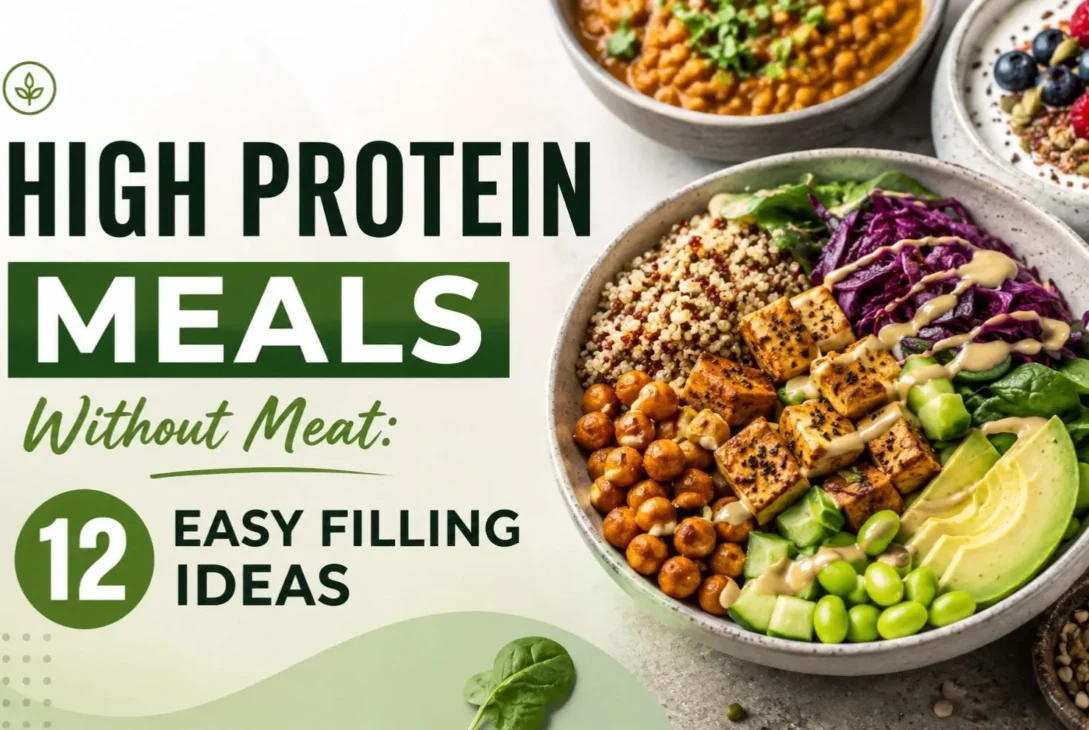
Skip the meat, keep the protein. High-protein meals without meat can pack 25 to 30 g per serving when you build them around the right foods. This guide walks you through real recipes for breakfast, lunch, and dinner, plus the science on why meatless protein works just as well for muscle, fullness, and energy. No bland salads. No sad tofu. Just real meals that fill you up.
Why protein matters even without meat
Protein rebuilds muscle, kills hunger, and keeps your skin and hair strong. It also stabilizes blood sugar and slows the snack attacks that hit around 3 p.m. Harvard nutrition researchers say what matters is your total daily amount, not whether it came from a cow.
So plants, eggs, and dairy can absolutely cover your needs. The trick is knowing which foods carry the load and building meals around them on purpose, not by accident.
How much protein do you actually need?
Most active adults do well between 0.6 and 1.0 grams per pound of body weight. A 160-pound person aiming for muscle gain needs around 100 to 130 grams a day. Sedentary folks can get by with less, closer to 60 to 80 grams. Spread it across 3 or 4 meals instead of cramming 80g into dinner. Check our breakdown of daily protein requirements for exact numbers based on your body and goals.
Common myths about meatless protein
The “incomplete protein” myth refuses to die. Registered dietitians confirm that varied plant foods across a day cover your full amino acid profile. No timing tricks required, no rice-and-beans-at-the-same-meal rule. The second myth says you’ll always be hungry on plants. False. Pair protein with fiber (think lentils and quinoa) and you’ll stay fuller than a chicken sandwich on white bread.
Top protein sources to build your meals around
Stock these and any high-protein meals without meat; the plan comes together in 15 minutes per meal. Protein-rich vegetarian food runs cheap once you know what to grab. Most options below cost under $3 per serving and last 4 to 7 days in the fridge.
For full grams-per-serving comparisons, this Healthline list of plant-based protein sources ranks the top 17 by exact gram count. Use it as a reference when you’re at the store.
Legumes: beans, lentils, and chickpeas
One cup of cooked lentils packs 18g protein and 16g fiber. Black beans hit 15g per cup. Chickpeas land at 14.5g. Legumes and lentils also support healthy digestion thanks to prebiotic fiber and resistant starch. Canned versions work fine. Just rinse them well.
Dairy and eggs
Two eggs deliver 12g protein for about 140 calories. One cup of low-fat cottage cheese hits 24g. Plain Greek yogurt brings 17 to 20 g per cup depending on the brand. All three are complete protein sources with every essential amino acid.
Tofu, tempeh, and edamame
Tofu and tempeh are dense, filling, and soak up flavor fast. Tempeh leads at 31g per cup. Firm tofu hits 20g per cup. Edamame brings 18g per cup with a satisfying snap. Press the tofu before cooking, or it stays watery.
Whole grains and seeds
Quinoa packs 8g of protein per cooked cup and is a complete protein on its own. Hemp seeds add 10g per 3 tablespoons. Pumpkin seeds bring 9 g per quarter cup. Chia seeds and oats round out the list for breakfast bowls and smoothies.
High-protein meals without meat for breakfast
Front-load protein early for steadier energy and fewer afternoon crashes. Aim for 25 to 30g before 10 a.m. These two breakfasts hit that target without a 6 a.m. wake-up.
Both options take 5 to 10 minutes and use ingredients you probably already have.
Greek yogurt protein bowls
One cup of plain Greek yogurt brings 20 g. Add 2 tablespoons of hemp seeds, a handful of berries, and a drizzle of honey. Total: 28g protein in 5 minutes. Greek yogurt protein like Oikos Triple Zero works great here; see the full high-protein Greek yogurt option breakdown for exact macros.
Egg and cottage cheese scrambles
Whisk 2 eggs with 1/4 cup cottage cheese. Scramble low and slow. The cheese melts in and makes the eggs creamy without cream. Toss in spinach and serve with whole-grain toast. Hits 28g protein.
High-protein lunch ideas without meat
Lunch needs to be portable, filling, and not boring by Wednesday. Build around legumes or tofu, then add grains and crunchy vegetables for texture.
These two work great as meal prep for the whole week.
Lentil and chickpea salad bowls
Mix 1 cup cooked green lentils with 1/2 cup chickpeas, diced cucumber, cherry tomatoes, red onion, and feta. Dress with lemon, olive oil, and oregano. Roughly 28g protein, and it actually tastes better on day 2.
Tofu stir-fry with quinoa
Cube extra-firm tofu, toss it in cornstarch, pan-fry until golden, then stir-fry with broccoli, bell peppers, and garlic in soy and sesame. Serve over quinoa. About 32g protein in 20 minutes flat.
High-protein dinners without meat
Dinner is where most people slack on protein, defaulting to pasta or quick grain bowls. Vegetarian high-protein dinners fix that fast.
Each option below clears 25g per plate without complicated prep.
Black bean tacos and burrito bowls
Warm a can of black beans with cumin, garlic, and lime. Stuff into corn tortillas with cheese, avocado, and salsa, or build a bowl over rice. Three tacos with cheese hit 26g protein.
Tempeh and vegetable stir-fry
Crumble 4 ounces of tempeh into a hot pan. Brown it well for 5 minutes, then toss with green beans, mushrooms, and peanut-ginger sauce. About 30g per plate.
Egg fried rice with edamame
Hot pan, sesame oil, push rice aside, scramble 2 eggs in, fold in 1 cup of shelled edamame, scallions, and soy. Quick weeknight winner at 28g protein.
Quick meal prep tips for meatless protein
Batch-cook quinoa and lentils every Sunday. Both keep for 5 days in the fridge. Pre-press and cube tofu so it’s grab-and-cook ready by Tuesday. Hard-boil 6 eggs at once for snacks and salad toppers.
Store everything airtight and follow USDA food storage guidelines to stay safe past the day. 3. Feeding a family? Our budget-friendly meal ideas stretch lentils and eggs across a full week under $40.
Frequently asked questions
Two questions come up constantly when readers start eating less meat. Here are honest answers.
Can you build muscle without eating meat?
Yes, and the evidence is clear. Peer-reviewed muscle research shows vegetarians and vegans build muscle at the same rate as meat eaters when daily protein matches. You can hit muscle gains with tofu, tempeh, eggs, Greek yogurt, and a scoop of pea or whey protein when needed. Hit your gram target and lift consistently. That’s it.
What is the highest-protein food without meat?
Tempeh wins among whole foods at 31g per cup. Cottage cheese leads dairy at 24 g per cup. Whey isolate and pea protein powders both deliver 20 to 25 g per scoop. For protein per serving in everyday foods, tempeh and cottage cheese are your two strongest plays.
Stock eggs, Greek yogurt, lentils, tofu, and quinoa this weekend. Pick 2 meals from this list and try them this week. See how full you feel, then build from there until meatless protein feels automatic.