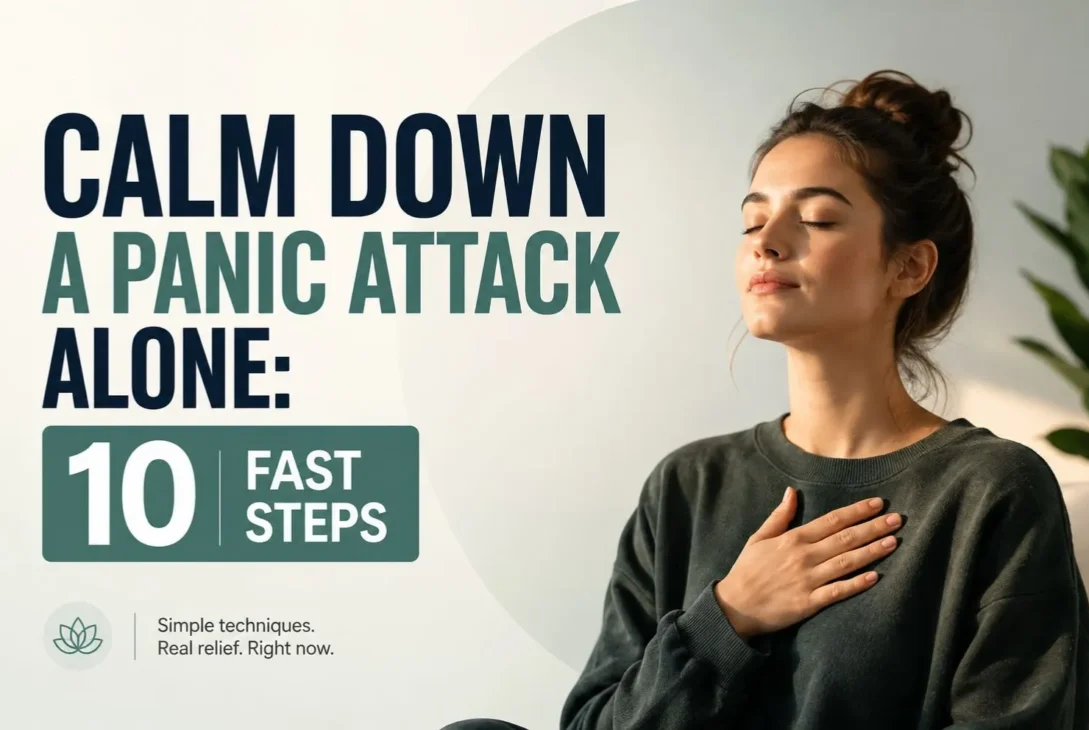
Your heart pounds. Breath stops. The world feels like it’s ending, but you’re safe. This guide shows you how to calm down a panic attack alone using 10 simple steps. You will learn to reset your body and mind in minutes.
What a panic attack feels like (quick primer)
Panic is a sudden wave of fear. It feels physical, like a heart attack or a loss of control. These sensations are just your body’s way of reacting to stress, and they will pass soon.
Most attacks peak within 10 minutes. Knowing the difference between panic disorder vs. anxiety attack helps you understand your patterns. Anxiety builds over time, but panic strikes fast and leaves you feeling drained.
Common symptoms (physical and mental)
You might feel chest pain, sweating, or shaking. For a clear overview of symptoms and NHS-backed self-help tips, see the NHS page on panic disorder symptoms and self-help.
Why panic attacks escalate (fight-or-flight biology)
Your brain triggers the fight-or-flight response by mistake. Adrenaline floods your system, making your heart race and your breath shallow. This is a survival mechanism that has gone into overdrive without a real threat.
Immediate steps to calm down a panic attack alone
You can stop the spiral by taking direct action. Focus on your body to tell your brain that the danger isn’t real. These steps work because they force your nervous system to slow down.
Stay in one place if you can. Move through these steps slowly and don’t rush the process. Each action brings you one step closer to feeling calm again.
Step 1 — Name and accept what’s happening (labeling)
Tell yourself, “I am having a panic attack.” Giving the fear a name makes it less scary. You’re not in danger; you’re just having a physical reaction that has a clear start and end.
Step 2—Controlled breathing technique (4-4-8 or box breathing) with short how-to
Breathe in for 4 seconds. Hold for 4 seconds. Breathe out for 8 seconds. This slow exhale tells your heart to beat slower and helps you regain control.
Step 3—Grounding exercises (5-4-3-2-1 and sensory anchors)
Find 5 things you see and 4 things you can touch. Use grounding exercises to bring your mind out of the fear and back to the room. This stops the mental loop of panic.
Step 4 — Muscle relaxation (progressive tensing/release)
Tighten your muscles for 5 seconds and then let go. Do this with your hands, feet, and shoulders. This physical release helps your body release the tension of fight or flight.
Step 5—Use cold water or cold pack (physiological reset)
Splash cold water on your face. The shock forces your heart rate to drop instantly. This is a biological reset that works when your mind is racing too fast to think.
Step 6 — Reframe thoughts (simple cognitive reframing)
Remind yourself that you’ve survived this before. These feelings are uncomfortable, but they aren’t dangerous. You’re safe, and this will be over soon.
Step 7—Use a safe-space script and self-talk
Repeat a simple phrase like, “I am safe.” Talk to yourself like you’re helping a friend. Kindness reduces the extra stress that makes panic last longer.
Step 8—If available, use distraction strategies (counting, simple tasks)
Count backward from 100 by 3s. Focus on a simple task like sorting coins or naming colors in the room. Distraction gives your brain something else to do besides feeling afraid.
Step 9 — Medication considerations (brief note: prescribed meds only)
Use only the medication your doctor gave you for these moments. Follow the label exactly and don’t take extra. Meds like benzodiazepines can help, but they aren’t the only way to cope.
Step 10—Aftercare: rest, hydrate, journal what happened
Drink water and sit down for a while. Your body is tired from the adrenaline surge. Write down what happened so you can look for patterns later.
Practical examples and a short 3-minute action plan
You don’t need a lot of time to feel better. A quick routine can break the peak of a panic attack in just 3 minutes. Having a plan ready means you don’t have to think when you’re scared.
Keep this plan on your phone or a piece of paper. Practice it when you’re calm so it’s easy to remember. Small, fast actions are the best way to handle a crisis.
1-minute immediate routine (breath + grounding)
Do 2 rounds of 4-4-8 breathing. Look around and list 3 things you can see and 3 things you can hear. This short burst of focus can stop an attack before it gets worse.
3-minute routine (add muscle relaxation + cold stimulus)
Spend 1 minute on breathing and 1 minute on grounding. Spend the last minute tensing your muscles or using cold water. This full reset covers your mind and your body.
If you’re in public vs at home (privacy tips)
Go to a bathroom or a quiet corner if you’re out. At home, you can lie down or use a cold shower. You can do deep breathing exercises anywhere without anyone knowing.
When to seek professional help or emergency care
Panic is scary, but it’s usually not a medical emergency. However, you should see a doctor if your symptoms are new or very intense. They can help you find the cause and a plan for treatment.
Know when to call 911 or a crisis line if you feel unsafe. If your chest pain is severe or you feel like you might faint, get help. It’s always okay to ask for professional support.
Red flags (chest pain, fainting, suicidal thoughts, symptoms not improving)
Get medical help for chest pain that won’t stop. If you feel like you are going to pass out or have thoughts of hurting yourself, call for help. Don’t wait if the symptoms feel different than usual.
How to tell a clinician about your episodes (what to track)
Write down when your attacks occur and what they feel like. Tell your doctor if things like caffeine or stress make them worse. This helps them give you the best advice.
Preventive strategies between attacks
You can lower your risk of panic by taking care of yourself every day. Simple habits make your nervous system less jumpy. Over time, these changes make a big difference in how you feel.
Focus on one small change at a time. You don’t have to fix everything at once to see results. Building a calm life is a slow process that starts with your daily routine.
Lifestyle habits (sleep, caffeine, exercise)
Try to get better sleep habits by going to bed at the same time. You can improve deep sleep by keeping your room dark and quiet. Cutting caffeine and managing stress also helps keep your heart rate steady.
Therapy and long-term treatments (CBT, exposure therapy, meds overview)
Talk to a therapist about cognitive behavioral therapy. It helps you change the way you think about fear. Exposure therapy can also help you feel less afraid of the physical signs of panic.
Building a personalized coping toolkit
Keep things that calm you down in one place. This could be a playlist, a stress ball, or a list of people to call. When you build healthy routines, you’re more likely to use your tools when you need them.
FAQ
How long do panic attacks last?
Most peak in 10 minutes and end within half an hour. You might feel a bit shaky for a while after.
Will I die from a panic attack?
No. Panic is a natural reaction that feels bad but isn’t dangerous.
Can I stop one faster each time?
Yes. As you learn mindfulness for panic, you’ll be able to calm your body down more quickly.
Is it okay to be alone?
Yes, you can handle this. Many people learn how to calm down a panic attack alone with practice.
You are stronger than your panic. Use these steps to take back control and remember that the feeling is temporary. Save this guide and talk to a professional to find a long-term plan that works for you.