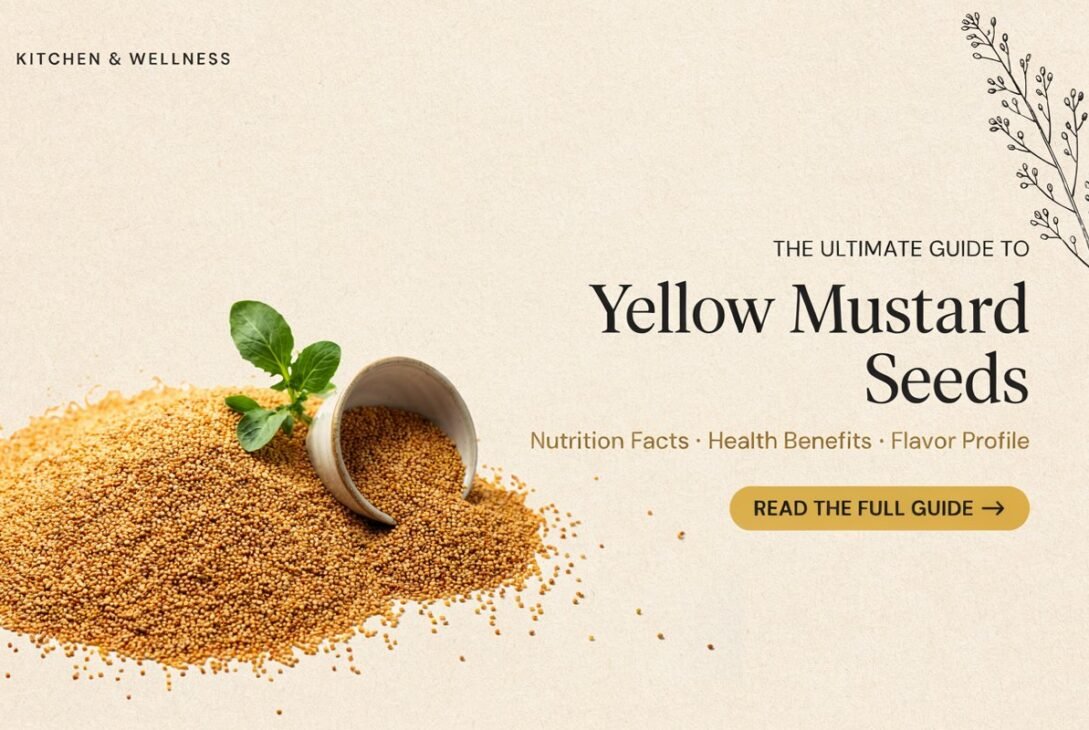
If you’ve ever opened a spice cabinet and spotted a small jar of pale, round seeds, chances are you were looking at yellow mustard seeds. They’re one of those ingredients that quietly show up in almost every kitchen, yet most people know surprisingly little about them. This guide breaks down everything worth knowing—what they are, how they taste, their nutritional value, and how to actually use them.
What Are Yellow Mustard Seeds?
Yellow mustard seeds come from the Brassica alba (also called Sinapis alba) plant, part of the same family as broccoli, cabbage, and kale. Despite the name, the seeds aren’t bright yellow themselves—they’re a light beige or tan color. The “yellow” actually refers to the powder or paste made from them, which turns a vivid golden shade once ground and mixed with liquid.
These seeds are the mildest of the three common mustard varieties—yellow, brown, and black—making them the most popular choice for everyday cooking and condiment-making across North America and Europe.
Yellow Mustard Seeds vs. Brown and Black Mustard Seeds
Since people often confuse the three types, here’s a quick comparison:
- Yellow mustard seeds – Mildest flavor, largest size, commonly used in American-style mustard and pickling.
- Brown mustard seeds – Sharper, more pungent, used heavily in Indian and European cooking.
- Black mustard seeds – Most intense and spicy, favored in South Asian tempering and curry bases.
If you’re new to cooking with mustard seeds, yellow is the safest starting point because it won’t overpower a dish.
What Do Yellow Mustard Seeds Taste Like?
On their own, raw yellow mustard seeds have a slightly nutty, faintly bitter taste with a gentle peppery kick. That sharpness only fully develops once the seeds are crushed or soaked in liquid, which triggers an enzymatic reaction responsible for mustard’s signature tang.
When toasted in oil, they take on a warm, earthy, almost popcorn-like aroma and a mild crunch—something home cooks in Indian and Southeast Asian kitchens rely on constantly for tempering dals, vegetables, and chutneys.
Nutritional Profile of Yellow Mustard Seeds
Despite their small size, these seeds pack a genuinely impressive nutrient density. Per 100 grams, yellow mustard seeds generally provide:
- Calories: Around 508 kcal
- Protein: Roughly 26 g
- Fat: About 36 g (mostly healthy unsaturated fats)
- Carbohydrates: Close to 28 g
- Fiber: Approximately 12 g
- Calcium: A solid source, supporting bone health
- Magnesium and Phosphorus: Present in meaningful amounts
- Selenium: A trace mineral with antioxidant properties
- Omega-3 fatty acids: Present in small but notable quantities
Because they’re used in small portions—usually teaspoons, not cups—the actual nutrient contribution per serving is modest. Still, when used regularly, they add up as part of a balanced diet.
Health Benefits of Yellow Mustard Seeds
1. Rich in Antioxidants
Yellow mustard seeds contain compounds like glucosinolates and phenolic acids, which help the body fight oxidative stress. This is one reason cruciferous-family foods are frequently highlighted in nutrition research.
2. May Support Digestion
The seeds stimulate saliva production and have traditionally been used to encourage healthy digestion. Their fiber content also supports regular bowel function.
3. Anti-Inflammatory Potential
Some studies suggest mustard seed compounds may help reduce inflammation markers in the body, though more human clinical research is still needed before making strong claims.
4. Good Source of Plant-Based Minerals
Selenium and magnesium, both found in yellow mustard seeds, play roles in thyroid function, muscle health, and immune support.
5. May Aid Metabolism
Mustard seeds have a mild thermogenic effect, meaning they can slightly raise body temperature and metabolic rate when consumed—something traditional medicine systems have noted for centuries.
Note: While these benefits are backed by preliminary research and traditional use, mustard seeds should be viewed as a supportive dietary addition, not a treatment for any medical condition. Always consult a healthcare provider for specific health concerns.
Ways to Bring Yellow Mustard Seeds Into Your Everyday Cooking
One of the best things about yellow mustard seeds is their versatility. Here are practical ways to use them:
- Pickling: A classic addition to pickle brines for tang and texture.
- Tempering (tadka): Heated in oil until they pop, then added to lentils or vegetables.
- Homemade mustard: Ground and mixed with vinegar, water, and spices.
- Salad dressings: Adds a subtle kick to vinaigrettes.
- Rubs and marinades: Works well with meats, especially in barbecue-style seasoning blends.
- Baking: Occasionally used in bread recipes for texture and flavor depth.
How to Toast Yellow Mustard Seeds
Toasting is simple but transformative:
- Heat a dry or lightly oiled pan on medium heat.
- Add the seeds in a single layer.
- Cover the pan—they will pop like tiny popcorn kernels.
- Once the popping slows, remove from heat immediately to avoid burning.
This step unlocks a deeper, nuttier flavor that raw seeds simply don’t have.
How to Store Yellow Mustard Seeds
Proper storage keeps the seeds potent for much longer:
- Store in an airtight container.
- Keep away from direct sunlight and heat.
- A cool, dry pantry works best.
- Whole seeds last significantly longer than mustard powder—often up to a year or more.
Ground mustard loses its potency faster because more surface area is exposed to air.
Are Yellow Mustard Seeds Good for Everyone?
That said, mustard seeds aren’t ideal for everyone. Here’s who should be careful:
- People with mustard allergies should avoid them entirely, as mustard is a recognized allergen in several countries.
- Individuals on blood-thinning medication should consult a doctor, since mustard seeds may have mild effects on blood clotting.
- Consuming them in very large quantities may cause digestive discomfort due to their pungency.
As with most spices, moderation is key.
Frequently Asked Questions
1. Are yellow mustard seeds the same as mustard powder?
No. Mustard powder is made by grinding the seeds into a fine powder. The seeds themselves are whole and can be used as-is or ground at home.
2. Can yellow mustard seeds go bad?
Yes, though slowly. Whole seeds have a long shelf life, but they can lose flavor and aroma over time, especially if exposed to moisture or heat.
3. What can I substitute for yellow mustard seeds?
Mustard powder is the closest substitute. In a pinch, brown mustard seeds can work too, though they’re slightly stronger in flavor.
4. Do yellow mustard seeds need to be soaked before cooking?
Not necessarily. For tempering, they’re used dry in hot oil. For making mustard paste, soaking or grinding with liquid is required to activate their flavor.
5. Is yellow mustard made from yellow mustard seeds?
Yes. Classic American yellow mustard is made primarily from ground yellow mustard seeds combined with vinegar, water, and turmeric for color.
6. Are yellow mustard seeds spicy?
They’re the mildest of the mustard seed varieties, offering warmth and tang rather than intense heat.
7. Can yellow mustard seeds be eaten raw?
Yes, though their raw flavor is quite sharp and bitter. Most people prefer them toasted or incorporated into a dish rather than eaten plain.
Conclusion
Yellow mustard seeds are a small but powerful ingredient with a long culinary and nutritional history. Mild in heat, rich in nutrients, and incredibly versatile, they fit into everything from pickling brines to spice tempering to homemade condiments. Whether you’re exploring global cuisines or simply want to understand what’s sitting in your spice rack, yellow mustard seeds are worth knowing—and worth using more often in your everyday cooking.