
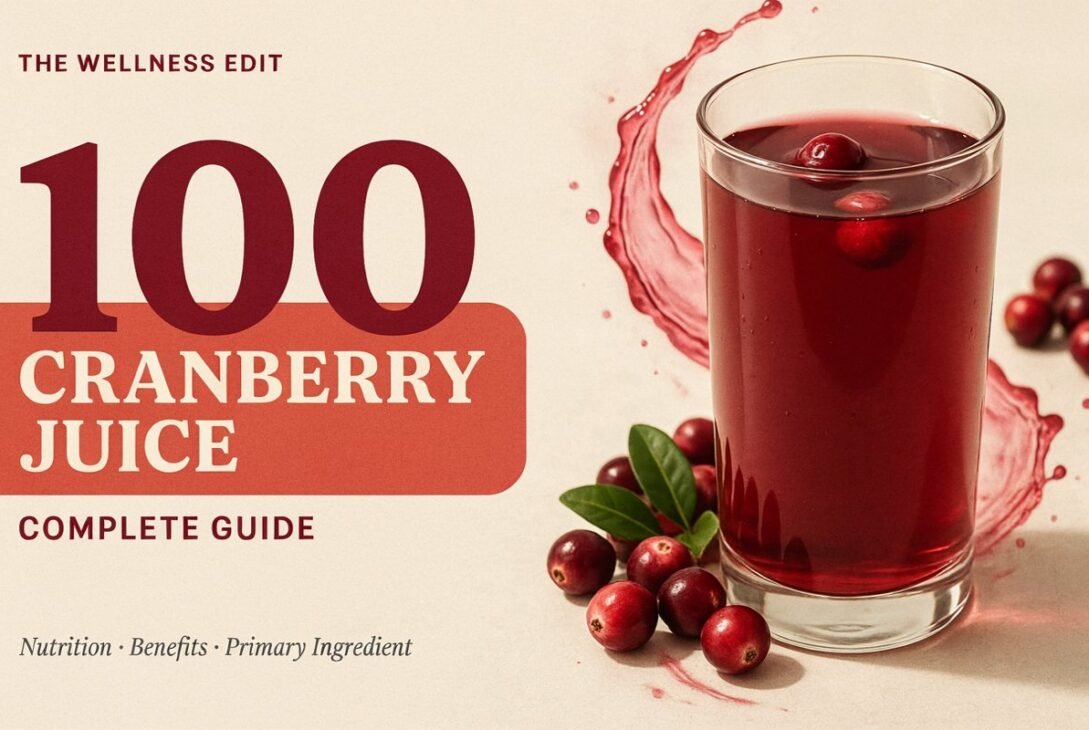
If you’ve ever stood in the juice aisle staring at a dozen different cranberry bottles, you already know the confusion. Cranberry cocktail, cranberry blend, cranberry juice from concentrate — and somewhere in the mix, 100 cranberry juice. This guide breaks down exactly what makes this product different, what’s actually inside the bottle, and why it matters for your health.
We’ll cover the nutrition facts, the real benefits backed by evidence, how it compares to other cranberry products, and how to pick a good one at the store. No fluff, no exaggerated claims — just the information you need to make a smart choice.
What Is 100 Cranberry Juice?
100 cranberry juice means the juice is made entirely from cranberries, with no added sugar, water dilution, or other fruit juices mixed in. It’s pressed or extracted directly from the fruit, so what you’re drinking is genuinely the juice of the cranberry — nothing else.
This is different from most cranberry drinks sold on supermarket shelves. Many of those are labeled “cranberry juice” but actually contain only a small percentage of real cranberry juice, with the rest made up of water, apple or grape juice, and sweeteners.
Key Characteristics
- Made from 100% pressed cranberries
- No added sugar or artificial sweeteners
- Naturally tart and slightly bitter taste
- Deep red color from natural plant pigments
- Short ingredient list — often just “cranberry juice”
Because it’s undiluted, real cranberry juice is far more concentrated in both flavor and nutrients than the sweetened versions most people grew up drinking.
Nutrition Facts: What’s Actually Inside
Understanding the nutritional profile helps explain why this juice has such a strong reputation among nutritionists and health-conscious consumers.
A typical 1-cup (240 ml) serving of unsweetened, pure cranberry juice contains approximately:
- Calories: 45–50
- Sugar: 4–5 grams (naturally occurring, no added sugar)
- Vitamin C: around 20–25% of daily value
- Vitamin E: small but meaningful amount
- Manganese: supports bone health and metabolism
- Antioxidants: proanthocyanidins (PACs), flavonoids, and polyphenols
Compare that to a typical sweetened cranberry cocktail, which can contain 30+ grams of sugar per cup — nearly six times more. This difference alone explains why so many people are shifting toward pure, unsweetened versions.
Why the Sugar Content Matters
Cranberries are naturally tart, almost bitter, when unsweetened. Manufacturers historically added large amounts of sugar to make the juice palatable. The problem is that this turns a nutrient-dense fruit juice into something closer to a sugary soft drink.
Cranberry juice with no added sugar keeps the calorie count low while preserving the beneficial plant compounds that get diluted or degraded in processed versions.
Benefits of Pure Cranberry Juice
Let’s go through the evidence-based benefits, because this is where most people’s real interest lies.
1. Supports Urinary Tract Health
This is the most well-known and most researched benefit. Cranberries contain proanthocyanidins, compounds that may help prevent certain bacteria, particularly E. coli, from sticking to the walls of the urinary tract. Several clinical studies have explored this connection, and while cranberry juice isn’t a treatment for an active infection, it’s commonly used as a preventive measure for people prone to recurring UTIs.
It’s worth being clear here: pure cranberry juice may help reduce the frequency of UTIs in some people, but it should never replace medical treatment for an existing infection.
2. Rich in Antioxidants
Cranberries rank among the highest fruits in antioxidant content. These compounds help neutralize free radicals in the body, which are linked to cellular aging and chronic disease risk. The antioxidant density is one reason cranberry pure juice is often recommended over diluted alternatives — you’re getting a much higher concentration per serving.
3. May Support Heart Health
Some research suggests the polyphenols in cranberries may support healthy cholesterol levels and blood vessel function. While cranberry juice isn’t a cure-all for heart disease, incorporating antioxidant-rich foods and drinks into a balanced diet is a widely recommended strategy by cardiologists and dietitians alike.
4. Supports Digestive Health
Cranberries contain natural fiber and organic acids that may support gut bacteria balance. Some early research also points to potential anti-inflammatory effects on the digestive tract, though more studies are needed to confirm the extent of this benefit.
5. Immune System Support
The vitamin C content in real cranberry juice contributes to normal immune function. While it won’t prevent colds outright, adequate vitamin C intake is associated with shorter illness duration and overall immune resilience.
6. Skin Health
Antioxidants and vitamin C both play a role in collagen production and protecting skin cells from oxidative stress. Many people include cranberry juice as part of a broader skin-supportive diet, alongside other vitamin C-rich foods.
Real Cranberry Juice vs. Cranberry Cocktail: What’s the Difference?
This is where most confusion happens at the grocery store. Here’s a clear breakdown:
| Feature | 100 Cranberry Juice | Cranberry Cocktail/Blend |
|---|---|---|
| Cranberry content | 100% | Often 25–30% |
| Added sugar | None | High (25–30g per serving) |
| Other juices added | None | Usually apple or grape juice |
| Taste | Tart, slightly bitter | Sweet |
| Calories per cup | ~45 | ~110–140 |
| Nutrient density | High | Diluted |
If a label says “cranberry juice cocktail” or “cranberry juice drink,” it’s almost certainly not pure cranberry juice. Look for labels that explicitly say “100% juice” and check the ingredient list — it should say cranberry juice, and nothing else.
Organic Cranberry Juice: Is It Worth It?
Organic cranberry juice comes from cranberries grown without synthetic pesticides or fertilizers. For consumers concerned about pesticide residue or environmental farming practices, organic options offer peace of mind.
Nutritionally, the core benefits — antioxidants, vitamin C, and low natural sugar — remain largely the same between organic and conventional cranberry juice. The difference lies primarily in farming methods, not in the fundamental nutrient profile. That said, some smaller studies have found slightly higher antioxidant levels in organically grown berries, though results vary by farm and growing conditions.
If budget allows, organic cranberry juice is a reasonable choice for those prioritizing minimal pesticide exposure. If not, conventional 100% cranberry juice still delivers the core health benefits.
How to Choose a Good Bottle at the Store
Reading labels correctly makes all the difference. Here’s what to check:
- Ingredients list — should read “cranberry juice” only, or “cranberry juice, water” for reconstituted-from-concentrate versions.
- Sugar content — anything under 5 grams per serving usually indicates no added sugar.
- The word “cocktail” or “drink” — a red flag that it’s diluted and sweetened.
- Percentage juice — look for “100% juice” printed clearly on the front label.
- Certifications — USDA Organic or non-GMO labels if that matters to you.
How to Drink It: Practical Tips
Because pure cranberry juice is quite tart, most people don’t drink it straight in large quantities. Here are some practical ways to enjoy it:
- Mix it with sparkling water for a refreshing, low-sugar drink
- Add a small amount to smoothies for a tart flavor boost
- Combine with a natural sweetener like honey if the tartness is too strong
- Use it in salad dressings or marinades for a tangy twist
- Freeze into ice cubes and add to flavored water
A common recommendation among dietitians is to start with a small amount — around 2 to 4 ounces — diluted with water, and adjust to taste.
Who Should Be Cautious With Cranberry Juice?
While cranberry juice is safe for most people, a few groups should talk to a doctor first:
- People taking blood thinners like warfarin, since cranberry juice may interact with the medication
- Individuals prone to kidney stones, as cranberries contain oxalates
- People with acid reflux, since the acidity may worsen symptoms
- Anyone with a known allergy to cranberries or related fruits
As with any dietary change, moderation and professional guidance are the safest approach.
Frequently Asked Questions
1. What does “100 cranberry juice” actually mean?
It means the juice is made entirely from cranberries with no added sugar, water dilution, or other fruit juices — just pure cranberry extract.
2. Is 100% cranberry juice good for you?
Yes, in moderation. It’s low in calories, rich in antioxidants and vitamin C, and may support urinary tract and heart health as part of a balanced diet.
3. Can I drink cranberry juice every day?
Most healthy adults can safely drink a small serving daily, typically 4 to 8 ounces. Always check with a doctor if you have kidney issues or take blood-thinning medication.
4. Does cranberry juice really help with UTIs?
Research suggests it may help reduce the frequency of recurring UTIs by preventing certain bacteria from attaching to the urinary tract. It is not a treatment for an active infection.
5. What’s the difference between cranberry juice and cranberry juice cocktail?
Cranberry juice cocktail typically contains only 25–30% real cranberry juice, with the rest made up of water and added sugar or other fruit juices. Pure cranberry juice is 100% cranberry with no additives.
6. Is organic cranberry juice healthier than regular cranberry juice?
The core nutritional benefits are similar. Organic versions mainly offer the advantage of being grown without synthetic pesticides.
7. Why does pure cranberry juice taste so bitter?
Cranberries are naturally tart due to their high acid content and lack of natural sugars compared to sweeter fruits. Diluting with water or mixing with other foods can balance the flavor.
Conclusion
100 cranberry juice stands apart from the sugary cocktails most people are familiar with. It’s a concentrated source of antioxidants, vitamin C, and plant compounds linked to urinary tract, heart, and immune health — all without the added sugar found in typical store-bought blends. Choosing real, unsweetened, and ideally organic cranberry juice means you’re getting the actual benefits of the fruit, not a diluted, sweetened imitation. As with any dietary addition, moderation and label-reading are your best tools for making it work for your health goals