
Waking up with a dull ache along one side of your face is more common than most people realize. If you’ve been searching for answers about jaw pain right side symptoms, you’re not alone — this is one of the most frequent complaints dentists and doctors hear every week. The good news? Most causes are treatable at home. The important news? A small number of cases need urgent medical attention.
This guide walks through everything you need to know: what causes right-sided jaw pain, when it’s connected to your ear, how it differs from left-side pain, and — most critically — the red-flag symptoms that indicate you should seek medical attention promptly rather than wait for a routine appointment.
What Does It Mean When Your Jaw Is in Pain?
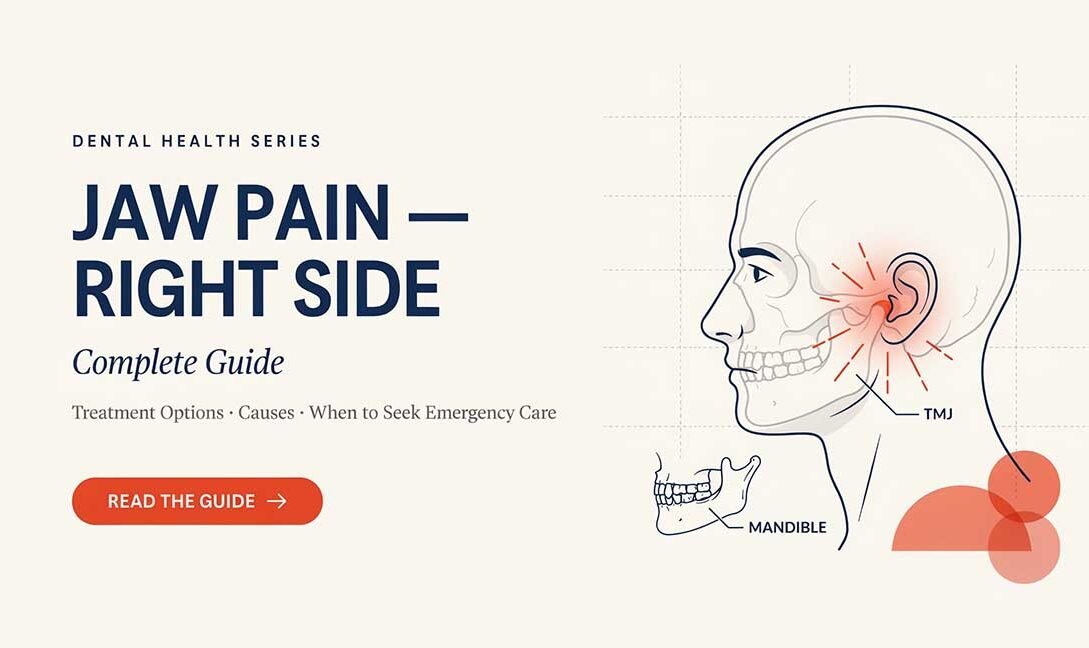
When your jaw is in pain, it usually signals irritation, inflammation, or pressure somewhere in the complex network of muscles, nerves, joints, and teeth that make up your jaw structure. The jaw isn’t a single unit — it’s a hinge joint (called the temporomandibular joint, or TMJ) supported by muscles, connected to your ear canal, and surrounded by nerves that also serve your teeth, sinuses, and neck.
Because so many structures overlap in this small area, jaw pain can originate from:
- The jaw joint itself
- Nearby teeth or gums
- The muscles used for chewing
- The ear or sinus cavities
- Nerves that travel through the face and neck
This overlap is exactly why pinpointing the cause of jaw pain right side symptoms often requires ruling things out one by one.
What’s Really Behind Right-Sided Jaw Pain
1. TMJ Disorders (Sore Jaw Joint)
The temporomandibular joint (TMJ) links the lower jaw to the skull and is located directly in front of each ear. When this joint becomes inflamed or misaligned, it creates what many people describe as a sore jaw joint — a dull, aching pain that worsens with chewing, yawning, or talking.
TMJ disorders are one of the leading causes of one-sided jaw pain. They can result from:
- Teeth grinding or clenching (often during sleep)
- Jaw injury or trauma
- Arthritis in the joint
- Chronic stress that leads to muscle tension
- Poor bite alignment
TMJ pain is often accompanied by clicking or popping sounds when opening the mouth, and stiffness that’s worse in the morning.
2. Dental Problems
A cavity, abscess, cracked tooth, or impacted wisdom tooth on the right side can radiate pain into the jaw. Dental pain tends to be sharp, throbbing, and sensitive to temperature or pressure — a useful clue that distinguishes it from joint-related pain.
An untreated dental infection is one of the more serious causes on this list, since infections can spread if ignored.
3. Sinus Infections
4. Ear Infections and Pain in Jaw and Ear
Many people search specifically for pain in jaw and ear because the two are so closely linked anatomically. The jaw joint sits directly next to the ear canal, so inflammation in one area often feels like it’s affecting the other.
Ear infections, earwax buildup, or eustachian tube dysfunction can all cause referred pain that travels into the jaw. If you’re also experiencing muffled hearing, ear fullness, or drainage, an ear-related cause is more likely than a dental or joint issue.
5. Muscle Strain or Tension
Chewing gum excessively, eating something particularly tough, or clenching your jaw during stressful periods can strain the muscles on one side more than the other. This typically causes soreness that improves with rest and gentle stretching.
6. Trigeminal Neuralgia
Less common but worth knowing about, trigeminal neuralgia involves the nerve responsible for facial sensation. It causes sudden, electric-shock-like pain, often on one side of the face. This condition requires evaluation by a neurologist for proper diagnosis and treatment.
Pain Under Ear and Jaw Bone: What It Usually Indicates
Pain under ear and jaw bone specifically often points toward the lymph nodes, salivary glands, or the TMJ itself. A swollen lymph node from a cold or throat infection can create tenderness in this exact spot. Similarly, a blocked salivary gland — sometimes caused by a small stone — can cause swelling and pain that worsens around mealtimes, since saliva production increases when you eat.
If the area under your jaw and ear feels swollen, warm, or tender to touch, and you also notice swelling that changes throughout the day, a salivary gland issue is worth mentioning to your doctor.
Jaw Pain Left Side vs. Right Side: Does It Matter Which Side?
A common question is whether jaw pain left side means something different from right-sided pain. In most everyday cases — TMJ disorders, dental issues, muscle strain — the side doesn’t change the underlying cause. Pain simply reflects which side is affected by grinding, infection, or strain.
However, there’s one important exception. Left-sided jaw pain, especially when it appears alongside chest discomfort, shortness of breath, sweating, or arm pain, can be a symptom of a heart attack. This connection is well documented in emergency medicine because the nerves from the heart and jaw share pathways to the brain, so the brain sometimes “confuses” the source of the pain.
Right-sided jaw pain is far less commonly linked to heart problems, but it’s not impossible, particularly in women, who more often experience atypical heart attack symptoms. This is why any jaw pain that comes on suddenly and doesn’t fit a dental or muscular pattern deserves attention.
At-Home Treatment Options
For mild to moderate jaw pain without emergency symptoms, several home strategies can help:
- Apply a warm compress to relax tense jaw muscles, or a cold pack to reduce inflammation after an injury.
- Eat soft foods for a few days to give the joint and muscles a break.
- Avoid chewing gum and hard or chewy foods temporarily.
- Practice gentle jaw stretches recommended by a physical therapist or dentist.
- Use over-the-counter pain relievers like ibuprofen to manage inflammation, following label directions.
- Wear a nightguard if grinding is suspected — even a temporary drugstore version can help until you see a dentist.
- Manage stress through relaxation techniques, since clenching often has an emotional trigger.
Most muscle-related jaw pain improves within one to two weeks with these steps. If it doesn’t, it’s time to see a professional.
When to See a Doctor or Dentist
You should schedule an appointment if you notice:
- Jaw pain that continues for more than a week even after trying appropriate home-care measures
- Difficulty opening or closing your mouth fully
- Clicking or locking of the jaw
- Visible swelling on one side of the face
- Pain that worsens when chewing on that side
- Fever accompanying jaw or facial pain
A dentist can rule out tooth-related causes first, since these are among the most common. If dental causes are ruled out, an ENT specialist or your primary care doctor can evaluate ear, sinus, or nerve-related causes.
Emergency Warning Signs — Don’t Wait
While most jaw pain is manageable, certain symptoms require immediate emergency care because they may indicate a heart attack, severe infection, or fracture:
- Jaw pain combined with chest pressure, tightness, or pain
- Shortness of breath
- Nausea, sweating, or lightheadedness alongside jaw discomfort
- Sudden, severe facial swelling with fever (possible spreading infection)
- Jaw pain after a fall, blow to the face, or accident
- Inability to fully close the mouth after trauma
- Numbness spreading through the face
If any of these symptoms appear, call emergency services or go to the nearest emergency room immediately. It is always safer to be evaluated and find nothing serious than to delay care for a genuine emergency.
Frequently Asked Questions
1. Why is my jaw in pain only on one side?
One-sided jaw pain usually results from localized causes like a dental problem, TMJ strain, or an ear infection on that specific side. Because the jaw’s muscles and joints work somewhat independently on each side, it’s common for issues to affect just one.
2. Can jaw pain and ear pain be connected?
Yes. The jaw joint sits directly beside the ear canal, so inflammation, infection, or muscle tension in one area frequently causes pain in jaw and ear together.
3. Is jaw pain on the right side ever a sign of a heart problem?
It’s possible but less common than left-sided jaw pain. If right-sided jaw pain appears suddenly alongside chest discomfort, sweating, or shortness of breath, seek emergency care right away.
4. How long does TMJ-related jaw pain usually last?
Mild TMJ flare-ups often improve within one to two weeks with rest, soft foods, and warm compresses. If jaw pain persists or becomes more severe, consider having it assessed by a dentist or qualified TMJ specialist.
5. What does pain under ear and jaw bone usually mean?
This location often points to swollen lymph nodes, a salivary gland issue, or TMJ inflammation. Swelling that worsens around mealtimes suggests a salivary gland cause.
6. Should I see a dentist or a doctor for jaw pain?
Start with a dentist, since dental issues are among the most frequent causes. If your dentist rules out tooth-related problems, a doctor or ENT can investigate ear, sinus, or nerve causes.
7. Can stress cause jaw pain?
Yes. Stress often leads to unconscious clenching or grinding, especially during sleep, which strains the jaw muscles and joint and can cause a sore jaw joint over time.
Conclusion
Jaw pain right side symptoms usually stem from manageable causes like TMJ strain, dental issues, sinus pressure, or ear-related inflammation. Most cases respond well to simple home care — rest, warm compresses, soft foods, and stress management. Still, because the jaw’s nerve pathways connect to the heart, ears, and sinuses, it’s worth paying attention to accompanying symptoms. If pain persists beyond a week, worsens, or appears alongside chest pain, swelling, or numbness, don’t wait — seek professional evaluation. Listening to your body and acting early is always the safest approach