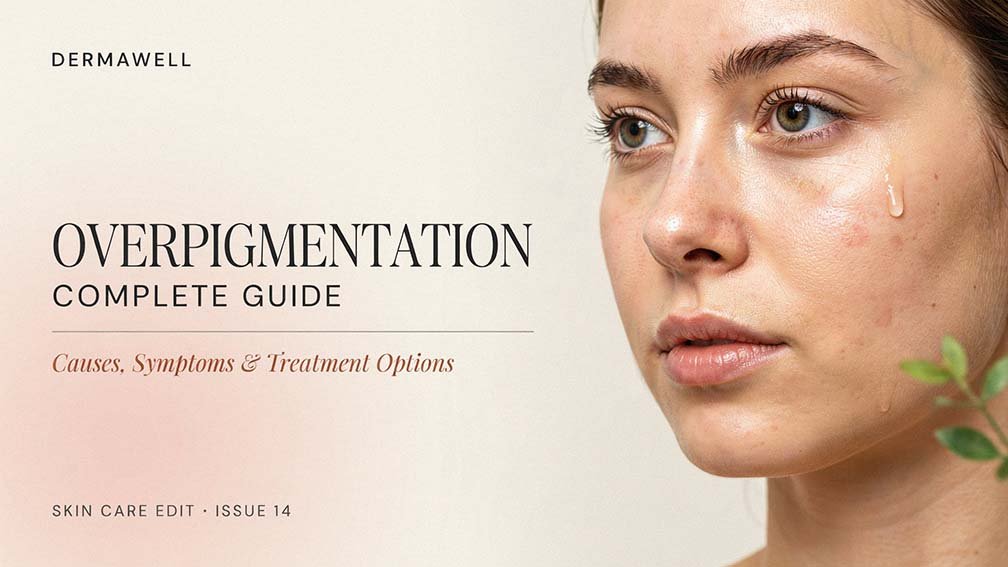
Look closely in the mirror and you might spot it — a patch of skin that’s just a little darker than the rest, maybe near your cheekbones, along your jawline, or scattered across your forehead. That’s overpigmentatie, and if you’ve been trying to figure out why it showed up and what actually makes it fade, you’re in the right place.
Overpigmentatie (also known as hyperpigmentation) is one of the most searched skin concerns worldwide, and for good reason — it’s stubborn, it’s confusing, and half the advice online contradicts the other half. In this guide, we’ll walk through what overpigmentatie actually is, why it happens, how overpigmentatie gezicht (facial pigmentation) differs from pigmentation elsewhere on the body, and which treatments are genuinely worth your time and money in 2026.
What Is Overpigmentatie?
Overpigmentatie happens when your skin produces too much melanin in certain areas, creating patches that are visibly darker than your natural tone. Melanin is the pigment that gives skin, hair, and eyes their color, and it’s made by cells called melanocytes. Normally these cells work evenly across your skin — but triggers like sun exposure, inflammation, or hormone shifts can cause them to go into overdrive in specific spots.
The result: brown, tan, or grey-brown patches that can appear anywhere, though they’re most noticeable on the face, hands, and shoulders — the areas that get the most sun exposure over a lifetime.
It’s important to understand that overpigmentatie isn’t dangerous on its own. This is a beauty frustration, not a health scare — your skin is fine, it’s just uneven. But it can be persistent, and treating it effectively means understanding why it’s there in the first place.
Overpigmentatie Gezicht: Why the Face Is So Prone to It
Facial skin is thinner, more exposed, and more reactive than skin elsewhere on the body, which is exactly why overpigmentatie gezicht (facial overpigmentation) is such a common complaint. Cheeks, the forehead, the upper lip, and the bridge of the nose are classic hotspots — largely because these areas catch the most direct sunlight and are also where hormonal pigmentation (like melasma) tends to concentrate.
If your pigmentation is mostly on your face rather than your body, hormones and sun exposure are usually the two biggest factors at play, which shapes how you should approach treatment.
Common Types of Overpigmentatie
Not every dark patch is caused by the same thing, and knowing which type you have makes treatment far more effective.
Sunspots (Solar Lentigines)
Flat brown spots that build up gradually from years of UV exposure. Common on the face, hands, and shoulders.
Melasma
Larger, often symmetrical brown-grey patches, typically across the cheeks, forehead, and upper lip. Strongly linked to hormonal changes — pregnancy, birth control, and hormone therapy are common triggers, and sun exposure makes it worse.
Post-Inflammatory Hyperpigmentation (PIH)
Dark marks left behind after acne, cuts, burns, or eczema. Extremely common, and often mistaken for scarring — though PIH is a color change, not a texture change, and usually fades faster than a true scar.
Freckles
Small, genetically driven spots that darken with sun exposure and often lighten again in winter.
What Causes Overpigmentatie?
A handful of triggers are behind most cases:
- UV exposure — the number one driver. Sunlight stimulates melanocytes directly and darkens spots that already exist.
- Hormonal shifts — pregnancy, birth control, and hormone therapy are the classic causes of melasma.
- Skin inflammation or injury — acne, eczema, bug bites, and even aggressive skincare can trigger dark marks as skin heals.
- Certain medications — some antibiotics and other drugs increase sun sensitivity, raising pigmentation risk.
- Genetics and skin type — people with more melanin-rich skin tend to see more visible, longer-lasting pigmentation after inflammation.
Symptoms and How to Recognize Overpigmentatie
Overpigmentatie typically looks like:
- Flat, discolored patches ranging from light tan to dark brown or grey
- No raised texture or bumps — just a color difference
- Spots that darken further with sun exposure
- Marks appearing where skin was previously irritated or inflamed
If a patch changes shape quickly, has an irregular border, bleeds, or looks different from your other spots, get it checked by a dermatologist — that’s a job for a professional, not a skincare routine.
Treatment Options That Actually Work
Patience matters more than any single product — real change happens gradually. Here’s what dermatologists and estheticians consistently recommend:
Topical Ingredients
Vitamin C, niacinamide, azelaic acid, tranexamic acid, and alpha arbutin are well-studied for fading pigmentation over time. Retinoids speed up cell turnover and help pigmented cells shed faster. Hydroquinone is a stronger prescription-strength option in some regions, but it needs professional guidance due to potential side effects with prolonged use.
Chemical Exfoliation
Glycolic, lactic, and salicylic acids remove pigmented surface cells and encourage fresh, even-toned skin to surface. Start slow — over-exfoliating can actually trigger more pigmentation.
In-Clinic Treatments
Chemical peels, microneedling, and laser or light-based therapies can accelerate results for stubborn overpigmentatie. These carry some risk of worsening pigmentation if mismatched to your skin type, so a professional consultation first is non-negotiable.
Daily Sun Protection
This is the step people skip and regret. Without daily broad-spectrum SPF 30+, no other treatment will hold — existing spots keep darkening, and new ones keep forming.
How to Prevent Overpigmentatie From Coming Back
- Wear broad-spectrum SPF every single day, rain or shine
- Reapply sunscreen every two hours during direct sun exposure
- Resist the urge to pick at acne, scabs, or irritated skin
- Introduce new active ingredients slowly to avoid triggering inflammation
- Wear a hat and seek shade during peak sun hours
When to See a Dermatologist
Most overpigmentatie is harmless, but book an appointment if patches are spreading quickly, not improving after several months of consistent care, or causing real distress. A dermatologist can also confirm whether you’re dealing with melasma, PIH, or something else entirely — which changes the whole treatment plan.
Frequently Asked Questions
What does overpigmentatie mean?
Overpigmentatie is the Dutch term for hyperpigmentation — patches of skin that appear darker than the surrounding area due to excess melanin production.
Does overpigmentatie gezicht go away on its own?
Mild post-inflammatory marks can fade naturally over a few months. Melasma and long-standing sunspots usually need active treatment plus daily sun protection to visibly improve.
Is overpigmentatie the same as acne scarring?
No. Overpigmentatie is a color change; scarring is a texture change. They can occur together, which is why the two get confused so often.
How long does treatment take to show results?
With consistent care, mild pigmentation often starts fading within 6–12 weeks. Deeper or hormonal pigmentation can take several months to a year.
Can I treat overpigmentatie at home?
Yes, for mild to moderate cases — targeted topicals, gentle exfoliation, and daily SPF cover most needs. Stubborn or widespread pigmentation usually benefits from a dermatologist’s input.
Final Thoughts
Overpigmentatie is common, manageable, and — with the right combination of ingredients, patience, and sun protection — very treatable. The biggest mistake most people make is chasing quick fixes instead of building a consistent routine. Start with sunscreen, add in one or two proven active ingredients, and give your skin the months it actually needs to show change.
If your pigmentation feels stubborn or you’re not seeing results after a few months of consistent care, it’s worth booking a consultation with a dermatologist who can tailor a treatment plan to your exact skin type and pigmentation pattern.