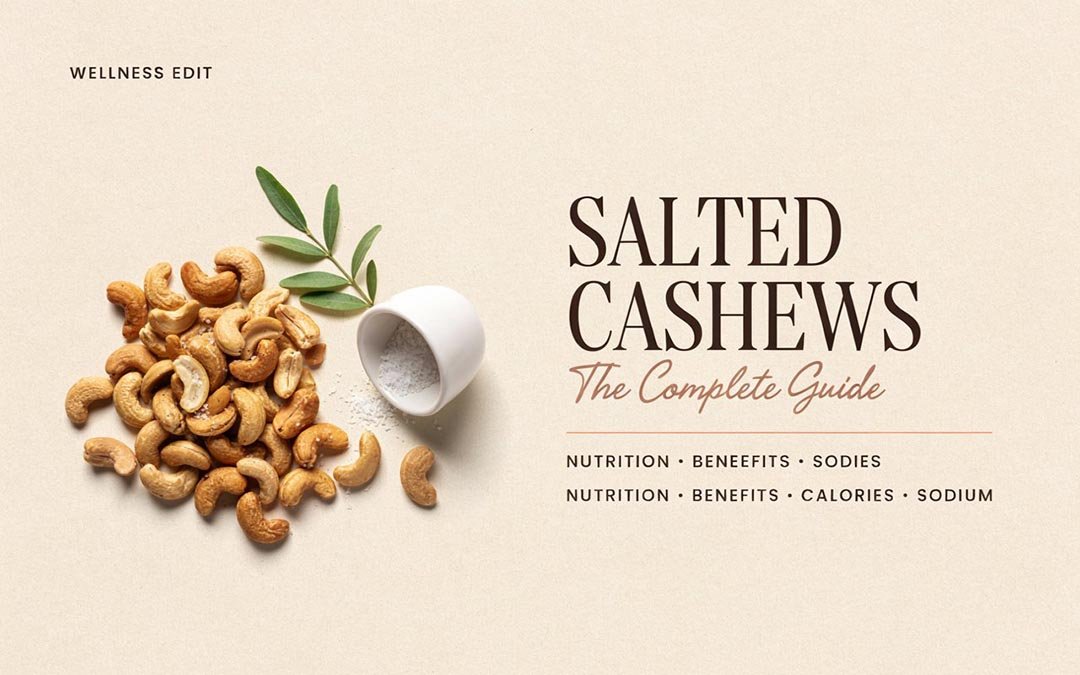
Salted cashews are one of the few treats that both indulgent and nutritious. They are creamy and delightful and just salty enough to make you want another handful. But do we really know what’s in that bag other than amazing taste?
Ever stopped in the grocery aisle wondering if salted cashew nuts fit into a healthy diet? Or searched online for cashews for sale that genuinely deliver on quality? This guide answers every query you might have. We will look at the nutrition, the calorie count, the sodium content and enable you to find out what makes for the greatest cashews on the market today
What Are Salted Cashews?
The fruit of the cashew apple tree bears the kidney-shaped seed of the cashew. Originating in Brazil, the cashew apple is now cultivated extensively in many tropical regions, including India, Vietnam, and even certain portions of Africa. It is important to delicately remove the nut’s hard shell, which forms outside the fruit, before roasting it.
After being roasted, either dry or in oil, and then sprinkled with salt, raw cashew kernels become salted cashews. Flavour, crunch, and shelf life are all enhanced by this method. When comparing salted and unsalted cashews, you’ll notice that the latter are softer and gentler. For a fast pick-me-up when you’re in the office, on the go, or watching a movie, they are the perfect snack.
Common Types of Salted Cashews You’ll Find
- Whole roasted salted cashews – the classic choice, ideal for snacking straight from the bag
- Salted cashew halves – often more affordable, commonly used in trail mixes and baking
- Honey-roasted salted cashews – a sweet-savory combination
- Lightly salted cashews – for those watching sodium intake
- Planters salted cashew halves – a widely available, budget-friendly option found in most supermarkets
Salted Cashew Nuts Calories: What You Need to Know
One of the most searched questions about this snack is simple: how many calories are in salted cashews? Here’s the breakdown.
A standard 1-ounce (28 grams) serving of salted cashews contains approximately 155–165 calories.
That’s roughly 16-18 whole cashews, depending on size. To put this in perspective:
| Serving Size | Approximate Calories |
|---|---|
| 10 cashews | ~90 calories |
| 1 oz (28g) | ~160 calories |
| 1/4 cup | ~200 calories |
| 100 grams | ~570 calories |
Calories in salted cashew nuts mostly come from good fats, not from sugar or processed carbohydrates. Twelve to thirteen grams of fat, five grams of protein, and nine grams of carbs—mostly starch and not sugar—make up one ounce.
Salted cashews are nearly as calorie dense as unsalted or raw cashews. While salt has no calories of its own, the roasting oil, if added, can greatly raise that figure. There are a few less calories in dry-roasted salted cashews compared to their oil-roasted counterparts.
Size of Servings Is More Important Than You Might Think
Because of its high fat content, cashews have a lot of calories. Eating straight from a large bag makes it simple to consume more than one serving without noticing. If you’re attempting to control your weight, dividing your cashews into smaller containers or using a kitchen scale will help you eat them more mindfully and prevent mindless snacking.
Nutritional Profile of Salted Cashews
Salted cashews really do carry a nutritious wallop, and that’s without the calories. Here’s what a standard 1-ounce serve looks like:
- Protein: 5 grams — aids in muscle repair and satiety
Fat: 12-13 g (mostly monounsaturated and polyunsaturated)
Carbohydrates 9 g
Fibre 1 g
Magnesium: 20% of the daily value
Copper: 60% of the Daily Value
Iron: around 10% of the Daily Value
Zinc: about 10% of Daily Value
Many people’s diets are deficient in copper and magnesium, two minerals that cashews are exceptionally rich in. Assists in the absorption of iron and promotes healthy connective tissues; copper Magnesium provides support for strong bones, healthy muscles, and proper nerve transmission.
How Salted Varieties Affect Sodium Content
Here is where raw cashews and salted cashews differ significantly. Depending on the type and level of saltiness, a 1-ounce serving of salted cashews might contain anywhere from 150 to 220 mg of sodium.
To put that in perspective, the average individual should limit their sodium intake to 2,300 milligrams per day, according to the general dietary recommendation. The recommended daily allowance for salt is 7–10% of a serving of salted cashews. Although it’s not excessive, it is worth considering if you plan on consuming other foods that are high in salt on that particular day
If you are concerned about salt, especially if you are controlling blood pressure, take into account:
- Choose a mildly salted or low-sodium variety
Quick rinse salted cashews (this will change the texture though)
Switching between salted and unsalted types
Read labels carefully, as salt content varies widely from brand to brand
Health Benefits of Cashews (Salted and Unsalted)
Salted cashews still offer most of the primary health benefits of this nut, however they do contain some extra sodium.
1. Heart Health Support
Similar to olive oil, cashew nuts are rich in monounsaturated fats, which are good for your heart. Multiple dietary studies have linked moderate consumption of nuts, particularly cashews, to better cholesterol profiles when included in a balanced diet.
2. The Role of Muscles and Bones
Snacking on a few cashews after a workout is a smart move. The copper and magnesium in cashews aid in building bone density and repairing damaged muscles.
3. Eye Health
Cashews are also high in lutein and zeaxanthin, antioxidants that may help promote eye health and even lessen the incidence of age-related visual problems.
4. Blood Sugar Control
Cashews are generally low in sugar and include healthy fats and protein thus they have a relatively low glycaemic impact than many packaged snacks. thus if you are watching your blood sugar, cashews are a reasonable choice.
5. Maintaining a Moderate Body Mass Index
Eating nuts in moderation can aid with fullness, lowering total snacking later in the day, and studies on nut consumption reveals that this does not inevitably lead to weight gain, which sounds counterintuitive.
How to Select the Best Cashews for Sale
Not all cashews are the same. Whether you buy them online or in a store, here’s what separates the best cashews from the mediocre ones.
Consider the Whole-to-Broken Ratio
Grade: Premium cashews are evaluated on size and wholesomeness. Whole cashews (graded W240, W320, etc.) are typically fresher and have a superior texture than broken pieces or half, however halves are just fine for cooking and baking.
Find the roasting or best-before date.
It is possible for the cashews’ natural oils to turn rancid over time. There is no substitute for fresh stock in terms of flavour or nutritional content.
Aroma and Colour
Nutty with a hint of sweetness, high-quality salted cashews should not have a sour or musty aroma. No speckles or discolouration allowed; hue should be uniform, ivory to light golden.
Packaging is important
Open bins don’t keep things fresh nearly as long as vacuum-sealed or resealable bags, especially if you’re buying in bulk from cashews for sale specials.
Analysing Well-Known Brands
To this day, Planters salted cashew halves remain a popular and easily accessible option for both everyday snacking and cooking. They are readily available in most supermarkets, usually sold at a reasonable price, and always seasoned with salt. Although they may be a bit more expensive, specialised brands and bulk food stores usually provide fresher, higher-grade whole roasted cashews that have a more artisanal touch.
Salted vs. Unsalted Cashews: Which Should You Choose?
| Factor | Salted Cashews | Unsalted Cashews |
|---|---|---|
| Flavor | Bold, savory | Mild, natural |
| Sodium | 150-220mg per oz | Under 5mg per oz |
| Calories | Slightly higher (if oil-roasted) | Slightly lower |
| Best for | Snacking, flavor variety | Baking, cooking, low-sodium diets |
| Shelf life | Similar | Similar |
Neither option is objectively “better”—it depends on your dietary needs. If you’re cooking, baking, or need to control sodium precisely, unsalted is the smarter pick. For snacking and flavor satisfaction, salted cashews win out for most people.
How to Store Salted Cashews Properly
To keep your cashews fresh and flavorful for as long as possible:
- Store in an airtight container after opening
- Keep in a cool, dry pantry for up to 2-3 months
- Refrigerate for up to 6 months to extend freshness
- Freeze for up to a year if buying in bulk
Exposure to heat, light, and air speeds up oxidation of the natural oils, leading to that unpleasant rancid taste.
FAQs (Frequently Asked Questions)
1.How many calories are in a handful of salted cashews?
A small handful (approximately 10-12 cashews) is about 100-120 calories, depending on size and how they are roasted.
2. Are salted cashews bad for you?
No, not naturally. Salted cashews, in moderate servings, are actually good for you. The problem is only with over-consumption that can amount to high salt levels over time.
3. Can you eat salted cashews on a low sodium diet?
If you’re on a strict low-sodium diet, you’ll want to choose lightly salted or unsalted varieties because typical salted cashews can add up rapidly with other salty foods.
4. Are salted cashews higher in calories than raw cashews?
There’s really no difference. Salt doesn’t have calories, and any tiny gain is mainly from oil used in roasting, not the salt itself.
5. How to eat cashews in the healthiest way?
Stick to one serving size (approximately 1 ounce or a tiny handful), pick dry-roasted over oil-roasted when possible, and combine with fiber-rich foods like fruit for a balanced snack.
6. Where to Buy the Best Cashews?
Seek out trusted grocery chains, speciality nut suppliers, or online bulk food vendors who provide transparent details on roast dates and sources. The brand name is less important than the freshness indicators.
7. Are salted cashew halves from Planters just as good for you as entire cashews?
Nutrition-wise, yes—whole and halved cashews provide pretty much the same nutrients per gram. The difference is mostly tactile and cosmetic, not nutritionally.
Closing Thoughts
The popularity of salted cashews is well-deserved. Not only do they taste delicious, but they also have a vitamin array that supports heart, bone, and muscular health in addition to being a wonderful source of healthy fats. The sodium content should be monitored, but in reasonable amounts, it isn’t a dealbreaker for most people, and the calorie count is plenty for a snack.
If you want to be in control of what you put into your body, it doesn’t matter if you buy salted cashew halves from Planters for convenience or seek out excellent cashews from a specialised merchant. Also, make sure to store these classic snacks properly and eat them in moderation as part of a healthy, balanced diet.