
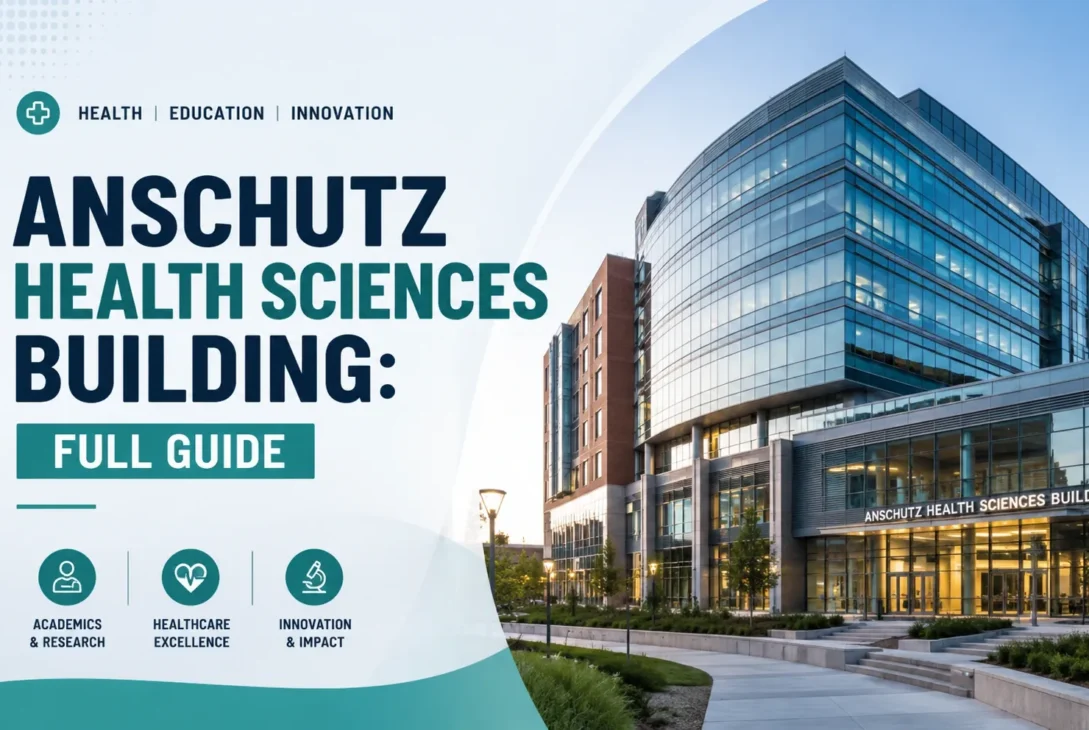
If you’ve ever wondered what a world-class academic health center looks like from the inside, the Anschutz Health Sciences Building gives you a pretty compelling answer. Sitting at the heart of one of the most respected medical campuses in the American West, this facility isn’t just a building — it’s where cutting-edge research, health education, and student life all converge under one roof.
What Is the Anschutz Health Sciences Building?
The Anschutz Health Sciences Building is a flagship facility on the University of Colorado Anschutz Medical Campus. It serves students, researchers, faculty, and healthcare professionals who need a modern, well-equipped environment to learn and innovate. Whether you’re a prospective student or a curious visitor, understanding what this building offers helps you appreciate why CU Anschutz carries such a strong reputation in health sciences education Colorado and beyond.
It’s also worth noting that this isn’t a standalone structure. It functions as an integrated part of a much larger ecosystem of research, clinical care, and education. The building connects people across disciplines — from nursing and pharmacy to public health and medicine — making it a true hub of interdisciplinary collaboration.
Location and Campus Overview
The building sits in Aurora, Colorado, just east of Denver. The Aurora Colorado medical campus spans hundreds of acres and shares space with major clinical partners, including UCHealth University of Colorado Hospital. Its location makes it easily accessible from the Denver metro area while keeping it close to the research corridors that define modern biomedical work.
Institutional Affiliation (University of Colorado)
The University of Colorado Anschutz Medical Campus operates the facility as part of the broader CU system. This affiliation gives the building access to substantial university resources, federal research partnerships, and a vast academic network. It’s one of the few campuses in the country that houses a medical school, dental school, nursing school, pharmacy school, and graduate programs all in one place.
History and Background of the Facility
The Anschutz Medical Campus didn’t appear overnight. Its development reflects decades of strategic investment in Colorado’s healthcare and research infrastructure. The Anschutz Health Sciences Building emerged from a broader campus vision — one focused on consolidating health sciences programs into a single, purpose-built environment rather than scattering them across multiple disconnected locations.
The Philip S. Anschutz Foundation played a foundational role in funding the campus, which is how it earned its name. Since the early 2000s, the campus — and this building in particular — has grown significantly in scope and ambition, becoming a nationally recognized biomedical research building in the Denver region.
When and Why It Was Built
The building was developed as part of the campus’s major expansion following the consolidation of CU’s health sciences programs in Aurora. The driving goal was simple: create a centralized space where students, faculty, and researchers could collaborate without the friction of being spread across different facilities. The result was a purpose-built academic and research structure designed for long-term growth.
Key Milestones and Expansions
Over the years, the building has undergone expansions and updates to keep pace with evolving research needs. New lab wings, updated digital infrastructure, and expanded student spaces reflect ongoing investment. Each phase of growth has reinforced the building’s role as a cornerstone of the University of Colorado Anschutz Medical Campus.
Architecture and Facility Highlights
From a design standpoint, the Anschutz Health Sciences Building is built to impress — but also to function. The architecture balances open, collaborative spaces with focused research environments. Natural light flows through large windows, and the interior layout encourages movement and interaction between different departments and disciplines. For a detailed look at the architectural design and vision behind the structure, the official ZGF architectural profile offers an in-depth overview.
The Anschutz Medical Campus buildings as a whole follow a cohesive design language — modern, functional, and built for scale. This particular facility fits seamlessly into that vision while standing out as one of the most feature-rich structures on campus.
Building Design and Layout
The building features a multi-floor layout that separates academic zones from research zones, making navigation intuitive. Open atrium spaces promote spontaneous collaboration while dedicated quiet zones support focused study. The STEM research infrastructure embedded throughout — from high-speed data networks to specialized lab hookups — reflects the building’s core purpose.
Key Floors and Spaces
Different floors serve different functions. Upper levels typically house research labs and faculty offices, while lower floors are dedicated to student services, classrooms, and communal areas. This vertical organization keeps noise levels manageable and ensures researchers and students aren’t constantly stepping over each other.
Accessibility and Sustainability Features
The building meets modern accessibility standards throughout. Elevators, ramps, accessible restrooms, and clearly marked pathways ensure everyone can navigate it comfortably. On the sustainability side, energy-efficient systems and environmentally conscious construction materials reflect the university’s broader commitment to reducing its environmental footprint.
Academic Programs and Departments Housed Here
One of the most compelling reasons to pay attention to this building is the sheer range of health sciences education Colorado programs it supports. Graduate students, medical students, and professional program students all share this space — and that cross-pollination of disciplines creates a uniquely rich academic environment.
The building doesn’t just house classrooms. It’s home to administrative offices, advising centers, and department headquarters that keep the academic engine running smoothly. If you’re exploring graduate health programs Colorado has to offer, this building is likely where your journey begins.
Health Sciences Schools and Colleges
Multiple schools operate within or closely connected to this building, including the Colorado School of Public Health, the Skaggs School of Pharmacy, and the College of Nursing. Each school contributes to a diverse academic community where understanding what behavioral health means is just as important as mastering pharmacology or surgical technique.
Research Centers and Institutes
Beyond classroom instruction, the building hosts several specialized research centers focused on areas like cancer biology, neuroscience, and infectious disease. These institutes give students hands-on exposure to real-world clinical and translational science — bridging the gap between laboratory discovery and patient care in meaningful ways.
Research and Innovation at Anschutz
Research is the heartbeat of this facility. The Anschutz Health Sciences Building sits at the center of a thriving research ecosystem that attracts scientists, clinicians, and innovators from across the country. CU Anschutz research facilities consistently rank among the top producers of federally funded health research in the U.S. That’s not an accident — it’s the result of deliberate infrastructure investment and strategic hiring.
What makes the research environment here particularly exciting is the emphasis on collaboration. Scientists don’t work in silos. Instead, they engage across departments, share equipment, and co-author studies in ways that accelerate discovery.
Ongoing Research Initiatives
The building supports a wide range of active research programs, from genomics and precision medicine to public health interventions and preventive health initiatives. Clinical and translational science projects are especially prominent — taking discoveries from the bench and moving them toward real clinical applications faster than traditional research models allow.
Funding, Grants, and Partnerships
CU Anschutz attracts hundreds of millions of dollars in research funding annually. The National Institutes of Health (NIH) is among the largest funders, alongside private foundations and industry partnerships. These resources flow directly into the building’s labs, supporting everything from early-stage basic science to large-scale clinical trials.
Student and Faculty Resources Inside the Building
Students at CU Anschutz don’t just attend classes and head home. The building is designed to support the full arc of academic life — studying, collaborating, accessing support services, and maintaining wellbeing. CU Anschutz student resources available inside the building are genuinely impressive in both breadth and quality.
Faculty benefit equally. Dedicated office suites, collaborative meeting spaces, and access to shared research infrastructure make this an environment where professors and researchers can do their best work without logistical headaches.
Libraries, Labs, and Study Spaces
The health sciences library and labs within the building give students access to vast digital and print resources, anatomical models, simulation equipment, and quiet reading areas. Whether you’re preparing for board exams or diving deep into a literature review, the study environment here is purpose-built for serious academic work.
Student Services and Support Offices
From financial aid advising to mental health counseling and career development, student support offices are embedded directly in the building. Understanding routine health check practices is encouraged as part of student wellness programming — because a healthy student is ultimately a more effective one.
How to Visit or Navigate the Anschutz Health Sciences Building
Visiting the Anschutz Health Sciences Building is straightforward once you know what to expect. The campus is open to the public in most areas, though some research and clinical spaces require authorization. If you’re attending an event, meeting a faculty member, or exploring the campus for the first time, planning ahead will save you time and frustration.
Campus tour medical education events are periodically hosted for prospective students and community members. These give you a real feel for the facility beyond what any website can convey.
Parking and Transportation
The campus offers structured parking garages, but spots fill up quickly on weekdays. The RTD light rail (University of Colorado A Line) provides convenient public transportation access directly to the Anschutz Medical Campus station. If you’re driving, arrive early or check the campus parking portal for daily availability.
Campus Map and Wayfinding Tips
Interactive campus maps are available on the CU Anschutz website. Inside the building, directories and digital signage guide visitors to specific departments and offices. If it’s your first visit, don’t hesitate to stop at the main welcome desk — staff there are genuinely helpful.
Frequently Asked Questions
Many people researching the campus have practical questions that don’t always show up in official brochures. Here are the most common ones, answered plainly.
Is the building open to the public?
Yes, most common areas of the Anschutz Health Sciences Building are accessible to the public during regular business hours. However, research labs, clinical simulation suites, and certain faculty areas require prior authorization or an escort. If you’re visiting for a specific reason, contact the relevant department ahead of time.
What programs are offered at CU Anschutz?
CU Anschutz offers a wide range of graduate health programs Colorado students and out-of-state applicants pursue, including MD, PharmD, DNP, MPH, PhD, and various certificate programs. The campus is home to four professional schools and multiple graduate programs spanning clinical, research, and public health tracks.
How is this different from the main CU Boulder campus?
CU Boulder is a general research university focused on undergraduate and graduate education across many disciplines. CU Anschutz is a dedicated academic health sciences campus — everything here is health-focused. The two campuses are administratively connected through the University of Colorado system but operate independently with distinct facilities, programs, and missions.
Final Thoughts
The Anschutz Health Sciences Building represents something bigger than bricks and glass. It’s a living example of what happens when a university commits fully to health education, research excellence, and community impact. Whether you’re a student, researcher, or just someone curious about the facility, it’s worth knowing that this campus is shaping the future of medicine in Colorado and across the country.
If this article sparked your curiosity about health more broadly, exploring the foundations of good health is a natural next step. The connection between great health institutions and informed, healthy individuals is one worth making.