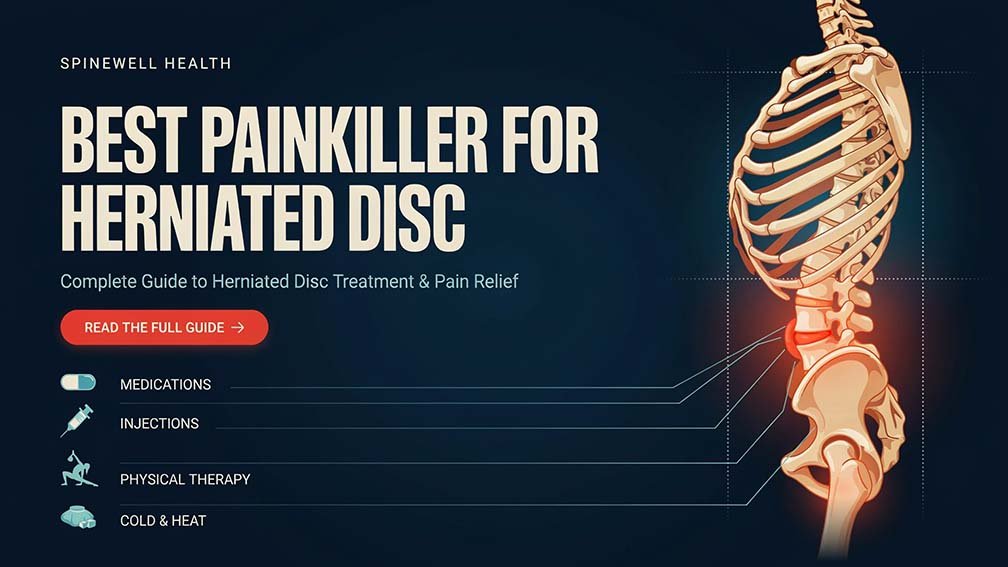
If you’ve ever stooped to retrieve a pencil and had a sharp pain running down your leg, then you are familiar with the inconvenience a herniated disk may cause. One wrong move and you find yourself struggling a bit to sit, stand, even sneeze. The first thing most patients ask their doctor, or Google, is simple: what is the best pain killer for a ruptured disk?
The truth is that there’s no one “best” medicine that will work for everyone. The level of pain alleviation you experience from a herniated disk depends on how bad the herniation is, where it is located and how your body reacts to different drugs. That yet, there are clear, well-established alternatives that doctors turn to first, and knowing them might help you have a smarter conversation with your own doctor.
This article discusses the drugs most frequently used, how they compare, what non-drug treatments might work with them, and when to quit treating on your own and consult a specialist.
What is a herniated disk?
Your spine is a stack of vertebrae with soft, gel-like cushions, called disks, in between. A herniated disk (also called a slipped disk or ruptured disk) occurs when the tough outer layer of one of these disks breaks and the soft inner material bulges out. That protrusion can pinch neighboring nerves in the spine, and that’s what causes pain, numbness or weakness.
A bulging disk is a less serious, preliminary cousin of a ruptured disk. The disk bulges out without the outer layer actually ripping. Both of these disorders are frequently found in the lower back (lumbar spine), as this part of the back takes the most weight and stress in daily activity.
Signs of a Herniated Disk You Should Not Ignore
Not all people with a herniated disk experience the same thing. Symptoms may differ depending on which disk is impacted and if it is affecting a nerve.
Common symptoms of herniated disk include:
- Sharp or burning pain in the lower back which can spread into the buttock and leg (also called sciatica)
Tingling, numbness or pins and needles in the leg, foot or toes
Difficulty raising the foot or gripping items due to muscle weakness
Pain worse with sitting, coughing, or sneezing
Limited back mobility
If you suddenly lose control of your bladder or bowels, or feel numbness in your inner thighs, this is a medical emergency (a condition called cauda equina syndrome) that needs rapid care—not painkillers.
Best Painkiller for Herniated Disk: What Are Your Medication Options?
Doctors usually begin with the least aggressive approach and escalate if necessary. Not all of these are used equally by doctors. This is why.
1. Over-the-Counter (OTC) NSAIDs
Nonsteroidal anti-inflammatory medicines, or NSAIDs, like ibuprofen (Advil, Motrin) and naproxen (Aleve) are often the first line of defense. They diminish the inflammation around the inflamed nerve, and this generally provides significant relief within a few days.
Why they are recommended by doctors as a first choice:
Available over-the-counter
Focus on inflammation not only the pain
Lower risk profile than prescription treatments for short-term use”
The problem is that NSAIDs are not intended for daily, long-term use. They can irritate the lining of the stomach and impair the way the kidneys work in some individuals, so it’s worth checking with a pharmacist or doctor if you’re taking them for more than a couple of weeks.
2. Tylenol (paracetamol)
Acetaminophen doesn’t reduce inflammation as NSAIDs do, but it can help take the edge off pain, especially for patients who can’t handle NSAIDs because of stomach or kidney problems. It is generally used along with other treatments, rather than as a sole treatment for pain caused by a disk.
3. Muscle Relaxants.
If the herniated disk is causing muscle spasms (quite common), a brief course of a muscle relaxant (such cyclobenzaprine) may be administered. They are not standard painkillers, but they treat spasms, and indirectly reduce pain and enhance movement. They are usually used for a brief period of time as they can make you drowsy.
4. Oral Steroids
For more severe flare-ups, a doctor may give a brief tapering course of oral corticosteroids such as prednisone. These act by pretty immediately reducing inflammation surrounding the pinched nerve. Long-term steroid use has serious hazards, therefore this is often a short, highly supervised treatment, rather than a long-term fix.
5. Nerve pain medicines
If pain goes down the leg (sciatica-type pain) then sometimes Medications initially formulated for nerve pain such as gabapentin or pregabalin are added. They don’t function like normal painkillers, which reduce inflammation; they calm hyperactive nerve signals.
6. Opioids Prescribed
Today opioids are rarely the first-line therapy for herniated disk pain. Because of their potential for reliance most guidelines suggest reserving them for severe, short-term flare-ups that haven’t responded to other therapies, and always under constant physician monitoring.
7. Epidural Steroid Injections
Not a pill, but worth noting: If oral meds aren’t enough, a doctor might suggest an epidural steroid injection directly into the space around the afflicted nerve. It provides a concentrated dose of anti-inflammation exactly where it’s required, and it can provide relief for weeks to months.
Bottom line: For most people, the “best” initial painkiller is an OTC NSAID, along with rest adjustment and gentle exercise. If it lasts for more than a week or two, or if it gets worse, you must see a doctor and not increase the prescription yourself.
Herniated Disk Lower Back: Why Is This Area So Commonly Affected?
The lower back, often known as the lumbar spine, endures a tremendous amount of daily strain, from sitting at a computer to carrying groceries. This makes lumbar disks (especially between L4-L5 and L5-S1) the most common site for herniation. The classic sciatica pattern is usually caused by a herniated disk in the lower back: pain that starts in the low back and progresses down the buttock, back of the thigh, and sometimes into the calf or foot.
Bulging Disc in the Lower Back? Here’s the Treatment Path Doctors Use
Since a bulging disc is generally less severe than a full herniation, treatment tends to be more conservative:
- Adjusting your daily activities by limiting movements that aggravate pain, such as heavy lifting, bending, or sitting for extended periods
- Physical therapy — targeted exercises to strengthen the core and take pressure off the disc
- Heat and cold therapy — cold packs for acute flare-ups, heat for ongoing muscle tension
- Posture correction — especially important for people who sit at desks for long hours
- Short-term NSAID use — to manage discomfort while the disc heals
Most bulging discs improve significantly within six to twelve weeks with conservative treatment. Surgery is rarely needed unless the bulge is pressing significantly on a nerve root.
Herniated Disk Treatment Without Drugs
While medication can help with the pain, a full recovery often calls for a comprehensive approach that addresses the underlying issue. This is what usually works with painkillers:
Physiotherapy
A physical therapist can teach you specific stretching and strengthening exercises to decompress the spine and support the muscles around it. This is one of the most evidence-based long term therapies for disk discomfort.
Manual Therapy and Chiropractic
Spinal manipulation or manual treatment may help some individuals but the results vary from patient to patient and with the severity of the herniation.
Fat Loss
The extra weight, particularly in the belly, puts strain on the lower back. Losing weight, even a little, can help take the stress off afflicted disks.
Ergonomic Modifications
Simple changes – a supportive chair, standing desk breaks, right lifting technique (bend at the knees, not the waist) – help prevent flare-ups from returning.
Surgery (When needed)
Surgery is usually only undertaken when conservative treatment has failed after several months or there is substantial nerve damage, paralysis or loss of bladder/bowel control. Typical procedures include a microdiscectomy, which removes the part of the disk that is pressing on the nerve.
Slipped Disc Treatment: A Step-by-Step Approach Most Doctors Follow
- Initial rest (short-term only) — a day or two of reduced activity, not prolonged bed rest, which can actually slow recovery
- OTC pain relief — NSAIDs or acetaminophen to manage early discomfort
- Gentle movement and stretching — to prevent stiffness and maintain blood flow
- Physical therapy referral — usually within the first few weeks if pain persists
- Prescription medication — muscle relaxants, short steroid courses, or nerve pain medication if OTC options aren’t enough
- Imaging and specialist referral — an MRI and orthopedic or neurosurgical consult if symptoms don’t improve after 6-8 weeks
- Injections or surgery — reserved for cases that don’t respond to the steps above
When professional medical care is safer than self-care
The painkillers may cover the symptoms but they won’t cure the problem with your disk. If you have any of these signs of side effects, get medical help right once.
- Pain that doesn’t get better or gets worse after roughly two weeks of home self-care
More numbness, tingling or weakness
Trouble walking or standing
Loss of bowel or bladder control (needs immediate emergency medical treatment)
Pain follows a serious injury or fall
FAQs
1. What is the top painkiller for herniated disk?
OTC NSAIDs like ibuprofen or naproxen are usually the first choice for most people because they reduce pain and inflammation. If symptoms are severe or do not improve, a doctor may prescribe muscle relaxants, a brief course of steroids or medication for nerve pain.
2. Can herniated disk cure itself without medication?
Yes. Many ruptured disks will improve on their own over weeks to months as the body reabsorbs the herniated material. Medication is used to alleviate discomfort during this healing window and does not fix the herniation.
3. Heat or Ice for Herniated Disk: Which is Better?
Ice is usually best to help decrease inflammation in the first 48-72 hours and heat can aid after that to help relax tight muscles and increase blood flow.
4. How long does discomfort from a ruptured disk typically last?
Most people report considerable improvement between six to twelve weeks with conservative care. Some cases are solved quicker, some take longer, certain herniations are worse and require more or extended intervention.
5. Can I use muscle relaxants for herniated disk pain?
They can be beneficial for short-term alleviation of spasm but are normally only recommended for a limited period because to concerns about sleepiness and reliance. They are not usually intended for daily long-term use.
6. When do you need surgery for a herniated disk?
Surgery is normally reserved for cases when conservative management has not succeeded after a few months, or where there is substantial nerve compression with loss of bladder/bowel control or paralysis.
7. Does exercising hurt a ruptured disk?
The improper activities can worsen symptoms, but the right exercises, with the advice of a physical therapist, frequently accelerate recovery by strengthening muscles that support the spine, and by restoring the alignment of the spine.
Conclusion
There’s no one best pain medication for herniated disks. Most people start with OTC NSAIDs, then move on to muscle relaxants or short courses of steroids if needed, and combine medicine with physical therapy and postural adjustments for lasting relief. But a lower back ruptured disk, whether just a minor bulge or a more serious herniation, generally does better with a layered approach, rather than just medication. If pain continues, gets worse, or is accompanied by numbness or weakness, don’t tough it out — consult a doctor. The earlier we identify difficulties, the smoother, faster the recuperation.